1/21/2026 AI & OJ: The HR & TA Leaders Breakfast NY
We kicked off the new year with our first AI & OJ of 2026 in New York, and the conversation did not disappoint. A room full of recruiters, talent leads, and hiring managers from companies ranging from 45-person startups to 30,000-employee enterprises, all wrestling with the same question: how do you actually hire well right now? Here's what happened.
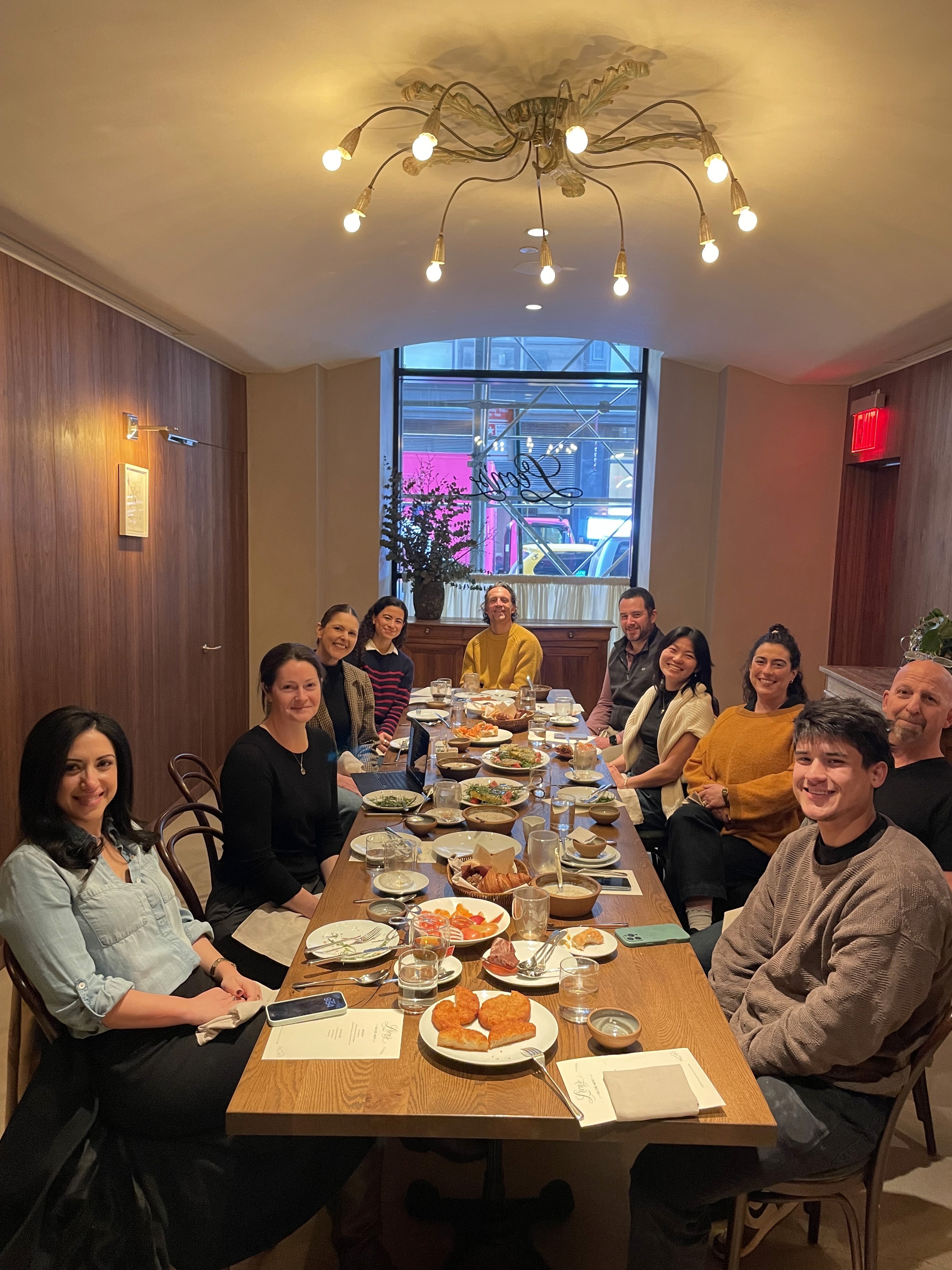
Who Was in the Room?
The group brought a solid mix of perspectives:
Jonathan Kraft from Button (ad tech, ~72 employees) came in hot with a ChatGPT-powered resume scoring model he's been building. Vicki, talent & ops lead at PointOne (AI timekeeping for law firms), is deep in the weeds of outbound sourcing and ATS migrations. Laura, people experience lead at Persado (~200 global employees), brought the culture and engagement angle. Steve from R1RCM (revenue cycle management, 30K employees) brought 15 years of engineering experience and strong opinions about employee value propositions. Sebastian from Fonzi shared sourcing hacks from his background co-founding an agentic ATS for engineering hiring. Hoda, the solo recruiter at Resilience (Series D cybersecurity), is living the one-person-team life. Emily, head of US People at a global hedge fund headquartered in Hong Kong, offered a window into a world that's still very old school on AI. Fallon, another solo recruiter at Revivn (~45 employees), is fighting to land GTM engineers against competitors like Palantir. And Maria from EliseAI (agentic AI for housing and healthcare, which grew from 80 to 450 people in two years) is navigating the chaos of hyper-growth hiring.
What are the Hardest Roles to Fill Right Now?
Everyone's struggling with something different, but a few themes kept coming up:
Junior roles are a mess. Hoda called junior SDR hiring an "absolute nightmare." Recent grads all look polished on paper, making it nearly impossible to tell who's actually good. Emily echoed this on the investment analyst side, especially as AI tools start handling the research work that junior analysts used to cut their teeth on. It raises a real question about what these roles even look like going forward.
VP and executive hires are stuck in no-man's land. Maria's been trying to fill revenue and go-to-market VP roles and keeps running into the same problem: candidates from big enterprises don't know how to operate at a scale-up, and early-stage folks haven't taken a company to IPO. Executive search firms haven't delivered, so she's leaning into networking instead.
Niche roles are just hard. Laura pointed out that "community builder" is one of the most critical hires you can make, someone who brings energy to calls and fosters collaboration, but it's not a skill that shows up on a resume. Fallon lost a GTM engineer to Palantir right before the holidays. And Maria's searching for an executive assistant to a CEO who's so hands-on he wants to do everything himself (comp target: $105K, and the role might actually need to be a chief of staff).
What's Working with AI in Recruiting?
Jonathan's resume scoring approach has been a real time-saver. He feeds ChatGPT a job description, the qualities that matter most, and examples of people who've been great in the role. The model scores incoming resumes against those criteria, takes a stack of 100-200 down to a focused list of ~10, and even flags potential weaknesses and asks clarifying questions.
Sebastian shared Fonzi's embedding technology. It takes data from past successful hires and creates an ideal candidate profile using multi-dimensional vectors, then measures new candidates against that profile. They're seeing a 50% hit rate for candidates above a certain confidence threshold. One example: a company screening for distributed systems engineers went from a 3% to 58% technical screen pass rate after building a custom eval based on their actual top performers.
Sebastian's Twitter sourcing hack was a crowd favorite. He creates multiple Twitter profiles that interact with specific content niches (design engineering, product design, etc.), and the algorithm starts surfacing candidates who are actively looking for work and already recognize you from the timeline.
Steve's sourcing philosophy was refreshingly methodical: test 2-3 platforms with identical protocols using boolean searches, prompts, and agentic tools. His key insight: LinkedIn's algorithm doesn't show you everyone, it shows you people based on your own interactions. So go find candidates in the communities where they actually hang out.
The big caveat everyone agreed on: fake resumes and AI-generated candidate interactions are a growing problem. Jonathan flagged this as a major time waste, candidates are using AI for every step of the process, which makes signal-to-noise harder than ever.
The ATS Struggle Is Real
Maria's situation at EliseAI captured a pain point that a lot of people felt. They're on Rippling for their ATS, which was a cost consolidation move, but it has no API integration, meaning she's manually pulling resumes one by one. Deliberate stickiness from the platform, real bottleneck for recruiting.
Vicki is migrating to Greenhouse to get out of a similar top-of-funnel time sink. Brett (PointOne) is handling all inbound plus 60% of outbound (~100 messages a day), first-round screens (~150 over two months), marketing operations, AND events. The bandwidth crunch is real.
Other tools that came up: Ashby, Juicebox, LinkedIn Recruiter Lite, and Noon (with Steve noting that Juicebox and Noon "steal from each other").
Culture That Actually Works
Some of the best conversations were around building culture without a massive budget.
Clay came up as the gold standard. They've had a Chief Vibe Officer since day one. Their founder is refreshingly honest about the mission: "we're not saving the world, we're building marketing software," and that authenticity permeates the whole company. Their referral program is creative: you get cash plus a unique experience (hair styling, a raw denim experience) for successful referrals.
Laura shared some wins from Persado. During COVID, she built themed Jeopardy nights using fun facts about the executive team (turns out one's a hot air balloon pilot, another has done ayahuasca). She gave people phone buzzers, ran quarterly scores, and grew attendance from 3 people to half the company. Now she runs "Sip and Spill" sessions where employees share their backgrounds and stories, plus an external speaker series featuring "cheap, obscure" guests, she's booked Netflix actors for $300 Zoom calls.
Low-cost ideas the group traded: NYC pizza competitions (~$100), trivia with swag prizes, and group outings like Othership (group sauna experiences).
Key Takeaways
Your employee value proposition and technical value proposition will make or break you, Steve's line landed hard. If you can't articulate why someone should work at your company, no sourcing tool is going to save you.
AI tools for screening are genuinely saving time, but they work best when you feed them data from your own top performers, not generic job descriptions.
The "scalars vs. builders" framing matters. Hoda made the distinction between people who build something from zero and people who can take what exists and scale it, so you know which one you need.
Targeted outbound beats high-volume spray-and-pray. Multiple people confirmed that investing time upfront in candidate quality saves way more time than blasting hundreds of generic messages.
Culture doesn't have to be expensive. The most engaging programs people shared cost almost nothing; they just required creativity and someone who genuinely cares.