2/18/2026 AI & OJ: The HR & TA Leaders Breakfast NY
Our second AI & OJ of 2026 brought together another great group of recruiters and talent leaders. This time, one topic dominated the room more than anything else: fake candidates. Deepfakes, VPN scramblers, fabricated LinkedIn profiles.
Who Was in the Room
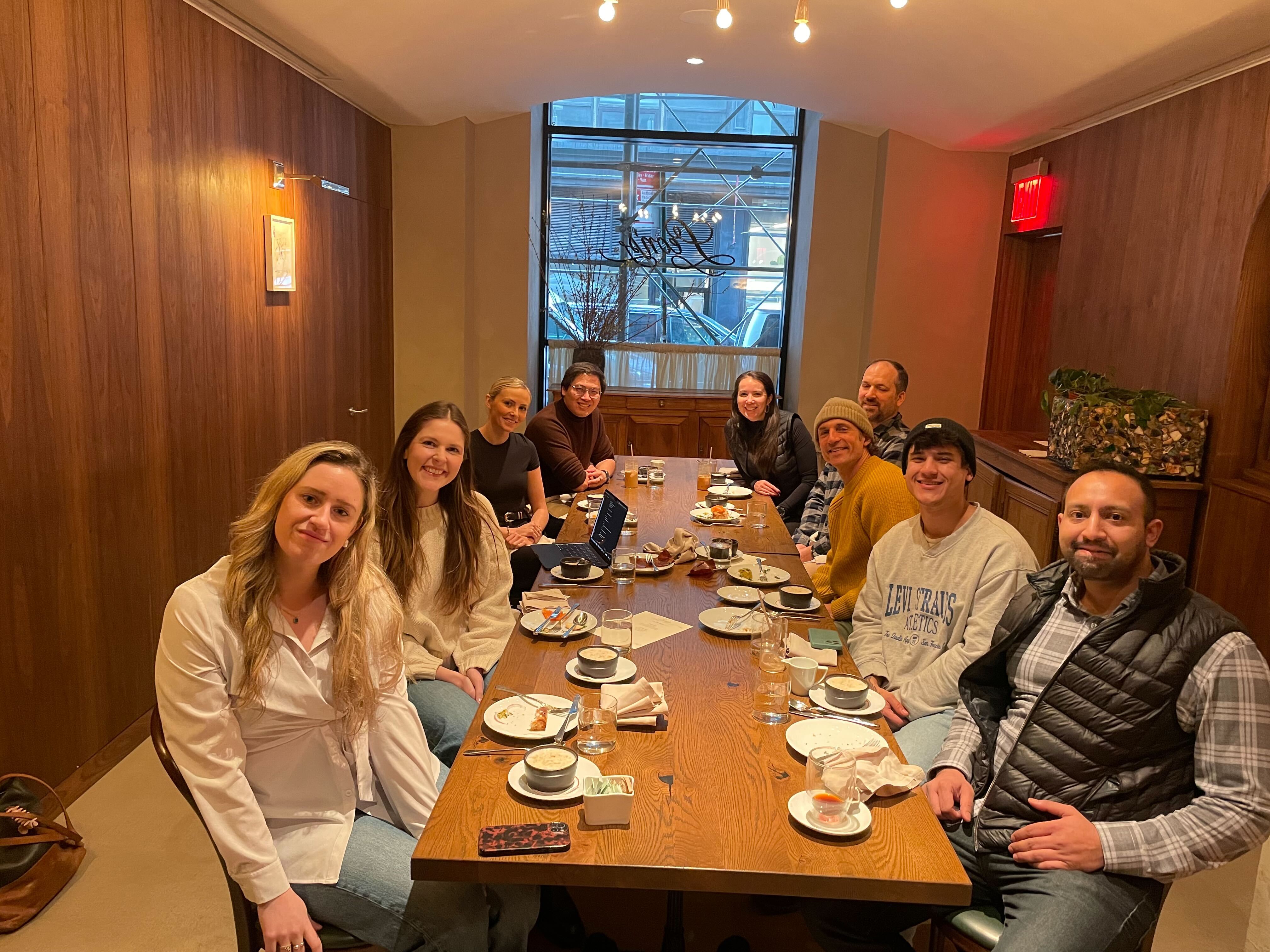
Jeremy Urban from Invisible Technologies (AI data labeling and platform engineering, ~500 core employees plus tens of thousands of contractors) just joined after 8 years at Tabula and is focused on connecting performance across a massive, distributed workforce.
Danielle is doing fractional work with Nexla, where she's helped scale from 0 to 100 people since October and is laser-focused on making hiring managers smarter at hiring.
Thompson from Fabric Health (healthcare tech, ~200 employees) is a solo recruiter juggling operations and recruiting, and fighting an uphill battle against fake candidates.
Kelsey from Heron Data (AI document processing, Series A) is the company's first internal recruiter and has doubled the team from 30 to 60 since October.
Fallon from Revivn is solo recruiting and still battling the "nobody knows who we are" problem while trying to fill a director of engineering and director of sales.
Mel from Evolution IQ (AI/ML for insurance claims) is deep in technical recruiting and sourcing, frustrated with LinkedIn Recruiter's performance in the current market.
And Paul from Alaffia Health (Series B, healthcare overbilling detection, 60 people) is trying to hire 20 senior technical roles this year, including an AI Ops Engineer that's proving especially tough.
The Fake Candidate Crisis
This was easily the hottest topic of the morning. Nearly everyone in the room had a story.
Mel almost hired someone who was using deepfake video during the interview process. Thompson caught a candidate using a VPN scrambler to hide the fact that they weren't actually in the US. Multiple people flagged candidates with no LinkedIn presence submitting applications, or profiles that were clearly created in the last few months with suspiciously similar patterns.
The group got into the weeds on detection methods and tools. Greenhouse just rolled out a fraud detection feature in the last two weeks. Tofu, through a partnership with Gem, analyzes IP addresses and video behavior for red flags. Puck is a bot that picks up on location inconsistencies and speaking patterns. Square Peg came up, though the group noted it's really more of an application ranking tool than actual fraud detection.
On the manual side, people are getting creative: asking hyper-local questions ("what's your favorite lunch spot near the office?"), checking LinkedIn profile creation dates, requiring LinkedIn profiles on all applications, and tracking IP addresses within their ATS. It's scrappy, but it's what's working right now.
This is a real and growing problem, and the tooling hasn't caught up yet. Everyone's spending meaningful time and money on fraud detection that used to go toward actual recruiting.
What Sourcing Tools Are Working?
LinkedIn Recruiter came up repeatedly, and not in a good way. Mel mentions that it's not performing in this competitive market. Senior engineers are drowning in messages, and standing out in their inbox is harder than ever.
The group ran through alternatives:
Juicebox ($200-275/month for 1,000 contact exports) surfaces similar candidates to LinkedIn. The interface is clunky and most people end up clicking through to LinkedIn profiles anyway, but it's backed by Sequoia, so it's unlikely to get shut down by LinkedIn anytime soon.
Built In is useful for company research and sector-specific startup searches, but not really a candidate sourcing tool.
Wellfound got mixed reviews. Kelsey landed 2 hires since October at zero cost, while Paul got literally zero applicants for some roles.
The Org is solid for pulling engineer lists from startups. Gem is strong on data enrichment and email sequencing with good automated workflows, but the core ATS functionality is lacking with no active pipeline view, you can't edit job open dates, and the ranking system is basic.
Kula has impressive data and analytics, but is still very new and missing fundamental ATS building blocks. Ashby is data-analytics focused with a Tofu partnership for fraud detection rolling out, though some were put off by the sales process.
Outbound That Actually Lands
The group spent real time on what makes outbound messages work when engineers are getting hundreds of pings a week.
Paul shared his email approach: subject line is simply "Worth reading" plus the job title. No urgency tactics, no clickbait. He's seeing around a 20% response rate. The group agreed that putting compensation range upfront is essential, because engineers sort for it immediately.
Mel took a different approach: she sat down with a group of engineers and literally watched them sort through their LinkedIn inboxes. What she learned was that engineers care about three things: comp, whether the work is relevant to what they're currently doing, and for AI roles specifically, what product you're actually building with LLMs and what their direct impact would be. "Senior Software Engineer" is way too broad, you need to speak to the level and the specific technical work.
Brett shared that leading with event invites rather than direct recruiting asks has been a better entry point for building relationships. Multiple people confirmed that LinkedIn follow-up sequences of 3-4 messages work, with the second or third message often being the one that gets a response. VP of Engineering outreach, on the other hand, showed poor ROI.
How to Catch Fake Candidates Early
With fake candidates flooding the top of the funnel, early technical screening has become critical.
Mel's approach stood out: she runs a 45-minute first call that includes 20 minutes of conversation and 25 minutes of live Python coding on Coder Byte. Full screen sharing, no AI allowed. If someone's caught using AI, the interview ends immediately. This saves her hiring managers enormous amounts of time, and the pass rate is 15% or lower, which tells you how many candidates genuinely can't code.
The group discussed where AI usage should and shouldn't be allowed in interviews. The consensus was that using AI for syntax help is fine as long as the candidate can explain their thought process and has a backup plan if the AI fails. Systems design interviews remain the gold standard for testing real-world problem-solving ability.
For capturing interview data, the group shared several tools: Granola (AI note-taker that can be prompted to focus on candidate responses rather than the recruiter), Kula (built-in recording and note-taking), Gemini (video interview summarization), and Brighthire (video recording, recently acquired by Zoom). Thompson emphasized that structured scorecards remain a huge asset for maintaining consistency across interviews.
The Performance Question
Jeremy raised something that resonated with the whole room: there's no single attribute tied to employee performance. But if he had to pick one, it's tenacity, paired with strong values.
His approach to assessing it: make the interview process rigorous enough that it actually tests persistence. Not tedious for the sake of being tedious, but genuinely challenging. Train your interviewers to ask tough questions that produce real signal. The distinction between "challenging" and "tedious" matters; one reveals character, the other just wastes everyone's time.
Kelsey's initial screen focuses on projects, passion, and what she called a "vibe check." Can this person actually talk about what they've built with genuine depth and enthusiasm? It's a simple filter, but it catches a lot.
Key Takeaways
Fake candidates are everyone's problem now. Deepfakes, VPN scramblers, fabricated profiles. It's not edge cases anymore. Budget time and tools for fraud detection, and build verification into your process early.
LinkedIn Recruiter alone isn't cutting it. Diversify your sourcing stack, but know that most alternatives have tradeoffs. No single tool is doing everything well.
Lead with comp and specificity in outbound. Engineers are sorting for compensation and relevance first. Generic titles and vague descriptions get deleted.
Early technical screening saves everyone time. A 25-minute live coding exercise in the first call filters out a shocking number of unqualified candidates before they ever reach a hiring manager.
Tenacity over credentials. The best hires aren't always the most polished on paper, they're the ones who push through hard problems and care about the work.
AI & OJ is a recurring community event for talent and recruiting leaders navigating the intersection of AI and hiring. Stay tuned for our next gathering.