How Companies Use AI Interviews to Screen Candidates
By
Liz Fujiwara
•
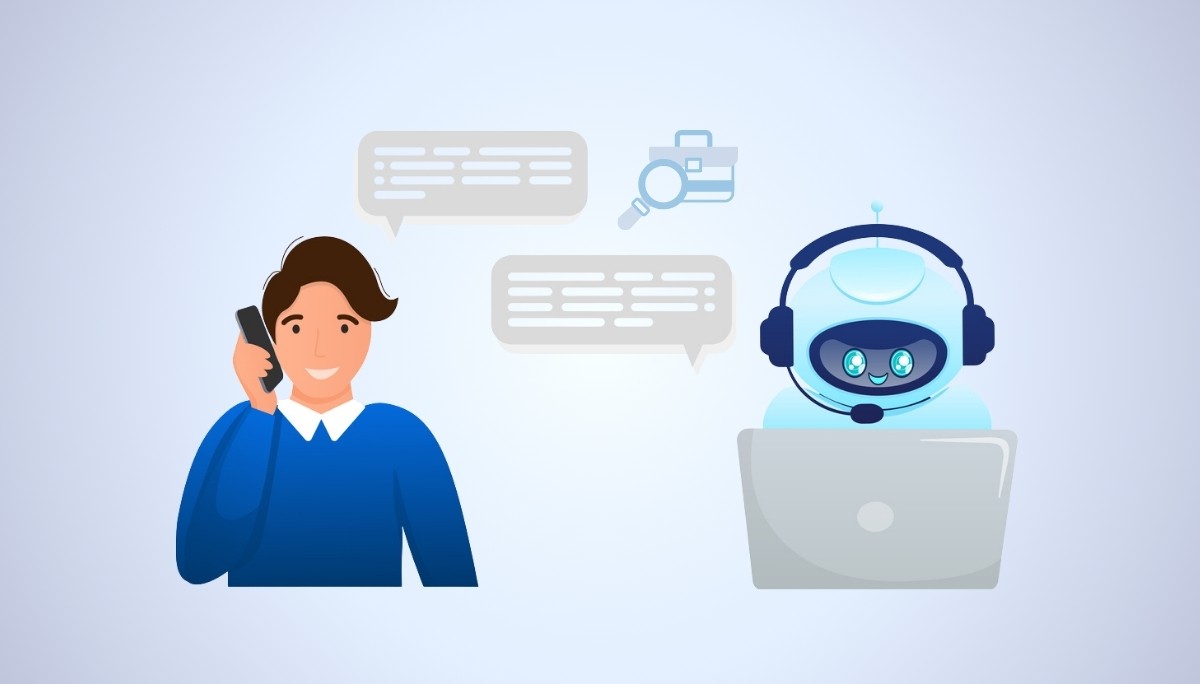
It’s 2026, and applying for an AI role often means completing a video screen and coding assessment before speaking with a human. For AI and ML job seekers, this has become standard as companies adopt AI-driven hiring tools to manage high application volume.
Today, an “interview with AI” can mean two things: being evaluated by automated tools or using AI to prepare for interviews. Both play a role in hiring outcomes.
This article is for AI engineers, ML researchers, infra engineers, and LLM specialists seeking clear, practical insight into how AI affects hiring without hype.
Fonzi is a curated marketplace for AI talent that uses AI responsibly to connect candidates with vetted companies. Rather than screening applicants out with opaque systems, Fonzi helps qualified engineers reach relevant opportunities faster while keeping humans involved in decisions.
Key Takeaways
AI interviews are now standard at companies like Google, Meta, Stripe, and AI startups, using tools such as async video screens, automated coding assessments, and resume matching, while human recruiters still make final hiring decisions.
Fonzi is a curated talent marketplace built for AI roles (LLM, infra, ML research, MLOps) that uses AI to reduce noise and bias, not to auto-reject candidates with opaque scoring.
Understanding both traditional and AI-enhanced hiring gives you a strategic advantage across different companies and their unique interview tools.
How Companies Actually Use AI in Interviews Today
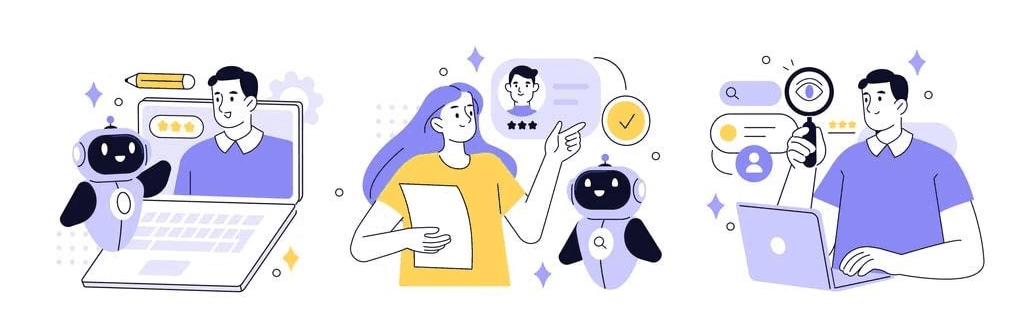
From Series A startups to FAANG-scale organizations, companies increasingly rely on AI to automate early stages of the hiring process. The goal is straightforward: handle high application volumes consistently while freeing recruiters to focus on candidates who’ve already cleared initial screens.
Here’s how AI shows up in real-world recruiting pipelines:
Async video interview tools like HireVue-style platforms present candidates with pre-recorded questions and strict time limits. AI analyzes candidate responses for keyword relevance, speech clarity, tone, and sometimes facial expressions, generating scores that feed into recruiter dashboards.
Automated coding screens from platforms like HackerRank and Codility use AI grading to evaluate code correctness, efficiency, and style. For AI-heavy roles, candidates may encounter questions on model optimization, RAG implementation, or data pipeline design.
ATS ranking systems use NLP to match resumes to job descriptions. When applying through a company’s career portal, AI often ranks applications against others before a human review. Keywords, skills, and experience markers heavily influence placement in the stack.
Many large companies have publicly acknowledged using AI screening in some form. However, legal constraints in the US, EU, and UK now require human oversight and bias testing. New York City’s Local Law 144, for example, mandates bias audits for automated hiring tools.
How do these AI models score candidates? They evaluate keyword relevance (does your background match the job description?), sentiment and confidence signals (how do you come across?), speech patterns and clarity, and the correctness or complexity of solutions. These are heuristics, not perfect judgments, and strong hiring teams understand their limits.
Types of AI-Powered Interviews You’ll Encounter
AI interviews differ by modality such as video, coding, chat, or recorded voice, and by what they measure, from technical skills to communication and culture fit. Understanding each type helps you prepare strategically rather than generically.
Async Video Interviews
In an async video interview, you record answers to pre-set prompts within strict time limits. You might get 30 seconds to think and 2 minutes to respond. AI analyzes speech patterns, content structure, and sometimes facial cues like eye contact and expressions.
Tips for async video screens:
Look directly at your camera, not the screen
Structure responses clearly (the STAR method works well for behavioral questions)
Speak at a measured pace as AI transcription accuracy drops 15–20% with fast speech
Test lighting and audio beforehand
Treat it like a live interview, even though it’s not
AI-Scored Coding Assessments
Browser-based coding challenges with hidden test cases are standard. AI grades correctness, runtime efficiency, and sometimes code style. For senior roles, companies often pair AI grading with human review to catch nuances the algorithm may miss.
What to expect:
Timed challenges ranging from 45 minutes to 3 hours
Hidden edge cases that test robustness
Possible AI analysis of coding patterns and solution approach
For LLM-focused roles: prompt engineering tasks, evaluation design, or RAG implementation
Chat-Based Technical Screens
Conversational AI systems ask follow-up questions about algorithms, ML modeling decisions, data pipelines, or system design. Unlike static coding tests, these evaluate your reasoning, not just your final answer.
Platforms like Nivo specialize in probing technical depth for AI/ML specialists, including tradeoffs in LLM fine-tuning or infrastructure scaling decisions.
AI-Enhanced Recruiter Screens
In these 15–30 minute calls, human recruiters use AI-generated question sets and real-time support for note-taking. The conversation remains human, with AI providing transcripts and structured insights afterward.
This hybrid approach gives recruiters more context while preserving natural conversation.
Experimental Formats
Some AI-native companies began piloting experimental interview formats:
Simulated pair-programming with an AI agent
Scenario-based conversations with a virtual PM
Live transcription with AI-generated follow-ups
Screen-share debugging sessions with AI observation
These remain edge cases, but they signal where the industry is heading.
What These AI Interviews Assess
Beyond raw correctness, AI interview tools assess multiple dimensions:
Category | What’s Being Measured |
Core Technical Depth | Transformers, retrieval systems, distributed training, LLM evaluation |
Coding Quality | Correctness, efficiency, style, readability |
Communication Signals | Clarity, structure, ability to explain complex concepts |
Problem-Solving Process | Step-by-step reasoning, handling ambiguity, tradeoff analysis |
Work Style Indicators | Time management in timed tests, organization, attention to detail |
For senior roles, AI scores rarely make final decisions alone. Instead, AI-derived signals feed into human-reviewed scorecards. Humans still choose who to hire.
Treat every interaction with AI tools as if a human will read the transcript and code afterward. Focus on readability and clear explanation, not just getting to the right answer.
Where AI Helps—and Where It Hurts—Candidates
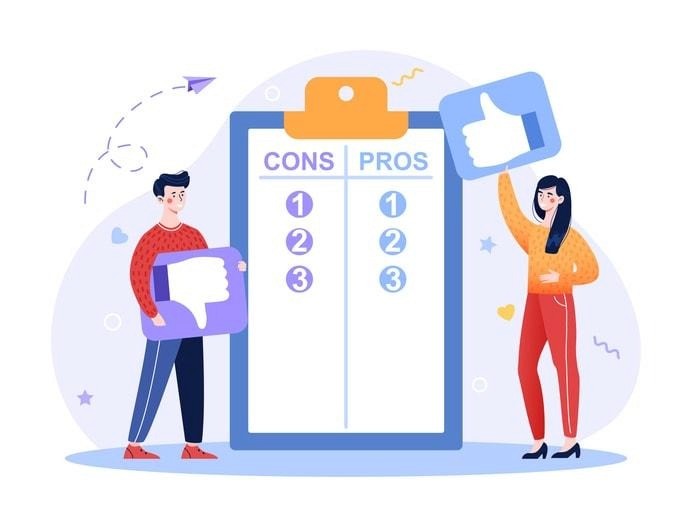
AI in hiring cuts both ways. Understanding the benefits and risks helps you navigate the system more effectively.
Benefits for Candidates
Faster feedback loops: Instead of waiting weeks to hear back, AI-enabled processes can move from application to interview invitation in days. For well-prepared candidates, this means less time spent in limbo.
More structured processes: AI reduces randomness in early filtering. Your resume is evaluated against consistent criteria rather than depending on which recruiter reviews it first.
Reduced human bias in initial screens: When configured properly, AI focuses on skills and qualifications rather than subjective impressions about names, schools, or backgrounds.
Risks to Watch For
Over-reliance on keyword matching: If your resume doesn’t use the exact terminology from the job description, basic ATS filters may under-rank you, even if you’re a strong fit.
Penalizing unconventional profiles: An ML researcher who publishes on arXiv but lacks “Senior” in their title may be filtered out. An infra engineer who built large-scale systems at a lesser-known company could be under-ranked compared to someone from a big-name employer.
The Regulatory Response
Regulators and companies are beginning to demand accountability:
New York City requires bias audits for automated hiring tools
The EU AI Act classifies hiring AI as high-risk and requires transparency
Large US employers increasingly conduct internal bias testing
This pressure is pushing the industry toward more responsible practices, though progress remains uneven.
This is why responsible marketplaces like Fonzi matter. They use AI for efficiency while keeping human judgment and candidate experience central to every hiring decision.
Meet Fonzi: A Curated Marketplace for AI Talent
Fonzi is a curated talent marketplace launched specifically for AI engineers, ML researchers, infra engineers, and LLM specialists frustrated with generic job boards and low-signal recruiter outreach. If you’ve ever wondered why your inbox is full of irrelevant roles while the jobs you actually want feel impossible to find, Fonzi was built with you in mind.
Unlike typical AI interview tools that auto-reject candidates based on opaque scores, Fonzi uses AI to understand your stack (PyTorch, JAX, Ray, Triton), research area (alignment, RLHF, retrieval), or infra depth (Kubernetes, observability, training pipelines), and match you to relevant companies.
Fonzi focuses on high-caliber companies actively hiring for AI-heavy roles: AI-first startups, infra companies building the picks-and-shovels of generative AI, and product teams at established tech firms deploying LLMs at scale.
Every candidate profile is reviewed by humans for quality and fit. AI is used to enrich profiles by tagging skills, suggesting niche matches, and removing repetitive manual work that slows traditional recruiting. The result is fewer random screens, more relevant conversations, and a shorter path from “interview with AI tools” to “offer with a human team you actually want to join.”
How Fonzi Uses AI Responsibly
Fonzi takes a different approach to AI in hiring:
No opaque black-box rejections. Fonzi does not rely on hidden scores to silently reject candidates. AI is used for ranking and routing, with human oversight at every decision point.
Your data stays yours. Candidate data is stored securely, not resold, and used only to improve matching between candidates and vetted employers. Models are configured to avoid training on sensitive personal data.
Explainable matching logic. Skills, experience, and preferences (remote vs. hybrid, compensation range, research vs. product focus) are visible drivers of matches. Candidates can see why they are matched to specific roles.
Human-centered design. AI handles repetitive parsing and matching so talent partners can focus on deep-dive calls, understanding motivations, and coaching candidates through interview processes.
Inside Fonzi Match Day: High-Signal Exposure to Top Companies
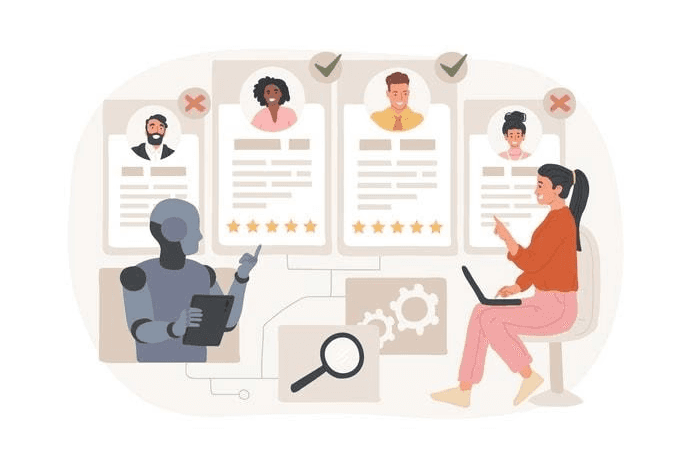
Match Day is a periodic event where pre-vetted AI talent is introduced to multiple hiring teams at once. Think of it as the opposite of spray-and-pray job applications, offering concentrated, high-signal exposure to companies actively hiring for roles aligned with your background.
How Match Day Works
Here is the step-by-step process:
Profile finalization (prior week): You complete a detailed profile covering technical stack, research interests, work preferences, and career goals.
AI-assisted matching: Fonzi’s system identifies companies with active roles aligned to your skills and preferences.
Match Day event: On the designated day, companies review matched candidates and send interview invites within hours or days.
Candidate notification: You are notified which companies showed interest, the specific roles (for example, Staff LLM Engineer, Applied Scientist for ranking, Infra Engineer for training stack), and clear next steps.
Instead of dozens of low-quality recruiter pings, you receive a small number of highly relevant match introductions, each tied to a real role with budget and urgency.
Advantages of Match Day
Compressed timelines: Go from introduction to onsite in 1–2 weeks instead of months. Less time spent in interview limbo.
More leverage: Parallel conversations with multiple companies create options and negotiating power.
Reduced misalignment: Fewer interviews for roles that turn out to differ from expectations.
Market demand insight: Feedback loops help clarify which skills attract the most interest and where deeper expertise may pay off.
What Companies Gain from Match Day
Hiring teams receive curated slices of the AI talent market, including senior infra specialists, LLM evaluation experts, and agents and retrieval engineers, rather than raw applicant floods.
Fonzi’s AI helps surface candidates whose experience aligns with specific stack choices (OpenAI vs. Anthropic vs. open-source LLMs) and product needs.
This creates a virtuous loop. Companies trust AI interview signals because the top of the funnel is already curated for quality, and candidates benefit from deeper, more technical conversations earlier in the process.
Preparing for an Interview with AI: Practical Playbook
While AI-powered interviews feel different from traditional job interviews, they reward the same fundamentals: clear thinking, strong communication, and demonstrable interview skills. Here’s a practical playbook tailored to AI/ML/infra/LLM roles.
Resume and Profile Prep
Make your skills machine-readable by naming specific frameworks, libraries, and platforms:
Instead of This | Write This |
“Worked with large models” | “Trained 70B-parameter models using DeepSpeed + ZeRO-3 on Azure” |
“Experience with ML infrastructure” | “Built and maintained Kubernetes-based training clusters serving 50+ researchers” |
“Familiar with LLM evaluation” | “Designed evaluation framework using HELM and custom domain-specific benchmarks” |
Align terminology to the job description without keyword stuffing. If the role mentions “retrieval-augmented generation,” use that phrase rather than just “RAG” somewhere in your resume upload.
Async Video Interview Prep
Practice 1–2 minute answers using the STAR framework (Situation, Task, Action, Result)
Ensure good lighting and audio. Technical issues can create negative impressions
Do several mock interview runs using AI tools that provide instant feedback on filler words, pacing, and clarity
Record yourself answering common interview questions and review critically
Stay calm and treat the camera like a person
Coding and System Design Prep
Timed interview practice on platforms that mimic real assessments is essential. For LLM engineers specifically, prepare for:
Prompt engineering tasks and optimization
Evaluation design for model outputs
Integration patterns like RAG and tools or agents
Debugging inference pipelines
Explaining tradeoffs in model selection and fine-tuning
For coding challenge prep, use platforms that offer instant feedback on your solution’s correctness and detailed analysis of efficiency.
Communication with AI Systems
When answering coding questions or case studies:
Write structured, stepwise reasoning so both AI and humans can follow your logic
Avoid excessively terse responses that look like pasted code with no context
Explain your assumptions before diving into solutions
Summarize your approach at the end
Behavioral Questions for AI Work
Prepare for behavioral questions specific to AI work:
How do you handle model failures in production?
Describe a time you navigated ambiguous product requirements for an ML feature
How do you collaborate with non-technical stakeholders on responsible AI decisions?
Tell me about a time you had to explain a complex ML concept to a non-technical audience
Using AI Tools Ethically as Your Interview Copilot
Using AI for interview preparation is encouraged and increasingly expected for AI professionals. Use an AI copilot to simulate likely questions from the job description, refine explanations of past projects, and debrief after interviews to identify gaps.
However, there is a clear line. Using covert AI tools during assessments where prohibited, such as copying code from an LLM into a “no external help” coding test, can violate company policies and result in being banned from future opportunities.
As an AI expert, you are often asked how you use AI responsibly. Treating interview prep ethically is part of demonstrating that judgment. The best approach is to use AI before and after interviews for practice, but be transparent and follow the rules during live assessments.
Comparing Traditional Hiring vs AI-Enhanced Hiring
AI doesn’t replace humans in hiring; it changes where humans focus their attention in the funnel. Understanding this shift helps you play to your strengths regardless of which system a company uses.
Dimension | Traditional Process | AI-Enhanced Process |
Speed | Weeks to months; bottlenecked by recruiter bandwidth | Days to weeks; automated screening accelerates early stages |
Consistency | Variable depending on who reviews your application | Standardized criteria applied equally across candidates |
Signal Quality | Depends on individual recruiter expertise | Data-driven signals but can miss nuanced strengths |
Candidate Experience | More human touchpoints but potentially longer waits | Faster feedback but can feel impersonal |
Data Usage | Limited analytics on hiring decisions | Rich data for continuous improvement and bias audits |
Fonzi’s Approach | N/A | AI for matching and routing; humans for decisions and conversations; Match Day for concentrated exposure |
AI moves some evaluation earlier in the process. Auto-scored screens happen before you talk to anyone. But this also frees recruiters and hiring managers to spend more time on deep technical interviews and culture fit discussions with top candidates who have already cleared initial bars.
Candidates who understand both systems can craft strategies that work across different companies. Some startups run almost entirely human processes. Enterprise tech companies might have five AI touchpoints before you meet a human. Being well prepared for both gives you a significant advantage.
Human-Centered Hiring in an AI World
Roles like AI engineer, ML researcher, infra engineer, and LLM specialist cannot be meaningfully evaluated by automation alone. The work is too nuanced, the skill combinations too varied, and the judgment calls too important for any algorithm to capture fully.
Leading companies in 2026 are consciously reintroducing human touchpoints while keeping AI assistants in the background for notes and logistics. Founder calls, deep technical sessions, and culture interviews remain critical, especially for senior hires. Many employers recognize that their best people were not necessarily the ones who scored highest on automated screens.
Fonzi believes in human-centered AI. Matching is automated, but decisions and conversations are human-led. The team believes candidates deserve transparency about how they are being evaluated and genuine support throughout the process.
Signals of Human-Centered Processes
As a candidate, look for:
Transparent expectations about what each interview stage covers
Clear feedback where possible, even if brief
Interviewers who understand the technical depth of your work
Respect for your time spent in the process
You are not just a passive participant in these systems. Give feedback to companies and platforms, including Fonzi, about what works and what does not in AI-enabled interviewing. Your insights help build better hiring for everyone navigating this landscape.
Conclusion: Turning AI Interviews into an Advantage
AI interviews are here to stay, especially for AI-heavy roles. Understanding them lets you confidently showcase your skills. AI speeds up hiring and structures evaluation, but humans still make nuanced decisions. The future of hiring is hybrid.
Fonzi is a curated marketplace that uses AI responsibly to match candidates with the right companies, while keeping human-led conversations central. Join Fonzi by completing a detailed profile and participating in Match Day to connect with multiple high-quality employers. No credit card required, cancel anytime. As an AI professional, you have a unique advantage so use it to navigate and shape the AI-augmented hiring ecosystem.
FAQ
How do AI interviews work and what do they assess?
What companies use artificial intelligence for interviews?
How should candidates prepare for an interview with AI?
Can AI interviews accurately evaluate candidates fairly?
What are the ethical concerns around using AI for interview screening?


