Engineering Placement Agencies That Can Get You Hired
By
Samara Garcia
•

AI hiring is booming, yet landing the right role still feels broken. Demand for AI engineers and LLM specialists is soaring, but candidates face slow timelines, opaque filters, and recruiters who don’t understand the work.
Fonzi AI was built to change that. It’s a curated marketplace for AI, ML, infra, and data engineers that replaces noisy outreach with pre-vetting and structured Match Day hiring. This article compares traditional placement agencies with AI-native platforms and shows how thoughtful use of AI can finally bring speed, clarity, and fairness to AI hiring.
Key Takeaways
Traditional engineering staffing firms focus on volume, geography, and broad disciplines, while Fonzi AI is a curated marketplace built specifically for AI, ML, LLM, infra, and software engineers globally.
Fonzi’s Match Day condenses the hiring process into a 48-hour, high-signal event where employers commit to salary ranges upfront and candidates gain access to pre-vetted roles at top AI startups.
AI at Fonzi is used for fraud detection, bias-audited evaluations, and logistics, never to replace human recruiters or remove candidate control from the process.
Engineering placement agencies typically charge employers 15-25% of first-year salary; Fonzi charges an 18% success fee to companies while remaining completely free for candidates.
What Is an Engineering Placement Agency?

An engineer placement agency is a third-party firm or platform that connects engineering talent with employers across sectors like energy, infrastructure, software, and AI. These agencies serve as intermediaries, handling sourcing, screening, and placement so companies can fill technical roles more efficiently.
Classic agency offerings typically include:
Temp and contract roles for project-based work or seasonal demand
Contract-to-hire positions that let both sides test fit before committing
Permanent placements for core team expansions
Disciplines served range from mechanical engineering and civil engineering to electrical, software, and increasingly AI/ML roles
Traditional firms like Apollo Technical and Insight Global organize around regions or broad specialties, from construction and energy to general tech. They earn 15–25% of the placed engineer's first-year salary or a margin on contract roles, paid by employers.
Fonzi AI takes a different approach. It’s a focused marketplace for pre-vetted AI, ML, LLM, and infra talent, trading breadth for depth and matching specialists directly with high-growth companies.
How Traditional Engineering Placement Agencies Work
Conventional engineering recruitment agencies still dominate in engineering career levels like infrastructure, upstream and downstream energy, civil engineering, and mechanical engineering. Many boast 40+ years of history, global contractor networks, and dedicated teams across multiple offices.
The typical workflow looks like this:
Database building: Agencies accumulate large candidate pools through job boards, inbound applications, and cold outreach
Recruiter assignment: Staff members are assigned to fill roles across multiple engineering disciplines
Resume matching: Recruiters scan for keywords and experience to match skills to jobs and client requirements
Screening and submission: Qualified candidates are contacted, interviewed briefly, and submitted to hiring companies
Placement and onboarding: Successful candidates receive offers, with agencies handling administrative details and employee onboarding.
Many agencies emphasize volume metrics: thousands of job fills annually, coverage in 90+ countries, and large contractor workforces. This approach optimizes for speed and geographic reach.
Pros for engineers working with traditional agencies:
Access to hidden roles not posted publicly
Help with resume formatting and interview preparation
Local support for relocation or project-based work
Extension of your search reach beyond your immediate network
Limitations for AI/ML and software engineers:
Generic screening that misses technical nuance
Limited understanding of LLM research, ML infrastructure, or system design tradeoffs
Slower timelines, weeks, or months from application to offer
Less transparency on salary bands and hiring process details
How AI Is Being Used in Engineering Recruitment, and Where It Goes Wrong
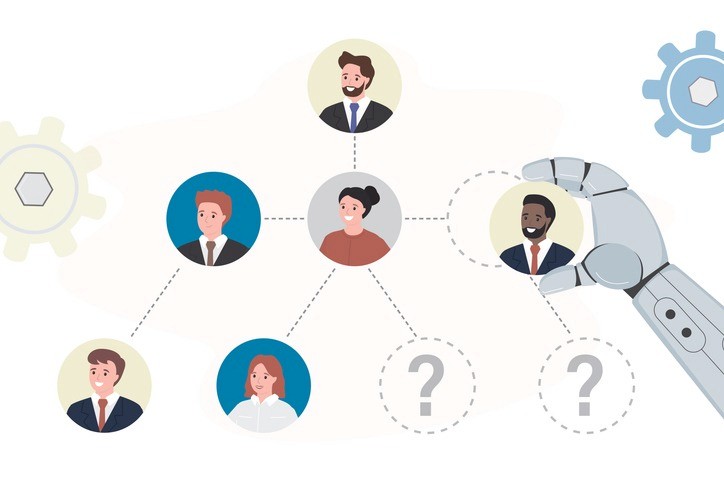
Since 2023, many engineering staffing firms have adopted AI tools for various parts of the hiring process. Industry surveys suggest that 75% of tech hires now involve some form of AI assistance.
Common uses of AI in recruiting include:
Keyword-based resume parsing and ranking
Automated candidate scoring based on role fit
Chatbots handling FAQ responses and scheduling
Basic fraud flagging on applications
Predictive analytics for candidate-job matching
Where this often fails engineers:
The challenge is that many AI recruiting tools reduce candidates to keyword matches. An ML researcher with a non-linear career path, perhaps moving from academia to a startup to a larger company, might get filtered out by systems optimized for traditional progressions. Over-reliance on resume keywords can miss outstanding talent whose skills don’t fit neatly into predefined categories.
Worse, black-box decisions can reinforce historical biases. If past hiring data skewed toward certain backgrounds, AI systems trained on that data may perpetuate those patterns.
Candidate pain points include:
Never hearing back after applying
Feeling reduced to a resume rather than evaluated as a professional
Skepticism that AI is “deciding their career” with no explanation
Fonzi AI vs. Traditional Engineering Placement Agencies
Understanding how Fonzi’s curated AI engineering marketplace differs from conventional staffing agencies helps you decide which partner fits your engineering career goals.
Dimension | Traditional Engineering Agency | Fonzi AI |
Talent Focus | Broad: mechanical, civil, electrical, software, construction | Specialized: AI, ML, LLM, data, infra, full-stack |
Geography | Often regional (e.g., Texas, California) or sector-specific | Global reach for remote and hybrid roles |
Evaluation Approach | Keyword screening, phone screens, resume matching | Pre-vetting with technical assessments, bias-audited scorecards |
Use of AI | Resume parsing, automated ranking | Fraud detection, bias auditing, logistics, and never final decisions |
Timeline | Weeks to months | 48-hour Match Day window |
Fee Structure | 15-25% of first-year salary (employer pays) | 18% success fee (employer pays); free for candidates |
Candidate Experience | Variable; often low transparency on salary and process | Upfront salary ranges, concierge support, transparent feedback |
The takeaway: traditional agencies are optimized for broad engineering coverage across many disciplines and sectors. Fonzi is optimized for fewer, higher-signal matches in cutting-edge AI and software roles.
Inside Fonzi’s Match Day: A 48-Hour Hiring Event for AI Engineers
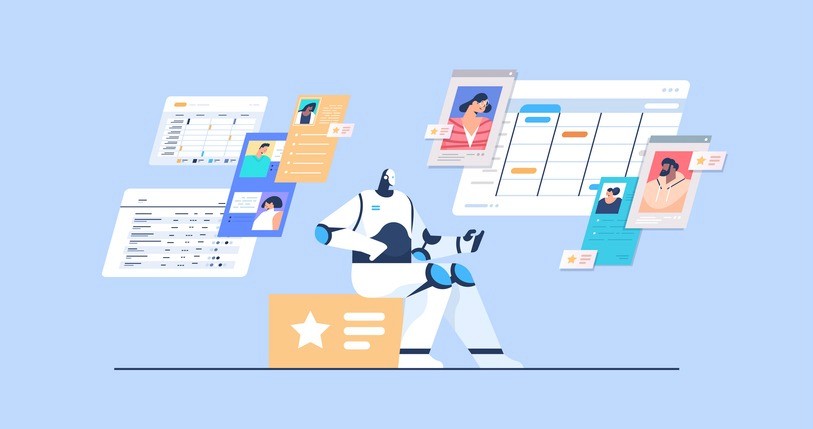
Imagine one or two intense days where multiple top-tier AI startups and tech companies review your profile and request interviews. That’s Match Day, a structured hiring event designed to compress what usually takes weeks into a focused 48-hour window.
Match Day timeline:
Pre-vetting and profile prep: Candidates complete technical assessments and build detailed profiles before Match Day begins
Match Day launch: Participating companies review candidate profiles and signal interest
Interview invitations: Engineers receive interview requests from companies interested in their background
Interviews and debriefs: Compressed interview rounds with technical and hiring manager conversations
Offer window: Companies extend offers within 48 hours
A critical difference from traditional agencies: employers commit to salary ranges and role details upfront. You know compensation bands before agreeing to interviews, no more wasting time only to discover the budget doesn’t meet your expectations.
Types of roles commonly seen on Match Day:
LLM Engineer
ML Researcher
Infra/SRE for AI workloads
Full-stack Engineer for AI products
Data Engineering roles in high-growth startups
Preparing to Work with an Engineering Placement Agency or Fonzi AI
AI engineers have leverage in the current market, but preparation still dramatically improves outcomes, whether you’re working with traditional agencies or curated platforms like Fonzi.
Refreshing your technical resume:
Highlight shipped systems and models in production rather than just listing tools
Include benchmarks, latency improvements, and measurable impacts
Feature contributions to open-source projects or published papers
Quantify results: “deployed model reducing inference time 40%” beats “worked on ML systems.”
Building a Fonzi-ready profile:
Define clear role targets (e.g., “Senior LLM Engineer” or “ML Infra Engineer”)
Specify location preferences and remote/hybrid flexibility
State salary expectations to avoid low-signal introductions
Link to GitHub, ArXiv, or portfolio work demonstrating your expertise
Practical interview prep tips:
Rehearse explanations of 2-3 recent projects in depth
Prepare the whiteboard system design for AI workloads
Practice communicating tradeoffs to non-technical founders
Be ready to discuss responsible AI practices and how you approach them
Be explicit about non-negotiables, remote vs. hybrid, time zones, visa needs, so agencies and Fonzi can avoid wasting your time with mismatched opportunities.
Summary
Traditional engineering placement agencies serve an important role in sectors like construction, midstream energy, and mechanical engineering, providing broad coverage, geographic expertise, and established employer relationships. But for AI engineers, ML researchers, and LLM specialists, these agencies often lack the specialized technical understanding and process transparency that modern candidates expect.
Fonzi AI offers a different model: a curated marketplace where employers commit to salary transparency, candidates undergo bias-audited evaluation, and the entire hiring process compresses into a 48-hour Match Day. AI handles logistics and matching; humans make decisions.
The future of engineering recruitment belongs to platforms that empower engineers rather than reducing them to resume keywords. Speed, clarity, and fairness aren’t luxuries; they’re what technical talent deserves.
Ready to explore your next role? Apply to join Fonzi’s curated marketplace, complete your profile, and participate in an upcoming Match Day. It’s free for candidates, and you’ll gain access to AI startups and high-growth tech companies actively hiring for roles that match your skills.
FAQ
What do engineering placement agencies charge, and who pays the fee?
How do engineering recruiting agencies differ from in-house recruiters?
Which engineering hiring agencies specialize in AI and machine learning roles?
Do engineering placement agencies work for senior engineers and tech leads?
What’s the difference between engineering staffing agencies and talent networks?


