Cracking the Apple Interview in 2026: Your Guide to Success
By
Ethan Fahey
•

Landing a role at Apple in 2026 is still a big deal for AI and software engineers. Whether you’re working on next-gen Siri, pushing on-device ML performance with Apple Silicon, or designing privacy-first AI systems, an Apple interview means you’re in the mix for products used by billions. Apple’s interview process reflects that bar: multiple rounds, deep dives with specific teams, and a strong focus on how you think, communicate, and execute, not just raw technical ability.
That structure is a sharp contrast to the broader AI hiring market, where roles and expectations often shift mid-process. Apple may be famously secretive, but its interview loops follow a recognizable pattern that serious candidates can prepare for methodically. In this guide, we’ll break down what the Apple interview looks like in 2026, how AI is being used responsibly in hiring, and how Fonzi AI can help you land strong offers faster, even while you’re preparing for Apple.
Key Takeaways
Apple’s interview process in 2026 typically spans 4-8 weeks with 5-7 stages, from resume screen through offer negotiation, and is highly team-specific for AI, ML, infra, and LLM roles.
Unlike Google or Meta’s standardized loops, Apple interviews are tailored to the exact team you’re joining: Siri Core Modeling, Apple Silicon ML tools, or Security Engineering. Each has distinct question styles and technical emphases.
AI is increasingly used behind the scenes in hiring (resume screening, scheduling, fraud detection), but Apple explicitly prohibits AI tools like ChatGPT or Copilot during live interviews, focusing on human judgment.
Fonzi AI uses bias-audited AI tooling to make hiring faster and fairer, compressing what could be weeks of Apple-style back-and-forth into a 48-hour Match Day with multiple offer conversations.
Strong preparation requires three parallel tracks: fundamentals (DSA, concurrency), applied systems thinking, and Apple-specific behavioral storytelling around customer empathy and simplicity.
Apple’s 2026 Interview Process: Stages, Timelines, and Team-Specific Loops
An apple interview typically unfolds over 4-8 weeks in 2026, though priority AI and ML roles can move faster when teams are urgently hiring. The process reflects what some internally call Apple’s “secrecy tax”: hiring committees meet bi-weekly, interviewers have up to 5 business days to submit feedback, and recruiters batch communications rather than providing real-time updates.
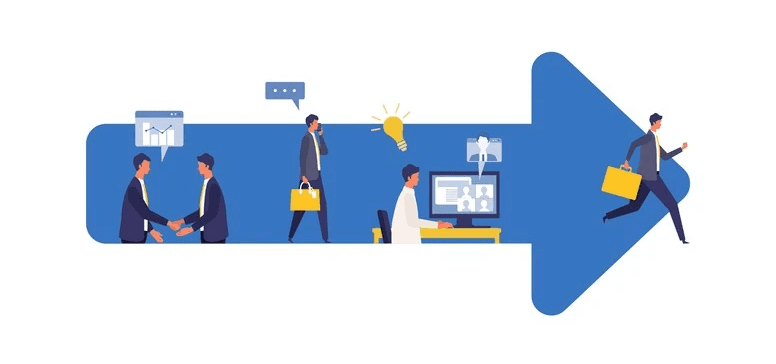
The core stages generally include:
Resume and profile screen
Recruiter phone screen (15-30 minutes)
One or two technical phone or video rounds (30-60 minutes each)
Possible take-home assignment or coding exercise
Virtual or in-person onsite loop (up to 6 hours)
Final interview with the hiring manager or director, plus offer discussion
For AI engineers, ML researchers, infra engineers, and LLM specialists, the structure mirrors competitors, but content is hyper-tailored to the specific team. A Siri Core Modeling interview will probe transformer architectures and on-device inference, while an IS&T infrastructure role might focus on distributed systems and Kubernetes orchestration. Apple’s team-specific approach means the people you interview with are usually the people you’ll work alongside; a significant difference from generalist matching at other FAANG companies.
Many candidates report 6-8 rounds in a loop, sometimes split across two days. These can include coding rounds, system design sessions, ML modeling discussions, domain-specific interviews (SQL-heavy for data and analytics roles), and dedicated behavioral sessions evaluating cultural fit.
Apple typically stores interview feedback for 6-12 months per team, so underperforming in a loop can limit immediate re-application. Each attempt is genuinely high stakes for senior engineers.
Typical 5–7 Stages of an Apple Interview in 2026
The canonical path through an Apple interview follows a recognizable sequence, though timing between stages varies significantly. After submitting your application (or receiving an internal referral), you’ll first encounter a resume and profile screen where recruiters evaluate your background against the job description.
Next comes the recruiter phone screen: a 15-30 minute conversation assessing your experience, motivation, and cultural alignment with Apple’s values around innovation and privacy. Strong answers here demonstrate progression potential and impressive accomplishments relevant to the role.
First round technical screens follow, typically 30-60 minute video calls with the Apple hiring manager or a peer engineer. For AI and ML roles, expect probes into hands-on achievements: specific model optimizations you’ve shipped, infrastructure you’ve built, or research contributions you’ve made. Some teams add a take-home assignment, such as a coding challenge, a dataset problem, or a system design exercise, before advancing you further.
The onsite interview (virtual or in-person) is the most intensive stage. Expect up to 10 interviews over 6 hours, including sessions with senior engineers, coding and system design rounds, behavioral evaluations, and sometimes a lunch interview. For senior AI and infra roles, Apple sometimes adds a “team match” call where multiple teams assess the same candidate in parallel.
The final interview typically involves a senior leader testing culture fit, followed by salary negotiation. Candidates should start high and negotiate comprehensively across base, stock, bonuses, and remote options.
The timeline between stages can stretch from a few seconds of recruiter acknowledgment to two weeks of silence. Candidates commonly report 5-10 days without updates after a virtual on-site while committees calibrate feedback. Post-onsite packet compilation takes about 1 day, feedback submission 2-7 days, recruiter prep 8-10 days, committee review 11-14 days, and decision communication 15-18 days in ideal scenarios.
With Fonzi AI, teams commit upfront to compensation bands and urgency, so candidates experience a “multi-team day” similar to Apple’s internal matching but compressed into a pre-arranged 48-hour hiring event.
What Makes Apple Interviews Different for AI, ML, Infra, and LLM Roles
Apple’s AI and ML interviews balance classic data structures and algorithms with real product constraints. On-device inference, privacy preservation, and energy efficiency aren’t abstract concepts; they’re daily engineering realities that shape every technical question you’ll face.
While a Google interview might test you on generalized graph traversals applicable to any team, Apple interviewers dive deep into domain-specific technology. Expect questions about Core ML optimizations, Metal shaders for ML acceleration, secure enclave constraints, and on-device personalization architectures. The interview loop tests whether you can ship features that users experience as “magical” rather than technically impressive.
Senior candidates (L5+ equivalent) often see fewer trick-based LeetCode problems and more job-realistic work: debugging concurrency bugs in production systems, reasoning about latency budgets for Siri requests, or designing evaluation frameworks for agentic LLM systems. Your thought process matters as much as your final answer.
Infra and platform candidates targeting IS&T, Security, or Siri infrastructure roles should expect heavy emphasis on systems fundamentals: threading, memory management, networking, reliability, and observability within Apple’s private stack. These aren’t just theoretical concepts but practical skills you’ll use immediately.
Apple also leans heavily on behavioral evaluation for customer empathy and simplicity. Interviewers probe whether you can cut scope aggressively, ship reliable minimal solutions, and protect user privacy, values that trace directly back to Steve Jobs’ legacy.
Role-Specific Focus Areas in Apple AI and Engineering Interviews
AI and ML engineers working on Siri, Recommendations, or Vision should prepare for rounds covering modeling choices (ranking vs. generative approaches), evaluation metrics, offline vs. online A/B testing, and tradeoffs between on-device and cloud inference. You might be asked to diagram how you’d deploy a model that runs in a few seconds on-device while maintaining accuracy parity with server-side alternatives.
ML researchers and LLM specialists may face questions about 2024-2026 advances: retrieval-augmented generation, agentic evaluation, preference optimization, and function calling. Siri Core Modeling job descriptions specifically mention “Agentic Eval Systems,” so be ready to explain how you’d design a scalable evaluation harness that reliably scores multi-step agent behavior.
Infra, backend, and data engineers should prepare for large-scale systems design: multi-region APIs, high-availability data pipelines, concurrency patterns, transaction boundaries, and deep debugging sessions mirroring real interviews at Apple services like iCloud or Apple Media Products. Expect technical questions about binary tree traversals alongside practical SQL optimization problems.
Security engineers and privacy roles blend secure coding practices, protocol reasoning, and practical exploit mitigation. Apple’s public stance on privacy-first engineering isn’t marketing; it’s reflected in every technical round.
Concrete topics to prepare:
Concurrency in C/Swift and safe data structures patterns
Java vs. Python performance tradeoffs for ML serving
SQL-heavy analytics interviews for Apple Media Products or App Store analytics
On-device vs. cloud ML deployment architectures
Differential privacy implementations and their practical constraints
How AI Is Used (and Not Used) in Modern Hiring and Where Fonzi AI Fits
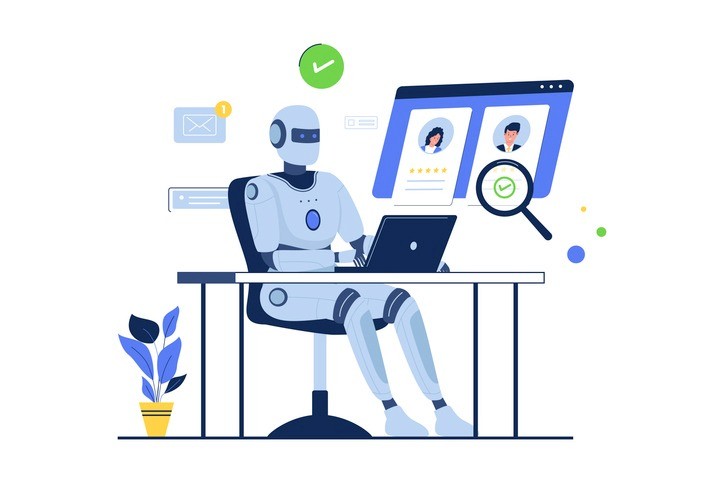
By 2026, most large companies, including Apple, use AI behind the scenes for resume triage, scheduling coordination, and fraud detection. These tools handle volume that would otherwise overwhelm recruiting teams, allowing human recruiters to focus on relationship-building and nuanced evaluation.
However, Apple interview policies explicitly prohibit using AI tools like ChatGPT or Copilot during live interviews, online coding exercises, or take-home assignments. Violations can lead to immediate disqualification. Apple wants to assess your reasoning and problem-solving abilities directly, not your skill at prompting AI assistants.
At Fonzi AI, we deliberately use AI around the edges of the process with structured profiles, bias-audited scoring, and anomaly detection, not to answer questions for candidates or decide unilaterally who gets hired. Our models are periodically checked on synthetic and real-world data to minimize disparate impact by gender, age, or background. Humans always make final decisions on candidate fit.
This means automation creates clarity rather than confusion. Salary transparency is built in (companies commit to compensation bands before talking to candidates), expectations are explicit, and skills signals are standardized. Founders, hiring managers, and candidates can focus on a deeper conversation rather than administrative overhead.
For employers on Fonzi similar to Apple in their rigor, AI also streamlines logistics: synchronized calendars for Match Day, automatic reminder flows, and structured feedback forms that reduce ghosting and ambiguous outcomes.
Traditional Apple-Style Hiring vs. Fonzi AI Match Day
Aspect | Traditional Big Tech Loop (e.g., Apple) | Fonzi AI Match Day |
Application Entry Point | Cold apply, referral, or recruiter outreach | Curated marketplace with pre-vetted profiles |
Timeline to First Technical Conversation | 1-3 weeks from application | Days from Match Day invitation |
Salary Transparency | Revealed post-offer during negotiation | Upfront bands agreed before interviews |
Use of AI | Basic resume screening; prohibited in interviews | Structured, bias-audited tools; humans decide |
Number of Interviews to Offer | 6-10 across 4-8 weeks | Multiple companies in 48-hour window |
Feedback Clarity | Often vague rejection emails; 20% ghosting rate | Structured feedback forms; minimal ghosting |
Team Matching | Hired directly into specific team | Multiple teams compete for same candidate |
Candidate Experience Focus | Variable; depends on recruiter responsiveness | Concierge support throughout process |
Preparing for the Apple Interview: Coding, System Design, and ML Depth
Apple interviews in 2026 for senior engineers emphasize depth, judgment, and clear communication over memorizing puzzle solutions. The team lead evaluating your onsite round wants to see how you think through an interesting problem, not whether you’ve seen the exact question before.
Treat preparation as three parallel tracks:
Fundamentals: Data structures, algorithms, complexity analysis, concurrency
Applied systems thinking: Backend architecture, infrastructure patterns, or ML systems design
Apple-specific behavioral storytelling: Customer empathy, simplicity, collaboration narratives
For a serious Apple loop, most candidates spend 4-8 weeks of part-time prep, with heavier emphasis if coming from a non-FAANG background or changing domains (web engineer to ML infra, for example).
Candidates on Fonzi AI can leverage their vetted profile to target prep more efficiently. Once you know which companies and roles are interested in you before Match Day, you can focus on the specific stacks and patterns those teams actually use rather than preparing for everything.
Coding and Core CS Prep
Focus on medium to hard coding questions, emphasizing arrays, strings, graphs, dynamic programming, and concurrency-safe data structures. These patterns appear consistently in 2024-2026 Apple candidate reports. Technical rounds typically last 45-60 minutes, with problems ranging from straightforward to genuinely difficult customer problem scenarios.
Practice in shared editors like CoderPad or Codility. Apple’s technical phone interview rounds use similar tools, and you need fluency in typing, running, and debugging code without IDE autocompletion. The environment strips away your usual productivity shortcuts.
Language expectations vary by team. Some Apple groups strongly prefer Java or C/Swift, while others are flexible with Python. Ask your recruiter which programming language is preferred before your interview day; this small detail can significantly impact your performance.
Incorporate at least a handful of timed mock interviews simulating the 30-45 minute pressure of Apple’s short technical screens. Real interviews feel different from solo practice; build fluency explaining tradeoffs aloud while someone watches you think. Many candidates who interviewed recently emphasize that communication quality often mattered as much as correctness.
System Design and Large-Scale Thinking
Apple's system design anchors on concrete products rather than abstract buzzword architectures. You might design a logging pipeline for Siri, a data ingestion service for App Store analytics, or a secure syncing service for iCloud. Interviewers want to see you reason through actual constraints, not recite generic scalability patterns.
Structure your answers around clear phases:
Requirements clarification: What are the scale targets? Latency requirements? Privacy constraints?
Data models and APIs: How does information flow? What does the interface look like?
Scaling and partitioning: How do we handle 1B users? Multiple regions?
Reliability and monitoring: What breaks? How do we detect and recover?
Operational considerations: On-call, incident response, deployment strategies
Infra and backend candidates should prepare 5-7 full system design scenarios. AI and ML candidates should sketch both serving architectures (online inference) and offline training/feature pipelines. Reference current realities like on-device vs. server-side ML, cost-aware GPU usage, and privacy constraints, as Apple is famously conservative about user data.
ML, LLM, and Research-Focused Prep
ML and LLM candidates should discuss data pipelines, labeling strategies, offline evaluation metrics (AUC, NDCG, BLEU, human preference scores), and online experimentation with examples from real projects. Abstract knowledge won’t suffice; interviewers want to hear about a time you actually solved these problems.
For Siri Core Modeling and related teams, expect probes on developments in LLMs: retrieval-augmented generation, function calling mechanisms, and agentic evaluation. How would you design an evaluation harness that reliably scores multi-step agent behavior? What metrics would you track? How would you handle edge cases?
Research-leaning roles may include a paper discussion round where you walk through a recent publication, explain your contributions, and describe how you’d adapt the ideas to Apple-scale systems. This tests both technical depth and communication clarity.
Fonzi AI lets candidates surface this depth in their profile, links to papers, open-source repos, and detailed project breakdowns. Companies in Match Day can pre-select candidates for advanced, research-heavy roles based on demonstrated work rather than resume bullet points alone.
Behavioral and Culture Fit: Customer Empathy and Simplicity at Apple
Many senior engineers underestimate Apple’s emphasis on behavioral interview questions. Multiple reports highlight that behavioral rounds can outweigh marginal differences in coding performance when hiring committees make final decisions.
Apple’s behavioral questions center on core themes: customer empathy, simplicity, cross-functional collaboration, and resilience under ambiguous constraints. These aren’t box-checking exercises; interviewers genuinely evaluate whether your instincts align with how Apple builds products.
Use structured storytelling frameworks like STAR (Situation, Task, Action, Result) while keeping language natural and product-focused. Overly rehearsed answers feel hollow. Interviewers often follow up with “What would you have done differently?” to reveal your authentic thinking beyond prepared scripts.
Fonzi AI encourages candidates to pre-articulate a small set of signature stories in their profile. Impactful projects, tough failures, and cross-team wins become visible evidence of behavioral fit before interviews even begin, helping hiring managers identify strong matches faster.
Common Apple Behavioral Themes in 2026
Customer empathy examples:
“Tell me about a time you went above and beyond for a user without direct instructions.”
“Describe a situation where you simplified something complex for an end user.”
“Share when you traded off an elegant technical solution for a more reliable one for the customer.”
Simplicity and focus examples:
“Give me an example of a time you cut scope aggressively to hit a tight deadline.”
“When did you intentionally remove a feature to improve clarity or performance?”
“Tell me about a complex system you simplified, reducing components without losing functionality.”
Collaboration and conflict questions:
“Tell me about a time you disagreed with your manager about a technical direction.”
“Describe handling feedback from non-technical stakeholders to improve a product feature.”
“How have you resolved a difficult customer situation while maintaining team alignment?”
Prepare 6-8 reusable stories mapped to these themes, each grounded in real dates, metrics, and outcomes. “In 2023, we reduced inference latency from 600ms to 200ms by implementing quantization” is far more compelling than vague claims about “improving performance.” Also see our guide on unique interview questions to ask employers.
Using Fonzi AI to Navigate Apple-Level Interviews and Land Better Offers Faster
Fonzi AI is a curated, invite-only talent marketplace focused on AI, ML, full-stack, backend, frontend, and data engineering roles at AI startups and high-growth tech companies. We work with companies that compete with or are inspired by Apple, organizations that demand similar rigor but move faster on decisions.
Here’s how it works: engineers apply once with a detailed profile. Our vetting process and AI-assisted screening build a high-signal snapshot of your skills, experience, and compensation expectations. Unlike cold applications where your resume might sit in a queue for weeks, your profile becomes immediately visible to companies ready to hire.
Match Day is where everything comes together. It’s a structured hiring event where pre-matched candidates and companies meet in a tightly orchestrated 48-hour window. Rather than months of scattered applications and inconsistent interview experiences, you get focused conversations with multiple interested employers, often resulting in competing offers.
Fonzi AI integrates AI responsibly throughout:
Fraud detection on resumes and profiles
Bias-audited scoring rubrics checked on diverse data
Auto-generated interviewer guides keeping questions job-relevant
Transparent salary bands agreed by companies before talking to candidates
For candidates prepping for or coming out of Apple loops, Fonzi can be used strategically. Benchmark your market value, line up parallel processes with startups, or pivot to roles using the same skills (LLMs, infra, evaluation) with faster decision cycles. You’re never dependent on only one outcome.
The alignment is straightforward: Fonzi is free for candidates. Employers pay an 18% success fee per hire, which incentivizes successful, long-term matches rather than volume-based recruiting.
How Fonzi AI Complements Your Apple Interview Journey
Consider a typical path: an AI engineer preps for Apple, joins Fonzi, participates in Match Day, and ends up with a portfolio of options from Apple, established tech companies, and fast-moving AI startups to compare side by side. Instead of waiting for verification successfully and waiting for Apple’s committee to deliberate, you have leverage from competing offers.
Fonzi’s structured resources overlap strongly with Apple prep. Our guidance on building resumes that pass big-tech screens, curated interview prep content, and profile optimization directly applies to Apple’s interview process requirements.
Here’s a concrete example: an AI engineer specializing in on-device inference uses Fonzi to get in front of privacy-focused startups and large tech teams working on similar constraints. While prepping for or waiting on Apple feedback, they’ve already completed two weeks of Match Day interviews and have offers in hand.
Fonzi doesn’t replace human aspects of hiring. You still talk to real founders, engineering managers, product managers, and team leads. We make those conversations more targeted and better prepared, leading to a higher signal for everyone involved.
Conclusion
Apple’s interview process in 2026 is still tough, but it’s very learnable if you know what you’re walking into. Once you understand the stages, the team-specific nuances, and Apple’s strong emphasis on customer empathy and simple, well-reasoned solutions, you’re already ahead of many candidates. Whether you’re interviewing for a Siri-related role or an infrastructure position supporting products like Apple Watch, the core prep playbook stays largely the same.
AI should make hiring clearer, not murkier. Apple keeps AI tools out of interviews to preserve fairness and human judgment, while Fonzi AI uses AI responsibly behind the scenes to reduce bias, speed up matching, and align expectations before interviews even start. The prep you do for Apple-level roles also compounds across the broader AI ecosystem, from consumer-facing assistants to LLM startups. If you’re an experienced AI, ML, infra, or data engineer, applying to Fonzi AI and joining an upcoming Match Day can turn months of scattered interviews into a focused, high-signal process and get you in front of Apple-caliber companies in days, not months.
FAQ
What are the 5 standard stages of the Apple interview process in 2026?
Who does Apple use to conduct interviews, internal employees or third-party agencies?
What are the most common Apple behavioral questions focused on “Customer Empathy” and “Simplicity”?
Does using AI tools during coding practice help or hurt my Apple interview prep?
How can Fonzi AI help if I’m already in the middle of an Apple interview loop?


