How to Crack the Netflix Interview in 2026
By
Ethan Fahey
•
Imagine you’re a mid-career ML engineer with six years of experience building recommendation systems, deep into the Netflix interview process. You’ve cleared the recruiter call, passed the hiring manager screen, finished two technical rounds, and three weeks in, you’re still waiting on next steps while your calendar fills with tentative holds and reschedules. It’s a familiar story for candidates targeting elite companies: high impact, high bar, and a lot of waiting.
Netflix is still a dream destination for many engineers, and for good reason. Its platform serves 250M+ subscribers across 190+ countries, its personalization systems shape billions of daily decisions, and its open-source work influences infrastructure far beyond Netflix itself. That scale comes with an interview process designed to identify “stunning colleagues,” which means rejecting 98–99% of applicants. In this guide, we’ll break down Netflix’s 2026 interview process, how AI is reshaping hiring, how to prepare for both technical and behavioral rounds, and how Fonzi AI can help you move faster without sacrificing fairness.
Key Takeaways
Four core stages define the loop: Most Netflix software, ML, and infra interview loops follow four stages: recruiter screen, hiring manager call, technical rounds, and final culture-focused panels with multiple interviewers.
The Culture Memo is non-negotiable: Deep familiarity with the 2024 Netflix Culture Memo update, the keeper test, and radical candor is now as critical as your system design and coding interview performance.
AI is reshaping the process: Companies, including Netflix, use AI to structure interviews and reduce low-signal steps, while platforms like Fonzi AI use bias-audited evaluations and salary-upfront commitments to protect candidates.
Match Day compresses timelines dramatically: Fonzi AI’s Match Day gives AI/ML and infra engineers a compressed 48-hour interview window with multiple top tech companies, often delivering offers faster than the standard 3-6 week Netflix interview process.
Preparation must be holistic: Success requires blending technical depth with behavioral answers that demonstrate ownership, candid feedback skills, and data-driven decision-making.
Understanding the 2026 Netflix Interview Process
The exact process varies by team; Studio Engineering runs differently from Personalization, which differs from Content Delivery and Infrastructure. But most software and ML roles in 2026 follow four key stages that share a common thread: unanimous consensus.
Netflix still uses unanimous panel decisions combined with the keeper test. This means one weak round can derail an otherwise strong candidacy. There’s no averaging of scores. Every Netflix interviewer must independently conclude they’d fight to keep you on their dream team.
Typical duration from first recruiter touchpoint to offer decision runs around 23-30 days for mid-level roles. Staff and principal positions often extend to 6-10 weeks due to additional stakeholders and cross-functional evaluations. This contrasts sharply with Fonzi AI’s 48-hour Match Day decision windows, where companies commit to fast timelines upfront.
Netflix now leans more heavily on structured rubrics, AI-assisted note summarization, and standardized behavioral frameworks. This helps keep evaluation consistent across different teams and reduces the variability that frustrated candidates in earlier years.
Stage 1: Recruiter Screen – Your First Culture and Context Check
The recruiter screen, usually 30 minutes via Zoom or phone, focuses heavily on your understanding of Netflix culture and your compensation expectations. This isn’t a technical deep-dive, but failing it means you never reach one.
The recruiter’s key goals include:
Verify your resume at a high level and confirm work authorization
Align on salary band (US-based Senior Engineer bands commonly cross $400k total comp in 2026)
Confirm you’ve actually read the latest culture memo PDF
Assess baseline cultural resonance before investing more team time
Preparation steps:
Read the 2024 refresh of the Culture Memo cover to cover, not just the highlights
Prepare concise “tell me about yourself” and “why Netflix?” answers under two minutes each
Have 2-3 examples ready that showcase freedom, responsibility, and direct feedback in action
Research your target team’s recent projects and be ready to discuss genuine interest
Sample recruiter screen questions for AI/ML and infra roles:
“What resonates with you about Netflix’s values, and what aspects give you pause?”
“How have you owned large distributed systems end-to-end at your previous company?”
“Tell me about a time you pushed back on a product direction using data.”
“Walk me through a major project where you operate with significant autonomy.”
The recruiter is evaluating whether Netflix employees on the team would want to spend more time with you. Cultural resonance often outweighs technical credentials at this stage.
Stage 2: Hiring Manager Screen – Blending Technical Depth and Culture
This 45-60 minute video call is often the highest-leverage early stage. The hiring manager mixes behavioral questions with light technical deep-dives, probing whether you can demonstrate expertise while fitting the team’s communication style.
For AI/ML/LLM roles, expect probing questions about recent past projects. You might discuss recommendation systems you’ve built, online experimentation frameworks you’ve operated, or LLM retrieval systems you’ve deployed. The focus is on the trade-offs made and your ownership level. Did you inherit a system or architect it from scratch?
Almost half of this call can focus on culture, even for deeply technical roles, so it’s important to understand the 7 different leadership styles. The hiring manager wants to see alignment with Netflix’s core values: context-over-control leadership style, farming for dissent, and comfort with candid feedback. They’re assessing whether you can handle constructive criticism without becoming defensive.
Targeted questions you’re likely to face:
“Describe a time you shipped an ML model that failed in production. What did you learn?”
“Tell me about a time you said no to leadership to protect the long-term health of a system.”
“How do you prioritize between short-term user engagement and long-term retention?”
“Walk me through how you’ve used raw data to influence a product decision.”
“Give me an example of giving difficult feedback to a peer. How did they respond?”
Listen carefully to follow-up questions; they reveal what the hiring manager cares about most.
Stage 3: Technical Rounds – Coding, System Design, and ML Depth
The 2026 technical loops for software and ML roles typically consist of 3-5 interviews: 1-2 coding sessions, 1-2 system design sessions, and 1 specialized round tailored to your domain (e.g., ML system design or data-heavy case study).
Some roles offer a choice between a live coding round and a 6-8 hour take-home exercise. Choose based on your comfort with on-the-spot thinking versus polished delivery. If you thrive under pressure and communicate well in real-time, go live. If you produce higher-quality work with time to iterate, request the take-home.
Netflix is increasingly interested in end-to-end ownership. Interviewers evaluate your ability to move from problem framing to design, to implementation, to observability, and incident response. They want practical engineering skills, not just whiteboard theory.
Coding Interviews: Practical Over Puzzle-Heavy
Netflix’s 2026 coding interviews favor practical, medium-difficulty problems over obscure algorithmic puzzles. Expect scenarios like streaming data aggregation, rate limiting implementations, or caching behavior analysis; problems that mirror real Netflix work.
Useful LeetCode-style patterns that appear frequently:
Kth Largest Element in an Array (heap operations at scale)
Median of Two Sorted Arrays (streaming data concepts)
Meeting Room scheduling problems (resource allocation)
Interval merging and processing
But don’t just memorize solutions. Interviewers care more about understanding trade-offs and communication skills than perfect code on the first try.
Best practices for coding interviews:
Narrate your thought process continuously; silence is your enemy
Start with brute-force, acknowledge its limitations, then optimize
Consider failure modes and edge cases before claiming completion
Write production-quality code with good naming conventions and basic tests
Choose your strongest language. Netflix commonly uses Java, Kotlin, Python, and Scala for backend and ML infra
System Design Interviews: Scale, Reliability, and Trade-offs
Senior software and infra candidates face at least one 60-minute system design round focused on large-scale, highly available architectures similar to Netflix’s microservices ecosystem.
Example prompts you might encounter:
“Design a globally distributed video streaming service that handles concurrent streams for 250 million users.”
“Design a real-time recommendations pipeline for the Netflix homepage.”
“Architect a content delivery network optimized for peak load handling during a major project launch.”
Addressing high-level diagrams alone won’t cut it. You must discuss:
Data partitioning strategies and consistency models
Caching layers (CDNs, edge caches, application-level caches)
Rate limiting and graceful degradation under load
Observability: metrics, logging, alerting, and incident response
Key metrics for measuring success
The system design round rewards explicit trade-off discussions. Talk through consistency vs availability, batch vs streaming processing, and cost vs performance decisions. Tie every choice to user behavior and business impact.
ML, Data, and LLM-Focused Interviews
Netflix’s machine learning, recommendation, and LLM roles include dedicated rounds exploring modeling choices, experiment design, and operating models at scale.
Core topics to prepare:
Bandit algorithms for personalization and exploration-exploitation trade-offs
Uplift modeling for retention and churn reduction
Causal inference for content launches and feature evaluation
Collaborative filtering approaches and their limitations
Serving LLM-powered experiences with retrieval-augmented generation and guardrails
Example scenario:
You’re shown a recommendations model that’s overfitting to short-term user engagement at the cost of long-term retention. How would you diagnose this? What new offline and online metrics would you propose? How would you design an A/B test to validate your hypothesis?
For LLM specialists, expect discussions around:
Prompt engineering at scale across different teams
RAG architectures and chunking strategies
Latency vs quality trade-offs in real-time inference
Evaluation methodologies beyond BLEU or simple accuracy
User testing frameworks for generative outputs
Stage 4: On-Site / Final Loop – Culture, Keeper Test, and Cross-Functional Fit
How AI Is Changing Hiring in 2026 – And How Fonzi AI Uses It Differently
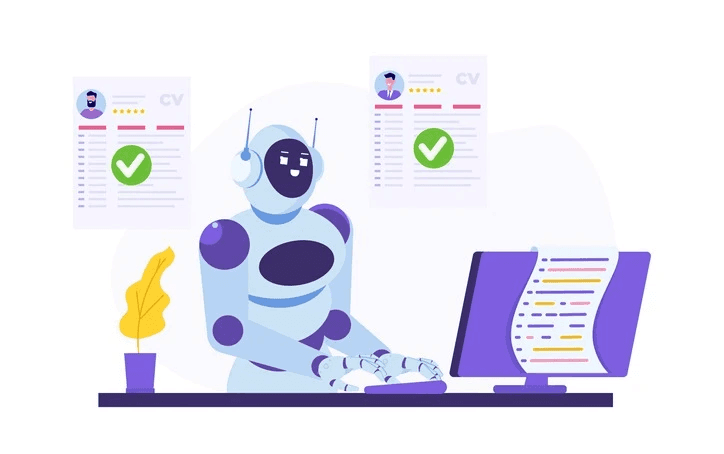
By 2026, many companies, including Netflix, use AI throughout the hiring funnel: resume triage, structured interview guides, note summarization, and candidate skill tagging. This can create anxiety for candidates who fear being filtered out by opaque models they can’t understand or appeal.
Fonzi AI was built specifically to use AI for clarity and fairness, not black-box filtering.
How Fonzi AI’s platform operates:
Automated fraud detection and duplicate checks ensure the candidate pool is legitimate
Skills extraction surfaces your strengths without requiring keyword-stuffed resumes
Bias-audited scoring models are regularly evaluated to reduce demographic disparities
Human recruiters validate every match, AI surfaces strong fits, and humans make decisions
Companies commit to salary ranges upfront before you invest interview time
Fonzi AI does not do fully automated rejections. AI removes noise and surfaces strong matches so human recruiters can spend more time on meaningful conversations. This protects candidates while accelerating timelines for companies serious about hiring.
Fonzi AI’s Match Day vs. Traditional Netflix Interview Timelines
A typical Netflix process runs 3-6 weeks from recruiter screen to offer. Fonzi AI’s Match Day compresses this into a 48-hour hiring event where pre-vetted candidates meet top AI companies, all committed to making decisions quickly.
Match Day works like this: candidates submit profiles, complete a focused vetting process, and get introduced to a curated set of AI startups and high-growth tech companies building products at Netflix-like scale. Everyone commits to tight timelines and transparent salary expectations.
Timeline Comparison: Netflix vs. Fonzi AI Match Day (Table)
Dimension | Netflix (2026 Typical) | Fonzi AI Match Day |
Duration from first contact to offer | 23-30 days (mid-level); 6-10 weeks (staff+) | 24-72 hours |
Number of companies interviewing you | 1 | 3-8 curated matches |
Salary transparency | Discussed after initial screens | Committed upfront before interviews |
Bias controls | Structured rubrics, AI note-taking | Bias-audited evaluation models, human validation |
Decision speed | Committee debrief can take 1-2 weeks | Companies commit to 48-hour decisions |
Candidate experience | High-touch but lengthy | Compressed, coordinated scheduling |
Many Fonzi AI candidates receive multiple offers, including from FAANG-level companies and emerging AI unicorns, within days. These offers provide leverage for Netflix negotiations if you’re still pursuing that route, or they reveal alternative paths you hadn’t considered.
Preparing for Behavioral Rounds: High-Signal Stories for Netflix
Nearly half of Netflix interview time is behavioral, especially for senior and staff-level engineers. Prepare a Story Bank of 8-12 concrete examples before you enter the loop.
Use a structured framework like SOAR (Situation, Obstacle, Action, Result) or STAR, but tailor each story explicitly to a Netflix value. Generic answers about “working hard” or “collaborating with the team” won’t land.
High-priority behavioral themes to prepare:
Disagreement with a manager: how you raised concerns and what happened
Making decisions without full data: how you operated under uncertainty
Handling failure transparently: taking accountability at work and owning mistakes without blame
Giving hard feedback: when you told a colleague something difficult
Acting like an owner beyond your job description and going above scope
Do and Don’t guidelines
Do | Don’t |
Quantify your impact with metrics, revenue, or reliability improvements | Hide failures or minimize your role in problems |
Own outcomes completely: “I decided” not “we decided” | Blame other tech companies or previous managers |
Show how you evolved your thinking based on user feedback | Present yourself as always right from the start |
Demonstrate innovative thinking and intellectual curiosity | Give vague answers without specific details |
Explain how you’d approach similar situations differently now | Dodge questions about a time you made a mistake |
Mock interviews with peers who’ve been through Netflix loops are invaluable. An interview coach familiar with Netflix interview questions can help you refine sample answers.
Preparing for Technical Rounds: What to Focus on in 2026
Most experienced AI, ML, and infra engineers already know the basics, LeetCode patterns, system design frameworks, and online courses. The difference-maker is tailoring prep to Netflix’s real-world technical questions.
Preparation pillars:
Core data structures and algorithms: Focus on streaming and array problems, heap operations, and graph traversals relevant to content delivery
Distributed systems concepts: Sharding, replication, CAP trade-offs, eventual consistency, and Netflix’s specific tech stack (Cassandra, Kafka, Flink)
Large-scale ML/LLM architectures: Recommendation pipelines, experimentation frameworks, and model serving infrastructure
Technical skills for your specialty: Whether that’s infra reliability, personalization ML, or LLM integration
Build or revisit one end-to-end project that mirrors a Netflix-like system. A toy recommendation service, experimentation framework, or content-feed ranking system gives you concrete material to discuss design and operations in detail.
Simulate full 60-minute design interviews with peers or mentors. Record yourself and evaluate:
Clarity of communication
Pacing and time management
Depth of trade-off analysis
How well you incorporated user research and user behavior considerations
Using Fonzi AI to Find Netflix-Caliber Roles Without the Chaos
Consider a typical Fonzi AI candidate: a mid-career ML engineer or infra specialist with 4-10 years of experience. They’re frustrated by low-signal recruiter spam and generic coding screens that don’t reflect their technical depth.
How Fonzi AI’s intake works:
Submit your profile with GitHub and LinkedIn links
Complete a focused vetting process evaluating technical skills and experience
Get introduced to a curated set of AI startups and growth companies building Netflix-scale systems
Participate in Match Day with coordinated interview scheduling
Key features aligned with what senior engineers care about:
Salary transparency before interviews, no more salary negotiations over email
Bias-audited evaluations are reviewed regularly
Concierge recruiter support handling logistics
Coordinated scheduling minimizes context-switching across different teams
You can pursue Netflix interviews and Fonzi AI Match Day in parallel. Use Match Day to de-risk your search, compare the company’s culture across options, and secure strong alternatives or leverage for negotiations.
Conclusion
Succeeding in a Netflix interview in 2026 still means bringing your full game: strong technical skills, real alignment with the culture memo, and honest, thoughtful stories about what you’ve built and what didn’t work. There’s no way around it. Netflix expects depth on both the technical side and the behavioral side, and candidates who try to shortcut either usually get filtered out.
At the same time, Netflix is just one path in a much bigger AI hiring landscape. When used well, AI in hiring should make things fairer and more human, not reduce people to auto-rejects, and that’s the philosophy behind Fonzi AI. Through bias-audited matching and structured Match Day events, Fonzi connects senior engineers with high-impact teams, including AI startups led by ex-Netflix talent, with salary transparency and fast timelines. Whether Netflix is your destination or just one option among many, you deserve a process that respects your time, your skills, and the impact you want to make next.
FAQ
How long does the Netflix interview process typically take from recruiter screen to offer in 2026?
What are the 4 main stages of the Netflix software engineer interview process?
Why does Netflix place so much emphasis on the “Culture Memo” during the behavioral rounds?
Can I choose between a live coding session and a take-home assignment at Netflix?
What is the “Keeper Test,” and how should it influence my interview answers?


