How to Take Accountability at Work: What It Means & Why It Matters
By
Samara Garcia
•
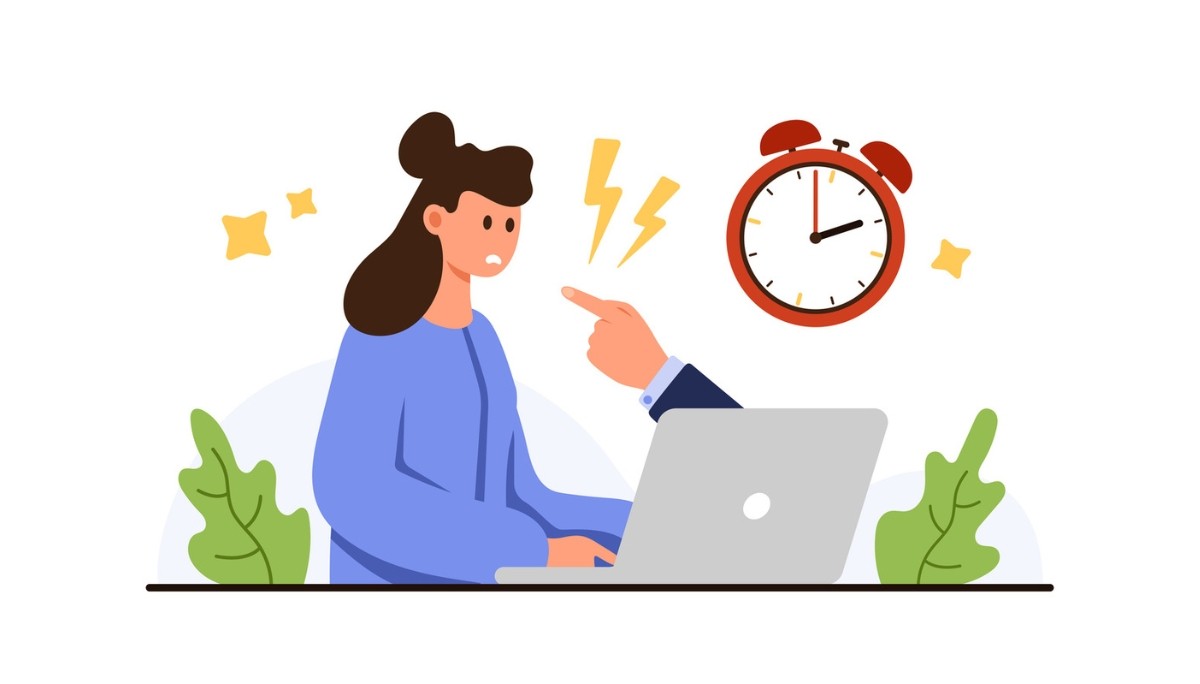
In late 2023, an engineer caused a production outage and immediately owned it, led the fix, and documented what went wrong. She was promoted soon after. Not because the outage didn’t matter, but because her response did.
In fast-moving AI and infra teams, accountability is a rare and powerful signal. AI can scan resumes and code, but it can’t predict who will step up when systems break. This article explores what accountability at work really means, and why it matters more than ever.
Key Takeaways
Taking accountability at work means owning your decisions, outcomes, and failures, not just completing tasks. This directly affects your hiring prospects, promotions, and the trust you build on engineering teams.
Modern hiring increasingly uses AI to triage and assess candidates, but at Fonzi AI, it’s done transparently with bias-audited systems and human recruiters always in the loop.
Owning past mistakes in interviews, including failed model deployments, production bugs, and research dead-ends, is a strong positive signal to hiring managers, not a liability.
Fonzi’s Match Day is a structured, high-signal 48-hour hiring event where accountable, prepared candidates can move from first conversation to offer quickly.
Building a personal accountability system (weekly retros, documented decisions, clear postmortems) gives you concrete evidence for promotions, reviews, and future interviews.
What It Really Means to Take Accountability at Work
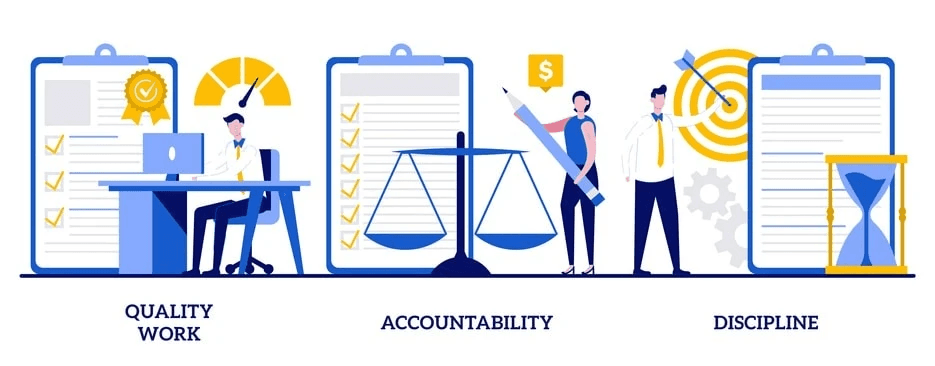
The word “accountability” gets thrown around a lot in corporate settings, often interchangeably with vague notions of “ownership” or generic “responsibility.” But for engineers and researchers, accountability involves recognizing something more specific: you’re on the hook for what happens because of your choices, and you’re the one who will drive the response.
Accountability in technical roles breaks down into three distinct areas:
Owning decisions: The architecture you chose, the model training approach you advocated for, the migration timeline you estimated
Owning outcomes: The latency regression that resulted, the failed experiment, and the missed SLO
Owning communication: The escalation you should have sent earlier, the postmortem you need to write, the cross-team update you owe
Here’s what accountability looks like in practice across common scenarios.
When a model deployment tanks conversion, accountability sounds like owning the signoff, leading the rollback, and fixing the test gaps. Avoiding accountability sounds like blaming the data team.
When a service misses its SLO, accountability means admitting you deprioritized alerting and proposing a concrete fix. Avoiding it means pointing to staffing or product pressure.
When a project runs far past its estimate, accountability is acknowledging a bad scoping call and resetting expectations with a clear plan. Avoiding it is blaming poor docs.
When results fail to reproduce, accountability means publishing corrections and full configs. Avoiding it means blaming someone else’s setup.
True accountability is not self-blame. It is owning your role and taking action to improve outcomes. That is why top AI teams interview for it directly. They are not looking for perfection. They are looking for people who turn failures into progress.
Accountability vs Responsibility vs Blame: Getting the Language Right
Many technical candidates blur responsibility, accountability, and blame, especially under pressure. Getting this right matters because the way you talk about mistakes signals maturity and trust.
Responsibility is what you’re assigned. Accountability is owning the outcome and driving the fix. Blame is about deflecting fault instead of improving the system. Strong teams are blameless but still clear about who owns follow-ups.
Interviewers listen closely to your language. Saying “we had issues” sounds evasive. Saying “I made the call, here’s what I learned, and what I changed” shows real accountability and earns trust.
Responsibility vs Accountability vs Blame in Engineering Teams
The following table clarifies how these three concepts show up differently in real engineering work:
Concept | What It Looks Like at Work | Example in an AI/ML or Infra Team |
Responsibility | Assigned duties and ongoing obligations | “I’m on-call this week for the inference service,” or “I review PRs for the data pipeline team.” |
Accountability | Owning outcomes and driving improvements after issues | “I led the postmortem after our 2024 Q3 latency incident in the recommendation API and implemented the circuit breaker that prevented recurrence.” |
Blame | Finger-pointing, defensiveness, and finding someone to punish | “The 2026 model update that degraded fairness metrics was really DevOps’ fault for not catching it in staging.” |
To shift your language from blame to accountability:
Replace “they should have caught this” with “I should have verified this before shipping.”
Replace “the requirements were unclear” with “I didn’t clarify requirements early enough, here’s how I’ll do it differently.”
Replace passive voice (“mistakes were made”) with active voice (“I made an error in my estimation”).
Why Taking Accountability Accelerates Your Career in Tech
Engineers who practice accountability advance faster. That’s not motivational talk; it’s how promotions, trust, and leadership actually work.
When you own mistakes and drive fixes, people want you on critical launches and incident calls. Tech leads often emerge from those who handled failures well, not those who avoided them. Strong accountability cultures also correlate with better outcomes, and individuals who embody them benefit most.
In performance reviews, accountability looks like owning missed estimates, flagging risks early, closing feedback loops, and being honest about uncertainty. In AI and research roles, it shows up in clear experiment docs, reporting what didn’t work, and stating limits openly.
How to Take Accountability in Day-to-Day Work
This section isn’t about abstract principles; it’s a practical guide for handling real situations you’ll encounter as an engineer or researcher.
A simple four-step pattern works for most accountability situations:
Recognize your role: Identify specifically what you did or didn’t do that contributed to the outcome
Communicate clearly: State what happened, your role in it, and what you’re doing about it
Repair the impact: Take concrete action to fix the immediate problem
Implement prevention: Put systems in place so it doesn’t happen again
Written accountability matters too. Your postmortems, Slack updates, and JIRA tickets should:
Name your role clearly without self-attack (“I chose X approach, which led to Y problem”)
Focus on what’s next, not just what went wrong
Avoid the passive voice that obscures responsibility
When cross-functional dependencies are involved, product, data science, infra, and accountability get more complex. If you shipped a feature that failed because the requirements were unclear, you might say: “I should have pushed harder to clarify the edge cases before implementation. Here’s how I’m adjusting my intake process for future projects.” You own your part without accepting full accountability for others’ failures.
Scripts You Can Use to Take Accountability with Your Team
Having ready-to-use language makes it easier to accept responsibility in the moment rather than getting defensive. Here are scripts you can adapt for your own work:
After causing a bug: “I missed the impact of the concurrent writes when I implemented the caching layer. That’s on me. Here’s what I’m doing this week to fix it and add the test coverage we need.”
After unclear requirements caused problems: “I didn’t clarify expectations with the product upfront, that’s on me. Going forward, I’m requiring a signed-off spec document before starting implementation.”
After missing a deadline (to your manager): “I want to own that I missed the Friday deadline. I underestimated the API integration work. I’ve reprioritized and will have it completed by Tuesday. I’ll flag any blockers immediately if that changes.”
After a production incident (to your team): “I want to acknowledge that my config change caused today’s outage. I’ve rolled it back, and I’m drafting a postmortem that includes the safeguards we need to add to prevent this class of error.”
After receiving feedback, you initially resisted: “I pushed back on your feedback about the architecture last week, but after sitting with it, I think you were right. I’m revising the design to address your concerns.”
These scripts work in Slack, Zoom, or async docs. The key is being specific, taking personal responsibility, and moving forward with a concrete plan.
Taking Accountability in Interviews: Turning Mistakes into Strong Signals
Hiring managers expect mistakes. What separates strong candidates isn’t a perfect record, but how clearly you own and explain what went wrong.
Interviewers listen for accountability language that shows you understand your role, learned from the failure, and changed your behavior. That kind of self-reflection signals maturity no algorithm can measure.
A strong accountability story is simple:
Context and your role
The decision you made
What went wrong
What you learned
What do you do differently now
AI and ML candidates should be ready with examples like an overfit model, a broken data pipeline, or a mis-scoped LLM project, all framed around ownership and concrete improvement.
How AI Is Changing Hiring, and Where Accountability Fits In
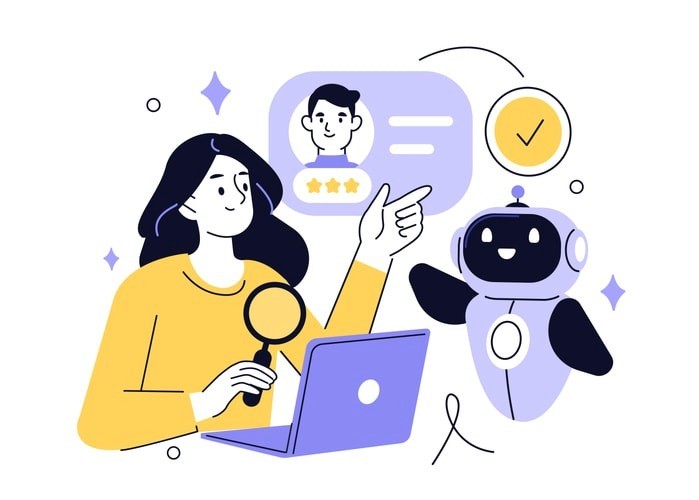
Hiring has changed fast. AI now touches nearly every step, from resume screening to scheduling and assessments.
Common uses include resume parsing, skill matching, fraud detection, interview scheduling, and scoring technical exercises. These tools improve speed, but they also add risk. Decisions can feel opaque, and biased data can quietly shape outcomes.
Accountability means companies are transparent about how AI is used, audit for bias, and keep humans in the loop. “The algorithm decided” isn’t an excuse when real careers are at stake.
Fonzi AI’s Approach: Bias-Audited, Human-Centered Hiring
Fonzi AI is built on the principle that AI should create clarity, not confusion. We use technology to make hiring faster and fairer, not to replace human judgment.
Our specific practices reflect this commitment:
Bias-audited evaluation flows: We actively test our matching and assessment systems for bias across demographic groups
Fraud detection that protects both sides: We verify candidates are who they say they are, while also protecting candidates from scam job postings
Structured profiles highlighting real skills: We focus on demonstrated experience and projects, not pedigree or brand-name employers
Human support at every step: Every candidate has access to a human recruiter or concierge to navigate Match Day, decode feedback, and prepare for interviews
AI at Fonzi surfaces high-signal matches and automates logistics so that humans, founders, hiring managers, and candidates can spend time on real conversations. We don’t auto-reject based solely on algorithmic scores. Instead, AI augments human review and helps guarantee consistent, accountable evaluation.
Inside Fonzi Match Day: A High-Accountability Hiring Event
Match Day is Fonzi’s 48-hour, high-signal hiring event where pre-vetted AI and software engineers meet vetted startups and growth companies. It replaces months-long interview loops with focused interviews and fast decisions.
The flow is simple: you apply and get vetted, build a high-signal profile, receive salary-transparent matches, interview during Match Day, and get decisions within 48 hours.
Accountability is built in. Companies commit to fast, clear responses. Candidates commit to being prepared, responsive, and honest. That mutual commitment is what makes the process work.
What Fonzi Expects from Candidates (and How We Help You Deliver)
We look for honest profiles, readiness to discuss real projects (including failures), responsive communication, and follow-through. In return, we help with resume and profile optimization and interview prep focused on clear, accountable storytelling.
Match Day works best for candidates ready to own their story, move quickly, and skip opaque, slow hiring processes.
Practical Ways to Show Accountability in Your Next Role
Simple habits make accountability visible and build trust fast:
Write clear postmortems focused on learning and prevention
Flag risks early instead of waiting for crises
Document key decisions and assumptions
Act on feedback and follow up with changes
Estimate honestly with buffers and clear uncertainty
Raise and document ethical concerns, especially in AI work
For remote teams, over-communicate status, be explicit about blockers, and follow through on async commitments.
Building a Personal Accountability System
Structure makes consistency easier:
Weekly retro to review wins, misses, and changes
Monthly lessons-learned note for mistakes and near-misses
Quarterly check-in on commitments vs delivery
Track this in a simple doc or notes system. Over time, it becomes concrete proof of growth for promotions and interviews.
Summary
Accountability means owning your decisions, outcomes, and fixes when things go wrong. In fast-moving AI and infra teams, it’s a key signal for trust, promotions, and leadership. Hiring managers look for candidates who can clearly explain failures, show what they learned, and demonstrate changed behavior.
The article explains how accountability differs from responsibility and blame, how it shows up in daily work and interviews, and why it matters more as AI automates hiring. Fonzi applies these principles through transparent, human-led hiring and fast, high-signal Match Day events.
FAQ
What does it mean to take accountability at work?
How do I take accountability for mistakes without making things worse?
What should I say when taking accountability to my boss or team?
Why is taking accountability important for career growth?
What’s the difference between taking accountability and making excuses?