Virtual Meeting Etiquette: 2026 Tips That Actually Matter
By
Liz Fujiwara
•
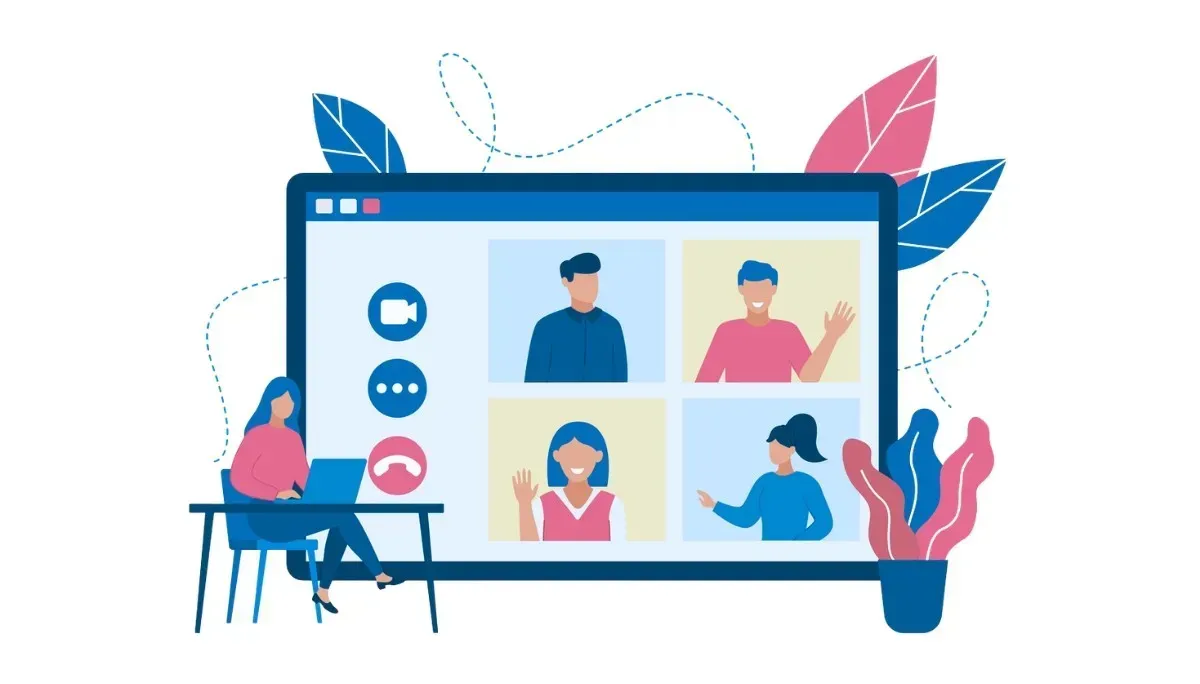
By early 2026, remote-first AI teams and fully distributed research organizations made virtual meetings the default for everything from first-round screens to final panel loops. AI engineers, ML researchers, infra engineers, and LLM specialists now experience most critical career moments, such as deep dives, design reviews, and research pitches, entirely over Zoom, Meet, or Teams.
Meeting etiquette is not about rigid rules but about signaling reliability, clarity, and collaboration, which hiring managers actively evaluate, especially as 58 percent of companies maintain permanent hybrid work structures.
This article combines classic virtual meeting best practices with 2026-specific realities, including AI-assisted interviews, recorded loops, what to bring to an interview, and asynchronous follow-ups, providing actionable guidance to help candidates stand out.
Key Takeaways
Virtual meeting etiquette in 2026 includes not only camera and microphone basics but also how you interact with AI tools, recordings, and technical assessments during hiring.
Fonzi uses AI to reduce noise and bias, focusing on skill-based matching rather than opaque scoring or replacing human judgment, and Match Day is a high-signal experience where good virtual etiquette improves outcomes for AI engineers, infra specialists, and LLM researchers.
Mastering remote meeting etiquette directly affects how clearly your capabilities are perceived by hiring managers during virtual interviews, live coding sessions, and research discussions.
Virtual Meeting Basics in 2026: The Foundations Still Matter
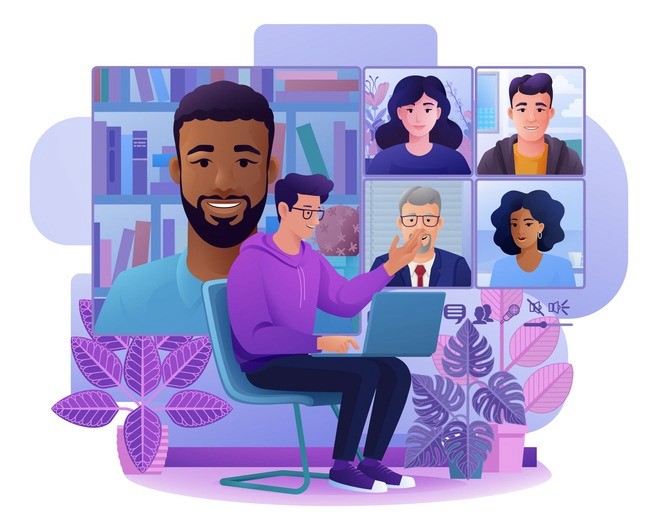
Even in highly technical conversations about transformer architectures or inference optimization, fundamentals like audio, video, and timing still define first impressions, and getting these basics wrong can undermine even the strongest technical credentials.
Test your setup early. Check your audio, video, and internet connection at least 10–15 minutes before interviews, especially for high-stakes sessions like onsite-equivalent loops. Aim for at least 1.5 Mbps upload speed for 720p video, and consider using ethernet over Wi-Fi to keep latency under 30 milliseconds, which preserves natural conversation flow and prevents awkward delays.
Use a neutral, uncluttered background. A simple virtual background works fine if your physical space is distracting, but avoid anything too busy, as research suggests complex backgrounds can reduce perceived competence by up to 15 percent. Position your camera at eye level to maintain natural eye contact.
Dress appropriately for the company culture. Hoodies are acceptable for startups, while collared shirts may be better for formal enterprises. Consistency across rounds is key, as changing attire between interviews sends mixed signals.
Be punctual. If you're wondering how early to show up to an interview, arrive three to five minutes early to handle last-minute updates, links, or platform changes, especially when multiple interviewers or coding platforms like CoderPad, HackerRank, or custom tools are involved. Punctuality demonstrates respect and sets a professional tone.
Before the Call: Preparing Like a 2026 AI Professional
Preparation signals ownership, clarity, and depth of thought, which AI teams evaluate closely, and good meeting prep separates candidates ready to contribute from those who are not.
Review the meeting invite carefully. Look at participants’ names and roles, scheduled length, format (coding, system design, research deep dive, culture interview), and expected tools (whiteboard, IDE, slide deck). Understanding the meeting agenda ahead of time lets you tailor your approach.
Research the company’s AI stack. Look into their cloud provider, frameworks like PyTorch or JAX, orchestration tools, and vector databases. Scan recent papers, blog posts, or product launches relevant to the role. This context helps you ask better questions and demonstrate genuine interest.
Prepare a concise intro. Have a 60–90 second “who I am” pitch tailored for AI roles, covering recent projects, model types you’ve worked with, infrastructure scale, and specific contributions. This helps you start conversations productive from the first minute.
Create a structured notes doc. List key projects to mention, 2–3 questions for the interviewer, and reminders of metrics or impact numbers to reference. Having these ready prevents you from blanking during high-pressure moments and helps you stay focused throughout the conversation.
Using AI Tools and Recordings Responsibly in Interviews
Many virtual interviews in 2026 are recorded, transcribed, and sometimes analyzed by AI tools. Understanding how these tools work helps you navigate them confidently.
Responsible AI use focuses on logistics such as scheduling, note-taking, and summarizing, rather than opaque scoring or facial analysis. When recordings are mentioned, it is good etiquette to ask if they will be used for feedback and calibration, and confirm consent is documented, as non-consensual recording in EU jurisdictions can violate GDPR Article 6.
How Companies Use AI in Virtual Hiring Meetings (And How Fonzi Differs)
Here’s a comparison of common AI applications in 2026 hiring versus Fonzi’s approach:
Dimension | Common AI Use in 2026 Hiring | How Fonzi Approaches It |
Scheduling and Logistics | Auto-schedules via calendar bots across time zones | Coordinates Match Day sessions with clear timing and expectations |
Meeting Summaries and Notes | AI generates transcripts and action items post-call | Summarizes interactions for recruiters while keeping candidates informed |
Candidate Matching and Role Fit | Keyword scanning of resumes with limited context | Uses structured signals from profiles and interviews to match specific AI/ML roles |
Bias and Fairness Controls | Varies widely; some use opaque scoring systems | Strips out irrelevant signals (e.g., school prestige) and focuses on skills and outcomes |
Candidate Visibility to Hiring Teams | Often unclear what info reaches decision-makers | Provides transparency on what companies see and how matches are made |
During the Meeting: Signal Clarity, Focus, and Collaboration
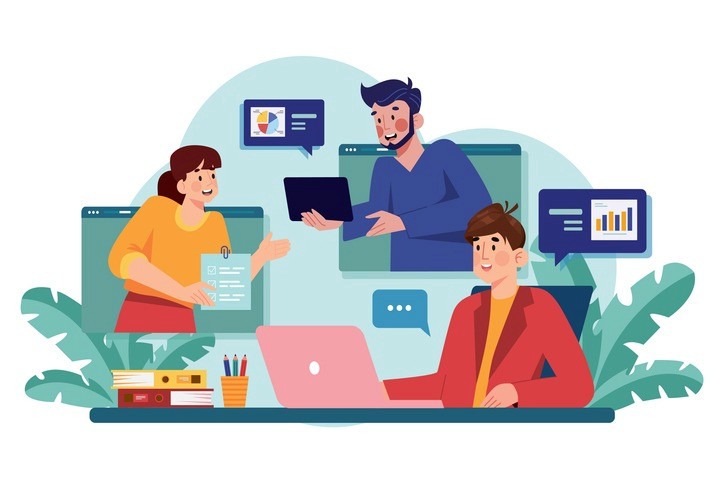
Interviewers at top AI organizations evaluate not just your answers, but also how you communicate, handle ambiguity, and interact with other attendees in a digital meeting environment.
Manage your mute status. Keep your microphone muted when not speaking to minimize background noise, but unmute quickly when contributing to discussion, as awkward delays can signal disengagement.
Avoid talking over people. Virtual latency makes this trickier than in-person meetings, so wait a beat after someone finishes speaking, watch for visual cues, and use hand-raising features or chat for larger groups. Phrases like “May I add to that?” create smooth transitions without interrupting.
Practice active listening. Nod, give concise acknowledgments such as “that makes sense,” and summarize questions back to the interviewer, which is especially important in complex system-design or research deep-dive sessions where misunderstanding the question can derail your response.
Virtual Etiquette for Coding, System Design, and Research Interviews
Technical interviews over video demand both strong problem-solving and clear “thinking out loud” etiquette, as how you communicate your approach matters as much as getting the right answer.
Confirm the coding environment in advance. Determine whether you will use a shared editor, a LeetCode-style interface, or your local IDE with screen sharing, and test any plugins or extensions you plan to use, as spending minutes troubleshooting software can derail momentum.
Narrate your thought process in a structured way:
Restate the problem to confirm understanding
Clarify constraints and edge cases
Outline your approach before coding
Implement while explaining key decisions
Discuss time/space complexity or trade-offs at the end
This structure helps interviewers follow your reasoning and allows them to provide hints if you are heading off track.
For system design, draw clear diagrams. Use virtual whiteboards or screen-shared diagrams, labeling key components such as API gateways, model-serving layers, feature stores, and monitoring systems, which prevents misunderstanding and keeps everyone aligned.
For research-focused roles, share concrete examples. Mention specific experiments, benchmarks, and failures, including dates or version numbers, for example, “In late 2025 we switched from 7B to 13B models with LoRA adapters and saw a 12 percent improvement in downstream task accuracy,” as specificity builds credibility.
Fonzi’s Match Day: High-Signal Virtual Meetings for AI Talent
Match Day is a focused period where pre-vetted AI and ML candidates meet curated companies actively hiring for specific roles. Think of it as speed dating for your next job, but with engineering leaders, founders, and hiring managers who understand what you do.
During Match Day, candidates typically have a series of scheduled online meetings, including intros, technical screens, and deeper dives. Fonzi uses AI to prioritize matches based on skills such as distributed training, RLHF, multi-tenant inference infrastructure, evaluation harnesses, and candidate preferences like startups versus large organizations or research versus product focus.
Good virtual meeting etiquette on Match Day can compress what is usually a multi-month search into a shorter, higher-signal process. Clear communication, prepared questions, and a professional setup all contribute to making strong impressions quickly.
Fonzi supports candidates before and after Match Day with guidance on what to expect in each meeting, typical interview formats for AI roles, and how to follow up effectively, reducing the guesswork that makes traditional job searches exhausting.
Human-Centered Hiring: How Fonzi Uses AI Without Losing the Human
There is a common fear that AI will replace recruiters entirely. Responsible AI in hiring instead handles repetitive work such as scheduling across time zones, aggregating role requirements, and preparing structured briefs, so humans can focus on real conversations.
Specifically, Fonzi uses AI to:
Aggregate and structure role requirements from companies
Rank potential matches based on technical skills and preferences
Prepare structured briefs for recruiters and hiring managers
Summarize candidate-company interactions for clarity
Hiring decisions remain human. Engineering leaders, founders, and recruiters make final calls based on interviews, take-homes, and portfolio reviews. The AI augments their work without replacing judgment.
Practical Interview Prep: Showcasing Your AI Skills Over Video
Here’s a checklist-style guide for candidates getting ready for upcoming remote calls and interviews.
Build or polish a concise portfolio:
GitHub repos with clean documentation
Small demos or prototypes
Published papers or blog posts
Internal write-ups you can anonymize
Clear summaries of your most impactful projects
Prepare two to three canonical STAR stories tailored to AI or ML roles, covering examples such as model performance improvements, inference cost reductions, or infrastructure reliability gains.
Practice explaining complex topics live, such as retrieval-augmented generation trade-offs, distributed training choices, or evaluation metrics, by presenting them to a non-expert friend or mentor via video to maintain focus and engagement.
Prepare thoughtful, role-specific questions that show depth:
How does the team handle data pipeline versioning?
What’s the experimentation culture like and how many experiments run per week?
What does the productionization process look like from research to deployment?
How does the company approach model governance and responsible AI?
These questions and interview responses signal that you’re thinking beyond just landing the job; you’re evaluating whether this is the right fit for your next call in your career.
Conclusion
Strong virtual meeting etiquette in 2026 combines classic professionalism, including good audio, clear video, and punctuality, with modern awareness of AI tools, recordings, and remote-first interviewing. For AI engineers, ML researchers, infra engineers, and LLM specialists, mastering these skills directly affects how clearly your capabilities are perceived by hiring teams.
Ready to put these skills to work? Apply to join Fonzi’s talent network today to get matched with companies actively hiring for AI and ML roles, receive guidance on interview prep, and access upcoming Match Days designed specifically for technical talent like you.
AI in hiring should enhance human connection, not replace it, and Fonzi is built around that principle, just like your next opportunity.
FAQ
What are the most important virtual meeting etiquette rules to follow?
Should I keep my camera on or off during virtual meetings?
What’s the proper etiquette for virtual job interviews vs. team meetings?
How do I avoid talking over people in a virtual meeting?
How do I handle background noise or distractions during a virtual meeting?