How Early Should You Be for an Interview?
By
Ethan Fahey
•
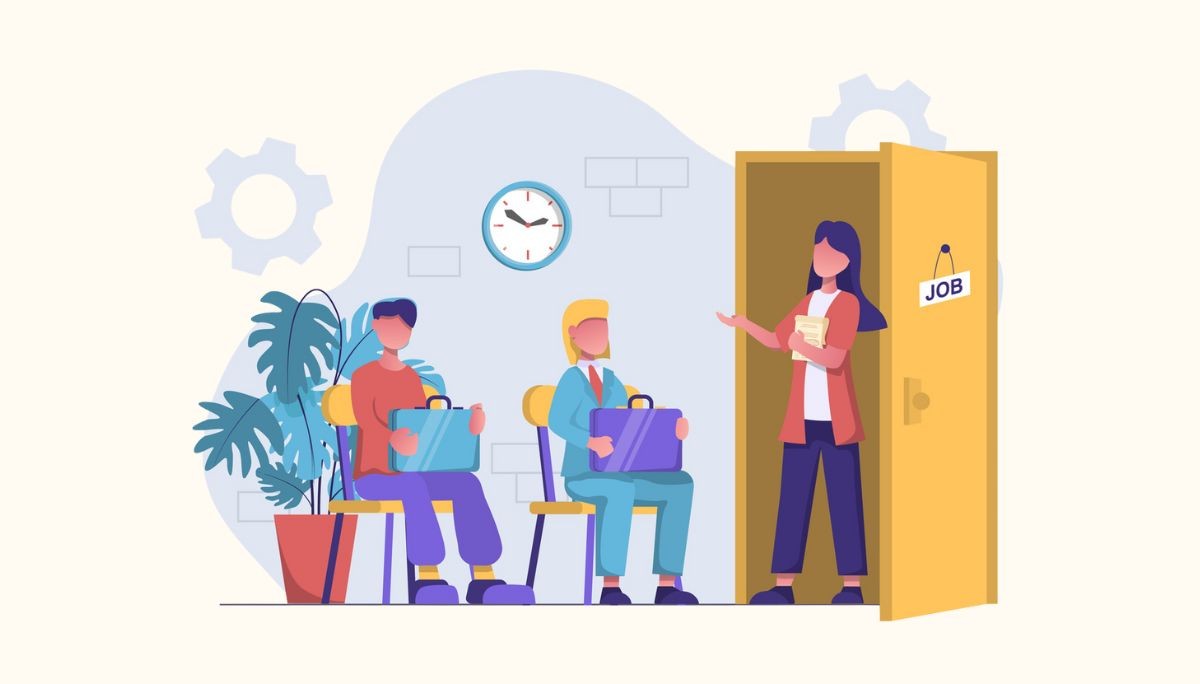
Picture this: you’re an AI engineer juggling three onsite interviews and two virtual loops in the same week. You’ve nailed your system design walkthroughs, practiced your STAR stories, and refined your “tell me about yourself.” Then you pull into the parking garage 35 minutes before a 10:00 AM interview and ask yourself if getting there this early makes you look prepared or just a little awkward?
It turns out the timing does matter. For most interviews, the sweet spot is checking in about 5–10 minutes early, even if you arrive nearby much sooner. In today’s hiring market for AI, ML, infrastructure, and LLM roles, details like punctuality, readiness, and interview logistics are often evaluated as closely as your technical answers. That first impression can form before you ever open your laptop or step into the room. Platforms like Fonzi AI help take the guesswork out of this by coordinating Match Day interviews and supporting candidates through timing, prep, and logistics across multiple high-stakes conversations. In this guide, we’ll walk through when to arrive for in-person and virtual interviews, what to do if you’re too early, and how Fonzi AI keeps modern, AI-assisted hiring fast, transparent, and human-centered.
Key Takeaways
The sweet spot for in-person interviews is to arrive at the building 20–30 minutes early, but check in at reception only 5–10 minutes before your scheduled interview time.
For virtual interviews, log in 5–10 minutes early after testing your audio, video, and screen-share tools at least 15–20 minutes beforehand.
Arriving excessively early at the front desk (20+ minutes) creates pressure for the interviewer and can hurt your first impression more than calmly waiting nearby.
AI and ML engineers should treat timing like latency in distributed systems: build buffers for traffic, security, and technical issues, but only “send the request” (check in) when it’s optimal.
Fonzi AI’s Match Day structure helps candidates optimize timing across multiple interviews in a tight 48-hour window, with concierge support handling logistics.
How Early Should You Be for an Interview? (In-Person Sweet Spots)
Here’s the clear rule of thumb: aim to be physically at or near the location 20–30 minutes before your scheduled interview time, but approach reception and check in only 5–10 minutes before the interview begins, unless told otherwise.
This distinction between “arrival in the area” and “arrival at the desk” is critical. You can use a nearby coffee shop, your car, or lobby seating as a buffer space. This gives you enough time to decompress, review your notes, and mentally prepare without creating awkwardness for the hiring team.

Typical expectations vary between startups and large enterprises:
Small AI startups may be more flexible with timing, often running in co-working spaces with casual reception areas
Big tech campuses run on tight schedules with back-to-back interview blocks, and showing up too early can throw off multiple calendars
Corporate offices often require security screening, so factor in 10–15 minutes just for building access
Regional and cultural norms also play a role. In North America and Northern Europe, punctuality is highly valued; arriving within that 5–10 minute window signals professionalism. In some East Asian business cultures, arriving exactly on time (or just slightly early) is expected. The key principle holds across contexts: respect the interviewer’s time by not forcing them to accommodate your early arrival.
Fonzi AI’s interview invitations clearly specify check-in expectations. For example: “Please arrive 5–10 minutes early and bring a driver’s license or government ID for security.” This clarity eliminates guesswork and lets you focus on performance.
How Early to Log In for a Virtual or Video Interview
For virtual interviews via Zoom, Google Meet, or Teams, aim to be fully set up 15–20 minutes before the interview starts. Then actually join the meeting 5–10 minutes prior. This buffer lets you handle technical issues without panic.
Technical interviews add complexity. If you’re doing a LeetCode-style coding screen, test your screen-sharing capabilities and make sure your IDE is visible. For collaborative whiteboard tools like Excalidraw or Miro, confirm you can draw and type smoothly. For system design rounds, have a blank document or whiteboard ready to sketch architectures.
Common failure modes to avoid:
Last-minute Zoom updates that stall your login
VPN conflicts that block video or audio
Low battery forcing a mid-interview scramble
Noisy backgrounds (dogs, construction, roommates) that you didn’t plan around
Handle all of these before the 5–10 minute login window. Some companies lock their waiting room until the exact start time, so joining earlier won’t get you in sooner, but it ensures you’re ready the moment they open the door.
Fonzi AI provides candidates with a prep checklist before Match Day: time zone confirmation, calendar holds, test links, and equipment checks. These small details prevent timing issues from costing you an offer when you’re juggling multiple conversations across companies.
Using Your Extra 15 Minutes Strategically
The buffer is not dead time. It’s your chance to mentally switch contexts, especially if you’re moving from a coding round to a behavioral conversation or from one company to another.
Here’s how AI and ML engineers can use those 10–15 minutes before check-in:
For in-person interviews:
Take a short walk around the block to release nervous energy
Visit the men’s room or bathroom for a final mirror check
Scan the job description one more time to anchor your talking points
Rehearse your impact metrics: latency improvements, cost reductions, model performance gains
Review a past project you’re proud of so it’s fresh in your mind
For virtual interviews:
Check your lighting and camera framing with no backlit silhouettes
Close unnecessary browser tabs and applications
Silence your phone completely (not just vibrate)
Have water within reach but off-camera
Do a quick audio test with headphones
A brief visualization technique can help: mentally simulate how the conversation could go. Picture yourself delivering a strong intro, answering the first question with confidence, and handling a curveball with composure. Engineers often underestimate how much this mental prep improves actual performance under pressure.
Ideal Timing for Different Interview Scenarios
This quick reference guide covers timing guidelines across common interview formats. Screenshot it before your interview day for easy access.
Interview Type | Arrive in Area | Check-In / Join Time | What to Do Before | What to Avoid |
Onsite AI Engineer Interview at Big Tech Campus | 30 minutes early | 5–10 minutes before | Clear security, find the reception area, review system design notes | Checking in 20+ minutes early, rushing the security line |
Startup Founder Chat at Co-Working Space | 20 minutes early | 5–10 minutes before | Find the right floor, grab water, review the founder’s background | Wandering visibly around the open floor plan too early |
Remote Coding Screen | Setup ready 20 minutes before | Join 5–10 minutes early | Test screen-share, close Slack, have IDE ready | Last-minute software updates, untested audio |
Remote System Design Round | Setup ready 20 minutes before | Join 5–10 minutes early | Have drawing tools ready, review the company’s tech stack | Fumbling with whiteboard tools during the interview |
Match Day Multi-Company Slot via Fonzi AI | Per Fonzi’s calendar invite | 5–10 minutes before each session | Use Fonzi’s checklist, review each company’s focus area | Overlapping sessions, forgetting time zone differences |
Why Arriving Too Early Can Backfire
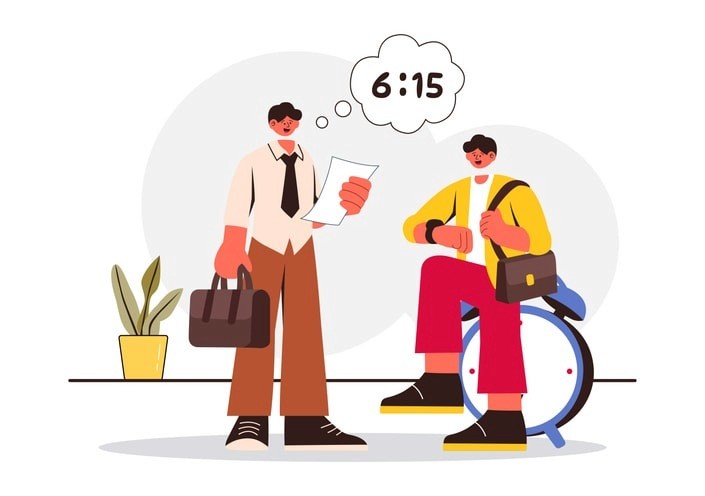
Arriving 20–30 minutes early at the reception area, not just in the neighborhood, creates social and scheduling friction for the hiring team. This is counterintuitive, since many candidates assume earlier is always better.
When an interviewer sees a candidate waiting in the lobby for an extended period, several problems emerge:
The hiring manager may feel pressured to rush their current meeting, code review, or standup
They might cut short the preparation time they’d planned to review your resume or prepare questions
The receptionist may feel obligated to make small talk or “entertain” you
You become a visible reminder of time pressure, which puts the interviewer on edge before they’ve even met you
Excessive earliness can also amplify your own anxiety. More time in the waiting room means more time to overthink your responses, misinterpret office dynamics, or obsess over body language cues from passing employees.
Example scenario: An AI engineer shows up 35 minutes early to a 10:00 AM panel interview. The interview location is a conference room currently hosting a model-review meeting. The hiring manager has to apologetically wrap up early, colleagues are confused about the schedule reshuffle, and the candidate’s first impression is subtly colored by the friction they caused, none of which was intentional.
Better approach: If you’re more than 15–20 minutes early, wait in your car, find a local coffee shop, or take a short walk. Enter the office or click the meeting link within the recommended 5–10 minute window. This signals judgment and respect for others’ time.
Planning Your Route (and Buffer) Like an Engineer
Think of route planning like capacity planning in distributed systems. You design for worst-case latency (traffic, parking, security, elevators) but optimize the “visible” arrival time when you actually present yourself to the interviewer.
For major metro areas with known congestion, such as San Francisco, New York, London, or Bangalore tech parks, plan to reach the building 20–30 minutes early. This buffer absorbs the unpredictable delays that public transportation, traffic, or parking can throw at you.
Specific tips for route planning:
Do a trial run the day before if the office is local; note parking garage entrances and building lobby layout
Estimate security queue times for corporate campuses, some require photo badges, sign-in, or escort to the floor
Check public transport schedules for the specific time you’ll be traveling, not just average frequency
Store recruiter contact info in your calendar invite so you can inform them quickly if delayed
Identify backup options like a nearby café where you can wait if you arrive super early
If you’re delayed despite your planning, notify the company at least 10–15 minutes before the scheduled time. This courtesy matters: it shows awareness of the interviewer’s schedule and professionalism under pressure.
With Fonzi AI, candidates often have back-to-back interviews across companies during Match Day. Our team helps sequence those sessions to avoid collisions and lateness, factoring in travel time between virtual and in-person conversations.
Fonzi AI: How We Use AI Responsibly in Hiring
Many engineers are skeptical of AI in hiring, and for good reason. Black-box screening tools have rejected qualified candidates based on noisy signals like resume formatting or keyword matching. But AI used correctly can increase clarity and reduce bias, not auto-reject people.
At Fonzi AI, we pre-vet engineers with structured, bias-audited evaluations. Our focus is on skills, experience, and outcomes, not school pedigree or arbitrary filters. Here’s what that means in practice:
Fraud detection: Our systems flag anomalies like fraudulent credentials or inconsistent work histories
Standardized scoring: We use consistent rubrics so every candidate is evaluated on the same criteria
Human decision-making: Recruiters and hiring managers always make final decisions, with AI support, not replacement
What this means for candidates:
Salary transparency upfront: Companies commit to salary ranges before Match Day, so you know what you’re walking into
Clear interview logistics: Times, formats, and expectations are communicated ahead of time
Feedback loops: Where possible, we provide consistent feedback so you can improve between conversations
This human-in-the-loop AI design lets recruiters spend their time on coaching and relationship-building rather than inbox triage. The result is a better candidate experience, less black-box rejection, and more clarity about where you stand.
Inside Fonzi Match Day: High-Signal Interviews, Tight Timelines
Match Day is a structured 48-hour hiring event where pre-vetted AI and ML engineers meet multiple high-growth startups and AI-first companies in rapid succession. It compresses the typical 4–6 week interview timeline into a focused sprint where companies are ready to hire and candidates are ready to decide.
Here’s what a candidate’s schedule might look like:
Morning, Day 1: 45-minute founder chat with an LLM infra startup about their scaling challenges
Afternoon, Day 1: System design round with a tooling company building developer productivity products
Morning, Day 2: Culture and values interview with a Series B AI company
Afternoon, Day 2: Offer review and negotiation support from Fonzi’s team
Companies commit to salary ranges in advance, so there’s no guessing about whether a role fits your expectations. You know exactly when conversations and potential offers will happen.
Fonzi’s concierge team coordinates calendar invites, time zones, and timing buffers. For candidates who are strong but time-constrained, Match Day is a high-leverage way to get in front of multiple serious employers without weeks of scattered calls and scheduling back-and-forth.
Timing, Preparation, and Signaling for AI/ML Candidates
Timing is just one part of the signal you send as an AI or ML engineer. How you prepare and use that buffer time also speaks volumes about your judgment and execution hygiene.
Before walking into reception or joining the call, have these ready:
A quick “about me” narrative tailored to the specific role (30–60 seconds)
2–3 STAR stories (Situation, Task, Action, Result) that showcase relevant wins
1–2 recent technical achievements with clear metrics (e.g., “reduced inference latency by 40%,” “cut model training costs by $50K/month”)
A list of 2–3 thoughtful interview questions to ask your interviewer
Top companies evaluate what you might call “execution hygiene”: punctuality, organization, and communication speed. If a schedule shift happens last-minute, handling it gracefully matters. For example, if a recruiter messages you 30 minutes before your interview to reschedule by an hour, responding quickly with “Confirmed, I’ll join at the new time” signals adaptability.
Fonzi AI candidates get coaching on how to structure these narratives and manage interview pacing. When you have multiple Match Day conversations, this preparation becomes even more critical; you’re context-switching rapidly, and having rehearsed, polished responses keeps you sharp.
Conclusion
Once you get the timing down, the rules are pretty simple. For in-person interviews, plan to be nearby about 20–30 minutes early, then check in at reception 5–10 minutes before your scheduled start. For virtual interviews, test your setup 15–20 minutes ahead of time and log in 5–10 minutes early. Showing up too early at the front desk can actually create friction, while a smart buffer shows good judgment and respect for the interviewer’s time, which are signals that matter a lot in competitive AI and ML hiring.
AI may be changing how companies hire, but when it’s used well, it actually makes the process more human. At Fonzi AI, that means clearer expectations, less noise, and faster, fairer decisions, with transparency around salary, timelines, and evaluation from day one. If you’re an AI engineer, ML researcher, infra engineer, or LLM specialist exploring your next move, Fonzi AI’s Match Day events connect you with high-signal interviews at companies ready to hire. Every interview detail, including timing, is a reflection of how you operate under constraints, so plan your buffer carefully and treat it with the same precision you’d bring to a production system.
FAQ
What is the ideal number of minutes to arrive before an interview starts?
What should I do if I arrive more than 20 minutes early for my scheduled interview?
Is there a difference between arrival time and check-in time at a large corporate office?
How early should I log in for a virtual or video interview?
Does arriving too early for an interview actually hurt my chances of getting the job?