Great Work-Life Balance Jobs: Top Career Paths for 2026 & Beyond
By
Ethan Fahey
•
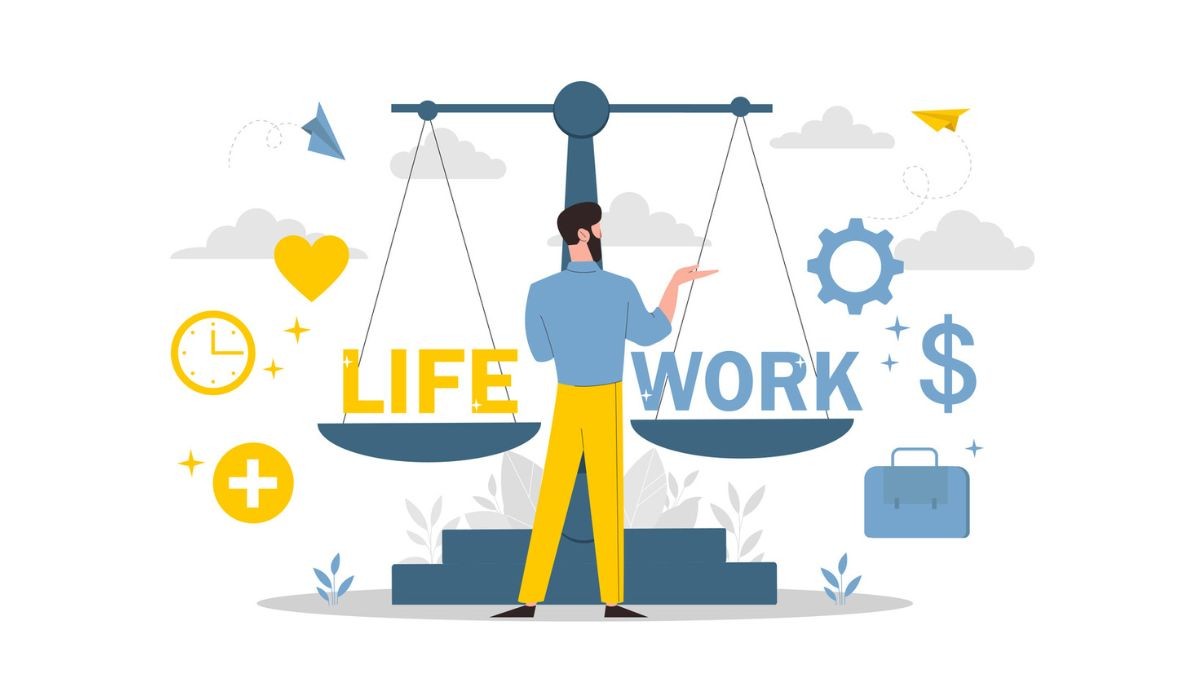
The best AI and ML engineers aren’t pulling all-nighters fixing production fires, they’re doing high-impact work during focused hours and then logging off to live their lives. If you’re a senior engineer worn down by endless interview loops, vague expectations, and salary ranges that only appear at the offer stage, the market is finally starting to shift in your favor.
Looking ahead to 2026, the companies that consistently win AI talent are the ones offering real work–life balance, transparent compensation, and hiring processes that respect candidates’ time. This guide breaks down which roles actually deliver on those promises and how to spot them early. It also shows how Fonzi AI helps experienced engineers cut through the noise by connecting them directly with vetted companies that move fast, share salary ranges upfront, and are serious about building sustainable, high-performing teams.
Key Takeaways
AI, ML, data, and infrastructure roles can offer excellent work-life balance when paired with the right company culture, remote flexibility, and realistic on-call expectations, as a job title alone doesn’t guarantee balance.
By 2026, many AI and software jobs will combine hybrid or remote setups, clear salary bands, and outcome-based performance instead of requiring constant online presence.
Fonzi AI is a curated talent marketplace built specifically for experienced engineers and AI specialists, helping them find high-signal roles with better balance and transparent compensation.
Fonzi uses bias-audited AI tools and human recruiters together, so candidates get fast, fair decisions instead of black-box automation or ghosting.
What “Good Work-Life Balance” Really Means in 2026
Work-life balance means more than clocking fewer hours. In 2026, it’s about autonomy over your own schedule, psychological safety to set boundaries, and a predictable workload that doesn’t require heroics to meet deadlines. The companies with the best employee retention rates understand this isn’t a perk, it’s a foundation for sustainable high performance.

Here’s what healthy work life balance typically looks like for technical roles heading into 2026:
Focused work hours: Roughly 35–45 hours per week of deep work, not 50+ hours of context-switching across meetings and Slack threads.
Protected personal time: Evenings and weekends are genuinely off-limits for most weeks, with on-call rotations reserved for truly critical infrastructure.
Reasonable paid time off: At least 15–25 days annually in markets like the US, UK, and EU, with a company culture that actually encourages using it.
Remote and hybrid flexibility: After the 2020–2022 shift, many AI and tech teams maintained 2–3 office days or fully remote arrangements through 2025–2026, treating flexible work schedules as standard rather than exceptional.
Watch for red flags that signal poor work-life balance: constant Slack pings after 9pm, undefined “crunch periods” every quarter, permanent on-call rotations for non-critical roles, and managers who describe the team as “a family” while expecting 60-hour weeks.
These criteria will guide how we evaluate the best jobs for work-life throughout this article.
Best Work-Life Balance Jobs for AI & Technical Talent in 2026
Not all tech jobs are created equal. This section focuses on concrete, high-demand roles for AI engineers, ML researchers, infra engineers, full-stack developers, and data specialists that can genuinely support a balanced lifestyle when structured well.
Machine Learning Engineer
ML engineers build and deploy models into production systems. When teams have clear project scopes and async-friendly workflows, this role avoids the constant fire-fighting that burns people out. Senior ML engineers in major tech hubs typically see $150K–$250K total compensation, with companies like NVIDIA and Cisco offering flexible hours and wellness programs that prioritize overall well-being.
LLM Engineer / Prompt Engineer
As large language models become central to product development, specialists who can fine-tune, evaluate, and deploy them are in high demand. This role often involves research-oriented work with fewer real-time emergencies, making it well-suited for engineers who want to set their own pace. Expect $140K–$220K at mid-to-senior levels.
Data Scientist
Data scientists who focus on data analysis and business insights, rather than 24/7 model monitoring, often enjoy predictable schedules. Financial services companies like Synchrony (ranked #2 in Fortune’s 2025 Best Companies) offer predictable 40-hour workweeks and unlimited PTO for these roles. A data analyst's average salary sits around $100K–$150K, climbing higher for senior scientists.
MLOps / ML Platform Engineer
Platform engineers who build the infrastructure for machine learning workflows have the leverage to design systems that reduce incident frequency for everyone. Good observability and automation mean fewer 3am pages. Senior MLOps roles pay $160K–$240K, with strong remote work options at companies prioritizing balanced career paths.
Backend Engineer (Python/Go)
Backend engineers working on AI-adjacent services, including APIs, data pipelines, and cloud infrastructure, can find a great work-life balance at companies with mature deployment practices. Clear release cycles and robust testing reduce the chaos that leads to long hours.
Security-focused Infrastructure Engineer
As AI systems scale, security and compliance become critical. Infra engineers focused on secure architectures often work on planned projects rather than reactive incidents, offering more control over work hours and personal commitments.
The key insight: Balance depends heavily on team culture and management style, not just job title. During interviews, vet on-call policies, incident frequency, and deployment cadence. Ask about the company’s technology infrastructure and how they handle production issues. The same “ML Engineer” role can mean 40 focused hours at one company and 60 chaotic hours at another.
Top Non-AI Careers Known for Great Work-Life Balance
While Fonzi focuses on elite engineering talent, it’s useful context to understand which non-tech roles historically offer the ideal work-life balance. These career options trade some compensation upside for predictable rhythms and standard daytime schedules.
Librarian: Manage collections, assist patrons, and maintain websites or digital resources. Most positions follow regular daytime hours with minimal weekend work. Median salary around $60K–$70K.
Dental Hygienist: Provide preventive dental care on fixed appointment schedules. Shifts are predictable, and most hygienists work the same schedule week to week. Median salary approximately $80K–$90K.
Occupational Therapist: Help patients develop or recover daily living skills. Many therapists run their own practice with flexible working hours and control over caseloads. Physical therapists and OT roles typically earn $85K–$100K.
Human Resources Specialist: Handle recruiting, onboarding, and employee relations. HR roles at government agencies and established companies often maintain standard hours with minimal after-hours demands. A corporate recruiter's average salary ranges from $60K–$90K depending on seniority.
Bookkeeper / Accountant: Manage financial records with cyclical busy periods (tax season, quarter close) but otherwise predictable workflows. Many professionals in this field work remotely and set their own hours.
These roles differ significantly from fast-paced AI work. They may not offer the same career growth velocity or high-paying jobs compensation, but they provide a healthy balance that many professionals value for different life events and priorities.
How AI is Changing Hiring – And Where It Breaks
By 2024–2026, AI tools became standard throughout hiring: resume parsers, automated screening, coding test auto-graders, and chatbots handling initial candidate communication. The promise was efficiency. The reality is more complicated.
Common Candidate Pain Points
Opaque rejections: You spend hours on applications only to receive automated “not moving forward” emails with zero feedback.
Keyword-driven filters: Systems that miss real skill because your resume doesn’t contain exact phrases like “project manager” or “software development” in the right format.
Excessive take-home tasks: Unpaid 8–15 hour projects before you even speak to a human.
Weeks of waiting: Radio silence between stages, making it impossible to plan your job search.
Industry reports suggest 70–80% of AI resumes get auto-rejected before a human ever sees them. That’s not hiring intelligence, that’s filtering noise with more noise.
Risks of Poorly Used Hiring AI
Amplifying historical bias: Models trained on past hiring data can penalize non-traditional career paths or underrepresented backgrounds.
Mistaking unconventional for low-quality: Engineers who transitioned from research, bootcamps, or adjacent fields get screened out despite strong portfolios.
Over-optimizing for “culture fit”: Vague signals that often just mean “people who look and sound like our current team.”
In regulated industries like finance and healthcare, and especially in the EU after the 2024 AI Act developments, companies must show more transparency around automated decision-making. But for many engineers, the experience remains frustrating.
Most platforms use AI to scale volume. The alternative is using AI to increase signal, fairness, and the human time spent on the candidates who actually matter.
How Fonzi AI Uses AI Responsibly in the Hiring Process
Fonzi AI is a curated talent marketplace focused on experienced engineers, typically 3+ years of professional development in AI, ML, full-stack, frontend, backend, and data science. Unlike generic job boards that blast your resume into a void, Fonzi builds high-signal connections between vetted candidates and companies ready to hire.
Structured, Bias-Audited Evaluations
Fonzi pre-vets candidates with structured evaluations rather than relying on raw CV keyword matching. Human recruiters review all final decisions. This means your GitHub projects, arXiv publications, and actual technical depth matter more than whether you used the phrase “machine learning” exactly 12 times.
Salary Transparency from Day One
Companies commit to salary bands upfront before Match Day. No more discovering after three interview rounds that the role pays 40% below market. You know what to expect before investing your time.
Responsible AI Practices
Fonzi implements specific safeguards that prioritize work-life and fairness:
Fraud detection: Identifying plagiarized GitHub repos or AI-generated CVs that misrepresent actual skills
Demographic monitoring: Tracking score distributions across candidate demographics to catch bias
Model auditing: Regular checks for drift and bias in matching algorithms
The goal is to use AI to remove administrative noise so humans can focus on meaningful evaluation, not to fully automate whether you get a shot at interviews.
Inside Match Day: A High-Signal Path to Better Offers, Faster
Match Day is Fonzi’s structured hiring event designed to compress what normally takes weeks or months of interviews into approximately 48 hours. It’s built for many professionals who want to achieve results without the endless interview marathon.
How Match Day Works
Candidate onboarding: You share your background, get vetted once, and your profile is prepared days or weeks before the event.
Company preparation: Startups and high-growth tech companies finalize open roles and commit to salary bands.
Matching: A specific Match Day date is announced (e.g., “April 15–16, 2026”). You see a curated list of matching roles with salary, tech stack, location (remote/hybrid/on-site), and company stage clearly listed.
Rapid decisions: Companies commit to moving fast during Match Day, often giving first-round decisions or even final offers within that 48-hour window for top matches.
Why This Matters for Work-Life Balance
Traditional job searches drain your personal life. You’re juggling 10+ parallel processes, taking PTO for back-to-back interviews, and context-switching between different companies’ expectations.
Match Day offers:
Fewer parallel processes to manage
Less context-switching across pipelines
Clear time-boxing of interview effort
Faster resolution so you can plan your life
Achieving work-life balance starts before you accept the offer; it starts with a hiring process that respects your time.
Traditional Hiring vs. Fonzi Match Day for Engineers
How does Match Day stack up against the standard hiring grind? Here’s a direct comparison:
Aspect | Traditional Hiring (2024–2026) | Fonzi Match Day |
Time-to-offer | 4–8 weeks typical, often longer | ~48 hours per event |
Salary transparency | Negotiated late in process, often unclear | Upfront bands before interviews |
Interview load | 10–15 calls across multiple stages | Fewer, higher-signal conversations |
Use of AI | Opaque filters, keyword matching | Bias-audited matching with human review |
Candidate support | Self-serve, navigate alone | Concierge recruiter guidance |
Feedback quality | Automated rejections, no detail | Human-driven decisions with context |
Risk management for bias | Varies widely, often unmonitored | Demographic tracking and model audits |
For engineers seeking a balanced lifestyle and efficient career path navigation, Match Day eliminates the exhausting overhead of traditional searches.
Preparing for a High-Balance AI Career: Skills, Portfolio, and Mindset
Strong work-life balance in AI doesn’t mean “coasting.” It means being so effective and aligned with your role that you don’t need heroics to succeed. Preparation matters.
Core Technical Skills for 2026
Deep learning frameworks: PyTorch, JAX, and increasingly Triton for custom kernels
LLM fine-tuning and evaluation: Understanding RLHF, LoRA, and systematic eval frameworks
Data engineering: Modern stacks like Snowflake, dbt, and Kafka for data pipelines
Cloud proficiency: AWS, GCP, or Azure for deployment and infrastructure
Mobile development and API design: For engineers building user-facing AI products
Building a Focused Portfolio
Quality beats quantity. Aim for 2–4 substantial projects with real metrics:
Latency reductions you achieved
Model accuracy improvements with business impact
Cost savings from infrastructure optimization
Open-source contributions with actual users
Skip the 30 toy notebooks. Show work that demonstrates professional development and impact.
Communication and Async Skills
Great work life balance jobs require more than technical chops:
Write clear design docs that reduce back-and-forth meetings
Explain trade-offs to non-technical stakeholders
Collaborate asynchronously across time zones
Document decisions so teammates don’t need to interrupt you
Clarity, documentation, and observability reduce incident frequency. They’re also how you protect your evenings and weekends from preventable emergencies.
Interviewing is a two-way evaluation. You’re assessing whether the company can deliver the healthy work-life balance it claims. Questions to Ask On-call and incidents: “In the last six months, how often have engineers been paged after midnight?” “What’s your typical incident frequency per quarter?” “How do you handle on-call rotations, do individual contributors rotate, or is there a dedicated reliability team?” Deployment and workflow: “What’s your deployment cadence, daily, weekly, or monthly?” “How long does a typical code review take from PR to merge?” “Can you describe your last production incident and how the team handled it?” Expectations and culture: “What percentage of the team uses their full PTO each year?” “Is there an explicit policy on Slack/email response times after 6pm?” “How do you track or address burnout?” Reading Between the Lines Vague answers signal trouble: “We’re a startup, we hustle” = undefined expectations, likely long hours “We’re like a family” = boundaries are discouraged “It depends on the sprint” = crunch is normalized Specific metrics are good signs: “Engineers are paged after midnight about once per quarter, and we do thorough post-mortems” “Our average weekly hours are 42, and we track it” “95% of the team uses their full PTO” How Fonzi Helps Fonzi gathers many of these details from companies ahead of time. You can prioritize interviewing with teams whose expectations match your desired lifestyle before you ever schedule a call. This is how supportive work cultures get built, by filtering for them early.
Interviewing is a two-way evaluation. You’re assessing whether the company can deliver the healthy work-life balance it claims.
Questions to Ask
On-call and incidents:
“In the last six months, how often have engineers been paged after midnight?”
“What’s your typical incident frequency per quarter?”
“How do you handle on-call rotations, do individual contributors rotate, or is there a dedicated reliability team?”
Deployment and workflow:
“What’s your deployment cadence, daily, weekly, or monthly?”
“How long does a typical code review take from PR to merge?”
“Can you describe your last production incident and how the team handled it?”
Expectations and culture:
“What percentage of the team uses their full PTO each year?”
“Is there an explicit policy on Slack/email response times after 6pm?”
“How do you track or address burnout?”
Reading Between the Lines
Vague answers signal trouble:
“We’re a startup, we hustle” = undefined expectations, likely long hours
“We’re like a family” = boundaries are discouraged
“It depends on the sprint” = crunch is normalized
Specific metrics are good signs:
“Engineers are paged after midnight about once per quarter, and we do thorough post-mortems”
“Our average weekly hours are 42, and we track it”
“95% of the team uses their full PTO”
How Fonzi Helps
Fonzi gathers many of these details from companies ahead of time. You can prioritize interviewing with teams whose expectations match your desired lifestyle before you ever schedule a call. This is how supportive work cultures get built, by filtering for them early.
Fonzi AI vs. Generic Talent Platforms
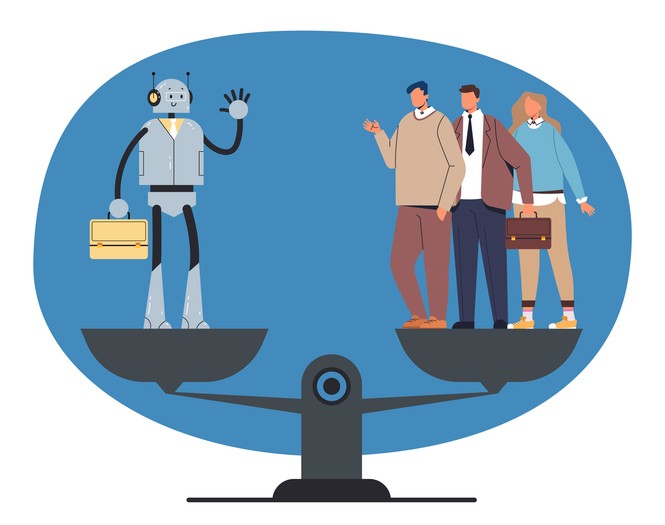
How does Fonzi compare to the alternatives you’ve probably already tried?
The Generic Platform Problem
Job boards and broad marketplaces list thousands of undifferentiated roles. You upload your resume, apply to 50 positions, and maybe hear back from 3. The social media management of your own job search becomes a part-time job itself.
Platforms like Hired, Toptal, and traditional ATS-based hiring serve volume. They optimize for filling roles, not for matching you with the right team culture or flexible schedules.
What Makes Fonzi Different
Curated marketplace: Only AI startups and high-growth tech companies that are ready to move quickly and commit to clear salary ranges are allowed into Match Day. This isn’t a job board—it’s a vetted pool.
Human-in-the-loop support: Fonzi’s concierge recruiters help candidates refine their profiles, position their strengths, and navigate the process. You’re not sending cold applications into a void.
Structured event model: Match Day creates urgency and commitment on both sides. Companies show up ready to hire, not just “exploring candidates.”
Focus on AI/ML talent: Unlike generalist platforms, Fonzi understands the specific skills, tools, and career growth patterns of engineers working in analyzing data, model training, and infrastructure.
The result: clarity and speed for both sides. And that’s a foundation for healthier work-life from the very start of a new role.
Conclusion
Great work–life balance roles absolutely exist in AI and tech, but finding them means being intentional about where you apply, how teams measure performance, and which hiring channels you use. The companies with the highest retention aren’t pushing 60-hour weeks; they’re built around flexible schedules, clear expectations, and outcome-based work that lets engineers do great work without burning out.
That’s where Fonzi AI fits in. Fonzi connects engineers with companies that respect time and talent from the start, offering curated matches, upfront salary transparency, bias-audited skill evaluation, and fast, structured hiring through Match Day events. If you’re navigating the 2026 job market and want roles that support your life, not consume it, joining Fonzi AI is a simple, free way to focus only on high-signal opportunities. After all, AI should help people work smarter and live better, and hiring is one of the best places to make that real.
FAQ
What specific factors define a “good work-life balance” in a professional career?
Which industries are historically known for offering the best work-life balance?
Can high-paying careers also offer a great work-life balance, or is there always a trade-off?
How does the ability to work remotely impact the work-life balance of a specific job?
What questions should I ask during an interview to gauge a company’s true commitment to work-life balance?