Unfair Treatment in the Workplace: Examples & How to Respond
By
Ethan Fahey
•

Imagine you’re a senior ML engineer at a fast-growing AI startup and keep hearing the same promotion feedback: “not quite ready” or “needs more visibility.” Then a less-experienced teammate, who happens to have more face time with leadership, gets promoted after 18 months, with no clear criteria or written rationale. Situations like this aren’t rare in tech, and they don’t just stall individual careers. Vague decision-making erodes trust, accelerates attrition (especially among underrepresented engineers), and creates real legal and reputational risk for startups and scale-ups that can’t afford it.
This article is for hiring managers, recruiters, and talent leaders who want to build fair, high-performing AI and engineering teams. We’ll break down what actually qualifies as unfair treatment, walk through concrete examples across hiring, promotion, and termination, and show how structured processes and responsible AI tools can reduce bias before it shows up as a problem. At Fonzi AI, we focus on bringing clarity and consistency to technical hiring through transparent criteria and data-driven matching, helping companies make decisions they can explain and stand behind. You’ll also find a practical response playbook for employees, plus FAQs on legal definitions, documentation best practices, and first steps for addressing unfair treatment.
Key Takeaways
Unfair treatment can be subtle (systematically being left off high-visibility AI projects) or obvious (slurs, demotion after reporting bias), and understanding the difference between bad management and unlawful discrimination is critical for both employees and leaders.
Federal laws like Title VII of the Civil Rights Act, the ADA, and the ADEA protect workers from discrimination, harassment, and retaliation based on protected characteristics, but modern tech companies should aim higher than legal minimums.
Much unfair treatment is rooted in unstructured, subjective decision-making during hiring, promotions, and performance reviews; structured, bias-audited processes can materially reduce these risks.
Employees who experience unfair treatment should document incidents, use internal reporting channels, and know when to seek external support from human resources, government agencies, or an employment lawyer.
For hiring specifically, AI-supported tools like Fonzi AI help fast-growing tech companies run faster, more transparent, and fairer hiring cycles for AI and engineering roles without replacing human judgment.
What Counts as Unfair Treatment vs. Unlawful Discrimination?
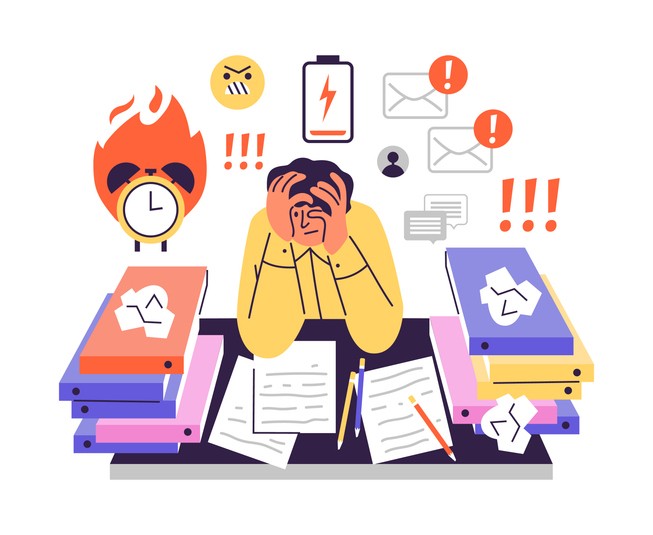
Understanding unfair treatment requires distinguishing between three layers:
Bad or inconsistent management: A supervisor who gives harsh feedback or plays favorites, but doesn’t target people based on who they are.
Unfair treatment that harms careers and culture: Patterns that disadvantage certain employees in ways that may not be illegal but still damage morale, retention, and your employer brand.
Conduct that crosses into legally actionable discrimination, harassment, or retaliation: Behavior tied to protected characteristics that violates federal or state employment law.
Under U.S. federal law, protected characteristics include race, color, religion, sex (including pregnancy and sexual orientation), national origin, age (40 and older), disability, and genetic information. Many states add protections for categories like marital status, veteran status, or gender identity.
Consider two workplace vignettes:
Unfair but likely legal: A manager assigns the most interesting AI projects only to engineers who went to the same graduate program. Frustrating and demoralizing, but not tied to a protected trait.
Potentially illegal: A qualified engineer with 12 years of experience is passed over for a lead role, with the hiring manager saying privately they want “someone with more energy,” a common proxy for age discrimination against older workers.
Key federal frameworks like Title VII, the ADA, the ADEA, and FMLA provide the legal backbone here. Coverage can depend on company size, so leaders should work with employment counsel for detailed compliance.
For modern tech companies, the goal shouldn’t just be legal minimums. It should be building transparent, consistent systems that reduce perceived unfairness in hiring, leveling, and performance management, because even legal unfairness drives away your best people.
6 Common Examples of Unfair Workplace Treatment in Tech
Unfair treatment in tech often shows up in who gets high-visibility projects, access to AI upskilling, remote-work flexibility, promotions, and who gets hired in the first place. The patterns can be subtle or overt, but they accumulate into real career damage.
Each of the following sections unpacks a common pattern, shows how it looks in a 2020s engineering or AI team, and flags when it may cross into illegal discrimination or retaliation. For managers and talent leaders, think of these as an audit checklist for your own org’s policies and behaviors.
Discriminatory Hiring, Promotions, and Pay Decisions
A computer vision engineer in New York with 7+ years of experience makes it to the final round, then gets rejected with vague “not a culture fit” feedback. A less-qualified candidate who mirrors the existing team’s profile gets the offer instead.
Unstructured interviews, informal referrals, and “gut feel” hiring can create patterns that disadvantage job applicants based on gender, race, age, disability, or parental status, even when no one says it aloud.
Signals to watch for:
Inconsistent job requirements that shift depending on the candidate
Unexplained lowball offers for certain demographic groups
Opaque promotion criteria that only insiders seem to understand
“Stretch” opportunities and lead roles given only to referrals or favorites
When such patterns correlate strongly with a protected characteristic and lack consistent documentation, they may constitute evidence of unlawful workplace discrimination.
For leaders: Review one recent hiring cycle or promotion slate and check for these patterns. Commit to more structured criteria and documentation going forward.
Retaliation After Raising Concerns
Retaliation means adverse treatment in demotion, shift in duties, exclusion from core AI roadmap meetings, after an employee reports discrimination, harassment, safety concerns, or ethics violations.
Example: An ML engineer reports that a model’s outputs show biased results affecting certain demographic groups. Within two months, they’re removed from the project and receive an unfairly negative performance review.
Retaliation can be subtle (no longer being invited to off-sites, sudden schedule inflexibility) or overt (termination, pay cut). It can occur even while the original complaint is still being investigated.
Under federal law, retaliation for engaging in “protected activity” such as reporting misconduct, participating in an Equal Employment Opportunity Commission process, or whistleblowing on certain violations is illegal even if the underlying claim isn’t proven.
For leaders: Implement clear non-retaliation policies, train managers annually, and centralize documentation when employees raise concerns.
Harassment and Hostile Work Environments
Harassment is unwelcome conduct based on protected traits that is severe or pervasive enough to create an intimidating, hostile, or abusive work environment. This includes verbal, visual, or physical behavior.
Tech-specific examples:
Persistent sexist jokes in a Slack channel were ignored by leadership
Mocking an engineer’s accent during code reviews
Repeated offensive comments about “culture fit” aimed at a religious or LGBTQ+ employee based on sexual orientation
A legally “hostile” work environment is about pattern and impact, not just a single awkward remark, though some extreme acts may be enough on their own. Remote and hybrid workplaces are not exempt. Workplace harassment can occur in chat tools, video calls, or off-site events, and the employer must still act when notified.
For leaders: Standardize reporting channels (anonymous and direct), commit to timely investigation, and track patterns across teams or managers.
Favoritism, Nepotism, and “Inner Circle” Dynamics
Favoritism means managers give special opportunities, better performance ratings, or schedule flexibility based primarily on personal relationships rather than merit.
Example: A founding engineer consistently assigns frontier AI projects to friends from a previous company, while other capable engineers are stuck on legacy maintenance work.
Favoritism itself isn’t always illegal, but it can become discriminatory if it systematically advantages or disadvantages people tied to protected traits, like only young, male engineers being invited to key hackathons.
Beyond legal risk, favoritism erodes psychological safety. High performers feel they need to leave to progress, increasing turnover costs in an already competitive talent market.
For leaders: Use transparent criteria for access to high-visibility projects and make selection decisions visible to the team.
Denial of Benefits, Leave, or Accommodations
Examples include denying remote work when it’s available to others, refusing reasonable accommodations for a software engineer with a documented disability, or punishing an employee for taking protected family or medical leave.
Inconsistent application of flexible work policies such as hybrid days, conference travel budgets, or training allowances can feel especially unfair when managers aren’t required to justify decisions.
Key legal touchpoints:
FMLA rights to certain unpaid leave
ADA obligations to provide reasonable accommodations
State-level protections that may exceed federal baselines
For AI and engineering staff, this matters especially when they need time for caregiving, mental health, or disability-related care while still wanting to stay on high-impact projects.
For leaders: Document benefit denials, require HR review for certain decisions, and proactively communicate eligibility rules in writing.
Wrongful or Unfair Termination
Most U.S. employment is at-will (in California, New York, Texas, and beyond), meaning companies can terminate employees for many reasons, but not for illegal ones like discrimination or retaliation.
Example: An engineer who previously complained about a manager’s sexist remarks is laid off in a “restructuring.” She’s the only woman on the team selected, despite strong performance ratings.
There’s a difference between a lawful restructure (business-driven, based on documented, consistent criteria) and a pretextual termination used to remove someone who asserted their rights. Wrongful termination claims often hinge on this distinction.
For leaders: Use written selection criteria, neutral audits, and HR review to mitigate legal risk and perceptions of targeted termination.
Employees who suspect wrongful termination should consult an employment attorney promptly; strict filing deadlines apply.
How Unfair Treatment Shows Up in Hiring and Interviewing
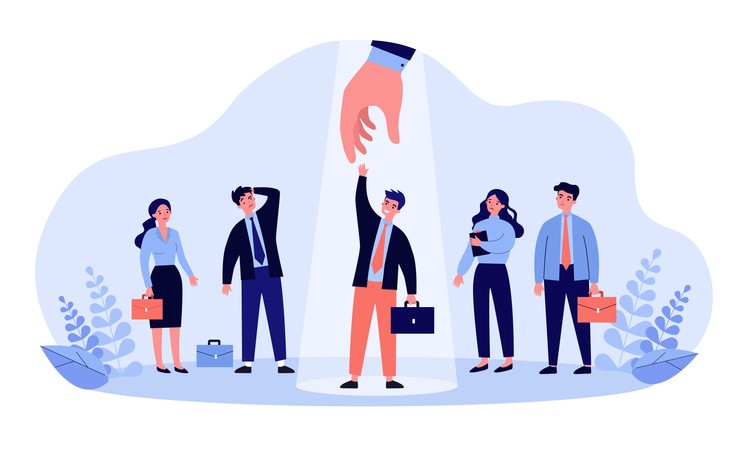
For many engineers and AI specialists, the first experience of being treated unfairly happens in the hiring funnel before they ever join the company.
Specific patterns include:
Inconsistent resume screening criteria that shift by reviewer
Biased “culture fit” interviews with no structured rubric
Ghosting candidates after final rounds with no closure
Unpaid take-home assignments that exceed reasonable scope (e.g., building production-ready models for free)
Low-reliability interviews and evaluator fatigue lead to arbitrary decisions that feel unfair to candidates and waste recruiter time. When volume spikes, teams often resort to blunt filters that inadvertently exclude qualified applicants.
Structured, AI-supported hiring processes can help reduce this unfairness, improve candidate experience, and protect your company culture and brand.
Why Unfair Treatment Persists: Systemic Causes in Fast-Growth Environments
Hiring and people decisions in 2024–2026 tech are made under extreme time pressure, with lean recruiting teams and rapidly shifting product priorities. These conditions increase the risk of unfair outcomes, even when no one intends harm.
Key systemic drivers:
Lack of standardized criteria: Every interviewer uses their own rubric (or none at all)
Overreliance on referrals: Hiring mirrors existing networks, limiting diversity
Untrained interviewers: Engineers pulled into hiring without bias training or structured guides
Minimal documentation: Decisions made in hallways, not captured in writing
Inconsistent policy application: Different managers apply benefits, leave, and remote work policies differently
These drivers connect directly to concrete problems: long time-to-hire for senior ML roles, high offer rejection rates, and attrition spikes among underrepresented engineers.
Even well-intentioned leaders create unfair patterns if they don’t have tools and processes to keep decisions consistent and auditable. The question becomes: can AI help fix these systemic weaknesses rather than amplify them?
Using AI to Make Hiring Fairer Without Losing Human Control
AI in hiring should not be about replacing managers or recruiters. It should automate repetitive tasks and surface better signals while keeping final decisions with humans.
Types of hiring tasks AI can responsibly assist with:
Resume triage based on explicit, documented criteria
Fraud detection to catch misrepresented credentials
Structured interview scheduling that reduces back-and-forth
Evaluation consistency checks that flag outlier scoring patterns
Bias audits on scoring patterns across demographic groups
Common concerns from tech leaders include fear of “black-box” algorithms, regulatory scrutiny of automated employment decision tools, and the risk of encoding past bias into new models.
Well-designed AI systems in hiring are transparent about what they evaluate, operate on clearly defined criteria, and are regularly audited for disparate impact. They augment human judgment rather than replacing it.
Fonzi AI is one example of a curated talent marketplace that combines multi-agent AI with human oversight to streamline and de-bias early hiring stages for engineers and AI talent.
How Fonzi AI Helps Tech Companies Reduce Unfair Treatment in Hiring
Fonzi AI is built specifically for AI, ML, and software engineering roles. It operates through a recurring hiring event called Match Day, where pre-vetted candidates meet vetted employers in a structured, time-boxed format.
Key capabilities:
Curated, pre-vetted engineering profiles: Every candidate passes technical and background vetting before employers see them
Upfront salary commitments: Companies declare salary ranges before Match Day, creating transparency for both sides
Concierge recruiter support: Human recruiters handle logistics, freeing hiring managers to focus on evaluation
Automation for fraud detection and bias-audited evaluations: AI flags anomalies and inconsistencies while humans make final calls
All candidates are evaluated against consistent, role-specific criteria such as Python + deep learning for ML roles, React + TypeScript for frontend, reducing arbitrary “vibes-based” filtering.
Fonzi’s multi-agent AI flags anomalies like plagiarized coding tasks or unverifiable employment histories, ensuring companies see only credible, high-signal candidates.
Critically, hiring managers retain full control over whom to interview and hire. Fonzi’s role is to remove noise, speed up logistics, and make the process more transparent and equitable for both sides.
Structured, Bias-Audited Evaluations on Match Day
Match Day is a 48-hour hiring event where companies see a curated slate of elite AI and engineering candidates who have already passed technical and background vetting.
Each candidate’s profile includes standardized fields, skills, years of experience, and work samples so hiring managers can compare like with like rather than relying on gut feel.
Fonzi’s AI looks for patterns in how companies score candidates over time, surfacing potential bias (e.g., systematically lower scores for a certain background) so teams can self-correct.
This structure reduces unfair early-stage rejection, particularly for candidates outside the usual alumni or referral networks. It helps companies tap into a more diverse engineering talent pool.
Evaluations are logged and can be revisited, supporting better internal accountability and consistency across hiring managers.
Fraud Detection and Signal-Rich Profiles
Unfair treatment can also arise when teams waste cycles on fraudulent or misrepresented candidates. This pressure often leads recruiters to “tighten” filters in ways that inadvertently exclude qualified applicants.
Fonzi uses AI to detect red flags:
Inconsistent employment timelines
Suspicious GitHub activity patterns
Repeated test patterns indicative of cheating
By front-loading this due diligence, Fonzi allows hiring teams to treat candidates more fairly, evaluating them based on real skills and verified history rather than skepticism or overgeneralization.
Richer candidate profiles (portfolio links, past impact on ML systems, production experience with LLMs) give managers better context than a standard resume, reducing reliance on proxies like pedigree alone.
This approach improves both candidate experience and recruiter bandwidth, lowering the temptation to use blunt, unfair filters to manage volume.
Salary Transparency and Reduced Negotiation Bias
Fonzi requires companies to commit to salary ranges upfront for each role on a Match Day. Compensation expectations are clear for both sides early on.
This reduces a common unfair pattern: negotiation-savvy or majority-group candidates secure higher offers for the same role, while others accept below-market pay.
Clear ranges also help internal equity. Hiring teams can align new offers with existing bands and avoid ad hoc exceptions that create future resentment.
Salary transparency is increasingly expected by senior engineers and AI talent. Companies that adopt it early are more likely to be seen as fair employers in a competitive market.
Leaders should extend this transparency by publishing internal leveling guides and pay bands where legally and culturally feasible.
Traditional Hiring vs. AI-Supported, Structured Hiring
This side-by-side comparison helps tech leaders see how process design affects fairness, speed, and candidate experience.
Stage | Traditional Approach | AI-Supported, Structured Approach (e.g., Fonzi) | Impact on Fairness & Speed |
Sourcing | Referrals and ad hoc outreach; mirrors existing network | Curated marketplace with diverse, pre-vetted candidate pool | Broader reach, less network bias |
Screening | Manual resume review with inconsistent criteria; evaluator fatigue | AI-assisted triage against documented role requirements; fraud detection | Consistent filtering, reduced arbitrary rejection |
Interviews | Unstructured conversations; “culture fit” questions | Structured rubrics, standardized questions across candidates | Higher reliability, less interviewer bias |
Evaluation & Decision | Hallway discussions, gut feel, minimal documentation | Logged evaluations, pattern analysis for scoring bias | Auditable decisions, self-correction opportunities |
Offer & Negotiation | Variable offers based on negotiation skill | Upfront salary commitment, transparent ranges | Reduced pay gaps, stronger internal equity |
Post-hire Review | Rarely tracked | Retention and performance data linked to hiring decisions | Continuous improvement, pattern detection |
How Employees Can Respond to Unfair Treatment (and What Leaders Should Expect)

While this article’s primary audience is employers, understanding the employee response playbook helps leaders anticipate, de-escalate, and address issues before they become legal disputes or public incidents.
A simple, chronological response model for employees:
Notice patterns and distinguish isolated incidents from systemic issues
Document incidents with specifics (who, what, when, where)
Seek informal resolution where safe—sometimes a direct conversation works
Use internal channels (HR, anonymous hotlines, ombuds)
Consult external resources if necessary (EEOC, state agencies, employment attorneys)
Leaders who communicate these steps transparently in onboarding documents, for example, show they take fair treatment seriously and welcome feedback.
Documenting Incidents and Patterns
Employees should keep a dated log capturing what happened, who was present, exact wording where possible, and any follow-up actions.
Example log entry:
“2025-11-03, 1:15pm Zoom standup: Manager said ‘We need younger energy on this project’ while discussing team assignments. Present: [names]. I asked for clarification; manager said ‘just thinking out loud.’”
Save relevant emails, Slack messages, meeting invites, performance reviews, and policy documents that show differences between stated rules and actual behavior.
For leaders: This documentation becomes the factual basis for HR investigations, internal appeals, or external legal review. Train managers not to discourage note-taking or written follow-ups; transparency protects both sides.
Employees should periodically summarize patterns (e.g., repeated meeting exclusions) rather than only isolated moments. This clarifies their own thinking before raising formal concerns.
Using Internal Policies and Reporting Channels
Employees should review the company’s handbook, code of conduct, anti-harassment policy, and complaint process. Focus on sections about discrimination, retaliation, and escalation paths.
When safe, start with a direct, professional conversation with a manager or skip-level leader. Frame it around specific behaviors and requested changes rather than personal attacks.
HR’s role is to investigate, document, and advise the business on risk. HR protects the company, but thorough internal processes can help employees, too.
For leaders: Make reporting options clear (including confidential email, hotline, ombuds) with approximate timelines for response and investigation steps. Track themes from complaints and feed them back into process improvements.
When to Seek Legal or External Support
If the situation involves suspected discrimination, serious harassment, or clear retaliation, employees may want to consult an employment lawyer early, even if they hope to resolve things internally.
In the U.S., employees can file charges with agencies like the Equal Employment Opportunity Commission or relevant state civil rights departments. Strict deadlines apply, often 180 or 300 days from the incident, depending on jurisdiction.
Seeking legal advice does not automatically mean “suing” the employer. It can simply mean understanding legal options and potential next steps.
For leaders: Respond constructively, not defensively, when you learn an employee has sought counsel. Focus on facts, documentation, and fair process. Organizations with transparent, structured processes are better positioned to withstand external scrutiny and maintain trust.
Conclusion
Unfair treatment at work, whether or not it crosses a legal line, quietly chips away at culture, slows teams down, and increases risk. In fast-moving AI and engineering orgs, those effects show up even faster. Most of the time, the problem isn’t bad intent; it’s unstructured hiring and promotion processes, inconsistent criteria, and overloaded recruiters or managers making rushed decisions. High growth doesn’t excuse unfairness; it actually makes clear, repeatable systems more important.
That’s where structured, AI-supported approaches come in. Tools like Fonzi AI’s Match Day help teams move faster without cutting corners by introducing bias-audited evaluations, clearer signals on candidate quality, and upfront salary transparency. Hiring managers stay in control, but they’re no longer relying on gut feel alone. If you’re leading hiring for AI or engineering roles and want a process that’s both efficient and fair, Fonzi AI can help you design and run searches that scale. Companies that get this right in 2026 won’t just reduce risk, they’ll hire more easily, retain top talent, and build stronger, more resilient teams.
FAQ
What is the legal definition of unfair treatment versus an “unfair” management style?
What are the most common examples of being treated unfairly at work by a manager or peer?
How should an employee document instances of unfair treatment to protect their career?
Does “unfair treatment” always qualify as workplace discrimination or harassment?
What are the first steps an employee should take to resolve a situation involving unfair job treatment?