Job Description Keyword Finder: How to Find & Use Keywords for Resumes
By
Samara Garcia
•

Up to 75% of resumes are rejected by automated screeners before a human ever sees them. That’s why qualified engineers with real experience can apply to dozens of roles and hear nothing back. The issue isn’t skill; it’s a keyword mismatch between resumes and job descriptions.
Key Takeaways
AI engineers and ML specialists now compete in an ATS-first hiring world where job description keywords directly determine who gets seen by recruiters and who disappears into the void.
A job description keyword finder is more than a generic ATS hack; it’s a way for technical candidates to map their real skills to how companies describe roles, translating your expertise into recruiter-friendly language.
Fonzi AI uses responsible, bias-audited AI to surface high-signal matches and give engineers faster, clearer feedback, not black-box screening that auto-rejects strong candidates.
You can manually extract keywords, use AI tools to accelerate the process, then structure your resume, GitHub links, and portfolio to mirror those keywords authentically without misrepresenting your experience.
Fonzi’s Match Day compresses weeks of resume-scanning, screening calls, and back-and-forth into approximately 48 hours of focused, high-intent interviews with companies ready to hire.
Understanding Job Description Keywords in Technical Roles
Job description keywords are the exact skills, tools, domains, and impact phrases companies codify in postings and ATS filters. They’re the vocabulary hiring managers use to describe the work they need done, and the vocabulary their systems use to filter candidates.

For AI/ML and infra roles, high-signal keywords typically cluster into three categories:
Hard skills: PyTorch, TensorFlow, Kubernetes, Docker, CUDA, Ray, AWS SageMaker
Domains: recommender systems, LLM fine-tuning, retrieval-augmented generation, computer vision
Impact phrases: “reduced inference latency by 30%,” “scaled to 10M+ users,” “shipped production models.”
ATS systems like Greenhouse and SmartRecruiters typically parse job descriptions into stemmed tokens. However, they often still depend on exact matches for tools and frameworks. If the job posting says “PyTorch” and your resume says “deep learning framework,” you might not get flagged as a match.
Consider two job descriptions for “Senior LLM Engineer”:
Aspect | Research-Leaning Role | Product-Leaning Role |
Focus | Novel architectures, paper publication | Shipping features, production reliability |
Keywords | “transformer architectures,” “RLHF,” “alignment research” | “RAG pipelines,” “latency optimization,” “A/B testing” |
Tools | JAX, Weights & Biases, LaTeX | Kubernetes, Triton, Grafana |
Outcomes | “contribute to research papers.” | “deploy models serving 1M+ requests/day.” |
Understanding this nuance helps you decide whether you’re actually a good fit, and how to present your experience authentically. The right keywords help you communicate fit; they don’t create fit where none exists.
How to Find Keywords in AI & Engineering Job Descriptions
The most effective approach combines manual reading, pattern recognition, and AI job description keyword finder tools. Each method catches different signals, and using them together gives you the clearest picture.
Here’s a practical process:
Collect 5–10 similar postings for your target role (e.g., “Senior ML Engineer, Recommendation Systems”)
Scan each for recurring phrases, highlighting tools, frameworks, and outcomes
Group keywords by type: required skills, preferred qualifications, domain expertise
Tally frequency across all postings to identify core keywords vs. one-off mentions
Validate with a keyword finder tool to catch anything you missed
Pay special attention to sections labeled “You will,” “Requirements,” “Preferred qualifications,” and “Nice to have.” These drive ATS scoring and tell you what the company actually prioritizes.
Concrete examples matter more than vague tech terms. Look for specific words like “RAG,” “vector databases,” “Transformers,” “AWS SageMaker,” “Databricks,” “Rust,” “CUDA,” and “ONNX Runtime," not just “machine learning” or “cloud experience.”
Manual Techniques: Reading Like a Recruiter
You don’t need fancy tools to identify keywords. Manual scanning, when done systematically, often catches nuances that automated tools miss.
Here’s a mini-checklist for mining a job posting:
Highlight verbs: deploy, optimize, fine-tune, scale, implement, design
Circle tools: Weights & Biases, Kubernetes, JAX, TensorRT, Airflow, dbt
Underline outcomes: production-scale, low-latency, 10M+ users, 99.9% uptime
Then organize your findings into three quick lists:
Category | Purpose | Example Keywords |
Non-negotiable requirements | Python, PyTorch, distributed training | |
Frequently mentioned tools | Tech stack signals | Kubernetes, Docker, AWS, Databricks |
Nice-to-have items | Differentiation opportunities | Rust, ONNX, real-time inference |
Example extraction from a fictional posting:
Senior Applied ML Engineer – Ranking at TechCo (2026)
Requirements: 4+ years ML experience, Python, PyTorch or TensorFlow, experience with ranking/recommendation systems, A/B testing, production deployment at scale.
Preferred: Experience with feature stores, real-time inference, Kubernetes, familiarity with LLMs.
Extracted keywords: PyTorch, ranking systems, A/B testing, production deployment, feature stores, real-time inference, Kubernetes, LLMs
This style of reading helps you understand the actual work, not just copy keywords for ATS games.
Using AI Job Description Keyword Finder Tools
A job description keyword finder parses text, identifies recurring technical terms, and clusters them into skill categories. These tools can scan job descriptions in seconds and highlight patterns you might miss on manual review.
The typical workflow:
Paste the job description into the tool
Review the categorized output (hard skills, soft skills, tools, qualifications)
Export the list to compare against your current resume
Identify gaps and alignment opportunities
Different tools offer different features:
Tool | Key Features | Best For | Limitations |
AI extraction, skill categorization, and multi-job description support | Quick scans, all industries | No direct resume integration | |
Huntr | Color-coded keywords (5 types), 2-click resume add, keyword match score | Resume builders, tailoring | Full features behind a paywall |
ML-starred important keywords, 10-second analysis | Prioritizing must-haves | Less categorization detail |
The goal isn’t to hit 100% keyword match. It’s to guarantee your most relevant, authentic strengths are expressed in the same wording as the job posting.
Be cautious with generic tools that don’t understand nuanced roles like LLM alignment, ML evals, or infra reliability engineering. They might miss domain-specific terms that actually matter.
Using Keywords Strategically in Your Resume & Portfolio
Keywords should be embedded in genuine accomplishments, not jammed into a “skills soup” section at the bottom of your resume. Hiring managers read for context, not just term frequency.
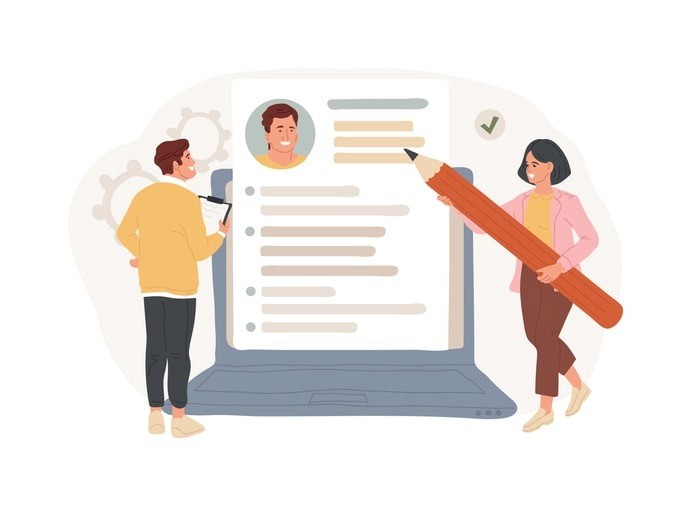
Organize keyword placement across these resume zones:
Headline/title: Captures role and keyword clusters immediately
Summary: 2–3 sentences with key phrases tied to career outcomes
Skills section: Grouped by category, with the most important keywords prominent
Experience bullets: Keywords attached to measurable results
Projects/portfolio: GitHub READMEs and descriptions using the same terminology
Before: “Worked on ML models.”
After: “Built and deployed PyTorch-based ranking models for a recommender system serving 5M+ users on AWS, reducing inference latency by 40%.”
The second version hits multiple keywords (PyTorch, ranking models, recommender systems, AWS, inference latency) while telling a compelling story. This is how you add keywords naturally.
Use exact phrasing where it matters. If the job description says “LLM fine-tuning,” write “LLM fine-tuning”, not “language model tweaking” or “adjusting LLMs.” ATS systems and recruiters look for specific words that accurately reflect the job requirements.
Don’t forget your GitHub READMEs and project descriptions. These are often reviewed by technical interviewers, and using the same language companies use in job descriptions creates immediate recognition.
Placing Keywords in High-Impact Resume Sections
Headline: Make it specific and keyword-rich.
Generic: “Machine Learning Engineer”
Better: “Senior ML Engineer, Recommender Systems & LLMs”
Summary: Use 3–4 key phrases from job descriptions tied to real career outcomes.
“ML engineer with 5+ years building production recommender systems and LLM applications. Shipped PyTorch models serving 10M+ daily predictions on Kubernetes. Focused on low-latency inference, MLOps, and cross-functional technical leadership.”
Skills section: Create clear groups instead of a random comma-separated list.
Category | Skills |
Modeling & LLMs | PyTorch, TensorFlow, Transformers, RLHF, RAG |
Data & Infra | Spark, Databricks, Snowflake, PostgreSQL |
MLOps & Observability | Kubernetes, Docker, Airflow, Grafana, Prometheus |
Experience bullets: Attach each keyword to a measurable result or technical challenge.
“Deployed TensorRT-optimized LLM inference pipeline, reducing p99 latency from 800ms to 120ms.”
“Led A/B testing framework redesign, improving experiment velocity by 3x.”
The tightest alignment should appear in your experience bullets; this is where resume matches become undeniable.
Hard Skills vs. Soft Skill Keywords
ATS systems and engineering hiring managers generally prioritize hard skills for AI and infra roles. Technical capability is the baseline filter. But soft skills signal whether you’ll thrive on the team.
Hard skill keywords (specific, measurable technical capabilities):
Tools: PyTorch, TensorFlow, Kubernetes, Kafka, Docker, Ray
Platforms: AWS, SageMaker, GCP, Azure
Languages: Python, Rust, TypeScript, CUDA
Domains: LLM fine-tuning, feature stores, distributed training
Soft skill keywords (how you work with people):
Cross-functional collaboration
Technical leadership
Mentoring
Stakeholder communication
Product mindset
Team player
Place soft skills inside accomplishment bullets rather than a separate “Soft Skills” list:
Generic: “Good communicator, team player.”
Better: “Led a 4-person team to deliver production RAG pipeline 2 weeks ahead of schedule, coordinating with product and infrastructure teams.”
Keyword finder tools may tag both types, but weight hard skills more heavily in early resume sections when applying to engineering roles. Recruiters search for tools first.
Avoiding Keyword Stuffing & Common Mistakes
Keyword stuffing means repeating skills unnaturally, dumping long comma-separated lists, or adding tools you’ve never actually used. It’s the resume equivalent of SEO spam, and experienced hiring managers spot it immediately.
Before (bad):
“Skills: Python Python PyTorch PyTorch Machine Learning ML Deep Learning AI Kubernetes Docker AWS GCP Azure TensorFlow JAX LLMs LLM Fine-tuning RAG Vector Databases…”
After (good):
“Skills: Python, PyTorch, TensorFlow | Kubernetes, Docker, AWS | LLM fine-tuning, RAG, vector databases”
Red flags that erode trust:
Claiming “expert” in every tool listed
Copying whole phrases from job descriptions without context
Listing technologies you’ve only read about
Misrepresenting production experience
Many engineering hiring managers at AI startups still manually scan resumes. Inflated or obviously copied language immediately raises suspicion and often leads to rejection.
How Companies Actually Use ATS & AI in Hiring
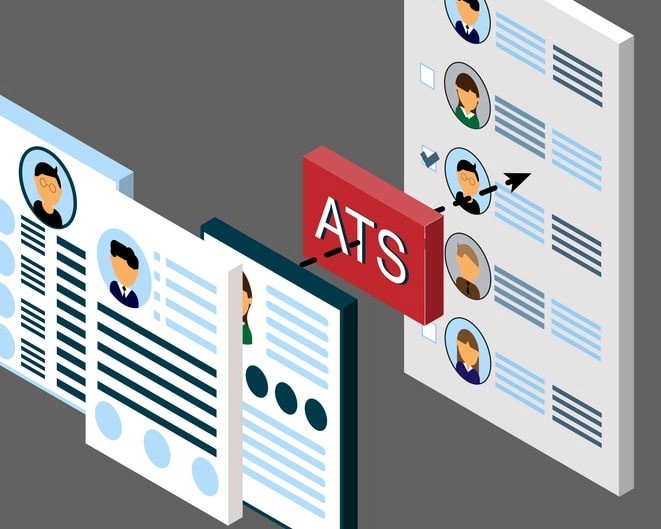
ATS systems don’t decide who gets hired; they decide who gets seen. In 2024–2026, most tech companies layer AI on top of their ATS to summarize resumes, cluster candidates, and prioritize who recruiters review first. For competitive roles like AI engineers, that often means faster processing or faster rejection.
The risk is that poorly configured AI filters introduce new bias. Nontraditional career paths, bootcamp graduates, candidates with non-U.S. universities, or engineers whose strongest signal is open-source work can be ranked lower or missed entirely. Responsible recruiting AI looks different. It uses bias auditing, transparent scoring, and human oversight, treating AI as decision support rather than a silent gatekeeper. Candidates deserve systems that explain why they’re a match, not just a hidden score that decides whether they’re ever seen.
How Fonzi AI Uses Keywords, AI & Match Day to Help Engineers Stand Out
Fonzi AI is a curated marketplace focused on AI, ML, full-stack, backend, frontend, and data engineers. The emphasis is on quality matches and salary transparency, not resume volume.
Here’s how it works differently:
Fonzi ingests candidate profiles (skills, experience, portfolio) and company job descriptions
AI identifies high-signal overlaps instead of just counting keywords
Candidates get matched with companies that actually want what they offer
Companies commit to salary ranges upfront, no guessing games
Match Day is a structured 48-hour hiring event where vetted candidates and committed companies meet for focused interviews. Instead of weeks of outreach, screening calls, and back-and-forth, everything happens in a compressed, high-intent window.
Fonzi’s process includes bias-audited evaluation, fraud detection, and concierge recruiter support. The experience is more human and less opaque than traditional ATS pipelines.
For candidates, Fonzi is free. Companies pay an 18% success fee when they hire, aligning incentives toward real placements, not resume spam.
How Match Day Works for AI & ML Candidates
Here’s the typical Match Day timeline:
Phase | What Happens |
Application & Vetting | Submit your profile; Fonzi reviews for quality and fit |
Profile Tuning | Optimize your skills presentation with the right keywords and language |
Pre-Match Day Briefings | Learn which companies are hiring and what they’re looking for |
48-Hour Interview Sprint | Focused interviews with matched companies, no intro call loops |
Offers | Companies extend offers within 48 hours of the event |
Before Match Day, candidates get help framing their experience in the language startups actually use, terms like LLM infra, RAG pipelines, and MLOps at scale. During Match Day, companies arrive with roles and budgets already defined, and matching is done collaboratively by AI and humans to align real skills with real needs. Instead of guessing or waiting in an ATS queue, engineers get fast, high-signal interviews, with offers often coming within 48 hours.
Practical Resume & Interview Prep Tips for AI/ML Job Seekers
This section is your tactical playbook for turning raw job description keywords into a compelling resume and strong interviews.

Sample Keyword-to-Resume Mapping Table
This table shows how to take common job description phrases and place them effectively in your resume:
Job Description Phrase | Where to Use It | Example Resume Bullet |
RAG pipeline | Summary, Experience | “Architected RAG pipeline integrating vector search with LLM inference, improving retrieval accuracy by 35%.” |
LLM fine-tuning | Skills, Projects | “Fine-tuned Llama-2 models on domain-specific data using LoRA, reducing training costs by 60%” |
Kubernetes | Skills, Experience | “Deployed ML inference services on Kubernetes, managing auto-scaling for 1M+ daily requests” |
Feature store | Experience | “Built feature store on Feast, reducing feature engineering time from days to hours.” |
Observability | Skills, Experience | “Implemented ML observability with Grafana and Prometheus, catching model drift within 24 hours.” |
A/B testing | Experience | “Designed A/B testing framework for ranking experiments, increasing conversion by 12%.” |
Notice how each keyword appears naturally within an accomplishment, not isolated in a list. This approach helps your resume match feel authentic to both ATS systems and human reviewers.
Summary
Most resumes fail not because of weak experience, but because ATS systems filter on job description keywords before a human ever looks. For AI, ML, and engineering roles, understanding and using the exact language companies use, specific tools, domains, and impact phrases, is essential to getting seen. The strongest approach combines manual keyword extraction, AI keyword finder tools, and thoughtful resume structuring that embeds keywords into real accomplishments rather than stuffing them into lists.
Responsible hiring AI should support, not silently reject, candidates by keeping humans in the loop and auditing for bias. Fonzi AI applies this philosophy through a curated marketplace and Match Day events that align real skills with real roles, compress hiring into about 48 hours, and replace opaque ATS pipelines with faster feedback, salary transparency, and high-intent interviews.
FAQ
How do I find keywords in a job description?
What are the best job description keyword finder tools?
Which keywords in job descriptions matter most for ATS?
How do I use job description keywords in my resume?
What’s the difference between hard skills and soft skill keywords?


