Paid Work Experience: Guide to Salaries & Career Benefits
By
Ethan Fahey
•

Paid work experience means getting paid to solve real problems in a real environment, whether that’s an internship, co-op, contract role, or full-time job. These roles come with concrete deliverables, real deadlines, and compensation, and they build practical skills across AI, machine learning, infrastructure, data engineering, or software development. In short, it’s an experience that mirrors how teams actually operate in production.
Over the last couple of years, especially in hubs like San Francisco, New York, London, and Berlin, paid opportunities for AI engineers have expanded fast. From research residencies at foundation model labs to LLM-focused infrastructure roles at Series A startups, the market now offers paths that barely existed five years ago. While hackathons, open-source work, and volunteer research can still be valuable, paid roles send a stronger signal: a company trusts your skills enough to invest real money in them. That signal carries weight with future employers. At Fonzi AI, we help turn paid experience into a repeatable advantage by connecting engineers with vetted startups through structured Match Day hiring events, making it easier to land well-compensated roles without months of uncertainty.
Key Takeaways
Paid work experience for AI, ML, and software engineers in 2025 typically ranges from $35–$120 per hour, depending on role, seniority, and company stage. This compensation reflects the high demand for technical talent across startups and established tech companies building AI-powered products.
Modern hiring increasingly uses AI for screening and logistics, but Fonzi AI’s curated talent marketplace is built to increase salary transparency, reduce bias, and accelerate offers via 48-hour Match Day hiring events where companies commit to salary ranges upfront.
Paid work experience, whether through internships, co-ops, apprenticeships, or contract roles, strongly correlates with higher starting salaries, faster promotion cycles, and better equity outcomes in AI startups.
Types of Paid Work Experience in AI and Software Engineering
AI and engineering candidates encounter multiple types of paid work experience in 2025, each with different expectations, pay structures, and benefits. Understanding these options helps you make informed decisions about which opportunities align with your career goals.

Here are the most common types you’ll encounter:
Paid Internships: These structured learning experiences typically run 10–12 weeks during summer or semester breaks. A summer 2025 AI internship at a Bay Area LLM startup might pay $45–$70 per hour. Interns work on real projects, building evaluation pipelines, fine-tuning models, or shipping features, while receiving guidance from senior engineers. Most common at both big tech and well-funded startups.
Co-op Programs: Popular in Canada, Germany, and parts of Europe, co-ops involve 6–12 month rotations where students alternate between academic terms and full-time work. Participants are often enrolled in university programs and earn both wages paid by employers and academic credit. Co-ops provide deeper immersion than shorter internships and frequently lead to return offers.
Apprenticeships: These 12-month structured programs combine job training with mentorship, designed for career switchers or candidates from non-traditional backgrounds. ML engineering apprenticeships often include planned skill development milestones and regular coaching. Young adults ages 18–24 particularly benefit from these pathways into tech.
Contract and Freelance Projects: 3–6 month engagements for MLOps, infra, or data pipeline work. These roles offer higher hourly rates ($80–$180/hour for experienced engineers) but less job security. Common for mid-career professionals who want variety or need to demonstrate skills to future employers before committing to full-time roles.
Fellowships and Residencies: AI research fellowships at labs like Google DeepMind or independent organizations offer 6–12 month stipends for candidates pursuing novel research. These blur the line between academic and industry work but provide legitimate paid experience with significant resume value.
Part-Time Consulting: Engineers with specialized expertise often consult for scaling startups 10–20 hours per week while maintaining other commitments. This format lets you build relationships with multiple companies and develop diverse experience across problem domains.
Fully Remote Global Roles: Companies increasingly hire engineers worldwide for remote positions at US-level salaries. Candidates in Lagos, Bengaluru, or São Paulo can access opportunities that were previously limited by geography.
Fonzi AI’s platform surfaces a mix of these opportunities during Match Day, from full-time AI engineer roles to short-term contracts, so you can compare them side by side with salary transparency built in.
Paid Experience vs. Unpaid Experience: Why Compensation Matters
The gap between paid and unpaid work experience has never been more significant for your career trajectory. Paid work involves actual wages, potential benefits, and often equity upfront. Unpaid arrangements such as volunteer projects, unpaid internships that may violate labor laws, or portfolio-only collaborations lack these markers of employer commitment.
Legal and ethical scrutiny of unpaid internships has intensified in the US and EU throughout 2024–2025. For-profit tech companies face strict requirements: in most cases, if an intern performs productive work that benefits the company, they must be compensated. Most engineering interns at major tech companies (Meta, Google, OpenAI, Anthropic) now receive substantial hourly pay, often $50–$80 per hour or more.
Why does compensation matter beyond the obvious financial benefit?
Financial accessibility: Paid roles allow candidates from non-wealthy backgrounds to participate fully. An unpaid internship effectively excludes anyone who can’t afford to work without income for months.
Stronger employer commitment: When a company pays you, they’re invested in your success. Paid work signals that the organization values your contribution enough to allocate a budget.
Higher likelihood of conversion: Paid interns convert to full-time roles at dramatically higher rates. Companies that invest in training participants want to retain that investment.
Clearer performance expectations: Paid roles come with structured evaluations, defined deliverables, and feedback loops. You learn what workplace success actually looks like.
Consider the difference between a hypothetical unpaid “ML research collaborator” role versus a 12-week paid ML internship at $55/hour in 2025. The paid intern earns roughly $26,400 over the summer, gains structured job training, receives mentorship, and walks away with a legitimate work experience entry on their resume. The unpaid collaborator has none of these and may struggle to explain the experience to future employers.
Fonzi AI only works with employers that commit to transparent, clearly defined paid roles with upfront salary ranges disclosed before interviews. We don’t surface unpaid opportunities.
Salary & Hourly Pay Guide for Paid Work Experience in AI (with Table)
Actual pay varies significantly by location (SF Bay Area vs. Austin vs. Berlin), seniority, and company stage. However, this guide provides realistic 2024–2025 ranges based on US and European startup and scaleup benchmarks that inform hiring across Fonzi AI’s marketplace.
Role Type | US Hourly/Annual Range | EU Hourly/Annual Range | Typical Duration |
AI/ML Engineering Intern | $40–$70/hr | €20–€40/hr | 10–12 weeks |
LLM/Foundation Model Research Intern | $50–$85/hr | €25–€50/hr | 12–16 weeks |
Junior Full-Time AI Engineer | $130k–$180k base + equity | €60k–€90k base + equity | Full-time |
Mid-Level ML Engineer | $160k–$240k base + equity | €80k–€140k base + equity | Full-time |
Senior/Staff Infra & Platform Engineer | $220k–$350k base + equity | €120k–€200k base + equity | Full-time |
Short-Term Contract (LLM Infra) | $110–$180/hr | €80–€150/hr | 3–6 months |
These numbers have direct career implications:
Paid internships and co-ops often raise a graduate’s first full-time offer significantly. A candidate with two paid AI internships might receive offers in the $150k–$170k total comp range, while peers without that experience start around $120k–$130k.
Equity grants at early-stage startups can augment headline salary substantially over 3–4 years. A $180k base with 0.1% equity at a startup that grows 10x creates meaningful wealth.
Remote roles through curated platforms like Fonzi AI may pay US-level salaries to global candidates. An engineer in Toronto or Berlin can earn comparably to SF-based peers.
Fonzi AI requires companies to share salary and equity bands before Match Day. You know pay expectations upfront instead of discovering ranges late in a drawn-out interview process.
How AI Is Changing Hiring and How Fonzi AI Uses It Responsibly
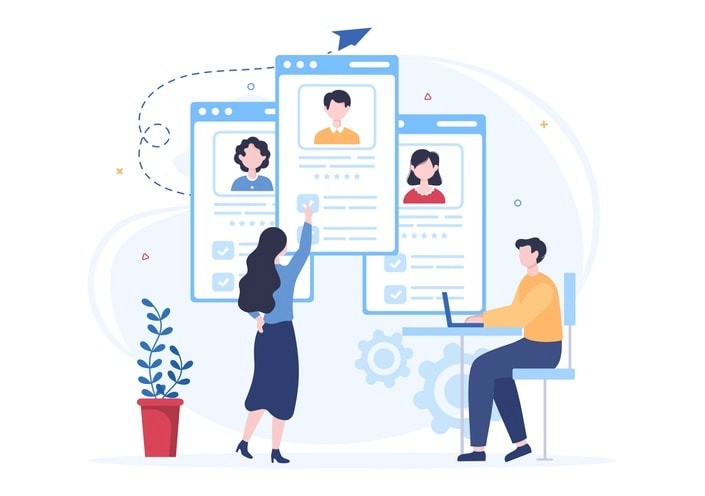
Since 2020, hiring teams have increasingly relied on AI for resume parsing, coding test evaluation, fraud detection, and candidate communication. This shift has benefits, faster processing, reduced manual overhead, but also introduces real risks around bias, opacity, and candidate experience.
Common uses of AI in hiring today include:
Automated resume screening at large tech companies that filter thousands of applications using keyword matching and predictive models
AI-powered coding challenge proctoring and plagiarism detection to verify candidate authenticity
Chatbots handling candidate FAQs and scheduling, reducing recruiter workload
Predictive scoring models estimating candidate “fit” based on historical hiring data
The problems with these approaches are well-documented. Models trained on historic hiring data often replicate biases, favoring candidates from specific schools, geographies, or demographics. Candidates receive form rejections with no understanding of why. The system feels like a black box, which creates barriers for people trying to break into the field.
Fonzi AI takes a fundamentally different approach:
AI for enrichment, not rejection: We use AI to enrich candidate profiles, extracting skills, tagging relevant projects, and surfacing your technical experience in ways that help companies understand your background. We don’t use AI to auto-reject candidates.
Bias-audited evaluations: Our assessment flows undergo regular reviews for disparate impact on gender, ethnicity, and geography, where data is available. We actively work to identify and correct imbalances.
Human recruiters stay in the loop: Every candidate has access to concierge recruiter support. Humans make nuanced judgments on edge cases, and AI handles logistics and data organization.
AI handles the tedious work: Scheduling, workflow automation, and candidate communication are streamlined so recruiters can focus on coaching candidates and building relationships.
Transparent profile views: You can see your profile as Fonzi’s AI interprets it, including skills, experience, projects, and request corrections. This transparency contrasts sharply with typical applicant tracking systems, where you have no visibility into how you’re being evaluated.
We believe AI should help people, not replace them. That philosophy shapes every feature we build.
Inside Fonzi Match Day: A High-Signal Way to Turn Experience into Offers
Match Day is a time-boxed hiring event, typically running over 48 hours, where pre-vetted engineers are matched with AI startups and high-growth tech companies that have committed roles and salaries. It’s designed to compress weeks of job searching into a structured, high-confidence hiring experience.
Here’s how the candidate journey works step-by-step:
Sign up and create a technical profile: Include your GitHub, publications, notable projects, tech stack, location preferences, and salary expectations. This becomes your primary representation to employers.
Undergo Fonzi’s vetting process: Your portfolio gets reviewed. You complete a structured technical interview and optional code or systems design assessments. This establishes you as a qualified participant.
Get accepted into the curated pool: Successful candidates join an upcoming Match Day cohort, for example, “March 2025 North America AI Match Day” or “Q2 2025 Europe ML Match Day.”
Receive intro requests during the 48-hour window: Vetted companies review your profile and send interview invitations. You see their roles, salary bands, and team information before deciding to engage.
Complete interviews rapidly: First-round and sometimes final-round conversations happen within days, not weeks. The compressed timeline keeps everyone focused and serious.
Salary transparency is built into the process. Companies submit roles with clear ranges, for example, “Senior ML Engineer, $220k–$280k plus equity,” visible to candidates before accepting interviews. No more guessing games or late-stage surprises about compensation.
Fonzi AI is free for candidates. We charge employers an 18% success fee on successful hires, which means our incentives align with actually placing you in a great role, not just collecting applications to show activity.
Example scenarios: A mid-level LLM engineer in Toronto might convert a 3-month contract into a full-time offer through Match Day connections. An infra engineer in Bengaluru could land a remote US startup role paying a US-level salary. These outcomes happen regularly because the platform is designed to develop real matches, not just generate noise.
How Paid Experience Boosts Career Trajectory & Starting Salary
Multiple longitudinal studies, including NACE’s annual surveys and internal marketplace data from 2023–2024, consistently show that candidates with relevant paid work experience secure higher starting salaries and faster promotions. This isn’t speculation; it’s documented across hiring data.
The mechanisms are straightforward:
One or more paid internships or co-ops in AI/ML during university can boost first full-time offers by tens of thousands of dollars. Employers see proven ability to deliver in production environments. A candidate who shipped a feature during an internship is less risky than someone with only academic projects.
Early exposure to production systems accelerates readiness for senior IC tracks. Working with MLOps, data pipelines, and distributed training during a paid role teaches you things that coursework simply can’t cover. You understand how to work within constraints that matter.
Contract roles at early-stage startups provide broad ownership. Engineers who’ve worn multiple hats, handling infra, deploying models, and debugging customer issues, later demonstrate the scope that supports staff and principal promotions at larger companies.
Here’s what the numbers look like in practice:
A graduate with no paid tech experience might start at $110k total compensation
Similar peers with one paid internship often start at $130k–$145k
Candidates with two to three distinct paid experiences (internships, co-ops, contracts) frequently start at $145k–$165k in 2025 US markets
Those same multi-experience candidates often reach senior levels (L5/L6 equivalent) 1–2 years faster than peers who entered without work experience
Fonzi AI’s curated marketplace favors candidates who can demonstrate prior paid work experience, but we also help strong self-taught or research-focused candidates package open-source contributions and academic work into “experience” that companies understand. Your GitHub commits and paper publications count as signals.
Match Day outcomes (multiple simultaneous offers) also create negotiation leverage. When you have competing offers with visible salary bands, you can negotiate stronger total compensation packages, including equity and remote flexibility arrangements.
Preparing for High-Value Paid Work Experience: Portfolio, Interviews, and Signals
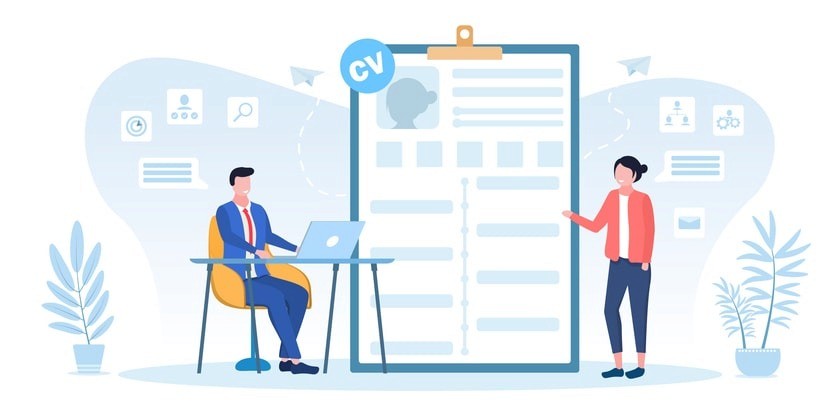
This section provides practical, tactical steps AI and engineering candidates can take in the next 30 days to increase their chances of landing better-paid offers. Preparation matters, and it’s often the difference between success and getting passed over.
Portfolio and Resume Preparation
Maintain a concise, impact-focused resume (1–2 pages) highlighting shipped models, infra, or systems with measurable outcomes. Quantify where possible: “Reduced inference latency by 40%,” “Deployed model serving 2M daily requests,” “Improved accuracy from 82% to 91%.”
Clean up your GitHub (or Bitbucket/GitLab) with 2–4 showcase repositories that are well-documented and relevant to target roles. If you’re interested in LLM work, show fine-tuning experiments. For infra roles, demonstrate distributed systems knowledge.
Add links to papers, blog posts, conference talks, or Kaggle competition results where applicable. These build confidence that you can learn, communicate, and apply knowledge.
Interview Readiness
Practice system design for ML and infra. Common prompts include designing an online inference service for a 7B parameter model, building a recommendation system with real-time updates, or architecting a training pipeline for large datasets.
Rehearse behavioral stories using the STAR format (Situation, Task, Action, Result) focused on real paid experience contributions. What problems did you solve? What impact did you have?
Refresh core CS fundamentals (data structures, algorithms) and core ML theory. These remain commonly assessed in 2025 technical interviews, even for senior candidates.
Align Expectations with Market Data
Research salary ranges on reputable sources like Levels.fyi, public salary bands from EU and UK employers, and marketplace benchmarks from platforms like Fonzi AI
Enter Match Day with a clear “target range” and a firm “walk-away” threshold. Knowing your numbers prevents you from undervaluing yourself
Fonzi AI’s recruiters can help refine resumes, suggest portfolio improvements, and provide interview coaching tailored to specific roles available on upcoming Match Days. The guidance is free for candidates.
Conclusion
Paid work experience in AI, ML, infrastructure, and data engineering is one of the clearest signals of long-term career momentum; it’s strongly tied to higher starting salaries, faster growth, and greater resilience as the tech market evolves. Whether you’re early in your career or between roles, choosing paid, real-world opportunities with credible employers creates compounding value that opens better doors over time.
That’s also where responsible AI in hiring comes in. Fonzi AI uses AI to streamline logistics and improve signal, while keeping humans firmly in charge of decisions, so candidates get clear evaluation criteria, upfront salary expectations, and faster timelines. If you’re ready to turn your experience into your next role, creating a free Fonzi AI profile and joining an upcoming Match Day is a practical way to connect with serious companies and make 2025–2026 career-defining years.
FAQ
What is the difference between a paid work experience program and a standard internship?
How much does paid work experience typically pay per hour across different industries?
Are employers legally required to pay for work experience if the student is receiving academic credit?
How does having paid work experience on a resume impact a graduate’s starting salary?
What are the most common types of paid work experience, such as apprenticeships and co-ops?