Auto Apply AI Tools: Can You Really Automate Job Applications?
By
Ethan Fahey
•

As an AI engineer, you’ve probably let an auto-apply bot fire off 500+ applications across LinkedIn, Indeed, and countless career pages. On paper, it sounds efficient. In practice, the results are familiar: maybe a couple of phone screens for roles that don’t really fit, a lot of silence, and the nagging feeling that most of those applications never reached a human. As automated job search tools become more common, many AI professionals are discovering that scale alone doesn’t translate into signal.
The real issue isn’t whether automation can send applications, it’s whether doing so helps or hurts your credibility in a crowded market. Auto-apply tools often trade precision for volume, which can quietly damage your chances with teams looking for clear, skills-aligned candidates. That’s why curated, skills-first platforms like Fonzi take a different approach. Instead of blasting applications into the void, Fonzi matches AI engineers, ML researchers, infra engineers, and LLM specialists with vetted companies that are already interested in their specific capabilities. For serious candidates, it’s a more intentional, higher-signal way to connect.
Key Takeaways
The landscape of job application automation has exploded in 2024-2026. Auto apply tools can now submit hundreds of applications for AI engineers and ML specialists in a single week, but quantity often comes at the cost of signal and candidate experience.
Most generic auto-apply platforms blast low-quality applications across job boards, while curated marketplaces like Fonzi focus on fewer, higher-signal matches between AI talent and vetted companies.
Fonzi uses AI to reduce noise (resume spam, irrelevant roles) and bias, not to replace recruiters or hiring managers. Its Match Day concentrates high-intent interviews into a short, efficient window.
Responsible AI in hiring means explainable matching, consent-based data use, and human oversight across every step of the process.
The goal isn’t to demonize automation, it’s to direct it toward quality matches and human-centered outcomes.
How Auto Apply AI Tools Actually Work Today
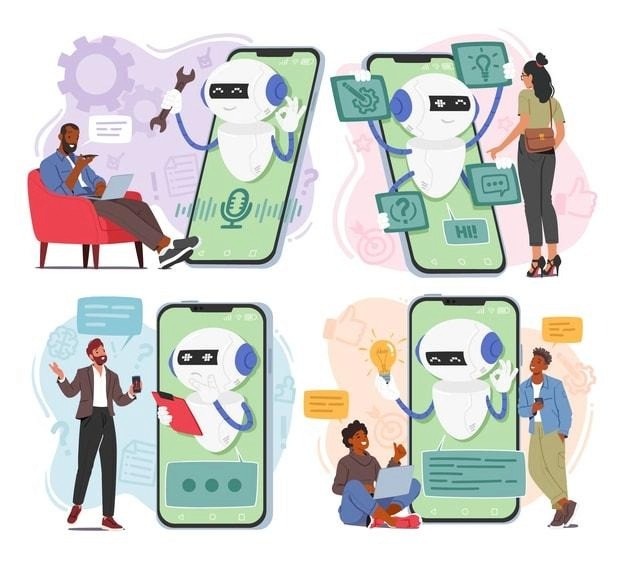
At their core, modern auto-apply systems operate by crawling job listings, parsing job descriptions with natural language processing, and auto-filling application forms with your stored candidate data. The goal is to remove the time-consuming, repetitive work of manually submitting applications one by one.
Here’s what happens under the hood:
Web Crawlers and Data Extraction
These tools deploy software bots to scan career pages across LinkedIn, Indeed, Greenhouse, Workday, and company-specific portals. They extract job postings, identify open roles matching your criteria, and queue them for submission.
NLP-Powered Matching
Natural language processing models analyze job descriptions to infer skill-role fit. More advanced tools use machine learning to compare your resume against role requirements, highlighting keywords that applicant tracking systems (ATS) expect to see.
Browser Automation and API Integrations
The actual submission happens through browser automation (think Selenium scripts) or API integrations with job boards. The tool works by emulating human actions, such as clicks, keystrokes, and form fills, to submit applications at scale.
Typical Setup Flow (2024-2026)
Most tools follow a similar process:
Upload your resume once
Define target titles (e.g., “Senior ML Engineer,” “LLM Ops Engineer”)
Set location, salary, and remote work preferences
Let the agent auto-apply daily across your specified platforms
Volume Ranges
Daily application volumes vary widely. Some platforms advertise 50-200+ applications per day, scanning hundreds of thousands of listings. Premium tiers push even higher volumes.
The key distinction: simple “one-click apply” helpers versus fully autonomous agents that answer screening questions, generate cover letters, and reword resume bullets for ATS optimization.
The more autonomous the tool, the less control you have over how you’re represented to hiring teams.
Benefits and Hidden Costs of Fully Automated Applications
For busy AI and infra engineers, the appeal of automated applications is real. You’re juggling technical work, open-source contributions, and maybe a research paper deadline. The last thing you want is to spend valuable time filling out the same form fields repeatedly.
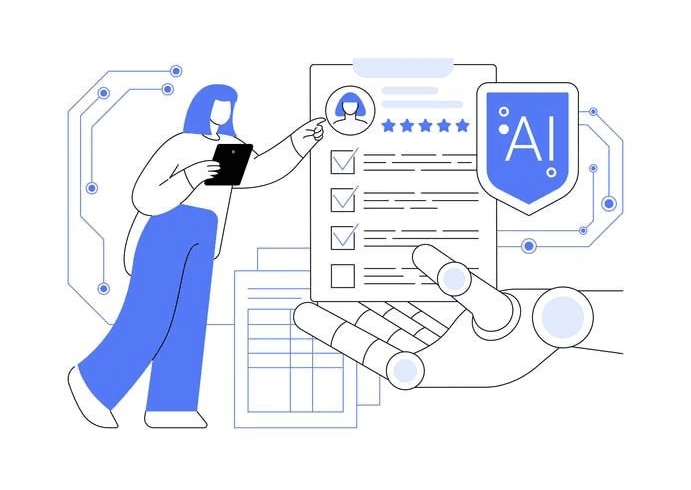
Clear Benefits
Never miss newly posted roles: Auto-apply tools monitor job boards continuously, capturing opportunities within hours of posting.
Increased surface area: You gain exposure to long-tail opportunities at Series A-D startups, lab teams, and companies you might never have discovered manually.
Basic ATS compatibility: Many tools optimize your resume with keywords parsed from job descriptions, improving your chances of passing initial automated screens.
Time savings: What might take hours of manual effort each week collapses into minutes of setup.
Hidden Costs
The downsides, however, are significant for AI professionals targeting high-quality roles.
Diluted Signal to Recruiters
When a hiring manager at an LLM startup receives 300+ applications in 24 hours, many of them obviously auto-generated and mismatched to the required research depth or infra stack, your carefully crafted application gets lost in the noise. Recruiters learn to distrust high-volume applicants.
Misaligned Applications
Generic auto-apply tools often apply to roles that don’t fit your skills. You’re a production MLOps engineer, but the system submits you for a computer vision research role. This wastes recruiter time and damages your personal brand.
Spam Detection and Account Bans
Platforms like LinkedIn actively flag automated activity. Data suggests 20-30% of automated submissions trigger spam detection. Some users report account bans or shadowbans that tank their visibility entirely.
Ethical and Reputational Concerns
Indiscriminate automatic application patterns erode trust between candidates and hiring teams. When companies see large volumes of low-intent submissions, they respond by adding more screening layers, making the job application process harder for everyone.
Here’s a concrete example: a 2024 LLM startup hiring manager reported receiving applications from candidates whose resumes listed “expert in transformer architectures” but who couldn’t explain basic attention mechanisms in screening calls. The culprit? Auto-apply tools are submitting on behalf of candidates who haven’t actually read the job postings.
Why Fonzi Takes a Different Approach to “Automatic Application”
Fonzi represents a fundamentally different model from “blast everything” job bots. Instead of maximizing volume, Fonzi focuses on curated, high-signal matching between AI talent and AI-hiring companies.
Pre-Screening Both Sides
Fonzi vets both candidates (AI engineers, ML researchers, infra, and LLM specialists) and companies (AI-heavy teams with clear roadmaps, budgets, and genuine hiring intent). This two-sided curation eliminates the noise that plagues public job boards.
AI for Prioritization, Not Secret Submissions
Fonzi uses AI to decide when and where to surface your profile to companies, not to secretly submit dozens of low-quality applications on your behalf. You remain in control of which conversations you pursue.
Stack-Aware Matching
Fonzi’s internal models analyze your GitHub contributions, past roles, and tech stack (PyTorch, JAX, Ray, Triton, Kubernetes, etc.) to map you to specific role types: “Founding ML Engineer,” “LLM Infra Lead,” “Applied Research Scientist.” This granularity matters for specialized AI roles.
Timing and Prioritization
The “automatic” layer is about intelligent timing: you set your preferences, and Fonzi’s AI decides which companies see your profile first based on fit, compensation bands, and the timing of their active searches.
How Fonzi Uses AI Responsibly in the Hiring Process
Fonzi’s AI is designed to increase clarity, rather than replace judgment or conceal how matching works.
Transparent Inputs
Matching relies on skills, experience, and preferences you explicitly provide. Fonzi bans the use of demographic features in its algorithms.
Continuous Monitoring for Bias
The platform monitors for unintentionally biased recommendations and periodically retrains models with fairness constraints. Audits using historical hiring outcomes ensure candidates from non-traditional backgrounds (bootcamps, open-source contributors without degrees) aren’t automatically penalized.
Humans Make Final Decisions
Recruiters and hiring managers at partner companies always make the final call on outreach and interviews. AI triages and surfaces relevant profiles, but humans decide.
Feedback Loops
When possible, Fonzi shares feedback on non-matches, helping you adjust your profile based on actual data rather than guesswork.
Inside Fonzi Match Day: High-Signal Automation Instead of Volume Spam

Match Day is where Fonzi’s approach to job application automation becomes tangible. Instead of slow, random inbound applications dribbling in over weeks, Match Day creates a synchronized marketplace with a time-boxed window (typically 24-72 hours) when Fonzi presents matched candidates to a curated set of companies actively hiring AI talent.
The Lifecycle:
Candidates complete Fonzi onboarding: You build your skills profile, link your GitHub, and specify preferences (remote vs. hybrid, research vs. applied, IC vs. tech lead).
Fonzi’s AI ranks you against current search briefs: The system identifies which open roles best match your background.
Companies log in on Match Day: Hiring teams see a prioritized list of pre-vetted candidates and send interview invitations during the same week.
Concrete Benefits vs. Auto-Apply Tools:
Fewer but higher-quality conversations: You’re not competing against 300+ spray-and-pray applicants.
Condensed timelines: Many candidates move from first conversation to job offer in 2-3 weeks.
Less context switching: No managing dozens of simultaneous, low-intent recruiter messages.
Match Day keeps humans in the loop: hiring managers review portfolios, research statements, or infra architecture write-ups before sending invites. This avoids the “black box auto-reject” experience common on public job boards.
What Candidates See and Control on Match Day
The candidate experience on Match Day prioritizes transparency and control:
Dashboard visibility: You see exactly which companies expressed interest, including role details (title, level, tech stack, salary band).
Hiring team notes: Companies can include specific notes—interest in a particular research paper you authored, or a project from your GitHub.
You decide engagement: There’s no “auto-accept” behavior. Fonzi’s automation handles discovery; you make decisions.
Response SLAs: Companies commit to timely responses within days, preventing the weeks-long silence common on job boards.
Preference updates: Before each Match Day, you can adjust preferences (location, role type, seniority) without rewriting your entire resume.
Responsible AI in Hiring: Clarity, Bias Reduction, and Human Judgment
AI in hiring is now mainstream, from ATS systems and sourcing tools to coding assessments and interview scheduling. But implementation quality varies enormously.
How Responsible Teams Use AI:
Deduplicating applicants across channels
Highlighting relevant experience that might be buried in a resume
Flagging potential job matches that could be overlooked due to unconventional backgrounds
Simplifying scheduling and communication logistics
Risks of Irresponsible Use:
Opaque rejection criteria that candidates can never understand or appeal
Over-reliance on resume keywords that disadvantage career changers
Models inadvertently learning to prefer certain schools, previous employers, or geographies
How Fonzi Mitigates Bias:
Excludes sensitive demographic attributes from matching algorithms
Focuses on skills, portfolio evidence, and measurable outcomes
Periodically retrains models with fairness constraints
Conducts external audits to validate equitable treatment
The bottom line: AI does not have the final say. Real hiring managers and recruiters still assess team fit, research alignment, and long-term potential through technical job interviews and genuine conversations.
Practical Strategies for AI & ML Candidates in an Automated Hiring World
Even as tools handle repetitive tasks, signal quality matters more than ever for AI and infra roles. Here’s how to stand out in 2026’s competitive market.
Portfolio Building
Maintain an up-to-date GitHub (or similar) with at least 2-3 substantial projects:
An end-to-end MLOps pipeline demonstrating production skills
An LLM fine-tuning project with evaluation code
A research repo replicating a 2023-2024 NeurIPS or ICML paper
Write Concrete Project Summaries
Emphasize metrics and impact that both humans and AI screeners can parse:
“Reduced inference latency by 40% through quantization and batching optimizations”
“Cut GPU costs by $15K/month by implementing dynamic autoscaling”
“Improved model accuracy by 8% through novel data augmentation techniques”
Align Your Profile to Specific Sub-Tracks
Help both ATS systems and Fonzi-style platforms route you correctly:
“Applied LLMs” for candidates focused on production language models
“Recommender Systems” for ML engineers building personalization
“Vision-Language Models” for multimodal research
“ML Infra / Platform” for those focused on serving and scaling
Use AI Assistants Selectively
AI tools work best for:
Rewriting bullet points for clarity
Drafting a baseline cover letter for editing
Generating study plans for mock interviews
Creating practice problem sets
Avoid delegating your entire job search process to automation blindly.

Preparing for Technical and Research Interviews
Here’s a focused, practical checklist for AI engineers, researchers, and infra specialists preparing for high-signal interviews.
Core Preparation Topics:
Area | Key Focus |
ML Theory | Optimization, generalization, regularization fundamentals |
Recent Papers | Transformer variants, retrieval-augmented generation, scalable serving |
Systems Design | Distributed training, model serving architecture, data pipelines |
Coding | LeetCode medium-hard, time-boxed practice sessions |
Structured Practice:
Time-boxed coding exercises (45-60 minutes per problem)
Mock interviews with peers or platforms like Pramp
Use AI tools as practice partners to generate problem sets or critique solution clarity
Deep Dive Preparation:
Be ready with 2-3 detailed walkthroughs of previous projects:
Problem framing and constraints
Design tradeoffs you made
Metrics and outcomes
Failures and what you’d do differently
Role-Specific Focus Areas:
Infra Engineers: Autoscaling, observability, GPU scheduling, cost optimization
Researchers: Experimental rigor, ablation studies, reproducibility, paper writing
Using Automation Without Losing Your Voice
Treat AI as a drafting and editing assistant, not an impersonator. Hiring managers in 2026 can generally spot fully generic AI text, tailored comments about a specific product, paper, or infra incident signal genuine engagement.
Recommended Workflow Patterns:
Write a rough bullet list yourself
Ask an AI tool to polish language and improve clarity
Generate an initial cover letter with AI
Personalize with real context about why that team and problem space matter to you
Protect Sensitive Information:
Before using any external AI assistant, remove:
Confidential company metrics
Proprietary technical details
Non-public product information
Maintain Your Voice:
Create a “voice file,” a short document capturing your personal phrases, communication style, and tone. Use it to edit AI-generated text so outputs sound authentically like you, not like a generic template.
Comparison: Generic Auto Apply Bots vs. Fonzi’s Curated Marketplace
For AI engineers deciding between high-volume automation and curated matching, understanding the tradeoffs is essential. The following table breaks down the key differences:
Aspect | Generic Auto Apply AI Tools | Fonzi Curated AI Talent Marketplace |
Application Volume | 100-300+ applications per day | 5-15 serious leads per Match Day cycle |
Match Quality | Spray-and-pray across public job boards | Pre-vetted, AI-heavy companies with active headcount |
Candidate Experience | Minimal feedback; weeks of silence common | Structured timelines; company SLAs on responses |
Company Experience | Overwhelmed by low-signal applications | Curated pool of relevant, verified AI talent |
Transparency & Control | Limited visibility into where you've applied | Full dashboard showing interest and role details |
Bias & Fairness | Varies widely; many tools amplify resume keyword bias | Audited algorithms; non-traditional backgrounds supported |
Typical Timeline to Interviews | Unpredictable; often 4-8 weeks | Days to first interview; 2-3 weeks to offers |
Key Takeaways from the Comparison
Volume alone doesn’t translate to more interviews or better job opportunities; targeting and signal quality matter more.
For specialized AI roles (senior ML engineers, LLM infra leads, applied researchers), curated platforms consistently outperform spray-and-pray approaches.
Generic auto-apply may still suit very broad junior searches where exposure matters more than precision.
The lesson isn’t that automation is bad; it’s that intelligent automation directed at quality matches produces better career outcomes than maximized application counts.
Conclusion: Let AI Clear the Path, Not Replace the Journey
Fully automating job applications often creates more noise than opportunity, especially in AI hiring. When candidates blast out hundreds of generic submissions, recruiters get buried in low-signal volume, and even strong, hard-earned skills are easy to miss in the pile.
That’s why curated, skills-first platforms like Fonzi take a different path. Instead of optimizing for application count, Fonzi uses AI to surface the right conversations at the right moment, connecting AI engineers, ML researchers, and infra talent with teams that are genuinely interested. The strongest candidates still lean on fundamentals, clear portfolios, concrete impact, and authentic communication, but Fonzi helps ensure that effort reaches the right people. At its core, the goal is human-centered hiring: AI should reduce noise so recruiters can spend more time understanding candidates, not filtering spam.
FAQ
How do AI tools automatically apply for jobs on your behalf?
What are the best auto apply AI tools for job applications?
Is it ethical to automate job applications with AI?
Does automatically applying for jobs increase or decrease your chances?
What are the risks of using automatic application tools?


