Best AI Interview Helpers: Practice, Prep & Assistants That Work
By
Samara Garcia
•
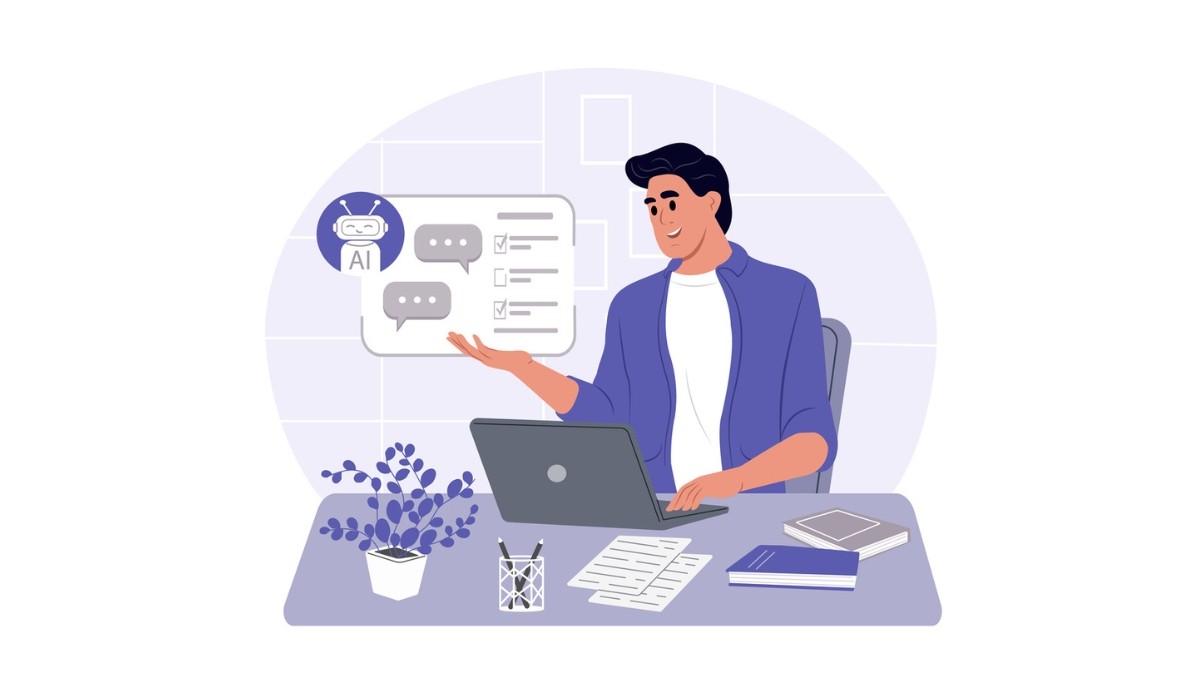
In 2026, AI interview tools are everywhere, but how you use them matters. The best ones help you practice and get sharper, not cheat your way into interviews you can’t pass. This guide breaks down what actually works and how platforms like Fonzi AI turn real preparation into real offers.
Key Takeaways
AI interview helpers in 2026 span three main categories: real-time copilots, mock interview platforms, and hiring-side tools used by companies for screening and matching.
Fonzi AI is not a cheating copilot; it’s a curated talent marketplace that utilizes AI to match elite AI/ML, infra, and data engineers with high-signal roles through 48-hour Match Day hiring events.
Fonzi’s AI is bias-audited, used for fraud detection and logistics, and designed to protect candidate experience while keeping final hiring decisions with humans.
Practice tools with instant feedback can boost interview confidence by 30-50% and callback rates by 25-40%, but real-time copilots during live interviews carry serious risks.
This guide covers concrete 2026 tool examples, tactical prep advice for AI/ML specialists, and how to pair smart prep with smart marketplaces for faster, better offers.
What Is an AI Interview Helper? From Copilots to Marketplaces
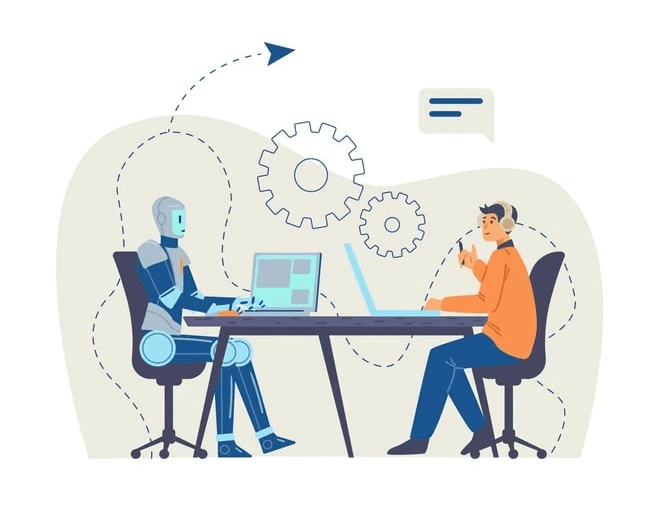
The term “interview helper” covers three distinct types of tools. Real-time interview copilots run during live calls and provide transcription, prompts, or suggested answers. Practice and mock interview platforms let you rehearse ahead of time by simulating interviews based on your resume and target role, then give feedback on structure, clarity, and confidence. AI-powered hiring platforms like Fonzi use AI behind the scenes to match candidates with roles, coordinate interviews, and reduce bias, without assisting during the actual interview.
Most modern tools offer resume analysis, role-specific question generation, interview analytics, and scheduling automation. The ethical difference matters. Practice tools help you prepare and improve. Real-time copilots that answer for you during live interviews are often explicitly prohibited and increasingly detectable, putting candidates at risk of rejection or being hired into roles they’re not ready to succeed in.
Best Types of AI Interview Helpers in 2026 (and When to Use Each)
Understanding which type of interview assistant to use, and when, can make the difference between a productive job search and wasted time.
AI Mock Interview and Practice Platforms
These tools let you upload your resume, target a specific job role, and run unlimited practice sessions. The AI generates realistic interview questions based on your background and the role’s requirements, then provides detailed insights on your answers.
What they offer:
STAR-method coaching for behavioral questions
Code correctness scoring for coding interviews
Response completeness metrics (e.g., “You covered 85% of key concepts”)
Filler word tracking (targeting under 5% usage)
Video analysis for eye contact and engagement
Real-Time Copilots
These are the controversial categories. Real-time copilots sit invisibly on your screen during a Zoom or Google Meet call, listening via audio input and offering live suggestions, answer structures, and even code snippets.
What they offer:
Live transcription of interviewer questions
Real-time suggestions for structuring answers
Coding hints during technical interviews
Stealth mode operation to avoid detection
The catch: Many companies now deploy proctoring and behavioral anomaly detection that catches 85% of hidden tool use. Getting flagged can mean immediate rejection and a permanent note in applicant tracking systems.
AI-Driven Hiring Platforms
These platforms use AI for matching, logistics, and fairness rather than answering questions for you. They focus on curated matches between experienced engineers and high-growth companies, apply bias-audited evaluation frameworks, and run structured, time-boxed hiring cycles where decisions happen quickly and transparently.
What they offer:
Pre-vetted candidate profiles matched to company needs
Salary transparency before interviews begin
Fraud detection for fake resumes or generated portfolios
Human-centered final decisions with AI handling logistics
When to use each type:
Tool Type | Best Timing | Primary Use Case |
Practice platforms | 2-4 weeks before interviews | Building skills, refining answers, gaining confidence |
Real-time copilots | Low-stakes practice only (if at all) | Understanding question patterns, never in real interviews |
Hiring platforms | Throughout an active job search | Finding high-signal roles, reducing interview noise |
How Companies Use AI in Interviews Today (Responsibly and Otherwise)
AI isn’t just something candidates use; it’s deeply embedded in how companies recruit, screen, and evaluate. Understanding this helps you prepare.
Common employer-side AI uses:
Resume screening at scale: Algorithms parse thousands of applications, matching skills to job descriptions and ranking candidates by fit
Coding test evaluation: Automated scoring of technical assessments, often with plagiarism detection
Fraud detection: Catching fake credentials, AI-generated portfolios, and suspicious interview behavior
Interview summarization: AI-generated notes that highlight key responses for hiring managers
Bias auditing: Standardized rubrics and scoring that reduce subjective bias
Concrete 2024-2026 trends:
Companies like those hiring through Fonzi now use AI-based coding assessment scoring that evaluates not just correctness but code quality, efficiency, and documentation. Automated JD-to-candidate matching surfaces relevant profiles faster, while structured question banks calibrated on prior hiring data provide consistency across interviewers.
Risks candidates should know about:
Black-box scoring systems that don’t explain rejections
Language model hallucinations that misinterpret unconventional resumes
Unfair flags for non-traditional backgrounds or career paths
Systems that penalize candidates for non-standard answer formats
How Fonzi AI Uses AI Interview Helpers the Right Way
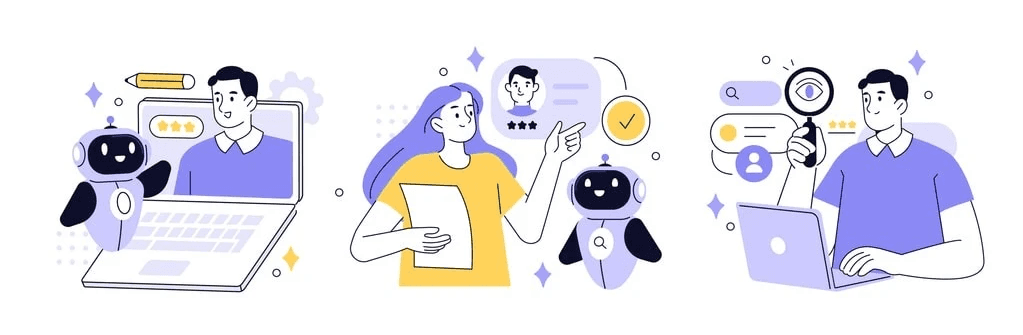
At Fonzi, we’ve built our platform around responsible AI use that improves the hiring process for everyone.
How we vet candidates:
We focus on experienced engineers (typically 3+ years in AI, ML, full-stack, backend, frontend, or data engineering)
Structured profiles capture real skills, not keyword-stuffed resumes
Bias-audited evaluation rubrics guarantee fair assessment across backgrounds
Our AI systems handle:
Fraud detection: Catching fake resumes, AI-generated portfolios without real work samples, and duplicate applications
Boilerplate detection: Identifying copy-paste profiles that don’t reflect genuine experience
Salary consistency: Ensuring ranges are transparent and aligned across similar roles
Match optimization: Surfacing the highest-signal pairings between candidates and companies
What we don’t do:
We do not provide live “cheat copilots” during interviews. We don’t whisper answers or offer real-time assistance while you’re talking to a hiring manager. Instead, we coordinate structured technical conversations where startups know exactly what they’re evaluating and candidates know what to expect.
Inside Fonzi Match Day: High-Signal Interviews Without the Noise
Match Day is Fonzi’s signature hiring event, a structured 48-hour window where pre-vetted AI engineers and companies come together for efficient, high-signal interviews.
How a typical Match Day works:
Candidate onboarding: Engineers apply, submit profiles, and go through our vetting process
Company commitment: Startups and high-growth companies specify roles and commit to salary ranges upfront, no bait-and-switch
AI-powered matching: Our systems propose pairings based on skills, experience, and preferences (location, remote, specific domains like LLM infra or MLOps)
Compressed interview window: All interviews happen within 48 hours, with offers often extended by the end
Why this works:
You primarily talk to startups already aligned on salary, skill needs, and logistics
No more weeks of scattered interviews across random platforms
Multiple offers can come from a single Match Day
The 48-hour window creates urgency that benefits prepared candidates
For AI/ML specialists, infra engineers, and data scientists who are well prepared, Match Day compresses what typically takes months into days.
Practical AI Interview Prep for AI/ML, Infra, and LLM Roles
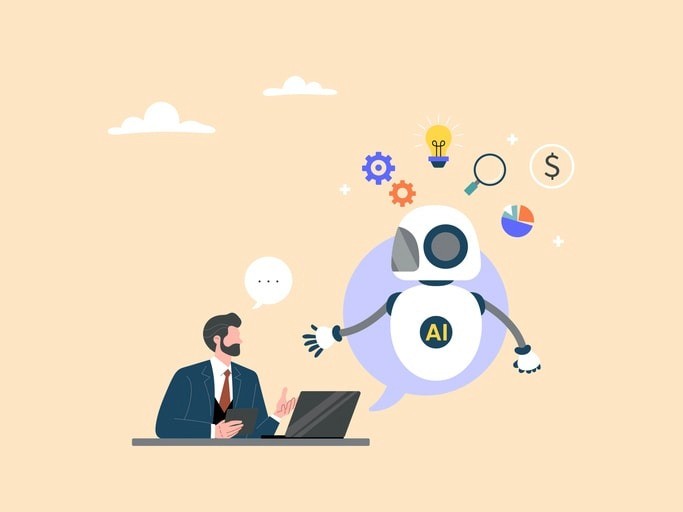
Preparation is where AI interview helpers deliver the most value. Here’s a tactical timeline for technical candidates.
3-4 Week Prep Timeline
Week 1-2: Foundation
Refresh core algorithms and data structures
Review system design patterns (distributed systems, caching, load balancing)
For ML roles: revisit 2023-2025 transformer architectures, RLHF fundamentals, retrieval-augmented generation
Week 2-3: Domain Depth
For LLM specialists: practice questions on fine-tuning, prompt engineering, inference optimization
For infra engineers: K8s, CI/CD pipelines, observability, scalability patterns
For ML engineers: model training pipelines, A/B testing, online vs. offline metrics
Week 3-4: Interview Simulation
Run daily mock interview sessions with AI practice tools
Record yourself and review transcripts for clarity and depth
Practice with friends or colleagues for human feedback
Using AI Practice Helpers Effectively
Generate realistic questions by uploading your resume and target job descriptions. For a software engineer role at an AI startup, expect:
Technical interviews: Coding questions on algorithms, ML system design, infrastructure decisions
Behavioral questions: STAR-structured scenarios about past projects, conflicts, and leadership
Domain-specific: For LLM roles, questions on context windows, hallucination mitigation, and multi-modal models
Comparison Table: AI Interview Helpers vs Fonzi AI Match Day
Tool Type | Primary Use | When to Use | Pros for Candidates | Risks/Limitations | How Fonzi Fits In |
AI Mock Interview Platform | Practice and skill-building | 2-4 weeks before interviews | Unlimited reps, instant feedback, builds confidence | Can't replicate human nuance, may overprepare generic answers | Use alongside Fonzi prep to arrive at Match Day well prepared |
Real-Time Copilot | Live answer assistance | Low-stakes practice only | Helps understand question patterns | Detectable by proctoring, can lead to skill atrophy, ethical issues | Not compatible with Fonzi's transparent, human-centered process |
Volume applications | Early job search exploration | Wide exposure to roles | Low signal, high noise, frequent ghosting | Fonzi replaces scattered applications with curated matches | |
ATS-Driven Large Company Pipelines | Structured enterprise hiring | Targeting specific large employers | Clear process, established brands | Slow timelines, black-box rejections, impersonal | Fonzi offers startup speed with structured process benefits |
Fonzi AI Match Day | High-signal curated matching | Active job search, ready for offers | 48-hour timeline, salary transparency, multiple offers possible | Requires vetting, focused on experienced engineers | Core platform for serious AI/ML job seekers |
The most effective approach combines practice platforms for skill-building with Fonzi’s high-signal marketplace for actual job opportunities. Using mock interviews to build confidence, then entering Match Day prepared, gives you better ROI than relying on scattered applications plus risky real-time copilots.
How to Use AI Interview Tools Without Hurting Your Chances
AI tools are powerful, but they can backfire if used carelessly. Here’s how to stay on the right side.
Best practices for ethical, effective use:
Use AI heavily in preparation, not performance: Resume feedback, question generation, mock interviews, all fair game. Real-time assistance during a live interview? That’s where you cross the line.
Treat AI suggestions as drafts: Rewrite everything in your own words. Inject your actual metrics and projects. A generic answer about “improving model performance” won’t impress; “reducing inference latency by 40% through quantization in Q3 2024” will.
Verify technical accuracy: AI tools can hallucinate or provide outdated information. If you’re discussing transformer architectures or distributed systems, make sure your explanations reflect current understanding.
Avoid overfitting to templates: Experienced interviewers can spot formulaic STAR responses or suspiciously polished answers. Your goal is to be well prepared, not robotic.
Self-check before relying on content: If you couldn’t reproduce the logic or code from memory without the tool, don’t use it in a live setting. The final round of your dream role isn’t the place to discover gaps in your understanding.
The goal of using an interview copilot for practice is to build confidence and skills you can deploy independently, not to create a dependency you can’t function without.
Summary
AI interview helpers fall into three categories: practice tools that help you prepare, real-time copilots that risk getting you flagged, and hiring platforms that use AI responsibly behind the scenes. The most effective approach is using AI for mock interviews, feedback, and confidence building, then pairing that preparation with high-signal marketplaces like Fonzi AI.
Fonzi doesn’t help you cheat interviews; it uses bias-audited AI to match vetted engineers with companies through fast, transparent 48-hour Match Day events. Used correctly, AI tools make you sharper and faster, while platforms like Fonzi turn real preparation into real offers.
FAQ
What are the best AI interview helper tools in 2026?
How do AI interview assistants help with practice and prep?
Can AI interview practice tools actually improve performance?
What features should AI interview prep tools have?
Are AI interview helpers worth using vs traditional prep methods?