What Is a Job Board? Definition, How They Work & Types Explained
By
Liz Fujiwara
•

Your Series B AI company posts a senior ML engineer role and quickly receives 400 applications. Weeks later, only a fraction have been screened, and months pass without a hire. This is common at fast-growing tech companies.
Job boards are not broken. They were simply never designed to handle the full hiring process. At their core, they are platforms for posting roles and collecting applicants, which works well for volume but not for highly specialized talent. For AI and engineering teams, speed and quality both matter. With tech roles often taking 40+ days to fill, relying on job boards alone slows hiring.
The takeaway is clear: job boards are a useful distribution channel, but not a complete hiring system. Platforms like Fonzi are built to fill that gap by automating screening and evaluation for AI and engineering roles while keeping hiring decisions with humans.
Key Takeaways
Job boards are still useful for distribution, but fast-growing tech companies face long hiring cycles, recruiter overload, and inconsistent candidate quality when relying on them alone.
Because most job boards optimize for clicks and applicant volume, hiring teams must add their own screening and assessment layers to find qualified candidates.
The advantage in 2026 comes from treating job boards as sourcing channels and layering AI-driven evaluation tools like Fonzi into the hiring stack while keeping decisions human-led.
What Is a Job Board? Clear Definition and Core Features

A job board is a website or application where employers publish job openings and job seekers can search, filter, and apply to roles that match their skills and preferences.
That’s the simple version. In practice, many job boards now function as job search engines, aggregating roles from ATS feeds, company career sites, and direct postings into a single searchable interface.
Common features on most job boards include searchable listings with filters for title, location, salary range, experience level, and remote options; company pages and employer profiles with branding, culture information, and open roles; resume uploads and candidate profiles that employers can search; employer dashboards for managing postings and viewing applicants; job alerts that notify candidates when new roles match their criteria; and application tracking tools or integrations with applicant tracking systems.
For tech companies, it’s important to understand that job boards are primarily top-of-funnel sourcing channels. They generate applicants, but they don’t inherently ensure fit or quality.
Platforms like Indeed, Monster, LinkedIn Jobs, and the now-sunsetted Stack Overflow Jobs excel at reaching candidates at scale. What they don’t do is tell you which of those 400 applicants can actually build the distributed system you need.
How Do Job Boards Work? Step-by-Step for Employers and Candidates
Understanding the mechanics of job boards helps you identify where they add value and where they fall short.
The employer workflow
Create an employer account on the platform
Purchase postings (pay-per-post, subscription, or free tier depending on the board)
Craft job listings with descriptions, requirements, and company information
Choose targeting options like location, visibility settings, or featured placement
Publish the role and start receiving applications
Manage applications through the job board’s interface or sync to your ATS
Most job boards allow employers to create detailed listings that include job descriptions, required qualifications, salary ranges, and work environment details. Clear, well-written listings tend to attract more relevant candidates.
The candidate workflow
Create a profile with contact info, work history, and preferences
Upload a resume or portfolio
Set up job alerts for roles matching specific search criteria
Search and filter available jobs by title, location, remote options, salary
Apply directly on the platform or get redirected to company websites
Job seekers can search through thousands of employment opportunities using relevant keywords, filtering by different industries, experience levels, and job types.
Where automation kicks in
Job boards use keyword matching and basic relevance ranking to connect employers and candidates. Recommendation engines suggest jobs to seekers based on their profiles and potential candidates to employers based on role requirements.
The limitation for tech hiring is that keyword-based matching often confuses buzzwords with real capability. A resume that mentions “machine learning” doesn’t mean the candidate can ship production ML systems, and these systems struggle with fast-evolving AI tech stacks while rarely catching misrepresentation or fraud in applications.
Types of Job Boards: General, Niche, and Beyond

Not all job boards are created equal. Choosing the right type matters significantly for your tech hiring outcomes.
General job boards
These are broad, high-volume platforms covering various industries and roles:
Indeed — the dominant aggregator with 250+ million monthly visitors
LinkedIn Jobs — professional networking integration with 200+ million U.S. members
Glassdoor — 70+ million company reviews with integrated job openings
ZipRecruiter — AI-powered matching popular with SMBs
Monster — 24 million monthly visitors with a strong international presence
General job boards excel at reach. If you want maximum exposure for your roles, posting jobs online through these platforms makes sense. The tradeoff is noise as you’ll receive applications from many candidates who don’t match your specific requirements.
Niche and industry-specific job boards
Specialized job boards focus on particular sectors, functions, or technologies:
Dice — The go-to for tech, IT, and software development roles
AngelList Talent (Wellfound) — Startup-focused with funding and equity details
We Work Remotely — Remote and flexible work positions
FlexJobs — Vetted part-time, freelance, and remote opportunities
Demand Curve — Growth and marketing roles
A niche job board like Dice delivers higher-quality candidates for tech roles because the audience is pre-filtered by interest and experience. The limitation is smaller candidate pools, which is great for relevance, challenging if you need high volume.
Local and regional job boards
City or country-specific platforms matter for hybrid or on-site roles:
London tech boards, Berlin startup boards, NYC-focused platforms
Particularly relevant when local labor regulations affect hiring
Company career sites
Platforms like Google Careers or Stripe’s jobs page function as single-employer job boards. They’re powered by ATS tooling and offer maximum branding control but lack cross-platform discoverability.
Aggregators and meta-search engines
Some platforms (including aspects of Indeed, Google for Jobs, and Reddit job boards) crawl and re-list jobs from multiple sources. This increases visibility but can fragment candidate tracking when applications come through different channels.
Job Boards vs Talent Marketplaces vs AI-Driven Hiring Platforms
Understanding how traditional job boards compare to modern alternatives helps you build a smarter hiring stack.
Dimension | Traditional Job Boards | Generic Talent Marketplaces | AI-Driven Platforms (e.g., Fonzi) |
Primary Function | Job distribution and candidate sourcing | Freelance/contract matching with basic vetting | End-to-end candidate evaluation and shortlisting |
Typical Use Case | Broad exposure for open positions | Project-based or contract hires | Full-time AI and engineering roles |
Matching Method | Keyword search and basic relevance | Profile-based matching with reviews | Multi-agent AI screening with skill verification |
Recruiter Workload | High; manual resume review required | Medium; some pre-screening done | Low; structured shortlists with candidate summaries |
Candidate Quality Signal | Minimal; volume over quality | Moderate; ratings and past work visible | High; fraud detection, code analysis, structured scoring |
Best Fit for Tech/AI Hiring | Top-of-funnel sourcing only | Contract or freelance engineering | Scaling full-time AI and engineering teams |
Benefits and Limitations of Traditional Job Boards for Tech Hiring
Job boards remain widely used in 2026 for tech roles. Understanding their strengths and weaknesses helps you deploy them strategically.
Core benefits of using job boards
Broad reach: Post job openings once and reach millions of potential candidates across industries
Passive candidate discovery: Resume databases let recruiters search for qualified candidates who haven’t applied directly
Employer branding opportunities: Company pages and branding tools help attract candidates through culture and reputation
Cost-effective sourcing: Posting fees of $100–$500 per role are lower than agency fees of 15–25% of salary
Familiar workflow: Many job boards offer straightforward interfaces that integrate with existing applicant tracking systems
The global online recruitment market continues to grow, with job boards remaining a mature, essential piece of the talent acquisition landscape.
Limitations for fast-growing tech companies
High volume, low signal: Hundreds of applications per role, but most don’t match your actual requirements
Heavy recruiter workload: Manual screening of 100+ resumes per posting is time consuming and leads to burnout
Resume inflation: Candidates oversell skills, and AI-generated applications make it harder to identify genuine expertise
Poor technical assessment: Keyword matching doesn’t evaluate whether someone can actually solve your engineering challenges
Fraud and misrepresentation: Fake credentials and ghost candidates are increasingly common
These limitations directly cause slower time-to-hire, inconsistent candidate quality across hiring managers, and recruiter bandwidth issues, especially when filling multiple AI and engineering roles simultaneously.
How Job Boards Make Money (And What That Means for You)
Understanding job board business models helps you interpret where your budget is going and why these platforms behave the way they do.
Common revenue streams
Revenue Model | Typical Cost | How It Works |
Pay-per-post | $100–$500 per listing | One-time fee for each job ad posted |
Subscription bundles | $300–$1,500/month | Unlimited or set number of postings per month |
Resume database access | $200–$1,000/month | Search and contact candidates directly |
Premium/sponsored listings | $200–$1,000+ per post | Boost visibility in search results |
Performance-based (PPC) | Variable | Pay per click on your job ad |
Additional monetization channels
Display advertising on the platform
Upsells for skill assessments or screening questions
Partnerships with ATS vendors
Backfilling arrangements with aggregators
The strategic implication
Here’s what matters: because most job boards optimize for clicks and volume, not hire quality, you need to layer in your own assessment and screening processes.
Paying for a subscription gets your roles seen, but it doesn’t guarantee candidates can actually do the work. That gap is where AI-enabled platforms that focus on match quality provide value.
Where Job Boards Fit in a Modern Tech Hiring Stack
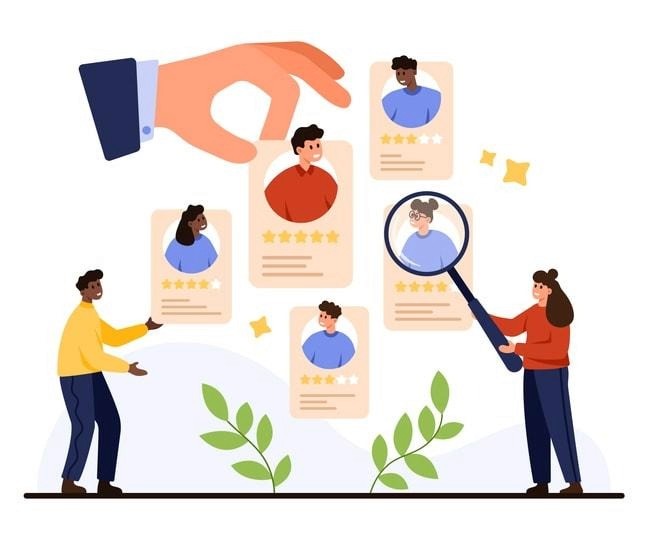
Think of your hiring stack as a combination of tools working together: job boards, ATS, assessment tools, scheduling software, and increasingly, AI decision-support platforms.
Job boards as top-of-funnel sourcing
For tech companies, job boards are best treated as sourcing channels that feed candidates into your ATS. They advertise jobs and generate applications without making hiring decisions.
Your ATS is where structured workflows, evaluation rubrics, and interviewer feedback live. That is where the actual hiring process happens.
How integrations work in practice
Create a job in your ATS with detailed job listings and requirements
Syndicate that role to multiple job boards automatically
Applications flow back into your ATS from all sources
Track, tag, and collaborate on candidates in one place
This approach lets you post open positions across many platforms while maintaining centralized candidate management.
Gaps that remain even with ATS + job boards
Manual resume review: Someone still has to read hundreds of applications
Fragmented feedback: Interviewers use different evaluation criteria
Subjective decision-making: Gut feelings vary across hiring managers
Ad-hoc fraud checks: No systematic verification of credentials or experience
These gaps are exactly where AI augmentation becomes valuable and where platforms like Fonzi enter the picture.
Introducing Fonzi: Beyond the Job Board for AI and Engineering Talent
Fonzi isn’t a traditional job board. It’s a specialized talent marketplace built for AI, data, and software engineering roles at fast-growing tech companies.
How Fonzi’s multi-agent AI works
Fonzi uses separate cooperating AI agents, each handling a part of the evaluation process:
Parsing agents: Analyze resumes, GitHub profiles, and portfolios for relevant experience
Fraud detection agents: Identify suspicious patterns, AI-generated content, and misrepresented credentials
Evaluation agents: Assess skills against real-world tasks and role requirements
Summary agents: Compile structured candidate profiles for recruiter review
Familiar concepts, deeper evaluation
Fonzi still uses core job board concepts, but instead of presenting hundreds of raw resumes, it delivers a shortlist of vetted, context-rich candidates with structured summaries and skill assessments.
Human decision-makers stay in control
This is critical: recruiters and hiring managers configure role requirements, interview steps, and final decision criteria. AI handles the repetitive analysis and ranking. You make the calls.
Benefits tailored to tech hiring
Faster time-to-shortlist, often in hours rather than weeks
Reduced false positives from resume inflation
Better detection of misrepresented skills
Higher consistency across different hiring managers and roles
How Fonzi Streamlines the Hiring Cycle Compared to Job Boards

Let’s compare two parallel scenarios for hiring a senior backend engineer.
Scenario A: Job boards only
Post to Indeed, LinkedIn, Dice
Receive 300+ applications over two weeks
Recruiter manually screens resumes (20+ hours)
Schedule 15 phone screens based on keyword matching
Discover half the candidates oversold their experience
Run technical interviews with 6 candidates
Make an offer after 45-60 days
Scenario B: Job boards + Fonzi
Post to job boards and Fonzi simultaneously
Fonzi’s AI analyzes all candidates against role requirements
Structured scorecards generated for each candidate (Python experience, distributed systems, etc.)
Fraud checks flag suspicious applications automatically
Recruiter reviews pre-vetted shortlist of 10-15 candidates
Schedule interviews with highest-scored matches
Make offer in 20-30 days
What Fonzi automates
Initial screening: Analyzes candidate experience, repositories, and technical signals
Fraud and quality checks: Cross-references claimed experience, flags suspicious patterns
Structured evaluation: Proposes or evaluates work samples using consistent rubrics
This approach directly addresses recruiter bandwidth issues. Instead of spending 20 hours on resume triage, recruiters focus on calibration calls, stakeholder alignment, and building relationships with top candidates.
Adopting AI in Your Hiring Stack Without Losing Control
The key concern many talent leaders have in 2026: they want the efficiency of AI in hiring without ceding control of decisions or introducing unexplainable bias.
Here’s how to adopt AI confidently.
Define clear governance practices
Specify which steps are AI-assisted versus fully human:
AI-Assisted | Human-Controlled |
Resume ranking and scoring | Final shortlist decisions |
Risk and fraud flagging | Interview scheduling and conduct |
Structured candidate summaries | Offers and compensation |
Skill verification | Culture fit assessment |
Use transparent evaluation criteria
Build structured scorecards and documented competencies for each role. When AI scoring is based on explicit rubrics, you can easily inspect and challenge recommendations.
Remember: Fonzi is decision-support, not auto-hiring
Humans review recommendations, approve or override rankings, and can always access raw candidate information. The AI surfaces signal and you make decisions.
Practical starting steps for tech companies
Pilot on one hard-to-fill role: Test AI-assisted screening on a senior engineering position
Compare results: Measure time-to-hire and candidate quality against traditional job-board-only hiring
Roll out gradually: Expand to more roles once you’ve validated quality and fairness
Conclusion
Job boards are useful for distributing openings and generating candidates, but they don’t solve slow hiring cycles, recruiter overload, or inconsistent quality. Traditional boards focus on volume, while you need to focus on signal.
The solution is combining job boards with structured processes, modern ATS, and human-centered AI. Fonzi takes this further with a specialized marketplace that provides faster shortlists, better fraud detection, and consistent candidate assessment while keeping final decisions in human hands.
See AI-powered hiring in action by booking a demo with Fonzi and compare your current time-to-hire to what is possible.
FAQ
What is a job board and how does it work?
What’s the difference between job boards and company career pages?
What are the different types of job boards (niche, general, industry-specific)?
How do job boards make money and charge for postings?
Are traditional job boards still effective in 2026?