What Does ATS Stand For? Applicant Tracking System Explained Simply
By
Ethan Fahey
•

It’s January 2026. You’re the Head of Talent at a Series B SaaS company, you open one AI engineer role, and within two weeks you’re buried under 800+ applications. Hiring managers want candidates yesterday, your inbox is overflowing, and you’re still trying to tell who’s actually fine-tuned an LLM versus who just added “AI” to their LinkedIn headline. This is exactly why applicant tracking systems exist. An ATS, short for Applicant Tracking System, is the backbone of modern hiring, helping teams collect, organize, and move candidates through the process from application to offer. Today, more than 98% of large enterprises and a growing number of startups rely on one, and if you’ve applied for a job in the last decade, your resume almost certainly passed through it.
The problem is that most ATS tools were built to track volume, not to win today’s AI talent race. They’re great at managing workflows, but far less effective at skills-based matching, deep technical signal, or spotting misrepresentation in a remote-first market. That’s where platforms like Fonzi come in. Fonzi works alongside your ATS using responsible AI to surface vetted, high-signal AI engineers and ML talent so recruiters spend less time sorting noise and more time having real conversations. For teams hiring business-critical AI roles, it’s a way to extend your existing stack with smarter matching while keeping human judgment firmly in control.
Key Takeaways
ATS stands for Applicant Tracking System, software that nearly every fast-growing tech company now relies on to centralize job postings, applications, and hiring workflows in one place.
Modern ATS tools solve slow hiring cycles, recruiter overload, and inconsistent candidate quality by automating job distribution, resume parsing, stage tracking, and team collaboration.
AI-enhanced platforms can automate screening, fraud detection, and structured evaluations without removing human decision-making from the process.
Fonzi is a talent marketplace that layers a multi-agent AI system on top of (or alongside) an ATS to deliver vetted AI and engineering talent faster and more fairly.
Adopting artificial intelligence in hiring is less about robots choosing people and more about giving recruiters superpowers while they keep full control.
What Does ATS Stand For and What Does It Actually Do?

Let’s start with the basics. ATS stands for Applicant Tracking System. It’s software used to manage job postings, job applications, and candidate workflows throughout the recruitment process.
Think of it as the central nervous system of your hiring operation. Here’s what a typical applicant tracking system handles:
Job posting distribution: Publish a role once and push it to your careers page, LinkedIn, Indeed, Wellfound, and niche job boards simultaneously.
Resume parsing: Extract structured data from resumes, such as names, emails, job titles, skills, education, and store it in searchable candidate records.
Candidate tracking: Move applicants through stages like Applied, Phone Screen, Technical Interview, Onsite, Offer, and Hired.
Team collaboration: Let hiring managers, interviewers, and recruiters share notes, scorecards, and feedback in one place.
Communication automation: Send acknowledgment emails, interview reminders, and rejection notices without manual effort.
An ATS creates a single source of truth for every role. When you post “Senior Machine Learning Engineer, San Francisco, June 2026,” the system tracks every candidate associated with that job requisition, from first application to final hire.
Historically, older ATS products focused heavily on compliance and record-keeping. They were built to satisfy OFCCP requirements, maintain audit trails, and prove you followed a fair process. This made them essential for legal protection, but limited in their ability to actually help you find the best candidates.
For most companies today, the ATS is the backbone of their hiring stack. It integrates with scheduling tools like Calendly, background checks providers, HRIS systems, and increasingly, talent marketplaces like Fonzi that bring vetted candidates directly into your pipeline.
Why Fast-Growing Tech Companies Depend on ATS Today
The tech hiring environment in 2026 is brutal.
Competition for AI and engineering roles is fiercer than ever. Teams are distributed across time zones. And the pressure to move from job requisition to signed offer in under 30–45 days is intense, because every week you delay, your top candidates are fielding competing offers.
Here are the core pain points an ATS is meant to solve:
Problem | Without ATS | With ATS |
Scattered resumes | Lost in email inboxes and Slack DMs | Centralized in one searchable database |
Lost candidate history | No record of past interactions | Full timeline of notes, emails, stages |
Unstructured feedback | Verbal opinions, no documentation | Standardized scorecards and ratings |
Slow response times | Days to acknowledge applications | Automated emails sent instantly |
Consider a practical example: You’re a growing startup posting a Staff Backend Engineer role to LinkedIn, Wellfound, and a few AI-specific job boards. Within a week, you receive 400 applications from different sources. Without an ATS, you’d be copying and pasting data into spreadsheets, losing track of who came from where, and manually emailing each applicant.
With an ATS, all those applications flow into one system. The software normalizes the data, assigns candidates to the right pipeline, and lets your recruiting team focus on evaluation rather than data entry.
ATS tools also enable team collaboration at scale. Hiring managers can see exactly where candidates stand. Interviewers log structured feedback using consistent scorecards. Everyone stays on the same page without endless status update meetings.
But despite these benefits, traditional ATS implementations still leave recruiters underwater. Even with good tooling, your team might spend hours each week triaging low-signal applications for highly technical roles, scrolling through resumes that look similar on paper but vary wildly in actual capability.
Key Benefits of Applicant Tracking Systems for Recruiters and Employers

The right ATS can compress hiring cycles from months to weeks, especially for engineering and data roles where time-to-hire directly impacts product roadmaps.
Here are the core benefits in business terms:
Faster time-to-fill
By automating job posting, initial screening, and interview logistics, an ATS reduces the manual processes that slow down hiring. Companies using mature ATS implementations often see time-to-fill improvements of several days to weeks, depending on their baseline.
Better candidate organization
Instead of hunting through email threads, recruiters can search by skills, location, experience level, or custom tags. Finding passive candidates you spoke with six months ago takes seconds, not hours.
Improved communication
Automated emails keep candidates informed. Acknowledgment messages go out immediately. Rejection notes are sent consistently. This protects your employer brand and reduces candidate drop-off from “black hole” experiences.
Measurable recruiting analytics
ATS reporting shows you where your pipeline is healthy and where it’s broken. For example, if you notice that senior AI researcher roles are stuck at the technical screen stage for an average of 12 days, you can investigate whether your interview loop is too long or your compensation is misaligned.
Recruiter bandwidth
Automation of repetitive tasks, email updates, rejection notes, basic scheduling, frees your team to focus on sourcing top talent, aligning with stakeholders, and closing offers. This is where recruiters add the most value.
For founders and heads of talent, ATS visibility into pipeline health helps you forecast hiring capacity. You can align your hiring plans to funding milestones, product launches, or seasonal demand without flying blind.
How ATS Systems Work Under the Hood
Let’s walk through what actually happens inside an ATS from the moment a job is created to when a candidate is hired.
Step 1: Creating a job requisition
A recruiter or hiring manager creates a new requisition with details like job title, department, location, salary band, and required qualifications. This becomes the anchor for everything that follows.
Step 2: Posting to job boards
The ATS publishes the role to your careers site and syndicates it to multiple job boards, such as Indeed, LinkedIn, Glassdoor, and other niche sites, with a single click. It tracks which source each candidate came from, enabling source-of-hire analytics later.
Step 3: Receiving and parsing applications
As candidates apply, the ATS ingests their resumes and cover letters. The parsing engine extracts structured fields: name, email, phone, work history, education, and skills. These populate the candidate record and make profiles searchable.
Step 4: Keyword matching and filtering
Recruiters configure screening criteria at the requisition level. Common filters include:
Must-have keywords (Python, Kubernetes, PyTorch)
Minimum years of experience
Location or work authorization requirements
Knockout questions (e.g., “Are you authorized to work in the US?”)
The ATS uses these filters to surface resume matches and flag candidates who meet or fail threshold criteria.
Step 5: Stage progression and collaboration
Candidates move through pipeline stages. Interviewers log feedback using structured scorecards. Hiring managers compare candidate evaluations side by side. Status changes are logged automatically for compliance purposes.
Step 6: Offer and hire
When a finalist is selected, the ATS supports offer management, including approvals, templates, and e-signature integration. Once the candidate accepts, their data flows to your HRIS or onboarding system.
It’s important to understand that ATS systems generally do not “make the hire.” They surface options and track decisions, while humans choose who advances and who receives offers.
The Limits of Traditional ATS in 2026
Here’s a realistic scenario: It’s August 2026, and you’ve posted a remote Machine Learning Engineer role. Within three weeks, you have 1,200 applicants. You have 3 internal recruiters and 6 hiring managers involved in the process.
Even with a solid ATS, you’re in trouble.
Volume overwhelms conventional setups
When recruiters can’t manually review 1,200 resumes, they lean on blunt filters: “Must have FAANG experience,” “Only SF-based,” “5+ years minimum.” These filters reduce volume but also eliminate strong outliers; the self-taught engineer who shipped production models at a Series A startup, or the researcher from a non-traditional university who published influential papers.
Keyword matching misses nuance
Traditional resume screening relies on matching job descriptions to resume keywords. But assessing deeply technical skills such as multimodal model optimization, distributed training on GPUs, LLM evaluation frameworks requires context that keyword scans can’t provide. A candidate might have the exact skills you need, but describe them differently than your job description.
Fraud and misrepresentation are rising
Generative AI has made it easier than ever for candidates to fabricate impressive-sounding resumes. Inflated titles, misrepresented contributions to open-source projects, and plagiarized project descriptions are increasingly common. Traditional ATS tools have no built-in mechanism to detect these issues.
ATS tracks but doesn’t evaluate
Your applicant tracking system can store data and enforce stages, but it’s not inherently built to verify technical claims, run structured skill-based evaluations, or detect fraud at scale. That’s a gap that requires something more.
Beyond ATS – How Fonzi’s Multi-Agent AI Enhances the Hiring Stack
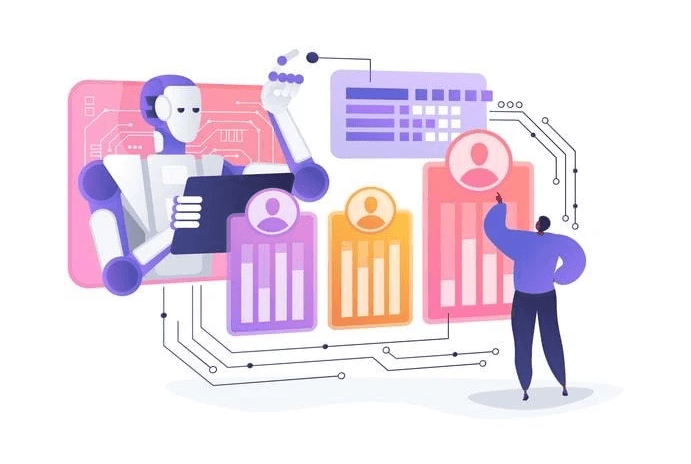
Fonzi is a talent marketplace specifically focused on AI, machine learning, and senior engineering roles. It’s designed to sit alongside your ATS, not replace it.
Think of Fonzi as an intelligence layer on top of your existing infrastructure. While your ATS handles the plumbing, such as posting jobs, collecting applications, tracking stages, Fonzi handles the thinking.
What is multi-agent AI?
Instead of a single AI model trying to do everything, Fonzi uses multiple specialized AI agents that each handle focused tasks:
A screening agent analyzes candidate portfolios, GitHub repos, and work history
A fraud-detection agent cross-checks employment dates, project claims, and public contributions
A role-fit agent evaluates how well a candidate matches your specific tech stack and team context
An orchestration agent coordinates everything and presents findings in clear, human-readable summaries
How it integrates with your ATS
Fonzi can connect to common ATS platforms via integrations or data exports. Vetted candidates appear in your ATS with rich, structured evaluation notes instead of just raw resumes. Your recruiters see the same candidate record they’re used to, but now it includes AI-generated assessments they can review and act on.
The key difference
Fonzi’s AI handles the heavy lifting, screening portfolios, checking for inconsistencies, or benchmarking skills while recruiters maintain final say on who interviews and who is hired.
This isn’t about replacing your ATS. It’s about upgrading it into a high-precision hiring system for technical talent, without asking your team to rip and replace their current tools.
How AI and Multi-Agent Systems Transform Screening, Fraud Detection, and Evaluation
AI in hiring doesn’t have to mean black-box decisions that recruiters can’t explain. Fonzi uses transparent, agent-based workflows designed to support human judgment, not replace it.
Here’s how it works across three core areas:
Candidate screening
Fonzi’s screening agents go beyond resume keywords. They analyze GitHub repos to assess code quality and contribution patterns. They review papers and publications for genuine research impact. They evaluate Kaggle profiles, portfolio projects, and prior work history to determine whether candidates have actually built or shipped what they claim.
The result: your recruiters receive a shortlist of qualified candidates who have been vetted for real capability, not just keyword matches.
Fraud detection
With generative AI making it easier to fabricate application materials, fraud detection has become essential. Fonzi’s agents cross-check:
Employment dates across multiple sources
Project details against public repositories
Claims about open-source contributions
Duplicate or templated application content
Candidates flagged for likely misrepresentation are surfaced for human review before they waste an interviewer's time.
Structured evaluation
One of the biggest challenges in technical hiring is inconsistent evaluation. Different interviewers focus on different things. Feedback is unstructured. Comparisons across candidates are unreliable.
Fonzi generates consistent skill rubrics; covering areas like LLM ops, data engineering, distributed systems, or ML infrastructure, and produces standardized scorecards. These can be logged directly into your ATS, giving hiring teams a clear, comparable view of each candidate’s strengths.
Human Oversight and Fairness – Keeping Recruiters in Control
A common objection to using AI tools in hiring is fear: “Will AI replace our recruiters? Will it inject bias we can’t see or control?”
These concerns are valid. And the answer depends entirely on how the AI is designed.

AI proposes, humans decide
In Fonzi’s model, AI agents propose and summarize, but humans make the final call. Recruiters can accept recommendations, override them, or request more context on any candidate. The AI surfaces evidence and structured views; it doesn’t click “hire” on your behalf.
Structured evaluation reduces arbitrary decisions
Ironically, using consistent skill-based rubrics can actually increase fairness compared to unstructured resume sorting. When every candidate is evaluated against the same criteria, you reduce the influence of unconscious bias, “gut feel,” and irrelevant proxies like university prestige or employer brand.
Transparency and auditability
Fonzi is designed to expose the reasoning behind agent judgments. When a candidate receives a “strong” rating, recruiters can see which projects, repositories, or papers led to that conclusion. This makes decisions auditable and defensible, important both for internal trust and regulatory compliance.
AI as co-pilot, not gatekeeper
The right frame is to see AI as a co-pilot to your ATS and recruiting team. It handles the cognitively heavy, repetitive work, such as screening, fraud checks, and initial skill assessments so your human team can focus on relationships, candidate experience, and closing offers.
Comparing Traditional ATS Functions vs Fonzi’s AI-Enhanced Marketplace
To clarify where a standard ATS stops and where Fonzi adds value, here’s a side-by-side comparison:
Function | Typical ATS | Fonzi + ATS |
Candidate intake | Collects applications from job boards and careers site | Curates a vetted pool of AI and engineering talent before they enter your pipeline |
Resume matching | Manual keyword filters and basic rules | Agent-based code, portfolio, and contribution analysis |
Fraud detection | None built-in; relies on manual review | Automated cross-checking of dates, claims, and public profiles |
Skill evaluation | Unstructured or inconsistent scorecards | Standardized rubrics across technical domains (LLM ops, data engineering, etc.) |
Time to first qualified candidate | 2–4 weeks on average | 48–72 hours for vetted matches |
Recruiter workload | High volume of manual triage | Focused review of pre-screened, high-signal candidates |
Human control | Full control, limited support | Full control with AI-generated insights and evidence |
The bottom line: Your ATS remains the operational backbone, being the system of record for job applications, candidate tracking, and compliance. Fonzi supplies the depth, accuracy, and speed you need to hire for highly technical roles without drowning in volume or missing top candidates.
How to Confidently Add AI and Fonzi to Your ATS Stack
You don’t need to rebuild your hiring process from scratch. You can layer Fonzi and AI capabilities onto your existing ATS in phases.
Here’s a simple 4-step adoption approach:
Step 1: Pilot with your hardest-to-fill roles
Start with one or two positions where the pain is highest, typically senior ML engineers, AI researchers, or staff-level backend roles. These are the roles where manual processes break down fastest.
Step 2: Connect Fonzi to your ATS or workflows
Integrate Fonzi with your existing tools, so vetted candidates flow into your ATS with structured evaluation notes attached. This keeps your system of record intact while adding intelligence.
Step 3: Benchmark outcomes
Track practical metrics to measure impact:
Time-to-first-qualified-candidate
Onsite-to-offer conversion rate
Recruiter hours saved per role
Candidate NPS or experience scores
Step 4: Expand to more roles
Once you’ve validated results on pilot roles, extend Fonzi to additional engineering and data positions. Build internal playbooks based on what you learned.
Involve hiring managers early
Show your hiring managers example Fonzi scorecards and evaluation artifacts before rolling out broadly. When they see the quality of signal, and how it reduces their interview load, adoption becomes much easier.
The goal throughout is to keep humans making final decisions while delegating repetitive, error-prone work to AI agents that can handle it at scale.
ATS as the Foundation, AI as the Force Multiplier
An ATS is still the backbone of hiring at fast-growing tech companies. It keeps roles, candidates, and workflows organized, and no serious recruiting team can operate without one. The challenge is that traditional ATS platforms weren’t built for today’s AI and engineering hiring reality, where global candidate pools, massive application volume, and highly specialized skill sets make it harder than ever to spot real signal.
That’s where Fonzi comes in. Fonzi extends your existing ATS with multi-agent AI that helps recruiters move faster and make better decisions, screening for real skills, flagging potential fraud, and structuring evaluations at a scale humans simply can’t manage alone. Importantly, it doesn’t replace recruiter judgment; it amplifies it. For teams hiring AI engineers and senior technical talent, pairing a solid ATS with responsible AI like Fonzi is quickly becoming the new baseline, and the companies that adopt this approach early are the ones most likely to win the talent race.
FAQ
What does ATS stand for in business and recruiting?
What is an Applicant Tracking System and how does it work?
Why do job seekers need to know about the ATS acronym?
How do ATS systems screen resumes and applications?
What are other common meanings of the ATS abbreviation?