Transitioning to Agile without Disrupting Your Teams Productivity
By
Samara Garcia
•
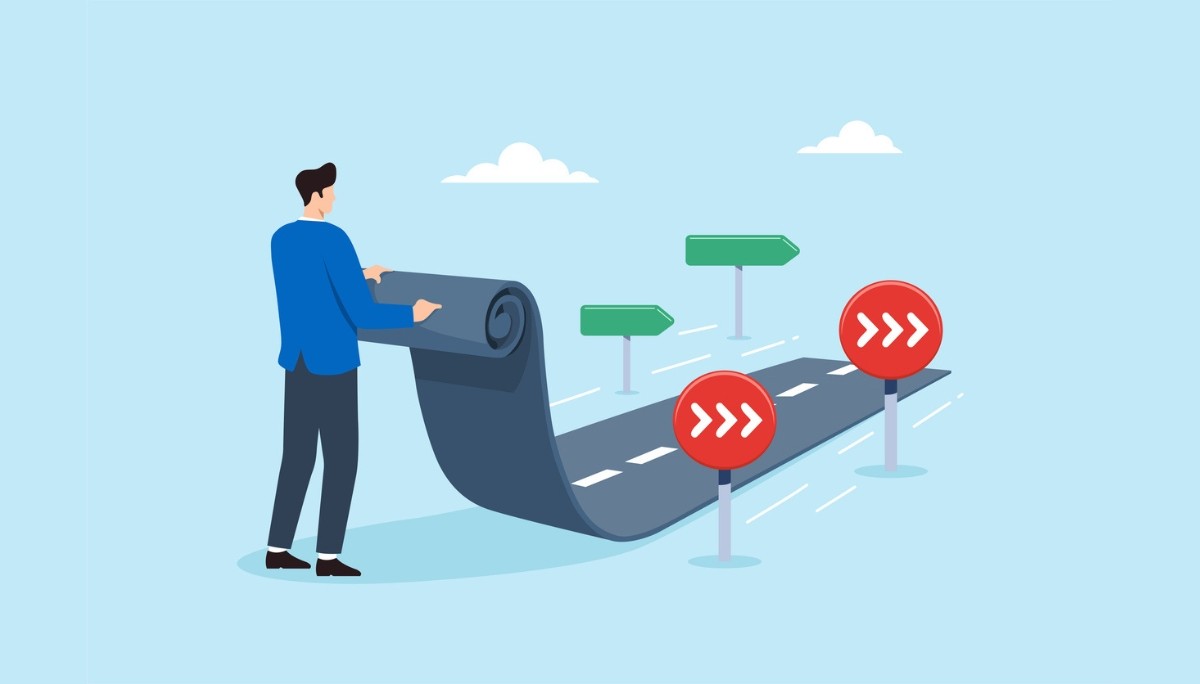
AI teams aren’t falling behind because they lack talent; they’re slowed by delivery models built for a slower era. As competitors ship weekly, many companies are still stuck in quarterly cycles that can’t keep up with AI-driven product demands.
This guide shows how to implement agile without killing velocity, and when hiring experience matters more than process tweaks. Fonzi AI helps teams move faster by matching them with engineers who’ve already shipped in high-speed, agile environments.
Key Takeaways
Agile implementation, when done incrementally through pilot teams and phased rollouts, improves delivery speed and quality without creating operational chaos or derailing existing roadmaps.
The biggest risks during agile transitions are cultural, unclear ownership, resistance to change, and overloading teams with ceremonies, not selecting the wrong tools or frameworks.
Staffing agile-experienced engineers and tech leads before transformation begins dramatically reduces the learning curve and protects productivity during the shift.
Fonzi AI helps maintain momentum during agile transitions by quickly placing pre-vetted, agile-native engineers and AI talent through 48-hour Match Day hiring events.
Realistic agile transformation timelines range from 3–18 months, depending on organizational size and complexity, with visible improvements appearing in pilot teams within the first quarter.
Key Challenges: Why Agile Implementations Disrupt Productivity

Series A through Series D tech companies often fail at agile for the same reason: they treat it as a training exercise instead of an operating model change. Leadership announces “we’re going agile,” runs a workshop, and expects teams to adapt on their own. A few months later, cycle times increase, engineers feel frustrated, and stakeholders question the value of the shift.
The breakdown is predictable. Teams are asked to run sprints while still maintaining legacy systems, handling production incidents, and responding to ad-hoc requests, leaving no space to absorb new ways of working. Product ownership is often unclear, creating conflicting priorities, while rigid Scrum ceremonies add meetings without improving output. At the same time, leadership pushes agile values but continues to demand fixed scope, upfront plans, and timeline certainty.
Without the right roles in place, such as a true product owner or an experienced tech lead, these tensions compound. Agile works when it’s introduced incrementally, with clear ownership and aligned expectations, not as a one-time process announcement.
Step 1: Define the Why, Where, and When of Agile for Your Organization
Not every department needs the same level of agility at the same time. Forcing your infrastructure team into the same sprint cadence as your product squad creates friction without benefit. Successful implementation starts with clarity about what you’re trying to achieve.
Document 2–3 concrete business outcomes for 2026. Generic goals like “be more agile” don’t work. Instead, define measurable targets: cut cycle time for AI feature releases from 90 to 30 days, reduce failed engineering hires by 30%, or ship MVP iterations to three new customer segments before Q3. These outcomes become the filter for every agile decision.
Choose 1–2 pilot areas instead of going agile everywhere. Your core product squad, data platform team, or ML experimentation group makes a better starting point than an organization-wide mandate. Pilot teams can experiment, fail safely, and develop practices that work in your specific context before spreading.
Establish guardrails for existing deliverables. Identify which commitments cannot slip, perhaps a March 2026 product launch or a SOC 2 compliance deadline, and explicitly design your agile approach to protect them. The development process should enhance predictability, not undermine it.
Involve HR and recruiting early. When you shift to agile teams, job descriptions need updating. Performance expectations change. Hiring profiles must reflect new requirements. Bringing talent leaders into planning guarantees you’re sourcing candidates who understand agile software development rather than discovering the gap after offers are made.
The agile manifesto emphasizes individuals and interactions over processes and tools. Starting with clear outcomes and the right pilot scope respects that principle while protecting your business.
Step 2: Choose an Agile Approach That Won’t Break Flow
There are three common approaches to rolling out agile methodology: top-down mandates, bottom-up organic adoption, and hybrid models combining executive sponsorship with empowered teams. Each has tradeoffs for productivity.
Top-down implementation happens when a CTO or VP of Engineering decides all squads will run Scrum starting next quarter. The 2025 version of this looks like a company-wide Jira migration, mandatory training sessions, and standardized sprint lengths. The upside: consistency and clear expectations. The downside: teams without agile experience struggle simultaneously, creating organization-wide slowdowns and no internal experts to learn from.
Bottom-up implementation starts with a single product team experimenting with Kanban or Scrum because they believe it will help. Leadership notices improved delivery and encourages other teams to learn from them. The upside: changes are organic, and teams have genuine buy-in. The downside: scaling takes longer, and inconsistencies emerge across teams.
Hybrid approaches typically work best for fast-growing tech firms. Executive sponsorship provides air cover, resources, and clear priority. Pilot teams have autonomy to adapt practices to their context. Early wins create proof points that accelerate adoption elsewhere. Company leaders set direction while teams reflect and adjust.
Comparing Common Agile Frameworks for First-Time Implementations
Before selecting a framework, understand what each actually looks like in a working software team rather than a certification course.
Scrum structures work into fixed-length sprints (typically two weeks) with defined roles: the product owner manages priorities, the scrum team builds features, and a Scrum Master or delivery lead removes blockers. Ceremonies include sprint planning to commit to goals, daily standups to surface issues, and retrospectives where teams reflect on improvement. Scrum works best for cross-functional teams shipping user-facing features, think a product squad releasing a new AI recommendation engine every sprint.
Kanban visualizes work on kanban boards, and limits work in progress without requiring fixed iterations. There’s no sprint planning or time-boxed delivery; instead, managing flow and cycle time become primary concerns. Kanban suits DevOps teams handling incident response, data engineering groups with unpredictable inflow, or platform teams that can’t predict what requests arrive next week.
Lean principles, eliminating waste, reducing handoffs, optimizing for value delivery- should inform any framework choice. Whether you run Scrum or Kanban, asking “Does this ceremony or practice actually help us ship better software faster?” keeps you focused.
For first-time implementations, avoid selecting scaled frameworks like SAFe prematurely. Start with team-level Scrum or Kanban for at least 3–6 months. Master the basics before adding coordination complexity. Extreme programming practices like pair programming and test-driven development can be layered on once the core agile approach stabilizes.
Step 3: Redesign Roles, Teams, and Hiring to Support Agile

Agile breaks down when companies keep the same org charts and job descriptions. Productivity improves only when team structure reflects how work actually flows.
Core agile roles for a mid-sized tech company:
Product Owner: Owns the backlog, sets priorities, translates customer needs, and says no to misaligned requests.
Tech Lead: Guides architecture, mentors engineers, and surfaces technical complexity during planning.
Scrum Master / Delivery Lead: Facilitates ceremonies, removes blockers, and protects focus (not a people manager).
Cross-functional engineers: Frontend, backend, AI/ML, QA, and data engineers working in stable squads of 6–10.
When teams contain all skills needed to ship, dependencies drop and cycle times shrink.
Reskill when engineers have strong fundamentals but limited agile experience, coaching and pairing work well.
Hire externally when core skills are missing (e.g., ML for a new AI product). Learning everything at once slows delivery.
Align roles and incentives with agile
Update job descriptions to emphasize collaboration, sprint ownership, and outcomes, not task execution.
Shift performance reviews from individual ticket counts to team outcomes: lead time, defect rates, and customer impact.
Include agile skills in competency matrices: sprint planning, breaking work into increments, and effective pairing.
Agile succeeds when roles, hiring, and incentives all reinforce how teams actually work.
Step 4: Protect Productivity with Thoughtful Practices and Tooling
Adopting every agile ceremony because “that’s what Scrum says” is a guaranteed way to destroy productivity. Focus on a minimal, high-value set of practices that solve real problems for your team.
Recommended starter set for pilot teams:
Practice | Time Investment | Purpose |
Sprint Planning | 60–90 minutes per sprint | Align team on goals, break work into manageable chunks |
Daily Standup | 15 minutes daily | Surface blockers, coordinate dependencies |
Backlog Refinement | 60 minutes per sprint | Clarify upcoming work, estimate effort using story points |
Sprint Retrospective | 45–60 minutes per sprint | Enable continuous improvement and continuous learning |
Sprint Review | 30 minutes per sprint | Demo working software to key stakeholders |
Keep meetings from derailing productivity:
Every meeting needs a clear agenda shared beforehand
Timeboxes are non-negotiable; when time is up, the meeting ends
Facilitation focuses on outcomes, not status reporting
Anyone not directly contributing to the discussion can skip
Tooling choices matter less than configuration. Whether you use Jira, Linear, or GitHub Projects, configure your boards to reflect actual workflow stages. Make work visible so team members can see what’s in progress and what’s blocked. Integrate with your development tools so deployments and pull requests connect to tickets automatically.
Limit work in progress (WIP) explicitly. If your development team has five engineers, having 15 tickets in progress simultaneously means everyone is constantly context-switching. Cap WIP at twice your team size and enforce it. This single practice, making all work visible and limiting parallel work, often drives immediate productivity gains.
Using AI to Support Agile Without Losing Human Control
AI works best in agile teams when it handles low-leverage work, not judgment.
In delivery: AI can automate ticket triage, sprint forecasting, test generation, and documentation, freeing engineers to focus on design and problem-solving.
In hiring, Fonzi AI uses a multi-agent system for screening, fraud detection, and structured evaluation, so recruiters spend less time filtering and more time on candidate experience and fit.
The rule is simple: AI predicts and filters; humans decide. A model might flag a risky sprint or rank candidates, but prioritization, tradeoffs, and final calls require context and leadership.
Start small. Pilot AI with one squad or hiring loop, track metrics like time-to-shortlist or reduced manual work, then scale based on results. Transparent, bias-audited AI keeps hiring fair, and stronger, more diverse teams build better products.
Step 5: Measure, Learn, and Iterate Without Overloading Teams
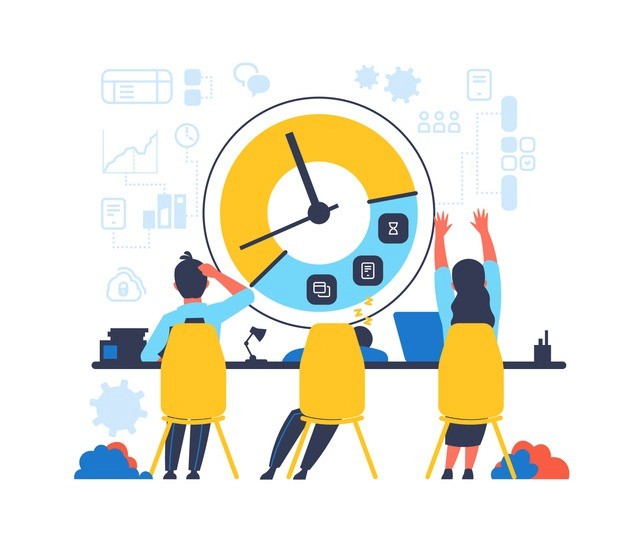
Measurement matters in agile transformations, but less is more. Tracking too many metrics slows teams and shifts focus from improvement to reporting. The goal is visibility that supports learning, not overhead.
Start with a small, focused metric set for pilot teams:
Lead time: Time from starting work to production
Cycle time: Time spent actively working once started
Deployment frequency: How often code ships to production
Defect rate: Bugs reaching production per release
Team satisfaction: Energy, focus, and burnout signals
Run short learning loops. Every 2–3 sprints, hold a brief review beyond the standard retrospective: what’s helping, what feels like ceremony overhead, and where friction appeared. Agile is about responding to change; apply that mindset to the transformation itself.
Change one or two variables at a time. If you adjust WIP limits, planning cadence, and standups all at once, you won’t know what worked. Incremental change makes improvement measurable.
Finally, align hiring metrics with delivery metrics. Track time to hire vs. time to fill, offer acceptance rates, and new-hire ramp-up speed. Time-to-hire reflects recruiting efficiency; time-to-fill captures the full business impact from vacancy to start date. If it takes 90 days to fill a senior ML engineer role, every departure silently resets your agile progress.
Metric | Before Agile | After 3–6 Months | Improvement |
Average cycle time (days) | 45 | 18 | 60% reduction |
Deployment frequency (per week) | 0.5 | 3 | 6x increase |
Production incidents (per quarter) | 12 | 7 | 42% reduction |
Time-to-hire for senior ML engineers | 90 days | 40 days (with Fonzi AI) | 56% reduction |
Recruiter hours per engineering role | 25 hours | 12 hours | 52% saved via AI-assisted screening |
Team satisfaction score (1-10) | 5.8 | 7.4 | 28% improvement |
These numbers reflect realistic ranges from companies that implement agile thoughtfully rather than rushing. Industry data suggests agile-adopting teams report 25% higher productivity and customer satisfaction, with velocity increases of 20-40% after sustained transformation.
Leaders can use these metrics in QBRs and board updates to demonstrate transformation ROI. The combination of faster delivery, fewer incidents, and improved hiring velocity creates a compelling narrative for continued investment.
Step 6: Scaling Agile Across Teams Without a Productivity Collapse
Scaling agile should only happen after 2–3 pilot teams operate stably for at least 3–4 months. Premature scaling spreads problems rather than solutions.
Phased rollout plan:
Pilot squads (Months 1–3): 1–2 teams adopt Scrum or Kanban, establish metrics baselines, and iterate on practices
Adjacent teams (Months 4–6): Teams with dependencies on pilot squads adopt compatible approaches
Shared platforms (Months 7–9): Infrastructure, data, and DevOps teams adopt Kanban for managing flow
Organization-wide norms (Months 10–18): Common cadences, shared definitions of done, and portfolio-level coordination emerge
As agile teams grow, coordination has to stay light and intentional. Communities of practice share knowledge, architecture forums prevent fragmentation, and simple engineer portfolio planning keeps teams aligned with strategy, without slowing them down.
Skip heavy frameworks until you feel real pain. Let bottlenecks guide fixes, not theory. And keep momentum with a ready pipeline of agile-ready engineers, so new squads form fast, and progress doesn’t stall.
Realistic Timelines for Agile Transformation in a Mid-Sized Tech Company
Agile transformation timelines vary based on organizational complexity, but here’s a realistic breakdown for a mid-sized tech company (200–800 employees):
Phase 1: Pilots (0–3 months)
First squad lives with Scrum or Kanban
Initial metrics baselines established
First sprint review showcasing working software to stakeholders
Team completes first retrospective and identifies improvement opportunities
Phase 2: Early Scale (3–9 months)
3–5 squads operating in agile cadences
First cross-team planning sessions
Hiring profiles updated to include agile experience
Metrics show consistent improvement over baseline
Phase 3: Broader Transformation (9–18 months)
The majority of engineering in agile teams
Organizational agility becomes embedded in company culture
Leadership is comfortable with iterative planning and adaptive roadmaps
Business agility extends beyond engineering to product and design
Factors that extend timelines:
Legacy systems requiring significant technical debt work
Distributed teams across many time zones
Simultaneous reorgs or M&A activity
Resistance from traditional project management stakeholders
Sustained productivity gains usually appear after 2–4 quarters, not immediately after announcing an agile transformation. Patience matters. The development team that struggled through month two often hits its stride by month six.
Sync your transformation roadmap with your hiring roadmap. If you’re scaling from three to eight agile squads over the next year, ensure critical roles, tech leads, and senior engineers with agile experience are filled ahead of each expansion phase.
How Fonzi AI Helps You Staff and Sustain Agile Teams

Fonzi AI is a curated talent marketplace focused on elite AI, ML, full-stack, frontend, backend, and data science engineers. Unlike traditional recruiting, Fonzi’s model delivers pre-vetted candidates through structured Match Day hiring events, producing offers within a 48-hour window.
For companies implementing agile, this speed matters enormously. When your pilot squad needs a product-minded full-stack engineer who understands iterative development, waiting 90 days to hire derails momentum. When your ML experimentation team lacks a senior engineer who can mentor junior team members, the entire roadmap slips.
How Fonzi supports agile transitions:
Pre-vetted candidates with documented agile experience: Structured profiles show whether candidates have worked in sprints, participated in retrospectives, and understand customer collaboration approaches
Multi-agent AI for screening and fraud detection: Fonzi’s system handles resume screening, fraud detection, and structured evaluation, freeing your internal recruiters for high-touch engagement
48-hour Match Day events: Companies commit to salary upfront, candidates receive pre-matched profiles, and offers happen within two days
Bias-audited evaluations: Fair hiring practices build diverse teams that ship better products
For employers, Fonzi charges an 18% success fee on hires; you pay nothing until someone starts. For candidates, the service is completely free. Salary transparency from day one eliminates negotiation friction and accelerates offer acceptance.
Whether you need backend engineers to stabilize platforms, ML engineers for experimentation squads, or tech leads who can drive agile transformation, Fonzi AI provides a pipeline of talent ready to contribute from their first sprint.
Summary
Agile, done thoughtfully, reduces risk and increases throughput without burning out teams or derailing roadmaps. The benefits of agile, faster delivery, improved quality through continuous testing, and better responsiveness to customer needs materialize when implementation matches your organizational context.
The six steps covered here provide a practical path forward:
Clarify goals: Define measurable outcomes before changing processes
Choose an approach: Hybrid implementation with executive sponsorship and empowered pilots
Redesign roles and hiring: Build cross-functional teams with clear ownership
Tune practices and tools: Start minimal, add ceremonies only when needed
Measure and iterate: Short learning cycles with limited metric sets
Scale deliberately: Expand only after pilots stabilize
Staffing the right agile-experienced engineers and tech leaders is the lever that stabilizes productivity during transitions. Companies that adopt agile practices while simultaneously struggling to fill critical roles create unnecessary friction.
FAQ
What are the first three steps an organization should take for a successful agile implementation?
How do you implement agile methodology in a team used to traditional Waterfall processes?
What are the most common barriers to the implementation of agile methodology in 2026?
Which agile framework (Scrum, Kanban, or Lean) is best for a first-time implementation?
How long does a full agile transformation typically take for a mid-sized company?