The Future of Workplace Technology and the Rise of the AI Co-Pilot
By
Liz Fujiwara
•
A decade ago, workplace technology meant email threads, spreadsheet trackers, and clunky applicant tracking systems moving candidates through static pipelines.
The post-2020 remote boom forced companies to adopt cloud computing and collaboration tools rapidly, and by 2026, the generative AI wave reshaped interactions with data entry, documentation, and code.
In 2026, agentic AI co-pilots represent a shift from tools that wait for instructions to systems that proactively manage entire workflows, helping hiring managers and recruiters navigate fierce competition for elite AI and engineering talent. This article explores the challenges breaking traditional hiring, the role of AI co-pilots, where humans and AI should intersect, and practical steps to adopt AI in the hiring stack without losing control.
Key Takeaways
By 2026, Agentic AI co-pilots automate screening, fraud detection, and structured evaluations while humans retain final hiring authority, compressing weeks of work into hours.
Fonzi AI uses a multi-agent AI system to handle sourcing, screening, fraud detection, bias-audited scoring, and logistics, delivering offers within a 48-hour Match Day window.
Adopting AI in hiring can be done safely with audit trails, compliance checkpoints, bias mitigation protocols, and structured human oversight at every decision point.
The New Reality of Work Technology in 2026
The modern workplace has undergone a fundamental transformation. What started as digital tools for communication and file sharing has evolved into intelligent systems that act as true collaborators. Consider the trajectory: 2020-2022 brought remote work technology infrastructure with virtual meetings and cloud-based project management software. 2023-2025 saw the explosion of large language models and generative AI across documentation, customer support, and software development. Now in 2026, Agentic AI is becoming an essential part of how more organizations operate.
The World Economic Forum has documented this rapid pace of change, noting that new digital technologies are reshaping every function. Engineering teams have GitHub Copilot writing code alongside them. Sales teams have AI orchestrating outreach sequences. Operations teams have autonomous agents managing supply chain decisions. Yet hiring, one of the most critical functions for any growing company, has lagged behind. Many recruiters still spend hours in manual coordination, inbox triage, and calendar wrangling while their engineering counterparts enjoy unprecedented automation.
This creates a widening efficiency gap. When your product team ships features faster than you can hire the people to build them, something is broken. The same level of AI assistance that engineers enjoy in coding should now exist for recruiters and hiring managers. The digital revolution in workplace tech has finally arrived at the doorstep of talent acquisition.
The Hiring Crisis: Why Traditional Tools Are Breaking
The numbers paint a stark picture. For engineering roles at tech companies in 2024-2026, typical hiring timelines stretch from 60 to 90 days from requisition to signed offer. For specialized AI and ML positions, it can run even longer. Meanwhile, startup funding cycles expect teams to be built in quarters, not years, and product roadmaps assume headcount that does not yet exist.
The pain points compound across every stage:
Recruiter bandwidth limits mean each open role competes for attention with dozens of others
Noisy inbound pipelines generate 500 plus applicants for a single ML role, most of which are low-signal resumes
Interview fatigue burns out engineering teams who should be building product, not running endless screening calls
Inconsistent evaluation rubrics lead to decisions driven by gut feel rather than structured evidence
Late-stage candidate withdrawals waste weeks of invested time and reset the clock entirely
The downstream impacts are severe. Missed product deadlines cascade through roadmaps. Burned-out interviewers become reluctant to participate in future hiring. Over-reliance on referrals can worsen diversity outcomes. Many employees report that hiring dysfunction is among the most time-consuming and frustrating aspects of scaling a company.
Slow Cycles and Recruiter Bandwidth
Manual work dominates the typical recruiter’s day. Screening resumes, scheduling interviews, coordinating across time zones, answering repetitive candidate questions, these specialized tasks consume bandwidth that should go toward high-touch relationship building and strategic planning.
Automation can save the average worker nearly five hours per week by eliminating micro-frictions. Yet most recruiting functions have not captured these gains. The average recruiter still spends huge amounts of time on administrative coordination rather than evaluating talent or building pipelines.
Standard ATS platforms introduced in the 2010s provided basic automation, status updates, email templates, stage tracking; however, did not fundamentally change the operational load. They organized the chaos rather than reducing it. What is needed now is an AI co-pilot that handles the operational burden while recruiters focus on the work that requires human interaction: stakeholder alignment, candidate relationship building, and nuanced judgment calls.
Inconsistent Candidate Quality and Evaluation
Even when candidates reach the interview stage, evaluation quality varies wildly. Different interviewers ask different questions. Feedback arrives as vague impressions, "good culture fit" or "seemed smart," rather than structured evidence against defined criteria.
This inconsistency creates multiple failure modes. Biased judgments creep in when interviewers pattern-match against familiar backgrounds. False negatives eliminate strong candidates with non-traditional paths. Inflated confidence in résumé keywords leads to over-indexing on pedigree rather than capability.
For AI and ML roles, where technical depth, reasoning ability, and ethical judgment matter more than title prestige, these evaluation failures are particularly costly. A mis-hire in a senior ML engineering position can set a team back months. The physical space of the interview room may be the same, but without standardized rubrics and structured scoring, each interviewer operates in a different evaluative universe.
Fraud, Exaggeration, and the AI Candidate Era
A new challenge has emerged alongside generative AI adoption: the rise of resume fraud, portfolio inflation, and AI-assisted interview coaching. Candidates now have access to tools that can fabricate impressive-sounding project descriptions, inflate contributions to open-source repositories, and even provide real-time assistance during technical screens.
Concrete examples are becoming common: multiple candidates claiming primary authorship of the same GitHub project, misrepresented open-source contributions, and suspicious coding exercise submissions that do not match a candidate’s live performance. Some candidates use covert AI to generate responses during online assessments, creating a gap between their presented capability and actual skills.
For lean startup HR teams, manual verification at scale is nearly impossible. Without smarter technology, hiring managers face an impossible choice: over-screen with lengthy verification processes, causing top candidates to drop off, or under-check, risking expensive bad hires. This is where multi-agent AI systems designed specifically to detect anomalies and validate technical credibility become not just helpful, but necessary to maintain compliance with quality standards.
From Tools to Co-Pilots: What Agentic AI Really Means
Agentic AI represents a fundamental shift in how artificial intelligence operates. Unlike basic AI tools, single-purpose chatbots that answered questions when prompted, and keyword filters that matched résumés against job descriptions, Agentic AI systems in 2026 coordinate multiple specialized agents that plan, act, and adjust over time.
Think of it like the difference between a static map and a modern navigation system. A map tells you where things are. A navigation system considers traffic, suggests alternatives, reroutes when you miss a turn, and learns your preferences over time. It is proactive rather than reactive. In the context of emerging technologies for the workplace, Agentic AI does not wait for instructions. It manages workflows, triages decisions, and surfaces insights without being asked.
This paradigm is already emerging across business functions. DevOps teams use agentic systems for incident response. Customer support deploys autonomous triage that resolves 80 percent of queries without human intervention. Sales organizations run intelligent outreach sequences that adapt based on recipient behavior. Recruiting and talent acquisition are naturally next in line for this transformation.
The Multi-Agent Stack Behind an AI Hiring Co-Pilot
A true AI hiring co-pilot is not a single model. It is a coordinated system of specialized agents, each handling distinct responsibilities:
Sourcing Agent: Scans talent pools, enriches profiles with public signals such as GitHub activity, conference talks, and publications, and surfaces candidates most likely to match open roles.
Screening Agent: Evaluates résumés and applications against role-specific criteria, ranking candidates by fit rather than just keyword matching.
Fraud Detection Agent: Cross-references portfolios, checks for timeline inconsistencies, validates claimed contributions against public records, and flags anomalies for human review.
Evaluation Agent: Structures assessments around defined rubrics, scores technical exercises, and synthesizes interviewer feedback into coherent candidate profiles.
Logistics Agent: Proposes interview slots, manages scheduling across time zones, sends reminders, and coordinates complex multi-stage processes.
These agents run in parallel and share context, compressing work that used to take days into minutes or hours. Critically, all outputs surface through human-readable dashboards. Recruiters see why a candidate was ranked highly, what concerns were flagged, and where manual review is recommended. Human stakeholders still define job descriptions, success criteria, and final offer decisions.
How This Differs from Legacy ATS and Automation
Legacy ATS workflows operate on static stages and manual triggers. A candidate enters a pipeline, a recruiter moves them through stages, and automation handles basic notifications. It is organized chaos, but chaos nonetheless.
AI-driven workflows fundamentally differ in several ways:
Reasoning over portfolios instead of keyword matching: The system understands what a candidate has actually built, not just what terms appear in their résumé
Anomaly detection instead of simple filters: Suspicious patterns trigger investigation rather than binary pass/fail
Dynamic ranking instead of rigid scorecards: Candidates are continuously re-evaluated as new information emerges
Continuous learning from feedback loops: Hires, rejections, and performance data, where available, improve future recommendations while staying auditable
The important tool here is transparency. Recruiters remain in control. They approve or override AI suggestions, see exactly why the system recommended certain candidates, and can provide feedback that shapes future outputs. This is not a black box. It is a co-pilot that explains its reasoning.
How Fonzi AI Uses Work Technology as an AI Co-Pilot for Hiring
Fonzi AI is a curated talent marketplace purpose-built for AI, ML, and engineering roles. Unlike generic job boards that blast openings to massive candidate pools, Fonzi focuses on experienced engineers, typically with 3+ years of professional experience, across full-stack, backend, frontend, data engineering, and machine learning specializations.
The centerpiece is Match Day, a structured hiring event where companies commit to salary ranges upfront and aim for offers within a 48-hour decision window. This creates urgency and transparency on both sides. For employers, Fonzi charges an 18 percent success fee per hire. For candidates, the service is completely free. This alignment ensures Fonzi is incentivized to deliver quality matches, not just volume.
What differentiates Fonzi from traditional marketplaces is the combination of human curation with a multi-agent AI co-pilot. The AI handles screening, evaluation support, fraud detection, and logistics. Human recruiters handle relationship building, context gathering, and the high-touch work that requires genuine human judgment. Let us walk through how this works across the hiring lifecycle.
High-Signal Sourcing and Curated Talent Pools
Fonzi’s talent pool is built through multiple channels: referrals from existing network members, targeted outbound outreach, and organic applications from engineers seeking roles in high-growth companies. Every candidate goes through pre-vetting before entering the Match Day pool.
The AI agents consolidate public signals to enrich profiles. This includes analyzing GitHub repositories, published papers, conference presentations, and open-source contributions to understand what candidates have actually built, not just what they claim to have done. The support for remote collaboration capabilities of distributed engineering teams means technical work products are often publicly visible, providing rich data for evaluation.
The result is dramatically reduced noise for hiring teams. Instead of sifting through hundreds of applications, companies see a smaller, higher-signal candidate set tailored to their specific role requirements. This is not about limiting options; it is about focusing attention where it matters.
AI-Enhanced Screening and Bias-Audited Evaluation
Fonzi’s evaluation system structures candidate assessments around role-specific rubrics. For an LLM systems design role, the criteria differ from a data engineering pipeline position, which differs again from a frontend performance optimization role. Interviews, take-home tasks, and coding exercises are scored against standardized criteria rather than vague impressions.
Critically, the system is bias-audited. It logs scores, anonymizes data where possible, and checks for systematic disparities across demographics, educational backgrounds, or company pedigree. This addresses concerns about AI amplifying existing biases. Instead, the system is designed to detect and flag them.
Hiring partners receive structured scorecards and interviewer notes, enabling faster, more confident decisions within the 48-hour Match Day window. The AI surfaces insights, but does not auto-reject candidates based on protected characteristics or proxies. Human resources teams retain full authority over final decisions.
Logistics, Scheduling, and Human Touch
Interview coordination is one of the most time-consuming aspects of hiring, particularly for distributed teams working across different locations and time zones. Fonzi’s logistics agent handles the complexity:
Proposes interview slots based on availability across all participants
Sends automated reminders with all relevant context
Manages timezone conversions and calendar conflicts
Handles rescheduling requests without lengthy email threads
Recruiters and founders can approve, adjust, or override schedules through simple interfaces. This frees internal teams to focus on relationship-building conversations rather than calendar operations. The cost savings in coordinator time alone can be substantial for fast-growing companies running multiple concurrent searches.
Fonzi also provides concierge recruiter support from a human team who uses AI-generated context, including candidate goals, constraints, and preferences, to craft more relevant outreach. This hybrid model delivers a better candidate experience: fewer reschedules, clear timelines, and transparent expectations leading into Match Day.
Where an AI Co-Pilot Creates the Most Value in Your Hiring Funnel
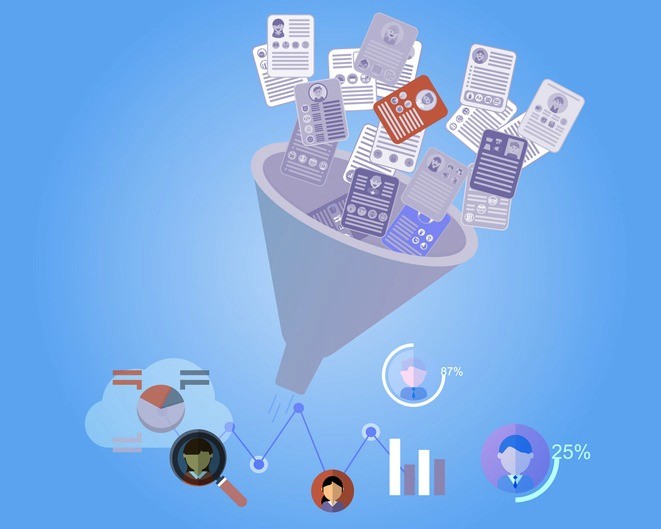
Understanding where AI adds value and where human judgment must remain primary is essential for effective adoption. Across funnel stages from sourcing through onboarding, the balance shifts. Some stages benefit enormously from automation. Others require human nuance that no algorithm can replace.
The goal is not full automation. It is targeted acceleration and risk reduction at each stage, with clear handoff points where humans make the calls that matter most. The following table maps out this division.
AI vs. Human Responsibilities Across the Funnel
Stage | AI Co-Pilot Role | Human Responsibility |
Sourcing | Enrich profiles with public data, rank candidates by role fit, surface high-potential matches | Define ideal candidate criteria, approve sourcing channels, build relationship pipelines |
Screening | Parse applications against rubrics, flag red flags, generate shortlists | Review flagged candidates, make judgment calls on edge cases, set screening standards |
Assessment | Score technical exercises, detect anomalies, synthesize structured feedback | Design assessment criteria, interpret cultural fit, evaluate soft skills |
Interviews | Schedule across time zones, provide interviewer prep materials, summarize feedback | Conduct conversations, probe for depth, assess collaboration style |
Decision & Offer | Aggregate scores, highlight risk areas, generate compensation benchmarks | Make final hiring decision, negotiate offers, sell the opportunity |
Onboarding | Automate paperwork, schedule orientations, provide resource access | Welcome new hires, integrate into culture, establish relationships |
Adopting an AI Hiring Co-Pilot Without Losing Control
Business leaders considering AI in hiring often share legitimate concerns. Will the system amplify existing biases? Will decisions become opaque black boxes? What happens when something goes wrong? These are not irrational fears; they are prudent questions that deserve serious answers.
The key is approaching AI as infrastructure for repeatable excellence, not as a replacement for your team’s expertise. With proper governance, compliance checkpoints, and structured human oversight, you can capture the speed and consistency benefits of AI without sacrificing accountability.
Governance, Compliance, and Bias Mitigation
Before deploying any AI hiring tools, define your internal AI principles. What does fairness mean in your context? How much explainability do you require? Who is accountable when the system makes mistakes?
Establish a cross-functional working group with representatives from HR, Legal, and Engineering. This team should evaluate AI hiring vendors, approve specific use cases, and set boundaries on what decisions can be automated versus which require human approval.
Require audit trails for every significant decision. When a candidate is ranked, flagged, or recommended, the system should log why, including what inputs were used, what criteria drove the decision, and who made the final call. This data privacy practice protects candidates and creates accountability.
Schedule periodic fairness checks. Compare hiring outcomes across demographics and intervene where disparities appear. Worker autonomy requires that humans can review and override system recommendations. Fonzi’s bias-audited evaluations can complement internal DEI goals, but internal accountability remains essential.
Change Management and Team Adoption
Recruiters and hiring managers may initially distrust AI suggestions. This is natural and even healthy; it means your team is thinking critically. The solution is transparency. Show them exactly how AI signals are generated and encourage them to test the system’s reasoning.
Start with pilots on specific roles or teams. Collect data on time-to-hire, candidate quality, and interviewer job satisfaction during the pilot. This provides concrete evidence to support broader rollout or surface issues that need addressing.
Training sessions should focus on interpretation, not blind following. Recruiters need to understand what a “risk alert” or “fit score” actually means, where the data collected came from, and when to trust versus question the AI’s assessment. Real-time feedback loops between recruiters and the AI system improve accuracy over time.
Do not neglect candidate experience. When AI-driven steps like automated scheduling or status updates are introduced, gather qualitative feedback. Many employees report positive experiences with well-designed automation, including faster responses and clearer timelines, but only if the systems respect their time and provide feedback appropriately.
What’s Next: Workplace Technology Trends Reshaping Hiring by 2026
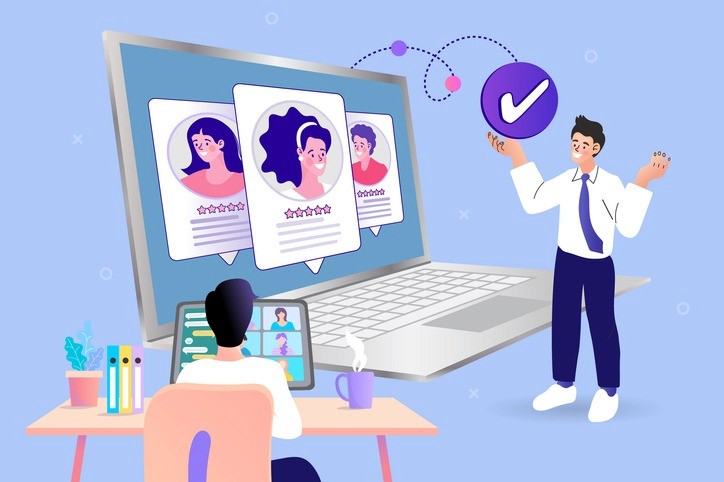
The trends reshaping the broader office environment are setting new expectations for hiring processes. Smart office sensors dynamically allocate workspaces. Collaboration technology supports hybrid working across meeting rooms and remote workers seamlessly. AI-powered automation handles everything from conference room booking to document summarization.
When candidates experience this level of sophistication in their work technology, they expect hiring funnels to feel equally modern. Elite engineers in 2026 do not want to juggle email threads for scheduling or wait weeks for feedback. They expect transparency, speed, and respect for their time, the same standards they apply to product and engineering tooling.
This creates both challenge and opportunity. Companies that stay ahead of workplace technology trends can offer candidate experiences that become competitive advantages. Those clinging to manual, fragmented processes will find themselves losing top talent to organizations that move faster and communicate better.
Conclusion
Workplace technology has evolved from email and spreadsheets to AI co-pilots that manage entire workflows. For hiring managers and talent leaders, this is a once-in-a-generation opportunity to fix what’s broken in technical recruiting.
The core idea is simple: Agentic AI handles operations and pattern detection, while humans make final decisions. AI screens applications, detects fraud, and coordinates schedules. Humans build relationships, interpret cultural fit, and make the decisions that shape teams.
The result is faster timelines, higher-quality candidate slates, reduced fraud risk, and consistent evaluations. Recruiters focus on high-value work while automation handles the operational burden. Interviewers assess candidates against structured criteria rather than ad-hoc impressions.
FAQ
What are the most disruptive workplace technology trends for 2026?
How is Agentic AI different from basic AI tools?
What does “Phygital” office design mean for hybrid teams this year?
Which collaborative technologies are best for reducing “meeting fatigue” in 2026?
How are companies using smart office sensors to improve sustainability and employee well-being?