The Core Pillars of Agile Methodology for Modern Development Teams
By
Liz Fujiwara
•
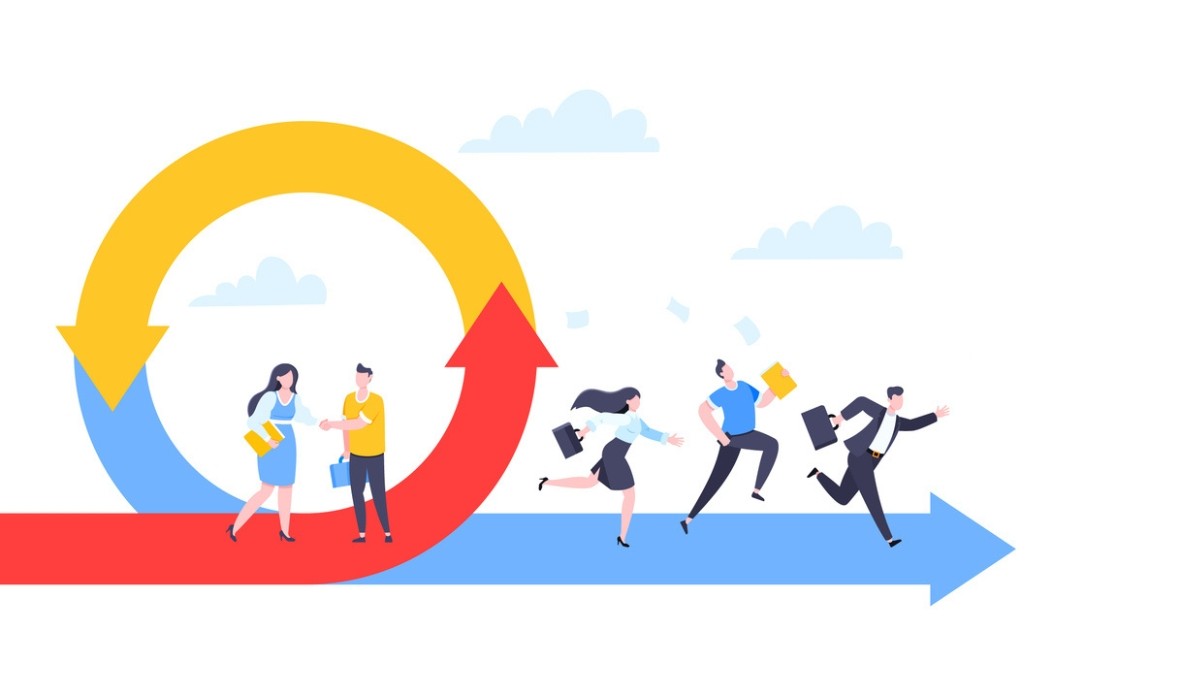
Modern development teams face an unprecedented combination of pressures, including tighter delivery timelines, distributed work across time zones, and rapid AI adoption that reshapes roadmaps quarterly. The engineers building your products today work in an environment where a new model release can obsolete three months of planning overnight.
Many teams adopted agile ceremonies such as daily standups, sprint planning, and retrospectives but lost sight of the underlying agile values and principles that drive outcomes. They run sprints that look agile on the calendar but feel like mini-waterfalls in practice, and the ceremonies became cargo cult rituals rather than tools for continuous improvement.
The uncomfortable parallel is that while engineering teams attempt agile practices, most hiring processes remain linear. Slow recruiting cycles, inconsistent candidate quality, and misaligned expectations between hiring managers and recruiters plague even the most agile product organizations. This article unpacks the core pillars of agile methodology and shows how they can shape both product development and technical hiring for modern teams.
Key Takeaways
The 12 agile development principles from the 2001 Agile Manifesto remain foundational for modern product development and technical hiring practices in 2026 and beyond.
Aligning hiring processes with agile principles reduces time-to-hire, improves candidate quality, and creates better team alignment between hiring managers and recruiters, with Fonzi AI applying multi-agent AI for screening, fraud detection, and bias-audited evaluations while keeping humans in control of final decisions.
Companies running agile development alongside traditional linear hiring leave velocity and competitive advantage on the table, so both functions should operate on the same iterative principles.
Agile Manifesto: Values vs. Principles
The Agile Manifesto emerged in February 2001 when 17 software developers gathered in Snowbird, Utah. They shared a common frustration that heavyweight Waterfall methods produced late discoveries of flaws, misaligned products, and projects that failed despite extensive upfront planning. The result was a set of four core agile values and twelve principles designed to prioritize adaptability over rigidity.
The four agile manifesto values state preferences rather than absolutes:
Individuals and interactions over processes and tools
Working software over comprehensive documentation
Customer collaboration over contract negotiation
Responding to change over following a plan
These values represent an agile mindset that prioritizes people, outcomes, and flexibility. The twelve agile principles provide operational behaviors that translate that mindset into daily practice. Both are required for real culture change; you cannot simply adopt the ceremonies without internalizing the agile philosophy behind them.
Since 2001, the scope of application has expanded beyond code. These values now guide how agile teams organize hiring, performance management, and cross-functional collaboration, with business people and developers working together daily applying just as much to recruiting partnerships as to product builds.
The 12 Agile Development Principles (And What They Look Like in 2026)
The original twelve principles were written with software development teams in mind, but their spirit applies to modern AI teams, platforms, and even hiring processes. Each principle interlocks to create a framework for iterative development where sprints break work into manageable increments, allowing teams to test, learn, and refine continuously.
Principle 1: Early and Continuous Delivery of Valuable Software
“Our highest priority is to satisfy the customer through early and continuous delivery of valuable software.”
In 2026, this principle drives practices like CI/CD pipelines, trunk-based development, and progressive delivery. Teams ship smaller, safer changes multiple times per day rather than waiting for quarterly releases. Feature flags enable incremental rollouts. The goal is continuous delivery of valuable software that users can touch and provide feedback on immediately.
The hiring parallel is clear: teams need early and continuous access to pre-vetted talent rather than sporadic, months-long recruiting cycles. Fonzi’s Match Day model mirrors this principle by compressing candidate sourcing, interviewing, and offers into a 48-hour decision window. Instead of waiting eight weeks to maybe see a qualified candidate, hiring managers get rapid access to curated talent on a predictable cadence.
Principle 2: Welcome Changing Requirements, Even Late in Development
“Welcome changing requirements, even late in development. Agile processes harness change for the customer’s competitive advantage.”
In volatile AI and SaaS markets, requirements change constantly. A new GPT-class model release, regulatory updates, or customer insights can reshape roadmaps mid-quarter. Agile processes harness change rather than fighting it because the ability to pivot quickly is often the customer’s competitive advantage.
This applies directly to talent strategy. Role definitions, seniority levels, and skill requirements often change mid-search. You might start looking for an “LLM engineer” and realize you actually need a “full-stack engineer with LLM integration experience.” Agile hiring processes accommodate this without restarting from scratch. Fonzi’s curated marketplace lets hiring managers pivot quickly because the talent pool is pre-vetted across multiple competencies, not locked into rigid job description matches.
Principle 3: Deliver Working Software Frequently
“Deliver working software frequently, from a couple of weeks to a couple of months, with a preference to the shorter timescale.”
Short cycles, biweekly or monthly at most, reduce risk, surface integration issues earlier, and give product and go-to-market teams real artifacts to learn from. The preference for shorter timescale means teams should push toward the minimum viable iteration length that still produces working software users can evaluate.
Principle 4: Daily Collaboration Between Business and Developers
“Business people and developers must work together daily throughout the project.”
In 2026, daily collaboration looks like async updates in Slack, focused standups, and shared product analytics rather than endless status meetings. Product, engineering, data, and go-to-market teams align around outcomes, not just story points or velocity metrics.
Direct communication between hiring managers, internal recruiters, and external partners prevents misaligned offers and lost candidates. Fonzi provides a shared view of candidate status, interview feedback, and salary ranges so recruiters and hiring managers stay in lockstep. When everyone operates from the same information, decisions happen faster and candidates get better experiences.
Principle 5: Build Projects Around Motivated Individuals
“Build projects around motivated individuals. Give them the environment and support they need, and trust them to get the job done.”
This principle emphasizes selecting high-agency engineers, then giving them clear context and autonomy rather than micromanagement. For AI-heavy teams, motivation includes appetite for experimentation, learning new frameworks, and owning ambiguous problem spaces.
Principle 6: Face-to-Face Conversation as the Most Effective Communication

“The most efficient and effective method of conveying information to and within a development team is face-to-face conversation.”
In 2026, face-to-face conversation often means high-bandwidth video calls rather than physical co-location, especially for remote and hybrid teams. The principle is not about physical proximity; it is about high-context conversations for complex topics like architecture decisions, trade-offs, and incident reviews.
Structured, high-signal conversations with candidates, such as pair-programming sessions and system design deep dives, beat asynchronous resume screens alone. Fonzi’s process optimizes for meaningful human interactions by offloading repetitive steps, including screening and fraud checks, to AI so recruiters spend more time in real conversations where human judgment matters most.
Principle 7: Working Software as the Primary Measure of Progress
“Working software is the primary measure of progress.”
Agile teams measure progress by shipped value, such as live features, performance improvements, and reduced incident rates, instead of vanity metrics like hours logged or tickets closed. Examples include tracking customer usage, NPS, trial-to-paid conversion, or latency improvements as the primary measure of progress.
The real measure in hiring is successful, productive hires in-seat, not applicants reviewed or interviews scheduled. Fonzi’s success-fee model, 18% only on successful hires, aligns incentives around real outcomes rather than pipeline volume. We succeed when you successfully onboard an engineer who delivers, not when we generate activity.
Principle 8: Promote Sustainable Development at a Constant Pace
“Agile processes promote sustainable development. The sponsors, developers, and users should be able to maintain a constant pace indefinitely.”
Sustainable development means avoiding crunch cycles that lead to burnout, attrition, and quality regressions. Sponsors, developers, and users should be able to maintain a constant pace indefinitely, not sprint toward deadlines, collapse, and repeat. Tactics include realistic sprint planning, capacity-based commitments, and incident response rotations that protect focus time.
Principle 9: Continuous Attention to Technical Excellence and Good Design
“Continuous attention to technical excellence and good design enhances agility.”
This principle recognizes that investing in code quality, observability, testing, and architecture enables faster movement later. Good design enhances agility because teams are not fighting legacy code, unclear abstractions, or missing tests when they need to pivot. Modern practices include automated testing, security scanning, infrastructure as code, and model evaluation pipelines for AI systems.
Hiring for technical excellence in 2026 includes depth in AI/ML fundamentals, data engineering, and productionizing models, not just toy project skills. Fonzi screens candidates for real-world technical rigor, including shipping models to production, scaling microservices, and handling data at volume. Attention to technical excellence in hiring protects the excellence of your codebase.
Principle 10: Simplicity: Maximizing the Amount of Work Not Done
“Simplicity, the art of maximizing the amount of work not done, is essential.”
Simplicity means intentional ruthlessness about scope: building only what truly drives outcomes and saying no to low-impact work. Examples include limiting features in an MVP, consolidating services instead of over-microservicing, or choosing simpler architectures for early-stage products.
Applied to hiring, this means fewer, sharper interview steps, reduced stakeholder noise, and constrained role definitions instead of endless “nice-to-have” requirements. Fonzi’s structured evaluations focus on the critical skills and signals that actually predict performance for AI and engineering roles. We maximize the work not done by eliminating redundant screening steps and ambiguous evaluation criteria.
Principle 11: Self-Organizing Teams Create the Best Designs
“The best architectures, requirements, and designs emerge from self-organizing teams.”
Self-organizing teams own how they work: they choose practices, split work, and decide on implementation details within clear business constraints. This connects to psychological safety and trust, which are essential for innovation in AI and experimentation-heavy environments. The best architectures, requirements, and designs emerge when teams have autonomy and ownership.
Leaders should hire for complementary skills and ownership mindsets so teams can self-organize effectively. Fonzi gives hiring teams visibility into candidates’ collaboration styles and past team contexts, not just raw technical scores. Understanding how a candidate operates within a team is as important as their individual capabilities.
Principle 12: Regular Reflection and Adjustment
“At regular intervals, the team reflects on how to become more effective, then tunes and adjusts its behavior accordingly.”
Retrospectives are recurring rituals where the team reflects on what worked, what did not, and what they will change. Mature teams use both qualitative insights and quantitative metrics, such as deployment frequency, lead time, and incident counts, to guide improvements. Then the team tunes and adjusts its behavior accordingly.
Extend this mindset to hiring: regularly inspect time-to-hire, funnel conversion, on-site-to-offer ratios, and six- to twelve-month performance of new hires. At regular intervals, the team reflects on hiring effectiveness, not just delivery effectiveness. Fonzi’s platform supports continuous improvement in hiring by surfacing conversion data, interview feedback patterns, and bias-audit outcomes that feed into your retrospectives.
From Theory to Practice: Applying Agile Principles to Modern Dev Teams

The principles are clear on paper. The challenge is translating them into concrete behaviors that engineering leaders and product organizations actually practice daily.
Common anti-patterns dilute agile impact:
Ceremony cargo-culting: Running standups without actually unblocking anyone
Tool obsession: Believing Jira configuration equals agile transformation
Over-planning: Spending more time estimating than building
Metrics theater: Optimizing velocity numbers while outcomes stagnate
Re-centering teams requires focusing on outcomes, frequent delivery, and customer feedback. For AI product teams specifically, this means shipping model iterations to real users quickly, measuring actual performance improvements, and adjusting based on what the data shows, not what the roadmap predicted.
Agile principles should also inform how tech companies structure and optimize their hiring processes. If you run agile development alongside Waterfall hiring, you create organizational friction. Engineers experience fast iteration in their daily work but slow, bureaucratic processes when trying to grow their teams. The following section contrasts these approaches directly.
Traditional vs. Agile: Development and Hiring Compared
Many companies run agile development processes alongside very Waterfall hiring approaches. They iterate rapidly on products but plan hiring annually, review candidates in slow batches, and treat job descriptions as fixed requirements rather than evolving hypotheses.
Aligning both delivery and hiring practices around agile principles compounds organizational benefits. When your entire operation, building and hiring, follows the same iterative, feedback-driven approach, you move faster at every level.
Area | Traditional Approach | Agile Approach (with Fonzi AI support) |
Planning | Annual hiring plans based on budget cycles | Quarterly Match Day hiring cycles aligned with team needs |
Candidate Flow | Large batches reviewed sporadically | Continuous delivery of pre-vetted candidates on predictable cadence |
Feedback Cycles | Feedback collected at end of process | Structured feedback after each interview, surfaced to all stakeholders |
Risk Management | Single high-stakes offer after long process | Multiple decision points; pivot roles mid-search if needed |
Screening | Manual resume review, inconsistent criteria | Multi-agent AI handles screening, fraud detection, and bias-audited evaluation |
Metrics | Track applications received, interviews conducted | Track successful hires, ramp time, 12-month performance |
Candidate Experience | Opaque timelines, unclear salary expectations | Transparent salary ranges upfront, defined 48-hour decision windows |
Fonzi’s marketplace model supports the agile side of each row. Faster loops reduce time-to-hire. Structured feedback improves decision quality. Salary transparency respects candidates’ time. Automated fraud and bias checks ensure consistent, fair evaluation at scale.
How Fonzi AI Brings Agile Principles into Technical Hiring
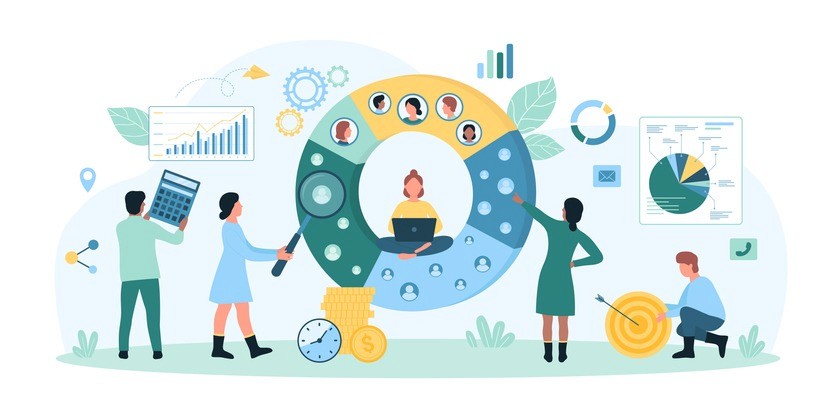
At Fonzi, we built a curated marketplace specifically for AI, ML, full-stack, frontend, backend, and data engineering roles at startups and high-growth tech companies. Our Match Day hiring events compress what often takes six to eight weeks into a tight, high-signal 48-hour window. This mirrors agile time-boxing: defined scope, focused effort, clear outcomes.
Our multi-agent AI system handles repetitive but critical tasks, including screening for skill and experience, fraud and identity checks, and bias-audited scoring, so human recruiters focus on interviews, relationship building, and offers. Fonzi’s goal is not to replace human recruiters but to give them leverage, transparency, and cleaner data to make better, faster decisions.
Multi-Agent AI for Screening, Fraud Detection, and Bias-Audited Evaluation
Separate AI agents handle different parts of the funnel:
Resume parsing: extracting structured data from varied formats
Portfolio analysis: evaluating GitHub contributions, deployed projects, and technical depth
Employment history checks: verifying claimed experience and identifying inconsistencies
Anomaly detection: flagging potential fraud indicators for human review
Bias-audited models detect and reduce patterns of unfair scoring across gender, ethnicity, geography, or school background. This does not mean hiding candidate quality signals; it means ensuring those signals are not contaminated by irrelevant factors.
All AI outputs are surfaced to human recruiters and hiring managers transparently rather than making opaque, automatic rejection decisions. This connects back to agile principles of transparency, continuous improvement, and focusing human effort where it delivers the most value.
Match Day: A Time-Boxed Agile Sprint for Hiring
Here’s how Match Day works:
Scope definition: Companies define roles and commit to salary ranges upfront
Curation: Fonzi surfaces a curated shortlist of pre-vetted candidates
Interviews: Concentrated into a 48-hour window
Offers: Extended before top candidates accept competing opportunities
Compare this to a sprint: clear goals, defined scope (number of roles), a fixed timebox, and a retrospective opportunity after each event. Hiring managers experience reduced context switching, clearer prioritization, and faster offers.
For candidates, Match Day provides transparency on salary ranges and timelines from the start. This aligns with agile’s focus on collaboration and trust, with everyone operating from the same information.
Keeping Humans in the Loop Without Slowing Down
Fonzi’s philosophy is “AI as a co-pilot,” not “AI as the boss.” Humans own final hiring decisions and can override or question AI outputs at any point. This is how you implement agile with AI assistance while maintaining control.
The structure:
AI handles patterns, logistics, and repetitive evaluation
Humans focus on culture fit, deep technical conversations, and role alignment
Both contribute to better outcomes than either alone
This mirrors agile software development, where automation handles repetitive tasks such as tests and deployments, and humans focus on design, strategy, and customer value. AI in hiring improves fairness and consistency when deployed with transparent, auditable systems and strong human oversight.
Implementing Agile Principles Across Your Development and Hiring Functions
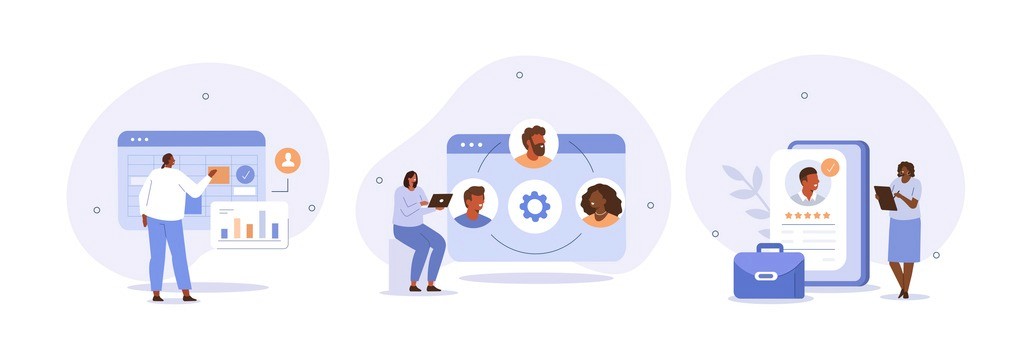
Aligning both product development and hiring processes with agile principles requires a pragmatic, step-by-step approach. Start with narrow, high-impact experiments rather than organization-wide transformations.
Key steps:
Assess current state in both functions
Choose principles to prioritize based on your biggest constraints
Redesign ceremonies to embed those principles
Measure outcomes and iterate
Leadership should treat hiring changes as experiments with clear hypotheses and metrics, just like product experiments. “We believe that time-boxing our senior engineer search to a Match Day window will reduce time-to-hire by 40 percent while maintaining or improving offer acceptance rates.”
Partnering with Fonzi can accelerate this shift, particularly for AI/ML and senior engineering roles where traditional processes create the most friction.
Step 1: Assess Your Current Agile Maturity in Delivery and Hiring
Development diagnostics:
What’s your deployment frequency?
What’s the lead time for changes?
What are your incident rates?
How aligned are teams on OKRs?
Hiring diagnostics:
What’s your average time-to-hire by role?
What’s your offer acceptance rate?
How long does a new-hire ramp take?
How satisfied are managers with candidate quality?
Involve both engineering leadership and talent acquisition in this assessment to avoid siloed views.
Step 2: Prioritize the Most Relevant Agile Principles
Don’t attempt to implement all 12 principles at once. Pick 3–4 that address your most painful constraints.
Examples:
Missing deadlines consistently → Focus on principles 1–3 (early, frequent delivery)
Quality suffering → Emphasize principles 8–9 (sustainable pace, technical excellence)
Slow hiring cycles → Map principles around frequent delivery and tight feedback loops
Inconsistent candidate quality → Focus on structured evaluation and continuous improvement
Step 3: Design Agile Ceremonies for Hiring
Consider “hiring sprints” with defined roles, timeboxes, and ceremonies parallel to development sprints.
Proposed ceremonies:
Intake planning: Align on role requirements, success criteria, and timelines
Daily hiring standups: 15-minute syncs during active searches
Structured debriefs: Consistent format for interview feedback
Post-hire retrospectives: What worked? What would we change?
Standardized, structured interview formats and scorecards improve consistency and fairness. When using Fonzi, many ceremonies streamline because initial screening, scheduling, and documentation are partially automated.
Step 4: Measure, Learn, and Iterate
Cross-functional metrics to track:
Cycle time for features
Defect rates
Time-to-hire
New-hire performance at 6 months
Retention after 12 months
Run quarterly retrospectives that include both engineering performance and hiring outcomes in the same discussion. Agile is an ongoing practice, not a one-time project. Expect to refine your approach annually as your organization scales and market conditions shift.
Conclusion
The 12 agile principles provide a durable framework for building both products and teams. Written in 2001 for software development, they remain highly relevant to modern AI teams, distributed organizations, and technical hiring processes.
For hiring managers and talent leaders, agile-aligned hiring delivers faster cycles, higher-quality candidates, better signal per interview, and improved fairness and transparency. Combining agile delivery with agile hiring compounds organizational velocity at every level.
Experience agile-aligned hiring with a Fonzi Match Day. Share your role specs, schedule a discovery call, and see how time-boxed, transparent, data-informed hiring compares to the Waterfall approach.
FAQ
What are the 12 original principles of the Agile Manifesto?
How do agile principles differ from Waterfall project management?
Which agile software principle is most important for remote and hybrid teams?
How does “Agile” scale for large organizations using frameworks like SAFe?
Can agile development principles be applied to non-software projects?