
Recruiting artificial intelligence is changing hiring, making it easier for teams to automate resume screening, streamline interview scheduling, and uncover data-driven insights that lead to better hiring decisions. These tools don’t just boost efficiency; they also help teams improve candidate quality and cut down time-to-hire in a measurable way. And if you’re building or scaling AI talent specifically, platforms like Fonzi AI make this shift even more impactful by directly connecting seasoned AI engineers with companies that need their expertise. It’s a simple way to stay ahead as recruitment becomes increasingly tech-driven.
Key Takeaways
AI in recruiting enhances efficiency by automating tasks like candidate screening and scheduling, enabling recruiters to focus on strategic relationship-building.
The integration of AI tools promotes fairness and inclusivity in hiring by providing unbiased candidate assessments and standardized evaluations.
AI-driven recruitment not only reduces time-to-hire but also improves the quality of hires and candidate experience, setting new standards in the hiring process.
Understanding AI in Recruiting

Artificial intelligence is utilized in recruiting to enhance the hiring process. It involves the application of AI technologies for this purpose. AI takes over manual tasks like screening and scheduling, letting recruiters concentrate on building strategic relationships with candidates. This shift not only enhances the efficiency of hiring teams but also significantly improves HR productivity. The role of AI in recruitment is not merely about automating tasks; it’s about redefining recruitment by making it smarter and faster.
The implementation of AI recruitment tools enables businesses to scale their recruiting efforts without necessarily increasing the size of their HR teams. This scalability is crucial, especially for companies looking to grow rapidly or manage fluctuating hiring demands. AI helps recruiters by providing data-driven insights that lead to faster and smarter hiring decisions. Imagine having access to predictive analytics that can forecast candidate success based on historical data and current market trends. This capability transforms the recruitment process from a reactive to a proactive endeavor.
AI recruiting tools harness the power of machine learning and generative AI to:
Analyze vast amounts of data, offering unparalleled insights into candidate behavior, skills, and potential.
Integrate seamlessly with existing HR systems, providing a comprehensive view of each candidate.
Make the entire hiring process more transparent and efficient.
Help hiring managers make quick, informed decisions.
Cut down the time to hire and enhance the quality of hires using AI-powered tools.
The benefits of AI in recruitment extend beyond efficiency and speed:
AI agents can provide consistent candidate assessments, ensuring that all applicants are evaluated fairly and objectively.
This consistency is particularly important in large-scale hiring processes where human recruiters might face challenges in maintaining uniform evaluation standards.
AI-driven recruitment tools can identify and mitigate unconscious biases, promoting a more inclusive and diverse workplace.
AI in recruiting is not just a technological advancement; it is a strategic asset that empowers hiring teams to make better, data-driven decisions. Embracing AI allows companies to improve their talent strategies, shorten the hiring process, and build stronger, more diverse teams. As we move forward, the integration of AI in recruitment will continue to evolve, offering even more sophisticated tools and insights to help businesses stay ahead in the competitive talent landscape.
The Role of AI in Talent Acquisition
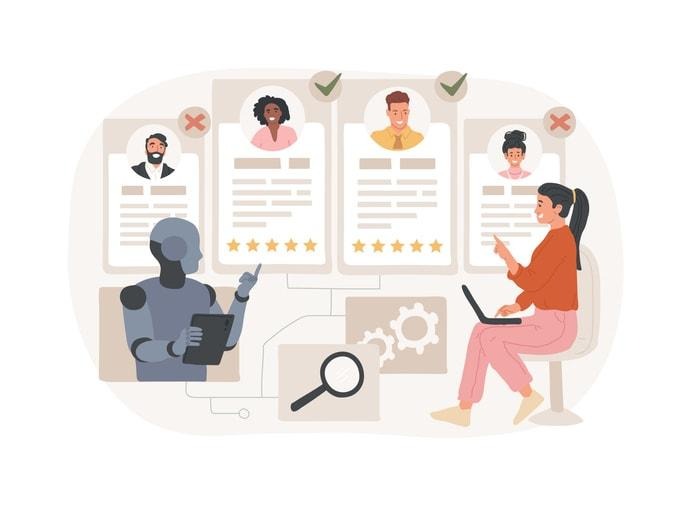
AI-driven recruitment plays a pivotal role in talent acquisition by expediting the hiring timeline and enhancing efficiency. Companies that leverage AI can significantly reduce the time taken to identify and assess suitable candidates, making the entire recruitment process more streamlined and effective. A striking 93% of Fortune 500 CHROs are incorporating AI technologies into their HR practices to boost efficiency. This widespread adoption underscores the transformative potential of AI in recruitment.
Fonzi AI, a curated artificial intelligence engineering talent marketplace, exemplifies the impact of AI in talent acquisition. By automating the screening process, Fonzi connects top-tier AI engineers with employers, allowing recruiters to focus on meaningful interactions rather than repetitive tasks. This approach enhances the recruitment process by significantly reducing the time needed to fill engineering positions, streamlining hiring workflows, and ultimately improving candidate quality.
The strategic use of AI in recruitment helps hiring teams build meaningful relationships with candidates. Advanced AI technology enables recruiters to tap into a vast and diverse talent network, ensuring consistent candidate assessments across different recruitment cycles. This consistency is crucial for maintaining high standards and making informed hiring decisions.
Additionally, AI-driven recruitment can analyze vast datasets to improve workforce planning and predict future hiring needs, further strengthening talent acquisition strategies.
Automating Job Descriptions with AI
One of the most time-consuming tasks in recruitment is writing job descriptions. AI recruitment tools can optimize this process by:
Ensuring job descriptions attract a diverse range of candidates.
Creating job descriptions based on real-time market trends, making them more relevant and appealing to job seekers.
Saving time by automating the creation process.
Aligning job ads with current job requirements.
Machine learning and generative AI enable job descriptions to write themselves, adapting to attract ideal candidates. These AI-driven tools streamline the job description creation process by automatically generating content that matches the specific needs of the role. This automation helps in reducing the administrative burden on hiring teams, allowing them to focus on more strategic tasks.
AI helps recruiters by ensuring that job descriptions are not only well-crafted but also optimized to attract the best talent. AI helps companies create job ads that are engaging and precise, improving applicant quality. This innovation in writing job descriptions is a clear example of how AI is redefining recruitment processes and enhancing overall hiring efficiency.
AI-Driven Candidate Sourcing
Candidate sourcing is a critical aspect of the hiring process, and AI tools have revolutionized this area by:
Conducting comprehensive searches across various platforms to discover suitable candidates
Analyzing job boards, social media, and forums to identify potential candidates
Making the sourcing process more efficient and effective
Granting recruiters access to a wider talent pool, allowing them to identify the right candidates faster.
AI simplifies sourcing by identifying both active and passive candidates through extensive online searches with minimal effort. Automated sourcing tools can analyze candidate behavior to identify those who may be open to new job opportunities, even if they are not actively job hunting. This capability is particularly valuable in competitive job markets where finding the best-fit candidates can be challenging.
AI-powered solutions enhance candidate sourcing by scanning numerous profiles and resumes to identify the best fits for specific roles. These AI models use machine learning to rank candidates based on:
their qualifications
experience
potential
This ensures that only the most qualified candidates are shortlisted. This process:
reduces the time to hire
improves the overall quality of hires.
The integration of AI in recruiting has transformed the candidate experience by making the recruiting process more efficient and targeted. AI technology ensures that hiring managers reach out to the most suitable candidates, increasing the likelihood of finding the best talent.
This AI-driven approach to candidate sourcing is a testament to how AI is redefining recruitment processes and enhancing talent acquisition strategies.
Enhancing Candidate Screening with AI
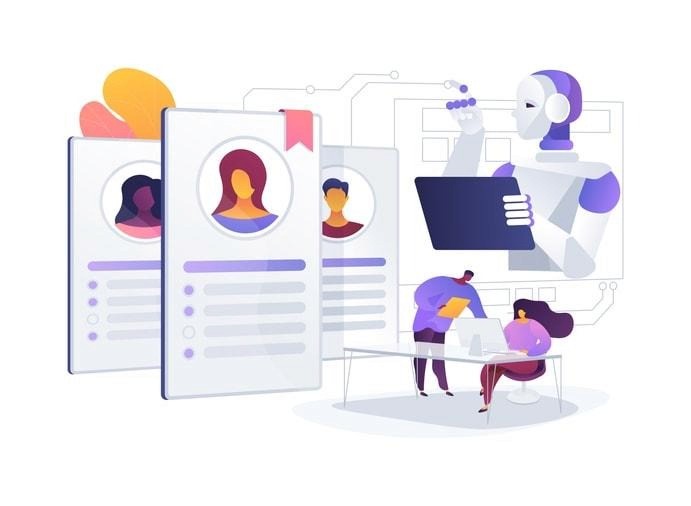
Candidate screening is a crucial step in the hiring process, and AI recruitment tools have significantly enhanced this aspect by providing:
Predictive analytics that can forecast candidate success.
Structured feedback regarding candidates’ performance in video interviews.
Insights into candidates’ communication skills and overall fit for the role. Additionally, these tools help to screen candidates more effectively.
This data-driven approach enables recruiters to make evidence-based decisions and improve the fairness of evaluations.
AI technologies can conduct virtual interviews using virtual assistants that:
Assess candidates’ verbal and non-verbal cues, offering a more comprehensive evaluation of their abilities.
Interpret the context and intent behind candidates’ qualifications, ensuring that evaluations are consistent and unbiased through natural language processing.
Integrate with existing HR systems to create comprehensive profiles, analyzing candidates’ skills and experiences for a holistic view of interview performance.
Fonzi’s multi-agent algorithms enhance efficiency in the recruitment process by:
Performing tasks like candidate screening and fraud detection.
Aiding in making well-informed candidate selection decisions through a data-informed approach.
Promoting a more inclusive hiring environment by minimizing bias.
Significantly decreasing the time-to-hire by 30-40% through automated candidate screening, allowing recruiters to focus on strategic tasks.
Using AI for candidate screening helps reduce subjective bias by applying standardized evaluation criteria, promoting fairer and more diverse candidate selections. Feedback from AI-assisted hiring shows it can lead to more diverse candidate selections compared to traditional methods. This reduction in bias is one of the key advantages of AI in recruiting, as it helps mitigate unconscious bias and promotes a more inclusive workplace.
End-to-end AI recruitment suites encompass various functions, from resume parsing to interview scheduling, in one integrated platform. These suites ensure a seamless and efficient recruitment process, enhancing the candidate experience and improving the overall quality of hires. AI technology helps hiring teams make informed decisions, shorten the hiring process, and build stronger, more diverse teams.
Improving Interview Scheduling with AI Tools
Scheduling interviews is a time-consuming aspect of the hiring process, but AI tools have revolutionized this task by enabling self-scheduling. Candidates can select convenient times themselves, reducing the back-and-forth communication typically required to schedule interviews. This self-scheduling capability not only saves time but also enhances the candidate experience by providing flexibility and convenience.
AI tools drastically cut down the time recruiters spend on scheduling, enhancing recruitment efficiency. AI cna help maintain effective communication with candidates by providing personalized information throughout the scheduling process. This personalized approach ensures that candidates feel valued and informed, improving their overall experience with the hiring process.
Automated interview scheduling systems can efficiently manage last-minute cancellations and distribute interview workloads among team members. This capability ensures that the interview process runs smoothly, even in the face of unexpected changes. AI technology allows hiring teams to focus on strategic tasks, boosting the efficiency and effectiveness of the recruitment process.
AI-Powered Onboarding for New Hires

Onboarding new hires is a critical phase in the hiring process, and AI-driven onboarding platforms play a significant role in personalizing training content based on individual roles and career aspirations. Companies utilizing AI onboarding tools report:
A 45% increase in engagement due to personalized welcome experiences.
Ensured new hires feel valued and supported from day one.
Improved overall onboarding experience.
AI can facilitate seamless onboarding by managing administrative tasks and creating tailored schedules for new hires. This capability allows HR professionals to focus on relationship building and strategic tasks, rather than getting bogged down by routine tasks. Real-time progress tracking enables HR teams to monitor new hire integration and engagement levels, leading to improved retention rates.
With AI, onboarding processes can reduce the time needed for new hires to achieve full productivity by up to 34 times. This significant reduction in ramp-up time ensures that new hires can contribute to business growth more quickly and effectively. AI-powered solutions enhance the onboarding experience, reducing time to hire and ensuring new hires are well-prepared and engaged from day one.
The integration of AI in onboarding not only improves the efficiency of the process but also enhances the overall experience for new hires. By providing personalized training content, managing administrative tasks, and tracking progress in real-time, AI helps ensure that new hires are set up for success. This AI-driven approach to onboarding is a clear example of how AI is redefining recruitment processes and supporting business growth.
Ethical Considerations in AI Recruitment
The use of AI in recruitment brings with it several ethical considerations that must be addressed to ensure fair and unbiased hiring processes:
AI algorithms may reflect historical biases in hiring data, necessitating vigilant curation to avoid perpetuating discrimination.
Without human oversight and curated training inputs, AI risks reinforcing existing inequities.
This challenge underscores the importance of incorporating human judgment into AI-driven recruitment processes.
Employers must be aware of the following key points regarding AI recruitment:
Data privacy regulations concerning the collection and storage of personal data used in AI recruitment.
Compliance with data regulations and data protection protocols to ensure ethical AI recruitment systems.
Ensuring transparency in how AI is used in candidate evaluations to build trust and understanding among job seekers.
Informing candidates about how their data is being used and the rationale behind AI-driven decisions.
Generative AI can reflect and replicate latent human bias from its training data, leading to biased interpretations of candidates’ qualifications and attitudes. This risk highlights the need for employers to implement bias prevention measures and regularly audit AI systems for fairness. An ethical AI use policy should address bias prevention, data privacy, transparency, and decision-making boundaries to ensure fair and ethical hiring practices.
Despite these challenges, AI has the potential to eliminate unintentional bias and ensure fair candidate evaluations. By applying standardized evaluation criteria, AI can reduce the influence of subjective bias and promote a more inclusive and diverse workplace. However, achieving this potential requires ongoing vigilance and a commitment to ethical AI practices.
In conclusion, while AI offers significant benefits for recruitment, it is essential to address the ethical considerations associated with its use. Transparency, compliance with data regulations, and bias prevention measures allow employers to use AI to enhance hiring processes while promoting fairness and inclusivity. This balanced approach will help redefine recruitment and build stronger, more diverse teams.
How Fonzi Revolutionizes AI Recruitment
Fonzi revolutionizes AI recruitment by delivering high-signal, structured evaluations with built-in fraud detection and bias auditing. Unlike traditional job boards or black-box AI tools, Fonzi provides transparency and reliability, ensuring that hiring decisions are based on accurate and unbiased information. This approach not only enhances the quality of hires but also builds trust among candidates and employers.
As a curated artificial intelligence engineering talent marketplace, Fonzi connects companies to top-tier, pre-vetted AI engineers through its recurring hiring event, Match Day. This platform makes hiring fast, consistent, and scalable, with most hires happening within three weeks. Fonzi’s automated screening process lets recruiters focus on meaningful interactions, preserving and elevating the candidate experience.
Fonzi supports both early-stage startups and large enterprises, from the first AI hire to the 10,000th. This flexibility ensures that companies of all sizes can benefit from Fonzi’s innovative approach to AI recruitment. By redefining recruitment processes and enhancing efficiency, Fonzi is setting new standards in the industry and helping businesses stay competitive in the rapidly evolving talent landscape.
The Future of AI in Recruiting

The future of AI in recruiting will evolve through the combination of automation and human insight. This blending will significantly influence the industry’s direction. As AI technologies continue to evolve, they will enhance hiring efficiency, objectivity, and scalability, providing recruiters with powerful tools to make data-driven decisions. This combination of AI and human judgment will enable hiring teams to identify the best-fit candidates more accurately and efficiently.
AI-native talent will need to possess qualities such as technical strength, adaptability, and collaboration to thrive in the evolving recruitment landscape. As AI-driven recruitment tools become more sophisticated, the demand for professionals who can effectively leverage these technologies will increase. This shift will require ongoing training and development to ensure that hiring teams can fully harness the potential of AI.
Embracing AI in recruiting will redefine recruitment processes and talent strategies, allowing companies to stay ahead of market trends and attract top talent. By leveraging AI technology, hiring managers can improve their hiring journey, reduce time-to-hire, and make more informed hiring decisions. The future of AI in recruiting promises to bring even greater innovations and efficiencies, transforming the way businesses approach talent acquisition.
Summary
In summary, artificial intelligence is transforming the recruitment process by automating routine tasks, enhancing decision-making capabilities, and improving overall efficiency. From writing job descriptions and sourcing candidates to screening and onboarding, AI-driven recruitment tools are redefining every aspect of talent acquisition. By leveraging AI programs such as Fonzi, companies can reduce time-to-hire, improve the quality of hires, and build more diverse and inclusive teams.
As we look to the future, the integration of AI in recruiting will continue to evolve, offering even more sophisticated tools and insights. By embracing AI technology and addressing ethical considerations, businesses can enhance their hiring processes and stay competitive in the rapidly changing talent landscape. The key to success lies in balancing automation with human insight, ensuring that AI-driven recruitment tools are used ethically and effectively to achieve unparalleled hiring success.
FAQ
What is recruiter AI?
Which AI tool is best for recruitment?
What is AI recruiting?
How does AI help in writing job descriptions?
What are the ethical considerations in AI recruitment?


