Types of Job Interviews: Complete Guide to Every Interview Format
By
Liz Fujiwara
•
The modern job interview goes far beyond the traditional handshake. Today’s hiring process includes virtual interviews, AI-driven assessments, and technical evaluations designed to assess candidate fit more effectively across both technical and interpersonal skills.
Since 2020, companies have moved away from purely face-to-face interviews, recognizing that traditional methods often fail to predict job performance. For technical candidates, especially in AI and software engineering, understanding these interview formats is essential for preparing effectively and standing out in a competitive job market.
Key Takeaways
Modern hiring includes 12+ interview types, from phone screens to AI-powered assessments, with structured formats improving hiring accuracy over unstructured interviews.
Technical roles such as AI engineering often require 4–6 interview rounds, including coding assessments, system design, and behavioral evaluations.
Video interviews now dominate first-round screenings, making it essential for candidates to understand each interview format and prepare strategically to showcase relevant skills.
Understanding the Modern Interview Landscape
The transformation of the hiring process over the past few years has been significant. Where companies once relied on simple phone interviews followed by in-person meetings, today’s recruitment process averages 3.8 rounds for technical roles, according to recent industry data. This increase reflects the growing complexity of modern jobs and the need to evaluate candidates across multiple skill areas.
The reasons different interview types exist are both practical and research-based. Studies in organizational psychology show that no single interview format can assess all the competencies required for success in complex roles. A behavioral interview may reveal how a candidate handles conflict, while a technical interview demonstrates problem-solving ability. Each interview style serves a specific purpose in building a more complete picture of a candidate’s potential.
Major technology companies have pioneered many of these approaches. Google’s interview process includes multiple technical rounds, behavioral assessments, and a “Googleyness” cultural evaluation. Microsoft follows a similar multi-stage model, combining coding challenges with system design discussions and leadership scenarios. Tesla often takes a more direct approach, involving hands-on technical challenges that reflect real work tasks. These companies recognize that the interview process itself requires intentional design and ongoing refinement.
The rise of remote work has accelerated the adoption of virtual interviews, while growing awareness of bias in hiring has increased interest in structured approaches. Companies are increasingly recognizing that their interview process affects not only hiring quality but also employer brand and the ability to attract diverse talent. This has led to innovations like Fonzi’s Match Day, which uses artificial intelligence to create more equitable and candidate-friendly assessment experiences.
Interview Types by Format and Setting
The physical and virtual settings where interviews take place significantly impact both the candidate experience and the evaluation process. Each format offers distinct advantages and challenges, requiring different preparation strategies and presenting different opportunities to showcase skills and personality.
In-Person Interviews
Traditional in-person interview meetings remain the gold standard for many companies, particularly for final rounds and senior-level positions. These face-to-face interview sessions allow for natural communication, enabling both parties to read body language, assess presence, and build rapport. Hiring managers can observe how candidates interact with the physical environment, handle interruptions, and demonstrate confidence in professional settings.
On-site interview processes often include multiple sessions with different team members, allowing companies to assess cultural fit from several perspectives. For technical roles, whiteboard coding sessions and collaborative problem-solving exercises are often more effective in person, where candidates can diagram ideas and engage naturally. Companies value the ability to observe professional presentation, eye contact, and communication skills without the filter of technology.
However, in-person interview formats also present challenges. They require significant time investment, can introduce geographical bias, and may disadvantage candidates with interview anxiety or accessibility concerns. Success in face-to-face interviews depends on professional presentation, confident body language, and authentic engagement with all interviewers.
Video Interviews
The pandemic reshaped the role of virtual interviews, turning them from a convenience into a primary recruitment tool. Today, video interviews account for many first-round screenings, allowing companies to connect with candidates regardless of location while maintaining much of the personal interaction of face-to-face meetings.
Modern video interview platforms extend beyond basic video calls. Many tools allow session recording, screen sharing for technical demonstrations, and AI-assisted analysis of communication patterns. Platforms like Fonzi support consistent candidate experiences by standardizing technical setups and reducing common issues that can disadvantage applicants.
Success in video interviews requires attention to technical details that are less relevant in person. Proper lighting, eye-level camera positioning, and a professional background contribute to positive impressions. Candidates must also adapt their communication style by speaking clearly, maintaining eye contact with the camera, and using more deliberate gestures to compensate for the reduced visual field.
Video interviews offer benefits beyond convenience. They expand access for geographically distributed candidates, reduce travel costs, and allow easy review. However, they may introduce technical issues, limit subtle social cues, and feel less personal than in-person interactions.
Phone Interviews
Despite the rise of video technology, phone interview sessions continue to play an important role in the hiring process, particularly for initial screenings and international candidates. These audio-only interactions typically last 15–30 minutes and focus on basic qualifications, communication skills, and initial interest.
Phone interviews serve as an efficient screening mechanism, allowing recruiters and hiring teams to quickly assess many candidates without the time investment of longer formats. They are particularly effective for evaluating verbal communication skills, listening abilities, and how candidates articulate complex ideas without visual aids. For companies hiring across time zones, phone interviews offer flexibility that video calls sometimes lack.
Preparation for phone interviews requires a different mindset than visual formats. Candidates must rely entirely on their voice to convey enthusiasm, professionalism, and competence. This means speaking clearly, varying vocal tone to maintain engagement, and paying close attention to pacing and clarity. Having notes and key information readily available is especially helpful since there is no concern about on-camera presentation.
The limitations of phone interviews include the inability to assess visual communication skills, body language, and professional presentation. They can also feel impersonal and make it challenging to build rapport. However, they remain valuable for early-stage screening and situations where video technology is impractical.
Asynchronous Video Interviews
One of the newest additions to the interview landscape, asynchronous video interviews represent a blend of efficiency and flexibility. Candidates record responses to pre-set questions within a 24–48 hour window, allowing them to participate at their convenience while providing companies with standardized content for review.
This interview format has gained popularity in high-volume recruiting situations where companies need to screen large numbers of candidates efficiently. AI-powered analysis can support initial assessments of communication skills, enthusiasm, and basic qualifications, though human reviewers typically make final decisions. The format works especially well for entry-level positions and roles where strong communication skills are essential.
For candidates, asynchronous interviews offer the advantage of preparation time and, in some cases, the ability to re-record responses. However, they also require self-motivation and the ability to perform well without live interaction. Success depends on treating each question seriously, maintaining professional presentation, and finding ways to convey personality and enthusiasm through a pre-recorded format.
Critics argue that asynchronous interviews can feel impersonal and may disadvantage candidates who thrive in interactive environments. There are also concerns about AI bias in automated scoring systems. When implemented thoughtfully, however, they can provide an equitable way to assess large candidate pools while respecting time constraints.
Interview Types by Structure and Approach
The structure of an interview, like how questions are selected, ordered, and evaluated, significantly impacts both assessment quality and the candidate experience. Research consistently shows that structured approaches produce more reliable and valid results while reducing the influence of unconscious bias.
Structured Interviews
Structured interviews represent the gold standard for reliable candidate assessment. In these sessions, all candidates receive the same questions in the same order, with predetermined evaluation criteria and scoring rubrics. This approach ensures hiring decisions are based on consistent evidence rather than interviewer intuition or subjective impressions.
The benefits of structured interviews are well documented. Research shows they improve job performance prediction compared to unstructured approaches. They also reduce the impact of unconscious bias by focusing evaluation on job-relevant responses rather than overall impressions influenced by personal preferences or demographic factors.
Companies like Amazon have built their hiring philosophy around structured approaches. Its Leadership Principles provide a framework for consistent evaluation, with behavioral questions designed to assess each principle. Interviewers receive training on probing for specific examples and evaluating responses against clear criteria, creating a process where candidates are judged on demonstrated competencies rather than interviewer preference.
For candidates, structured interviews require preparation around specific competencies and examples. The STAR method (Situation, Task, Action, Result) is especially useful for organizing responses. While the format may feel less conversational, it offers clear opportunities to showcase relevant experience through targeted, job-related questions.
Unstructured Interview
Despite research favoring structured approaches, unstructured interview sessions remain common, particularly in smaller companies and creative industries. These conversational interviews move organically from topic to topic, allowing interviewers to follow interesting threads and build rapport.
The appeal of unstructured interviews lies in their flexibility and personal tone. They can surface personality traits, cultural fit indicators, and unexpected strengths that may not emerge in more rigid formats. Some interviewers value the ability to adapt questions based on candidate responses and explore areas of interest in greater depth.
However, unstructured interviews carry notable risks. They are more susceptible to cognitive biases such as the halo effect, where one strong impression shapes the entire evaluation. Research shows they have lower predictive validity for job performance and greater potential for inconsistent or discriminatory outcomes. Without standardized criteria, similar responses may be evaluated very differently across interviewers.
When facing unstructured interviews, candidates should be prepared to adapt while staying focused on demonstrating relevant skills and experience. Guiding the conversation toward meaningful examples and building rapport become especially important, as interpersonal dynamics play a larger role in evaluation.
Semi Structured Interview
Semi-structured interview formats aim to combine the strengths of structured and unstructured approaches. They typically begin with a core set of standardized questions, followed by additional probes based on responses and conversational flow.
This hybrid format has become common in technical recruiting because it balances consistency with flexibility. Interviewers can ensure key competencies are assessed while still allowing space for natural discussion and cultural fit evaluation.
Success in semi-structured interviews requires preparation for both expected and spontaneous questions. Candidates benefit from having strong examples ready while remaining adaptable and conversational. The ability to shift between structured responses and natural dialogue becomes an important skill in this format.
Interview Types by Content and Purpose
Different interview approaches focus on specific aspects of candidate evaluation, from past behavior and technical skills to hypothetical problem-solving and analytical thinking. Understanding the purpose behind each content type helps candidates prepare more effectively and showcase relevant strengths.
Behavioral Interviews
Behavioral interview approaches are grounded in the psychological principle that past behavior is a reliable predictor of future performance. These sessions focus on specific examples from candidates’ professional experience, using questions that often begin with phrases like “Tell me about a time when…” or “Describe a situation where you…”
The behavioral interview format requires candidates to provide detailed accounts of real situations they’ve encountered, including context, specific actions, and outcomes. The STAR method (Situation, Task, Action, Result) provides an effective framework for organizing responses in a clear and complete way.
For AI engineers and technical professionals, behavioral interview questions often focus on collaboration, conflict resolution, leadership under pressure, and learning from failure. Questions may include “Describe a time when you had to explain a complex technical concept to non-technical stakeholders” or “Tell me about a project where you had to pivot your approach based on new information.”
The strength of behavioral interviews lies in their focus on demonstrated competencies rather than hypothetical responses. Candidates cannot rely on theoretically correct answers alone; they must provide evidence of applying skills in real situations. This makes the format particularly effective for assessing soft skills and leadership capabilities that are difficult to evaluate through technical challenges.
Preparation for behavioral interviews requires thoughtful reflection on professional experiences and the development of clear examples that demonstrate relevant competencies. Candidates should prepare stories that highlight growth, collaboration, problem-solving, and impact, ensuring each example connects directly to role requirements.
Technical Interviews
For roles in artificial intelligence, software engineering, and related fields, technical interview sessions form a core part of the evaluation process. These assessments focus on hard skills, problem-solving ability, and technical knowledge relevant to the role.
Technical interviews take many forms, including coding challenges, algorithmic problems, system design discussions, and debugging exercises. In AI and machine learning roles, candidates may be asked about model selection, evaluation metrics, data preprocessing techniques, bias mitigation strategies, and deployment considerations. The goal is to assess not only theoretical knowledge but practical application.
Platforms such as LeetCode, HackerRank, and Codility are commonly used to prepare for coding assessments, while system design interviews often involve designing scalable architectures for real-world applications. Live coding sessions test candidates’ ability to reason through problems, communicate their approach clearly, and implement solutions efficiently.
Critics argue that technical interviews sometimes emphasize academic computer science concepts that do not reflect day-to-day responsibilities. However, they remain widely used because they provide measurable and objective assessments of foundational skills that are difficult to evaluate through other methods.
Success in technical interviews requires both preparation and effective communication. Candidates must solve problems accurately while explaining their reasoning, considering edge cases, and demonstrating clean coding practices. The ability to stay calm under pressure and think systematically through complex problems often matters as much as technical knowledge itself.
Situational Interview
Situational interview approaches present hypothetical scenarios and ask candidates how they would respond. Unlike behavioral interviews that focus on past experience, situational questions assess judgment, decision-making, and problem-solving approaches for circumstances candidates may not have encountered before.
These interviews are particularly valuable for assessing leadership potential, ethical reasoning, and adaptability. Questions might include scenarios such as “What would you do if you discovered a significant bias in a machine learning model just before deployment?” or “How would you handle a situation where a key team member leaves in the middle of a critical project?”
Situational interviews allow interviewers to present consistent scenarios to all candidates, making it easier to compare approaches and reasoning processes. They are especially useful for assessing how candidates think through complex, ambiguous situations that lack clear-cut answers.
The key to success in situational interviews lies in demonstrating systematic thinking, ethical reasoning, and practical judgment. Candidates should ask clarifying questions when scenarios are ambiguous, consider multiple stakeholder perspectives, and explain their reasoning process clearly. The goal is not necessarily to find the “right” answer, but to demonstrate thoughtful analysis and sound judgment.
Case Study Interviews
Originally popularized by management consulting firms, case interview formats have expanded into product management, strategy roles, and some technical positions where business impact is a key consideration. These sessions present complex problems that require analytical thinking, structured problem-solving, and clear communication.
In a case interview, candidates may be asked to analyze market entry opportunities, investigate profitability declines, or develop product launch strategies. For AI engineers, case studies might involve designing recommendation systems, optimizing machine learning pipelines, or addressing bias in algorithmic decision-making systems.
Case interviews test multiple skills simultaneously, including analytical thinking, business acumen, communication clarity, and comfort with ambiguity. They often involve both quantitative analysis, such as market sizing and financial modeling, and qualitative reasoning, including strategic considerations and competitive dynamics.
Success in case interviews requires a structured approach to problem-solving, comfort with making assumptions when information is incomplete, and strong communication skills. Candidates should practice breaking down complex problems systematically, asking insightful questions, and presenting conclusions confidently.
Interview Types by Number of Participants
The number of people involved in an interview significantly affects the dynamics, assessment capabilities, and candidate experience. Each format offers unique advantages for evaluating different aspects of candidate suitability while presenting distinct challenges for preparation and performance.
One-on-One Interviews
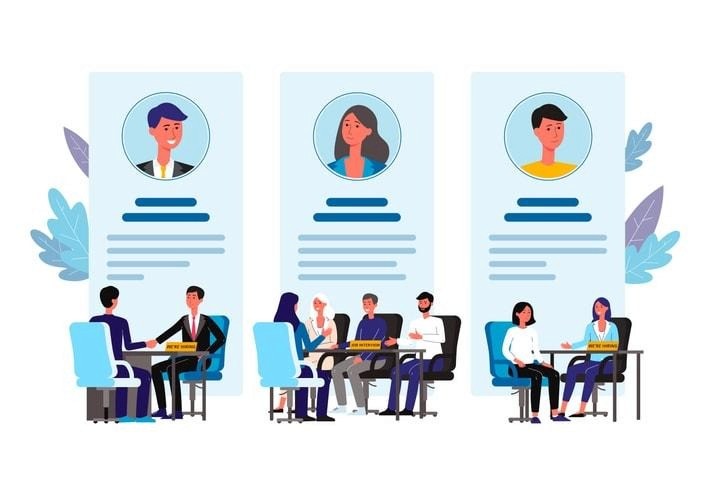
Individual interview sessions represent the most common interview format, allowing for focused conversations between a single candidate and one interviewer. This format creates an intimate setting that facilitates rapport building, detailed exploration of experience, and personalized assessment of cultural fit.
The primary advantage of one-on-one interviews lies in their conversational nature. Candidates can build genuine connections with individual team members, ask detailed questions about role expectations, and receive personalized insight into their fit for the position. Interviewers can adapt their approach based on candidate responses and explore areas of interest or concern in depth.
For technical candidates, individual interviews often focus on specific competencies or team relationships. A candidate might meet separately with the hiring manager to discuss role expectations, a senior engineer to assess technical depth, and a peer to evaluate collaboration potential. Each session provides focused evaluation of different aspects of candidate suitability.
Success in one-on-one interviews requires strong interpersonal skills, the ability to maintain energy across multiple sessions, and flexibility to adapt to different interviewer styles and interests. Candidates should research each interviewer’s background when possible and prepare relevant questions and examples for each conversation.
The challenge of individual interviews lies in their potential inconsistency. Different interviewers may focus on different competencies, ask varying questions, or apply different evaluation standards, which can create an uneven assessment process.
Panel Interview
Panel interview formats involve multiple interviewers assessing a single candidate simultaneously, typically including 3–6 people representing different perspectives and stakeholder groups. This approach allows for diverse input on hiring decisions while using time efficiently for busy teams.
The composition of interview panels varies by role and company culture. Technical panels may include the hiring manager, senior team members, cross-functional partners, and sometimes HR representatives. Each panelist typically focuses on specific competencies while contributing to an overall assessment of candidate fit.
Panel interviews offer several advantages over individual sessions. They reduce the impact of individual interviewer bias, provide multiple perspectives on candidate responses, and support a more comprehensive evaluation process. They also allow candidates to demonstrate skills such as managing multiple stakeholders, maintaining composure under pressure, and adapting communication style for different audiences.
However, panel interviews can feel intimidating for candidates and require careful facilitation to avoid a confrontational atmosphere. Success depends on treating the panel as a group of colleagues rather than opponents, maintaining eye contact with all participants, and directing responses to the most appropriate panelist.
Effective panel interview participation requires preparation for managing group dynamics, clear communication that includes all participants, and confidence to ask clarifying questions when multiple people speak simultaneously. Candidates should practice maintaining energy and enthusiasm while addressing each panelist’s concerns appropriately.
Group Interviews
Group interview sessions involve multiple candidates being assessed simultaneously, often through collaborative exercises, group discussions, or competitive scenarios. This format is less common than individual or panel interviews but provides unique insight into teamwork, leadership, and interpersonal skills.
Companies use group interviews primarily to observe interaction patterns, leadership emergence, and collaborative problem-solving abilities. These sessions may involve case discussions, role-playing exercises, or team-based activities that reveal how candidates work with peers and handle group dynamics.
For technical roles, group interviews may include collaborative coding exercises, design thinking sessions, or discussions about architectural approaches. These scenarios allow companies to assess not only technical skills but also the ability to contribute to team decision-making and knowledge sharing.
Success in group interviews requires balancing individual contribution with collaboration. Candidates must find ways to stand out while supporting others, contribute meaningfully without dominating discussions, and demonstrate leadership without appearing aggressive or dismissive.
Specialized Interview Types for Technical Roles
Technical positions, particularly in artificial intelligence and software engineering, require specialized assessment methods that evaluate complex problem-solving abilities, coding skills, and system design thinking. These interview formats have evolved to address the challenges of assessing technical competency while predicting real-world job performance.
Whiteboard Coding Sessions
Whiteboard coding remains one of the most controversial yet persistent formats in technical interviewing. These sessions require candidates to solve algorithmic problems by writing code on a whiteboard or shared screen without access to integrated development environments, compilers, or reference materials.
The appeal of whiteboard coding lies in its focus on fundamental problem-solving skills and clear communication of technical concepts. Interviewers can observe thought processes, see how candidates break down complex problems, and assess coding practices without reliance on modern development tools. The format also standardizes assessment by presenting consistent challenges across candidates.
However, whiteboard coding has faced increasing criticism for its disconnect from real software development work. Modern developers rarely write code without IDE support, documentation, or the ability to test and iterate quickly. Critics argue that the format favors candidates who excel at academic computer science problems rather than those skilled at building production systems.
Candidates preparing for whiteboard sessions should focus on core algorithmic concepts such as data structures, sorting, searching, and dynamic programming, while practicing explanation and communication skills. Starting with simple solutions and iteratively improving them often leaves a stronger impression than immediately presenting optimal approaches.
Pair Programming Interviews
Pair programming interview sessions offer a more realistic alternative to traditional whiteboard coding by involving collaborative development work between the candidate and an existing team member. This format simulates real working conditions while assessing technical skills, communication abilities, and cultural fit.
During pair programming sessions, candidates work alongside experienced developers to solve real problems using actual development tools and environments. This may include debugging existing code, implementing new features, or refactoring legacy systems. The collaborative nature allows interviewers to evaluate both technical competency and team integration.
The benefits of pair programming interviews include more realistic assessment conditions, reduced anxiety compared to solo performance formats, and stronger evaluation of communication and collaboration skills. Candidates can ask questions, seek clarification, and demonstrate how they would work with team members on day-to-day tasks.
This format has gained popularity as companies recognize the limitations of artificial coding challenges. It provides insight into how candidates approach unfamiliar codebases, handle ambiguous requirements, and contribute to team problem-solving. The interactive nature also helps candidates better understand team dynamics and work culture.
Success in pair programming interviews requires comfort with collaboration, openness in communicating thought processes, and adaptability to different coding styles and preferences. Candidates should focus on being effective partners rather than showcasing individual brilliance, demonstrating curiosity about the codebase and respect for existing practices.
Machine Learning Design Interviews
For artificial intelligence and machine learning engineers, system design interviews have evolved to focus on end-to-end ML system architecture, data pipeline design, and deployment considerations. These sessions assess the ability to think holistically about machine learning problems beyond algorithm implementation.
ML design interviews typically involve scenarios such as designing recommendation systems, fraud detection pipelines, or natural language processing applications. Candidates must consider data collection and preprocessing, model selection and training, evaluation strategies, deployment architectures, monitoring systems, and ongoing maintenance.
These discussions go beyond coding to assess understanding of production machine learning challenges, including data drift, model bias, scalability constraints, and real-time inference requirements. Interviewers look for awareness of the full machine learning lifecycle and the ability to weigh trade-offs between competing objectives.
The format reflects the reality that senior ML engineers often spend more time on system architecture, data engineering, and deployment than on algorithm implementation. Success requires broad knowledge of ML infrastructure, experience with production systems, and systematic reasoning through complex technical trade-offs.
Candidates should prepare by studying large-scale ML system architectures, common deployment patterns, and end-to-end system design across application domains. The ability to discuss ethics, bias mitigation, and responsible AI practices has become increasingly important in these interviews.
Modern AI-Powered Interview Approaches
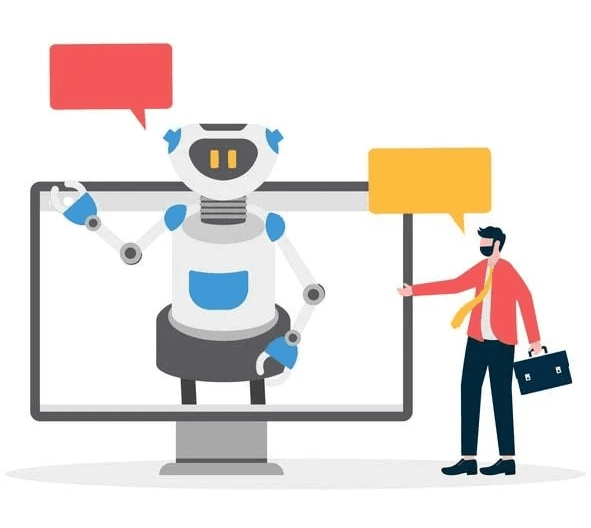
Artificial intelligence is transforming the interview process, from initial candidate screening through final selection decisions. These advances enable more efficient and consistent assessment processes, while also raising important questions about bias, transparency, and the overall candidate experience.
Fonzi’s Match Day Experience
Fonzi’s Match Day represents a new approach to technical hiring, designed to address common shortcomings in traditional interview processes while prioritizing skill-based evaluation and structured assessment. The platform combines standardized evaluations with AI-supported matching to connect candidates with roles based on demonstrated abilities rather than résumé credentials alone.
The Match Day experience begins with skills assessments focused on practical, job-relevant tasks and collaborative problem-solving rather than abstract coding puzzles or high-pressure interviews. Candidates participate in structured evaluations that reflect real work scenarios, allowing them to demonstrate competencies in realistic contexts while reducing unnecessary stress and inconsistency.
What sets Fonzi’s approach apart is its emphasis on candidate experience and consistency. The platform uses AI to support structured matching and evaluation workflows rather than replacing human decision-making. Standardized assessment criteria help reduce variability across interviews while preserving meaningful human interaction between candidates and hiring teams.
The Match Day format also acknowledges that traditional interviews often reward performance under pressure rather than actual job readiness. By emphasizing collaborative, skills-based assessments, Fonzi helps companies identify candidates who are more likely to succeed in real roles while ensuring a more respectful and transparent experience for candidates.
For artificial intelligence engineers and other technical professionals, Fonzi’s approach offers an alternative to multi-round, inconsistent interview processes. Instead of navigating repeated technical screenings with varying standards, candidates can demonstrate their skills in a single, structured environment designed to respect their time and effort.
Succeeding in the Competitive AI Job Market
The artificial intelligence job market presents both opportunity and challenge for technical professionals. While demand for AI talent remains strong, competition has intensified as more candidates develop relevant skills and companies become more selective in their hiring processes.
Understanding current market trends helps guide job search strategy and skill development priorities. Roles in machine learning engineering, AI research, and data science continue to grow, but employers increasingly seek candidates with production deployment experience rather than purely academic backgrounds. Full-stack AI capabilities, from modeling through deployment and monitoring, are highly valued.
Building relationships and networking effectively is critical in a competitive market where many roles are filled through referrals. Attend industry conferences, participate in online communities, contribute to open-source projects, and maintain an active professional presence. Genuine relationship building often matters more than aggressive self-promotion.
Develop a strong online presence that showcases technical capabilities through project portfolios, technical writing, and contributions to relevant discussions. Many hiring teams review candidates online before making interview decisions, making digital presence an important factor in early screening.
Stay persistent while maintaining realistic expectations around timelines and competition. The AI job market rewards both technical depth and professional maturity. Focus on continuous learning, skill development, and building meaningful relationships rather than optimizing solely for immediate placement.
Conclusion
The modern interview process now includes diverse assessment methods, from structured interviews to AI-supported platforms like Fonzi’s Match Day, designed to better predict job performance and improve candidate experience. For technical candidates, especially in AI and software engineering, understanding interview formats enables more effective preparation and clearer demonstration of skills. When applied thoughtfully, artificial intelligence can support fairer, more consistent hiring without replacing human judgment. Success in today’s job market depends on technical ability, strategic preparation, and understanding how modern interviews work.
FAQ
What’s the difference between behavioral and situational interview questions?
How many interview rounds should I expect for an AI engineering role?
Do video interviews put candidates at a disadvantage compared to in-person meetings?
What should I do if I encounter bias or unfair treatment during an interview?
How is AI changing the interview process, and should I be concerned about algorithmic bias?