The Best Interview Preparation Courses of 2026
By
Samara Garcia
•

AI interviews don’t just test what you know. They test how you think under scrutiny. Your resume may be parsed by an ATS before a human sees it, your coding session might be AI-reviewed, and your system design interview can jump from LLM evals to infra tradeoffs to explaining risk to a non-technical founder. If your prep still looks like a LeetCode-only grind, you’re already behind.
This is the gap many candidates feel but rarely see addressed. Instead of endless recruiter loops and low-signal interviews, the hiring process is slowly shifting toward more structured, higher-context conversations that better reflect real AI work. In this guide, we’ll break down how interviews actually work in 2026, which prep approaches matter now, how AI is being used in hiring, and how to prepare for roles at top AI startups without wasting months in the process.
Key Takeaways
Interview prep in 2026 requires more than basics: deep technical mastery, clear storytelling, and comfort with AI-assisted evaluations.
Fonzi AI is a curated talent marketplace, not a generic prep tool, with bias-audited evaluations and fast 48-hour Match Day hiring.
The best prep today is role-specific, combining pattern training, AI feedback, and real coverage of LLMs, ML infrastructure, and full-stack systems.
Responsible AI in hiring should increase transparency and signal, with clear criteria and feedback, not opaque black-box decisions.
The New Interview Landscape for AI & Engineering Roles
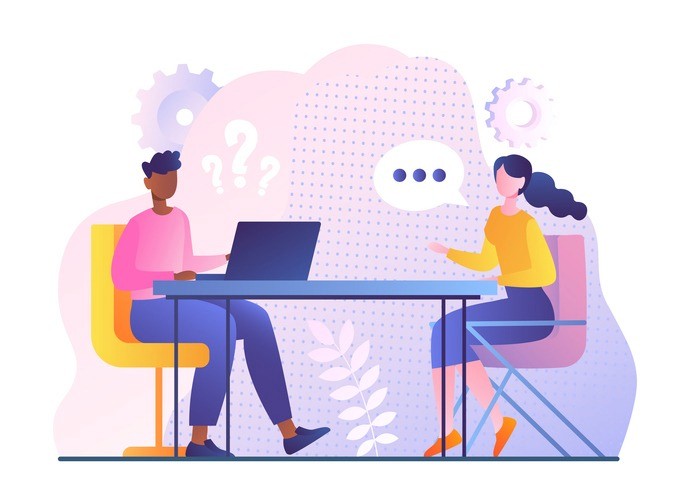
Interviews for AI/ML and engineering roles have evolved dramatically between 2020 and 2026. What used to be primarily data structures and algorithms coding rounds has expanded into multi-signal evaluation across system design, product sense, model reliability, and cross-functional collaboration.
Here’s what job seekers should expect to encounter:
Pair-programming sessions using tools like VS Code Live Share, where interviewers evaluate your real-time problem-solving and communication skills
LLM system design whiteboards covering retrieval-augmented generation architectures, vector databases, and inference optimization
Data infrastructure design on real production metrics, testing your ability to reason about scale and reliability
Research deep-dives for PhD and ML research roles, where you walk through paper contributions and experimental methodology
Companies now routinely use AI for candidate screening, transcript analysis, consistency checks, and automated code scoring. When these systems are transparent and intentionally designed to eliminate bias in recruitment, they can increase fairness by reducing subjective noise, inconsistency, and uneven human judgment in evaluations.
AI engineers themselves are increasingly evaluated on their ability to use AI tools responsibly. Can you prompt an LLM for scaffolding while still demonstrating independent reasoning and code quality? This meta-skill has become a genuine interview signal.
This complexity is why high-quality interview prep in 2026 must be holistic, combining technical drills, communication coaching, and realistic simulation of multi-round interview loops at AI startups and Tier-1 tech companies.
Types of Interview Preparation Courses in 2026
Instead of listing every platform, it’s more useful to understand the core types of interview prep in 2026 and what each is best for.
AI-powered mock interview platforms simulate real interviews and give structured feedback on communication, technical accuracy, and pacing. Tools like Interviewing.io and Final Round AI combine live coding with AI-driven analysis and transparent scoring.
Pattern-based technical courses teach reusable frameworks, algorithms, system design, and ML patterns, so candidates can adapt to novel questions instead of relying on memorization.
Deep-dive specialization courses focus on senior-level topics like LLM systems, ML infrastructure, evaluation, and production tradeoffs, doubling as real skill development.
Career storytelling programs help candidates clearly communicate impact and leadership in behavioral interviews using structured narratives like the STAR method.
Most candidates benefit from combining one technical foundation, one role-specific deep dive, and an AI-powered mock platform for realistic practice.
How to Choose the Best Interview Preparation Course for You
The “best” course in 2026 depends heavily on your target role (LLM engineer vs. infrastructure SRE) and seniority level (3-5 years vs. 8+ years of experience). Here’s how to make the right choice.
Assess Your Current Gap
Before investing in any course, benchmark yourself through:
A mock interview on a platform with structured feedback
A LeetCode-style assessment to identify weak pattern areas
Recent feedback from actual interviews (e.g., “weak on ML system design,” “communication unclear”)
Evaluate Course Criteria
Look for these characteristics when comparing options:
Criterion | What to Look For |
Domain Specificity | Does it cover AI, ML infra, or data platforms specifically? |
Topic Currency | Are retrieval-augmented generation, vector DBs, and distributed training included? |
Target Company Alignment | Is content calibrated for AI startups or big tech? |
Teaching Format | Live cohort vs. on-demand video vs. self-paced workbook |
Practice Integration | Does it include peer practice, instructor feedback, and graded assignments? |
Verify Outcomes Data
When available, check placement rates into FAANG and Tier-1 firms. Look for testimonials from AI engineers hired at Series A–C AI startups between 2024–2026. Confirm that content is updated as hiring practices shift.
Prioritize resources that teach thinking frameworks (system design lenses, ML tradeoff checklists) over just question banks. Modern interviews test reasoning in novel situations, not pattern matching against memorized answers.
Comparing Interview Prep Options: Courses, Marketplaces & Match Day

Candidates in 2026 often split their strategy between stand-alone interview prep courses, AI-based mock platforms, and curated marketplaces like Fonzi, where prep is integrated with real hiring events.
Here’s how these options compare:
Option | What’s Best For | Time to Signal | Notes for AI/ML Engineers |
Traditional Interview Courses | Building foundational knowledge, systematic pattern learning | 4-12 weeks of study before applying | Strong for computer science fundamentals and algorithms; less role-specific for ML/LLM positions |
AI-Powered Mock Platforms | Practice, feedback on communication, and identifying weak areas | Immediate feedback per session | Super helpful for refining responses and reducing filler words; limited connection to actual jobs |
Fonzi AI Match Day | Converting prep into real offers from vetted AI startups | 48-hour decision windows | Curated AI/engineering roles, transparent salary ranges, concierge recruiter support, bias-audited evaluation, real offers rather than hypothetical practice |
Fonzi isn’t a course provider in the classic sense. Instead, it offers structured guidance, constructive feedback, and curated interview loops that function as a high-signal, real-world prep and hiring mechanism combined.
The highest ROI comes from combining learning, practice, and real hiring events. Take a pattern-based data structures and algorithms course, practice on an AI mock interview tool, then participate in Fonzi’s Match Day to convert that preparation into offers within 48 hours.
Inside Pattern-Based Interview Courses (and Why They Work)
Pattern-based prep has become the gold standard in 2026. These courses teach reusable mental models rather than isolated questions, sliding window techniques, tree traversals, sharding strategies, and model evaluation frameworks that transfer across problems.
How Pattern-Based Training Works
Each problem maps to a core pattern. Candidates train to recognize and adapt that pattern in whiteboard or online coding environments. Instead of asking “Have I seen this exact question before?” you learn to ask “Which pattern family does this belong to?”
For AI/ML roles, patterns include:
Choosing between fine-tuning and prompt engineering for a given use case
Selecting architectures based on latency vs. quality tradeoffs
Designing evaluation harnesses for LLMs with appropriate metrics
Debugging data drift in production models
Why This Differs From Generic Q&A Prep
Traditional Q&A training focuses on memorizing hundreds of comprehensive interview questions. Pattern-based training teaches you a smaller set of deep frameworks that can be flexibly recombined across new, unseen interview problems.
This is particularly valuable in AI hiring, where interviewers often pose novel prompts specifically designed to test reasoning over recall.
When selecting pattern-based courses, prioritize those that explicitly show transfer from patterns to real job scenarios, like designing an RAG pipeline for a customer support bot at a Series B AI startup.
How AI Is Used in Interview Prep and Hiring
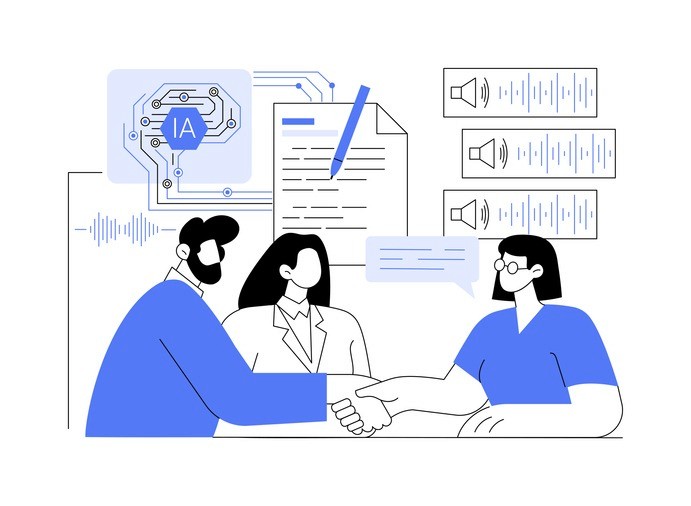
AI in hiring is commonly used to assist with scheduling, summarizing interviews, flagging resumes for fairness checks, and supporting decision quality. The key distinction is that responsible AI assists human judgment rather than replacing it.
AI in Interview Prep
Modern prep platforms use AI for:
Analyzing speech pace and clarity in mock interviews
Suggesting stronger behavioral stories based on your responses
Detecting missing edge cases in coding answers
Helping candidates rehearse salary negotiation scenarios
These tools are highly recommended for candidates seeking data-driven feedback on their interviewing skills.
The Darker Possibilities (And How to Avoid Them)
Not all AI in hiring is created equal. Opaque automated rejections and biased scoring systems exist. That’s why candidates should look for:
Transparent evaluation rubrics
Bias audits on AI systems
Human-in-the-loop oversight for final decisions
What Makes Fonzi AI Different From Traditional Interview Prep Platforms
Fonzi is a curated talent marketplace for elite AI, ML, and engineering talent, not a generic course library. It’s designed to compress months of scattered interviews into a high-signal, time-bounded event called Match Day.
Pre-Vetted Candidates and Companies
Fonzi vets both sides of the marketplace:
Engineers typically have 3+ years of professional experience and are assessed on demonstrable skills
Companies must commit to salary bands and demonstrate serious hiring intent before joining a Match Day
Structured Support Instead of Courses
Rather than selling interview prep courses à la carte, Fonzi surrounds candidates with integrated support:
Role calibration calls to clarify target positions
Resume sharpening tailored to AI startups
Interview logistics management
Guidance on positioning projects and research for specific companies
Bias-Audited Evaluation
The evaluation stack includes structured scorecards, consistent rubrics across candidates, and AI-assisted checks that reduce subjective noise. This helps hiring managers focus on genuine fit and capability rather than surface-level signals.
Radical Transparency
Salary ranges are shared upfront
Clear timelines from the beginning (typically 48-hour decision windows per hiring event)
Candidates know exactly how many companies will see their profile
How Fonzi’s Match Day Works for AI & Engineering Candidates
Match Day is a recurring, time-boxed hiring event where curated AI and engineering talent and vetted startups are brought together to run condensed, high-signal interview loops.
The Candidate Journey
Application: Submit your profile to Fonzi
Vetting: Skills and experience are assessed against marketplace standards
Calibration: Discuss role preferences (LLM infrastructure vs. applied ML vs. data engineering)
Invitation: Receive an invitation to a specific Match Day event
During Match Day
Multiple companies can request interviews with the same candidate over a 48-hour window. Fonzi handles all scheduling, reminders, and logistics so engineers can focus solely on performance.
The Business Model
For candidates, the service is completely free. Fonzi charges an 18% success fee to employers on successful hires. This aligns incentives toward genuine matches and high-quality interview experiences. Fonzi only succeeds when you succeed.
Practical Prep Strategy for AI & Engineering Interviews in 2026
Here’s a concrete roadmap for the 4-6 weeks before a Match Day or major interview loop.
Divide Prep Into Three Pillars
Foundations: Data structures, algorithms, core computer science concepts, networking fundamentals
Role-Specific Depth: LLM fine-tuning, distributed training, infrastructure reliability, or whatever your target role demands
Communication/Storytelling: STAR method responses, project narratives, explaining technical decisions to non-technical stakeholders
Weekly Cadence
Days | Focus Area |
3 days/week | Coding and system design problems |
2 days/week | ML/LLM or infrastructure case studies |
1-2 sessions/week | Mock interviews with peers or AI-powered tools |
Build Showcase Projects
Develop or refine 1-2 projects that align with current hiring trends:
A production-ready RAG pipeline
A scalable feature store
An evaluation harness for multi-modal models
Be prepared to whiteboard or walk through the architecture. Hiring managers at tech companies want to see how you think, not just what you built.
Structured Reflection
After every mock or real interview, write down:
Which questions were most difficult
What patterns were missed
How could explanations be clearer
Then adapt your study plan accordingly. This feedback loop is what separates professionals who build confidence quickly from those who plateau.
Summary
Interview prep in 2026 has moved beyond memorization and generic advice. Pattern-based thinking, realistic system design practice, and AI-driven feedback now define how strong candidates prepare for competitive AI and engineering roles.
Engineers who combine targeted skill building with access to high-signal hiring environments reach offers faster, because their preparation mirrors real work. Fonzi AI reflects this shift by prioritizing transparency, bias-audited evaluation, and efficient, human-centered hiring.
FAQ
What are the best AI-powered mock interview platforms for real-time feedback in 2026?
How do “pattern-based” interview courses differ from traditional question-and-answer training?
Which interview prep classes offer the highest success rates for FAANG and Tier-1 tech companies?
How should senior AI engineers prepare differently from mid-level candidates in 2026?
Is LeetCode still relevant for AI and ML interviews in 2026?


