The Ultimate Developer Tech Stack: 15 Tools for Modern Programming
By
Samara Garcia
•
This guide explores NYC’s 2026 tech calendar and how it functions as a live hiring market for AI, ML, data, and infrastructure engineers. It highlights the most important conferences, workshops, and meetups across the city, explains how AI is now embedded into networking and recruiting, and shows how Fonzi and Match Day turn event momentum into structured, fast interviews with companies ready to hire. The focus is on helping engineers pick high signal events, prepare intentionally, and move from conversations at meetups to real job offers without months of follow-up.
Key Takeaways
AI-native tools have become baseline productivity multipliers. From copilots that generate context-aware code to cloud IDEs that spin up in seconds, AI assistance is shifting how code is written, reviewed, and deployed in 2026.
The ultimate stack balances local and cloud. Teams need local tools like VS Code and Docker alongside cloud services like GitHub, CI/CD pipelines, and cloud IDEs to support remote and distributed development.
Standardization accelerates onboarding. When every engineer uses the same editor, the same linters, and the same deployment pipeline, new hires become productive in days instead of weeks.
Fonzi AI bridges tooling and talent. As a curated talent marketplace, Fonzi AI connects teams using these tools with elite AI and software engineers, typically delivering hires in under 3 weeks through structured Match Day events.
Core Coding Environment: IDEs and Editors
A standard code editor or integrated development environment baseline reduces friction across code reviews, pair programming, and onboarding. When everyone uses the same tools with shared configurations, developers working on the same project can focus on building software rather than fighting environment differences.
Visual Studio Code remains the most widely adopted code editor in 2026. It’s free, runs on Windows, macOS, and Linux, and supports multiple programming languages through its massive extensions marketplace. Built-in IntelliSense provides intelligent code completion, and the integrated terminal, Git support, and Remote Containers extension make it ideal for modern stacks. Teams often standardize on VS Code plus a recommended extension pack stored in a shared .vscode configuration in their code repositories.
JetBrains IDEs (IntelliJ IDEA, PyCharm, WebStorm, GoLand) offer language-specific deep refactoring and code insight that power users appreciate. For Java, Python, and enterprise-scale projects, these tools provide comprehensive environments combining editors, compilers, debuggers, and refactoring tools. The steep learning curve pays off for software development teams working on complex workflows.
Neovim and other modern terminal editors serve developers who favor keyboard-driven workflows. Many teams accommodate this choice by ensuring their linting, formatting, and CI configurations work identically regardless of the editor. The development process shouldn’t break because someone prefers Vim keybindings.
Concrete examples of 2026-relevant plugins include ESLint and Prettier for JavaScript/TypeScript, Black and Ruff for Python, and clangd for C++. These tools enforce consistency across the team and catch errors before they hit code review.
AI-Powered Coding Assistants and Dev Environments
Between 2024 and 2026, AI coding assistants went from “nice to have” to baseline productivity tools for professional developers. Studies via platforms like Cortex indicate measurable gains in code velocity, and expert guides suggest AI tools are now embedded in 70-80% of developer workflows.
GitHub Copilot stands out as the most widely adopted AI coding assistant in 2026. It provides real-time code suggestions, test generation, and inline chat, integrating directly into VS Code and JetBrains IDEs. The tool excels at context-aware suggestions across multiple languages and significantly reduces time spent on boilerplate code.
Codeium provides free real-time, context-aware code completion across languages like Python, JavaScript, and C++. It integrates with popular IDEs and offers paid tiers for advanced features, positioning it as a cost-effective alternative to premium AI assistants for teams watching their budget.
Cloud IDEs like GitHub Codespaces and JetBrains Gateway enable rapid, collaborative development from anywhere. These web-based platforms eliminate setup friction; new engineers can start coding within minutes instead of spending a day configuring their local environment. For distributed teams, this is invaluable.
AI tools change expectations in several ways:
Engineer productivity increases 2-3x for routine coding tasks
Code review depth shifts toward architecture and logic rather than style nitpicks
Junior engineers ramp in weeks instead of months when paired with AI assistants
Test coverage improves as tools like Codium generate unit tests in real-time
Note for hiring managers: When AI assistants are ubiquitous, interview questions should focus on problem-solving, architecture, and judgment rather than raw typing speed. Fonzi AI’s evaluation process is AI-aware: assessments are bias-audited and designed for a world where candidates responsibly use copilots.
Collaboration and Project Management Tools
Synchronized collaboration matters more than ever for hybrid and globally distributed software teams. When tickets, specs, docs, and chat live in disconnected silos, teams waste hours hunting for context instead of building software.
Jira remains the standard for backlog management, sprints, and incident workflows in many organizations. Linear has emerged as a modern alternative with a faster interface and better developer experience. Both tools help teams track progress through the entire development phase.
GitHub Issues and Projects work well for teams that want code and work tracking in one place. This distributed version control system now includes Kanban boards, issue tracking, and project tracking features that make it a viable all-in-one collaboration platform.
Notion and Confluence serve as living documentation platforms for architectural decision records, onboarding guides, and knowledge base creation. The best software development teams maintain up-to-date docs alongside their code.
A typical 2026 workflow looks like this: product specs live in Notion, Jira epics link to GitHub pull requests, and automated status updates flow to Slack or Microsoft Teams. This integration means everyone knows what’s happening without attending endless status meetings.
Fonzi AI often aligns take-home challenges with the same project management tools companies use in production. When candidates submit work through familiar issue trackers and PR reviews, hiring managers get a realistic preview of how they’ll collaborate day-to-day.
DevOps, CI/CD, and Infrastructure Automation
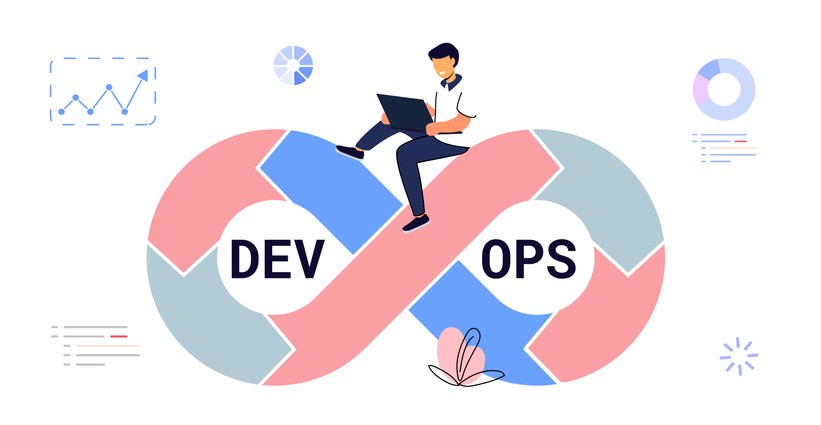
Continuous integration and continuous delivery are the default in 2026. Manual deployments are the exception, reserved only for high-compliance environments with strict regulatory requirements. The best software development tools automate the entire path from commit to production.
GitHub Actions and GitLab CI/CD tie automated builds, tests, and deployments directly to pull requests. CircleCI offers powerful parallel testing and caching for teams with complex build requirements. These tools run automated testing on every push, catching bugs before they reach main branches.
Docker revolutionized deployment consistency when it launched in 2013, and it remains essential for local development parity with production. Using Docker Compose or Dev Containers, teams eliminate the “it works on my machine” problem, and some estimates suggest a 90% reduction in environment-related issues.
Kubernetes orchestrates containers at scale through managed services like Amazon EKS, Google GKE, or Azure AKS. While it has a steep learning curve, Kubernetes enables deployment processes that handle traffic spikes, rolling updates, and automatic failover without manual intervention.
A reference architecture might look like this: a feature branch triggers CI on every push, runs tests and static analysis, and deploys automatically to a short-lived preview environment. Reviewers can test changes in isolation before merging to main.
Terraform and Pulumi define cloud resources in version-controlled files, making infrastructure changes as reviewable as code changes. This Infrastructure as Code approach ensures that staging and production environments stay consistent.
Fonzi AI surfaces candidates with experience in these specific pipelines. A candidate profile might note “has designed GitHub Actions workflows for Node.js microservices on AWS” or “migrated legacy Jenkins pipelines to GitLab CI/CD,” so founders don’t have to guess about DevOps readiness.
Observability, Quality, and Security Tools
The shift from simple logging to full observability, metrics, logs, and traces defines modern systems in 2026. When something breaks at 2 AM, you need application performance monitoring that pinpoints the problem in minutes, not hours.
Observability platforms like Datadog, New Relic, or Grafana Cloud provide metrics and traces across your entire stack. OpenTelemetry has emerged as the open standard underlying many setups, allowing teams to avoid vendor lock-in while maintaining comprehensive visibility.
Error monitoring tools like Sentry and Rollbar capture exceptions and performance issues in production and staging. These tools surface problems before users report them and provide the stack traces and context needed for rapid development of fixes.
Code quality and security scanners integrate directly into CI pipelines:
SonarQube and SonarCloud perform intelligent code reviews, catching bugs and code smells before merge
Dependabot scans for vulnerable dependencies and automatically opens pull requests with updates
Snyk detects security vulnerabilities and provides automated fixes for common issues
These tools tie directly to developer workflows. A pull request might fail when test coverage drops below a threshold or when a critical vulnerability is detected in a new dependency. This shift-left approach catches problems early when they’re cheap to fix.
Fonzi AI’s bias-audited evaluations often simulate production debugging. Candidates might diagnose a synthetic incident based on logs and traces from tools like Datadog or Sentry, demonstrating the practical skills needed for on-call rotations and incident response.
Comparison Table: 15 Essential Tools for the Modern Developer Stack
The table below summarizes the 15 recommended software tools, their primary role, typical team size fit, and why they’re relevant in 2026.
Tool | Category | Best For | Typical Use Case | Startups vs. Enterprises |
Visual Studio Code | IDE/Editor | All programming languages, web development | Daily coding, extensions for any stack | Both are free, lightweight, scale well |
IntelliJ IDEA (JetBrains) | IDE | Java, Kotlin, enterprise projects | Deep refactoring, database development | Enterprises, worth the license for complex projects |
GitHub | Version Control | Source code, collaboration | Code repositories, pull requests, issues | Both, free tiers are generous, and enterprise features are available |
GitHub Copilot | AI Assistant | Code completion, test generation | Real-time code suggestions while typing | Both, ROI typically justifies the per-seat cost |
GitHub Codespaces | Cloud IDE | Remote teams, rapid onboarding | Browser-based development environments | Growth-stage and up, simplifies environment management |
Jira or Linear | Project Management | Backlog, sprints, workflow management | Sprint planning, bug tracking, roadmaps | Jira for enterprise, Linear for startups |
Notion | Documentation | Living docs, onboarding, specs | Architectural decisions, team wiki | Both, an intuitive interface and a flexible structure |
Slack or Microsoft Teams | Communication | Team collaboration, integrations | Async updates, incident response, file sharing | Teams for enterprise, Slack for startups |
Docker | Containerization | Local dev parity, microservices | Consistent environments across machines | Both are essential for any modern stack |
Kubernetes | Orchestration | Container scaling, cloud-native apps | Production deployments, auto-scaling | Growth-stage and up, overkill for tiny teams |
GitHub Actions or CircleCI | CI/CD | Automated builds, tests, deploys | Run tests on every PR, deploy on merge | Both, GitHub Actions are often sufficient for starters |
Terraform | Infrastructure as Code | Cloud resource management | Define AWS/GCP/Azure resources in code | Both are critical for reproducible infrastructure |
Datadog or Grafana | Observability | Metrics, logs, traces | Production monitoring, debugging support | Grafana for budget-conscious, Datadog for all-in-one |
Sentry | Error Monitoring | Exception tracking, performance | Capture production errors, advanced analytics | Both, generous free tiers for startups |
SonarQube | Code Quality | Static analysis, security scanning | Fail builds on code quality issues | Both, cloud version easier for small teams |
How Fonzi AI Connects You with Engineers Who Master This Stack
Fonzi AI is a curated talent marketplace that matches elite AI/ML, full-stack, backend, frontend, and data engineers with startups and high-growth tech companies. Unlike generic job boards, we pre-vet candidates and run structured hiring events that compress months of recruiting into weeks.
The Match Day model works like this: companies commit upfront salary ranges, review shortlists of vetted candidates, and run focused interviews during a time-boxed event. Offers typically go out within 48 hours per hiring event, with most hires completed in about 3 weeks. This makes hiring fast, consistent, and scalable, whether you’re making your first AI hire or your 10,000th.
Fonzi AI pre-screens for hands-on experience with the exact tools and patterns described in this article:
Candidates who have built CI/CD pipelines on GitHub Actions
Engineers who have shipped services on Kubernetes
Developers who have integrated Datadog, Sentry, or similar observability tools into production microservices
Team leads experienced in maintaining software across distributed version control systems
Our bias-audited technical evaluations and fraud detection safeguards ensure candidates’ portfolios and assessments are authentic. Computer programs check for consistency, and human reviewers validate that what you see is what you get.
This approach serves different customer segments:
Early-stage startups making their first AI or platform hire can access the same caliber of talent that typically goes to Big Tech
Growth-stage companies standardizing their developer stack can find engineers who already know their tools
Large enterprises scaling from dozens to thousands of engineers can maintain a consistent candidate experience while hiring at volume
Summary
In 2026, the real developer tech stack is not just a set of tools but a shared operating system for how teams build. Modern IDEs, AI assistants, Git workflows, CI/CD, containers, observability, and documentation only create leverage when engineers are fluent in them and aligned on how work actually gets done. Teams that share the same tools and workflows move faster, collaborate better, and compound velocity over time.
Fonzi AI helps companies assemble those teams quickly. With sub three week time to hire, upfront salary transparency, and a curated matching experience instead of a noisy job board, Fonzi connects you with engineers who can step into your stack and contribute from day one. If you want to hire developers who already know how to work the way your team works, Match Day is the fastest path.
FAQ
What are the best AI-powered code editors for developers in 2026?
Which software tools are essential for setting up a modern DevOps pipeline?
Is Visual Studio Code still the industry standard, or are AI-native IDEs taking over?
What are the most recommended development tools for cross-platform mobile app creation?
How do I choose between local development environments and cloud-based IDEs like GitHub Codespaces?


