Full Stack Developer Jobs 2026: Remote, Java, & Entry-Level
By
Liz Fujiwara
•
By 2026, full stack developer roles in the US go far beyond “front end plus backend.” Modern engineers build web applications, design backend services, integrate LLM APIs, and collaborate across product, design, and data science teams.
US job boards list 10,000–15,000+ openings for full stack roles across fintech, healthtech, e-commerce, devtools, and AI startups, with the global developer population at 28.7 million and projected to grow 25% by 2031, making full stack development a future-proof career.
Full stack developers now handle web apps, RESTful APIs, data pipelines, and AI integrations, requiring knowledge of the full software lifecycle from design to deployment.
Fonzi AI offers a curated talent marketplace for AI, ML, full stack, backend, frontend, and data engineers, helping candidates navigate modern hiring whether pivoting, exploring remote work, or entering the workforce.
Key Takeaways
Core skills now include Java, JavaScript/TypeScript, React, Node.js, AI coding assistants like GitHub Copilot, and experience integrating LLM-based systems into production.
Hiring processes increasingly use structured evaluations, AI-assisted screening, portfolio assessments, and salary transparency, with Fonzi AI’s Match Day enabling 48-hour interviews and fast offers.
Remote full stack roles remain strong, Java developers command premium salaries in major tech hubs, and entry-level candidates must show end-to-end project work through GitHub, deployed apps, or open-source contributions.
What Full Stack Developer Jobs Look Like in 2026

A 2026 full stack developer or full stack software engineer works end-to-end on web applications, APIs, databases, and increasingly AI-driven features, expanding from CRUD apps to scalable applications handling real-time data, vector databases, and LLM integrations.
Typical responsibilities include:
Designing and developing full stack web applications using modern frameworks
Building and maintaining features across frontend and backend systems
Integrating third-party APIs, including LLM providers like OpenAI and Anthropic
Collaborating closely with product managers, designers, and data engineers
Owning services in production, from deployment through monitoring and incident response
Writing clean, testable code and participating in code reviews to ensure code quality
Solving problems across the entire stack when issues arise
Entry-level vs. mid-level vs. senior roles:
Entry-level developers focus on implementing defined features under guidance, learning codebase patterns, and contributing to agile teams; mid-level engineers own larger features, make technical decisions, and mentor juniors; senior full stack developers lead technical design, drive cross-functional initiatives, and shape architecture for the entire platform.
Common technologies in 2026 job descriptions:
Backend: Java 17+, Spring Boot, Node.js, Python, Go
Frontend: React, Next.js, Vue, Angular, TypeScript
Databases: PostgreSQL, MySQL (relational databases), MongoDB, Redis
Infrastructure: Docker, Kubernetes, AWS, Azure, GCP
AI/ML: OpenAI API, LangChain, vector databases, embeddings
Concrete industry examples:
A Boston healthtech startup might hire a Java full stack developer to build HIPAA-compliant patient portals with Spring Boot, React, and PostgreSQL; a Bay Area AI company might need a full stack engineer with TypeScript, Node.js, and Pinecone vector databases to build RAG applications for enterprise customers.
Remote & Hybrid Full Stack Developer Jobs in the USA
Remote full stack developer jobs remain abundant in 2026, with many US companies adopting permanent remote-first or hybrid models, though some roles are tied to hubs like San Francisco, New York, Seattle, and Austin, accelerated by cloud-native development and async collaboration.
Understanding role types:
Fully remote: Work from anywhere (sometimes globally, sometimes US-only)
US-remote: Must reside in the United States for tax and legal reasons
Hybrid: Required in-office 2–3 days per week, typically near a company hub
Employers may require candidates to be in specific time zones or hold US work authorization, so reading the job description carefully matters.
Key industries hiring remote full stack developers in 2026:
AI tooling and LLM platform companies
SaaS B2B companies building enterprise software
Fintech firms handling online banking and payments
E-commerce platforms scaling for global customers
Healthtech companies building patient-facing applications
Practical advice for remote candidates:
Showcase remote collaboration skills explicitly on your resume
Highlight experience with async communication tools (Slack, Notion, Linear)
Demonstrate strong documentation habits and self-direction
Include examples of owning features end-to-end with minimal supervision
Mention experience working across time zones if applicable
Java Full Stack Developer Roles: Skills, Tech Stack & Salary
Java full stack developer roles remain strong in 2026, particularly in large enterprises, fintech, insurance, and established SaaS platforms. While newer languages have gained traction in startup environments, Java’s robustness, strong typing, and mature ecosystem make it the backbone of enterprise level application development.
Organizations like major banks, insurance providers, and healthcare systems continue to invest heavily in Java-based stacks for their security, performance, and long-term maintainability.
Common Java full stack tech stacks:
Backend: Java 17+ or 21, Spring Boot, Spring Cloud, Hibernate/JPA
APIs: RESTful services, GraphQL, gRPC
Frontend: React, Angular, or Vue integrated with Java backends
Databases: PostgreSQL, MySQL, Oracle
Infrastructure: Docker, Kubernetes, AWS/Azure/GCP
Typical responsibilities of a Java full stack software engineer:
Designing microservices architectures for complex technical challenges
Building secure, scalable APIs that handle high transaction volumes
Implementing UI components with modern front end frameworks
Writing comprehensive integration tests and ensuring code quality
Optimizing performance through profiling, caching, and database tuning
Participating in code reviews and mentoring junior developers
2026 salary expectations for Java full stack developers in the US:
Experience Level | Salary Range (US Average) | Major Tech Hubs (SF, NYC, Seattle) |
Entry-Level (0-2 years) | $90,000 – $120,000 | $100,000 – $135,000 |
Mid-Level (2-5 years) | $120,000 – $160,000 | $140,000 – $180,000 |
Senior (5+ years) | $160,000 – $200,000+ | $180,000 – $220,000+ |
These ranges reflect base salary and may not include equity, bonuses, or benefits like health insurance, dental insurance, vision insurance, 401 k matching, and paid time off.
Entry-Level & Junior Full Stack Developer Jobs in 2026
Landing your first full stack developer job in 2026 is challenging, even amid high demand. Hiring managers receive hundreds of applications for early career positions, and without professional experience, standing out requires demonstrable proof of your skills.
Baseline skills expected from an entry-level full stack developer:
Proficiency in one backend developer language (Java, Python, or Node.js)
Competence with one modern front end framework (React, Vue, or Angular)
Working knowledge of Git, version control, and collaborative workflows
Basic SQL skills and understanding of relational databases
Ability to build and consume REST APIs
Familiarity with cloud deployment (even basic experience counts)
The importance of demonstrable work:
Hiring managers can’t verify your skills through a resume alone. What matters is what you can show:
GitHub repositories with well-documented projects
Deployed applications (even simple ones) that reviewers can interact with
Contributions to open-source projects demonstrating collaboration
Hackathon projects or portfolio pieces showing end-to-end ownership
Technical blog posts or documentation showcasing your understanding
Practical strategies for freshers seeking remote or hybrid roles:
Target companies with explicit new grad or early-career programs
Look for internships that convert to full-time positions
Apply to junior roles at startups where you’ll wear multiple hats
Build relationships through tech communities, meetups, and online forums
Consider curated platforms like Fonzi AI once you’ve built equivalent experience
Preparing to be Fonzi-ready:
While Fonzi AI typically works with candidates who have 3+ years of professional experience, junior developers can prepare by:
Building 2–3 polished full stack projects that demonstrate real problem-solving
Practicing system design at a smaller scale (designing a URL shortener, chat app, or simple e-commerce backend)
Learning to talk concretely about impact and trade-offs in your projects
Understanding data structures and algorithms at a level suitable for coding interviews
How AI Is Changing Full Stack Hiring
By 2026, AI-assisted hiring has become commonplace. Resume screening software, automated coding assessments, and LLM-based applicant ranking systems are standard at many large enterprises and generic job platforms. This creates efficiency for employers but often frustration for candidates.
Common candidate concerns:
Black-box rejections with no feedback or explanation
Biased models that may disadvantage certain backgrounds
Impersonal funnels that make engineers feel like “just another profile”
Gaming the system with keyword-stuffed resumes rather than real skills
How typical high-volume AI screening works:
Large companies and generic job boards often use AI to filter thousands of applications down to a manageable number. This prioritizes keyword matching and pattern recognition, sometimes at the expense of nuance.
How Fonzi AI approaches this differently:
At Fonzi, we use AI to assist humans, not replace them. Our approach includes:
Fraud detection: Automated checks identify inconsistencies between claimed experience and public profiles (GitHub, LinkedIn)
Consistency verification: AI flags discrepancies so human reviewers can investigate
Structured rubrics: Evaluations follow auditable frameworks, reducing subjective bias
Bias auditing: Our evaluation processes are regularly audited for demographic bias
Human final approval: Talent specialists review and approve every candidate profile
The goal isn’t to automate hiring decisions; it’s to remove low-signal noise so human recruiters can focus on meaningful conversations with qualified candidates.
Inside Fonzi AI’s Match Day for Full Stack & AI Engineers
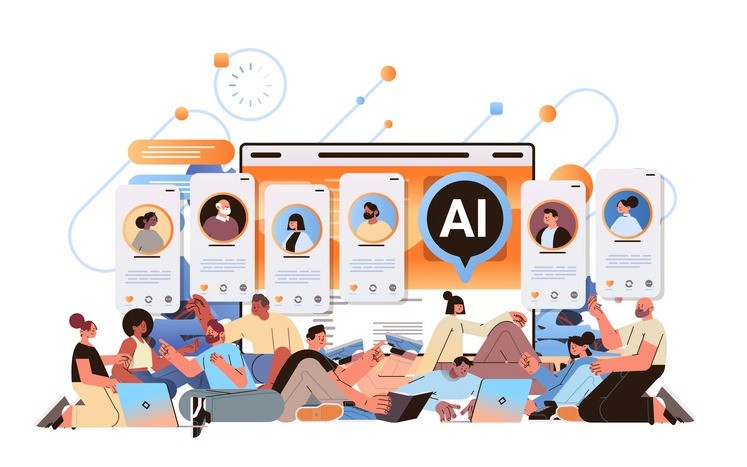
Match Day is Fonzi AI’s flagship hiring event, a recurring, time-boxed experience where pre-vetted full stack and AI engineers connect with curated AI startups and high-growth tech companies. Each Match Day cycle typically runs 48 hours, creating urgency and high signal for both sides.
How Match Day works:
Companies see profiles with standardized skill tags, salary expectations, and location preferences
Companies “opt-in” to interview candidates they’re interested in
Candidates receive multiple interview requests within the 48-hour window
Scheduling support is provided, reducing coordination overhead
Key differentiators from traditional job applications:
Fewer interviews to get an offer: High alignment means less wasted time
Pay transparency: Companies commit to salary ranges before Match Day
Concierge support: Scheduling, logistics, and candidate prep are handled for you
Access to top-tier teams: Participating companies are vetted for quality and culture
For a senior full stack engineer or a data engineer exploring new opportunities, Match Day compresses what typically takes 6–8 weeks of job searching into a focused, efficient experience.
Essential Skills for Full Stack Developer Jobs in 2026
Successful 2026 full stack developers combine strong fundamentals, modern frameworks, cloud skills, and comfort working alongside AI tools. The bar has risen as employers expect both deep expertise in your primary stack and breadth across the full development lifecycle.
Core technical skills:
Proficiency in at least one backend language (Java, Python, Node.js/TypeScript, Go)
Strong understanding of one SPA framework (React, Vue, Angular)
Experience building REST and GraphQL APIs
Working knowledge of both relational databases (PostgreSQL, MySQL) and NoSQL options (MongoDB, Redis)
Containerization with Docker and orchestration with Kubernetes
Cloud platform experience (AWS, Azure, or GCP)
Continuous integration and deployment pipelines
AI and data-related skills increasingly expected:
Consuming LLM APIs (OpenAI, Anthropic, local models)
Building retrieval-augmented generation (RAG) flows
Understanding embeddings and vector search
Basic prompt engineering for production applications
Familiarity with generative ai concepts and limitations
Non-technical skills that matter:
Clear written communication for async collaboration
Product thinking; understanding why, not just how
Testing culture: unit tests, integration tests, and TDD practices
Code review etiquette and constructive feedback
Ability to collaborate with designers, PMs, and data scientists
Comfortable solving problems with ambiguity
Comparing Paths to Full Stack Developer Roles in 2026
When searching for full stack developer jobs, candidates have several channels to choose from. Each has trade-offs in terms of speed, signal quality, and support.
Channel | Typical Time-to-Offer | Signal Quality | Salary Transparency | Candidate Support | Best For |
Traditional Job Boards | 4–8 weeks | Low-Medium (high volume, keyword matching) | Variable (often hidden until late stages) | Minimal (self-service) | Broad search, exploring options |
Direct Company Applications | 3–6 weeks | Medium (depends on referrals) | Variable (sometimes posted, often negotiable) | None (unless you have an internal contact) | Targeting specific companies |
Fonzi AI Match Day | 48 hours – 2 weeks | High (pre-vetted candidates and companies) | High (salary ranges committed upfront) | Concierge-style (scheduling, prep, advocacy) | Experienced engineers seeking fast, transparent hiring |
If you’re early in your career or casting a wide net, traditional job boards and direct applications provide volume, but expect longer timelines, less transparency, and more rejection without feedback.
If you’re an experienced engineer (3+ years) seeking a high-signal process with salary transparency, Fonzi AI’s Match Day eliminates much of the friction, letting you interact with companies that have already committed to compensation bands and role definitions, dramatically reducing wasted time.
Interview Preparation for Full Stack Developer Jobs

By 2026, many interview processes include AI-assisted coding tests, automated code reviews, and structured behavioral question generators, so understanding this helps you prepare more effectively.
Preparation clusters:
1. Core coding and algorithms
Practice LeetCode-style problems relevant to backend work
Focus on data structures, string manipulation, and database queries
Expect problems that test practical application, not just academic puzzles
2. System design and architecture
Design small microservices with databases and caching layers
Understand trade-offs between SQL and NoSQL
Be ready to discuss scalability, reliability, and security
Practice explaining architecture decisions verbally
3. Practical full stack build tasks
Build a small CRUD app with authentication
Add a simple AI feature (e.g., LLM-powered search or recommendations)
Deploy to a cloud provider and be ready to discuss the process
Using AI coding assistants during preparation:
AI tools like GitHub Copilot are common in real-world workflows. During practice:
Use AI assistants to learn patterns and explore solutions
Understand that some interviews may disable AI tools
Be ready to explain your workflow and how you verify AI-generated code
Show that you use AI as a tool, not a crutch
How to Stand Out as a Full Stack Developer on Fonzi AI
On a curated marketplace like Fonzi, differentiation comes from depth and clarity, not keyword stuffing. Your profile competes against other talented engineers, so precision matters.
Profile tips:
Write a concise headline: “Senior Java + React Full Stack Engineer – Fintech & AI Systems”
Separate stacks by proficiency level (expert, proficient, familiar)
Include 3–5 project highlights with measurable impact
“Reduced API latency by 40% through caching layer redesign”
“Built real-time notification system handling 50K concurrent users”
“Led migration from monolith to microservices, improving deployment frequency 3x”
Links and portfolio content:
GitHub with clean, documented repositories
Personal portfolio site showcasing deployed applications
Links to production apps you’ve built or contributed to
For at least one major project, describe architecture and trade-offs
Explicit preferences to include:
Remote vs. hybrid vs. on-site preferences
Preferred US locations if hybrid (San Francisco, New York, Austin, etc.)
Salary expectations aligned with market data
Industries of interest (AI infrastructure, devtools, fintech, healthtech)
Openness to early-stage startups vs. established companies
Using AI to enhance your profile:
Fonzi’s AI can help summarize experience into a strong narrative, and our recruiters will review and adjust the output based on the jobs you’re interested in. Authenticity matters, so ensure your profile accurately represents your background, because mismatches will surface during interviews.
Conclusion
The full stack developer career in 2026 rewards engineers with strong fundamentals and AI fluency. Demand is up, senior salaries exceed $100,000, and “full stack” now includes LLM integrations, cloud-native deployment, and cross-functional collaboration.
Whether you’re a Java full stack developer, AI engineer, or entry-level candidate, update your portfolio, practice system design, and get comfortable with AI coding assistants.
Skip the noise: full stack, AI, ML, backend, or frontend engineers with 3+ years of experience can apply to Fonzi AI, complete a vetted profile, and join Match Day to access remote and hybrid roles with upfront salary ranges and dedicated support.
FAQ
What are the essential technical skills required for an entry-level full stack developer job in 2026?
How can freshers in the USA find remote full stack developer jobs without prior professional experience?
What is the typical salary range for a Java full stack developer in the US for 2026?
How has the integration of AI coding assistants changed the modern full stack developer job description?
Which industries in the USA are currently hiring the most full stack developers for hybrid and remote roles?


