How AI Hires: What Happens When Algorithms Decide Who Gets Hired
By
Liz Fujiwara
•
It’s 2026, and you’re an AI engineer with three years of experience, but after 100+ applications you only get automated rejections or silence.
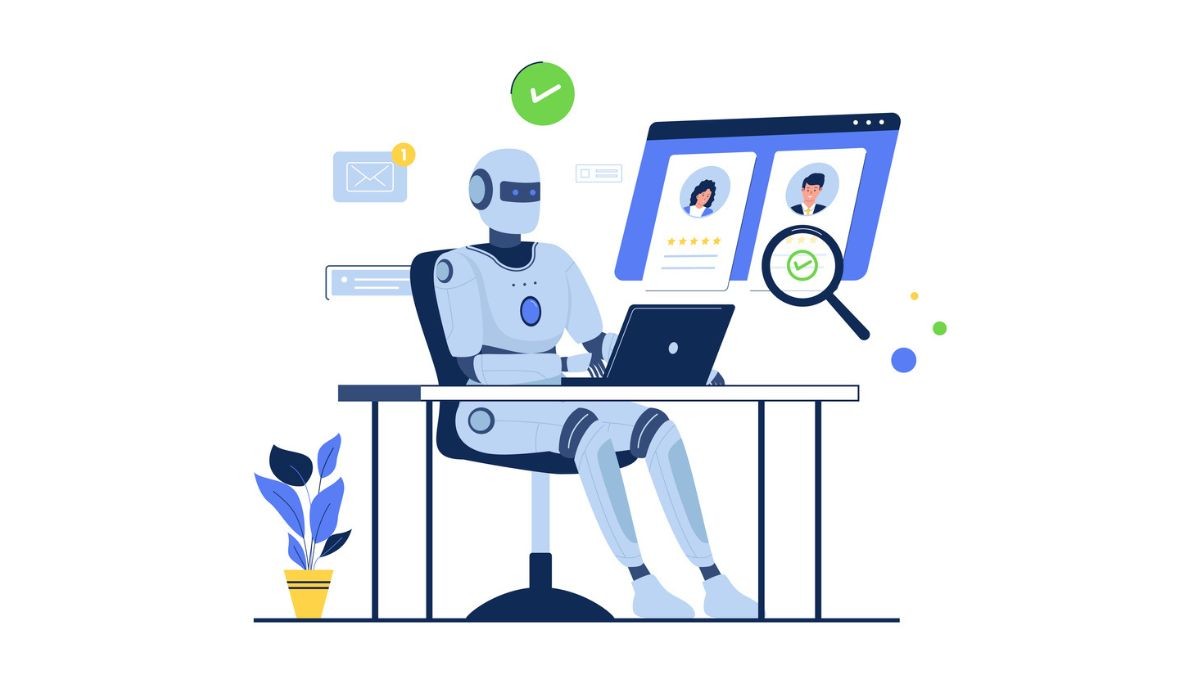
AI hiring systems now filter candidates before humans see them, using ATS scoring, coding challenges, and video analysis.
Fonzi is a curated marketplace for AI talent and companies, connecting skilled engineers with teams that need them. This article explains how AI hiring works, the risks of bias, and how Fonzi’s Match Day model provides a better approach for candidates and employers.
Key Takeaways
AI now shapes every stage of hiring, and understanding these systems gives AI/ML engineers, infra engineers, and LLM specialists an advantage in presenting skills and experience effectively.
Poorly designed AI can amplify bias, but platforms like Fonzi use human-in-the-loop processes, transparent signals, and curated networks to reduce noise and unfair filtering.
Fonzi’s Match Day model creates fast, high-signal hiring cycles, often moving from introduction to offer in 3–5 weeks, while this article provides tactical advice for navigating AI screeners, interviews, and landing roles at top AI teams.
How AI Hiring Really Works in 2026
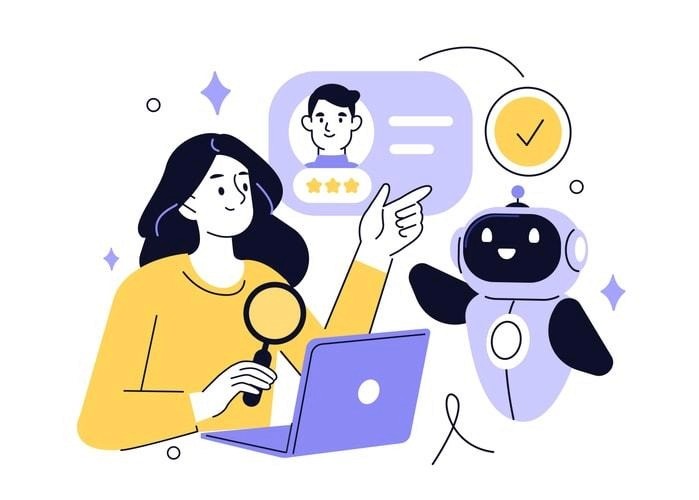
More than half of mid-sized and large technology employers now use AI tools at multiple stages of hiring, including sourcing, screening, assessments, and prioritization. For AI and ML roles, adoption is even higher, as companies building AI products trust AI tools to help find AI talent.
Let’s break down what’s actually happening behind the scenes.
Resume Parsing and Scoring
When you submit an application, AI does not read your resume like a human. NLP models parse your document into structured data such as skills, job titles, companies, degrees, and years of experience. These features are vectorized using embedding models and compared against the job description with semantic similarity scoring. For AI and ML roles, systems look for technical stacks like Python, C++, CUDA, PyTorch, TensorFlow, JAX; infrastructure such as Kubernetes, Ray, Docker, AWS, GCP; domains like NLP, computer vision, recommender systems, and reinforcement learning; and research signals such as arXiv publications, conference papers, and open-source contributions. Candidates below a scoring threshold are often filtered out before a human sees their profile.
Skills-First Filtering
Companies increasingly use skills-first filters for AI talent. GitHub activity is analyzed for contribution patterns, publication records on arXiv are matched to relevant research areas, Kaggle and competition results signal practical ML ability, and open-source contributions demonstrate collaboration and code quality. These signals feed into ranking models, so a candidate with strong visible work may surface above someone with a more traditional resume.
Automated Assessments and Chatbots
Coding platforms now detect plagiarism, flag unusual patterns, and auto-score submissions, while chatbots handle pre-screening questions about location, work authorization, salary, and availability. Video interview analytics may analyze speech and, in some cases, non-verbal cues.
The Critical Insight
AI usually does not make final hiring decisions alone. Instead, it shortlists, rejects obvious mismatches, and decides who humans ever see. The main risk for AI job seekers is being filtered out silently before a recruiter reads your profile. Understanding this reality is essential for candidates in the AI space.
Responsible AI Hiring: Principles Technical Candidates Should Expect
Not all AI hiring systems are built the same. Some employers and platforms now design them around fairness, explainability, and candidate experience rather than brute-force automation.
Core Principles to Look For
When evaluating where to apply and which platforms to use, look for:
Clear data use policies explaining what data is collected, how it’s used, and who sees it
Transparency about automation, including what is and is not automated
Accessible appeals channels that allow candidates to request human review or provide missing context
Human decision-makers at the end, with final hiring decisions made by hiring managers rather than algorithms
Human-in-the-Loop Systems
The strongest systems use AI for triage, not as final authority. Recruiters and talent leaders treat algorithmic rankings as one input among many and retain the ability to override recommendations or surface candidates models might undervalue. This matters most for senior or specialized roles where context, trajectory, and potential are as important as keyword matching.
Skills-Based Evaluation
Responsible platforms emphasize skills-based evaluation: real coding problems, system design exercises, model deployment scenarios, and research discussions. These approaches measure what you can actually do, rather than relying on proxies like school names, previous employer prestige, or polished interview performance.
Fonzi aligns with these principles.
Meet Fonzi: A Curated Marketplace Built for AI Talent
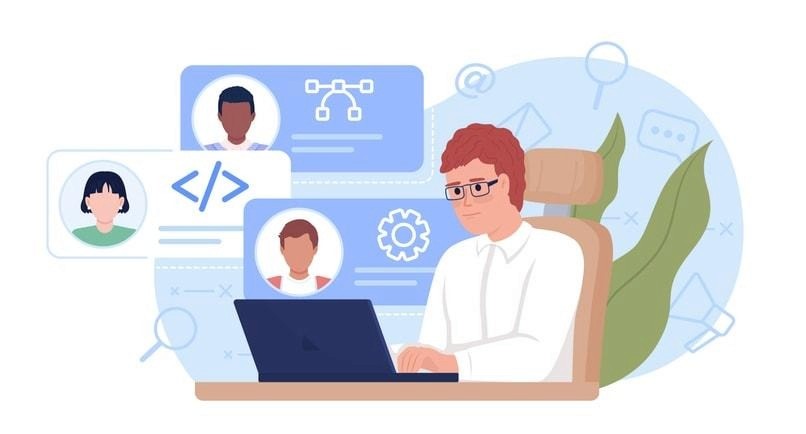
Fonzi is a curated talent marketplace built specifically for AI engineers, ML researchers, infrastructure engineers, and LLM specialists. Unlike generic job boards or volume-driven hiring platforms, Fonzi focuses on high-signal connections between experienced AI talent and companies with real AI roadmaps.
A key difference is that Fonzi vets both sides. Candidates are screened for demonstrated AI skills and experience. Companies are vetted for technical bar, compensation standards, and genuine investment in AI. This creates a trusted environment where both sides know they are engaging with serious counterparts.
How Fonzi Uses AI Under the Hood
Fonzi uses AI for what it does best: matching and logistics. The platform employs:
Embeddings for skill and trajectory matching: Your technical skills, research interests, and career trajectory are encoded and compared against role requirements
Clustering for similar roles: “LLM product engineer” and “ML platform engineer” are understood as related but distinct specializations
Ranking models prioritizing mutual fit: Matches are based on alignment between what you want and what companies offer, not just keyword stuffing
Transparency for Candidates
Fonzi’s matching is transparent. Your profile highlights concrete signals such as stack, research areas, infrastructure experience, and shipped systems. You see why roles are surfaced and receive focused opportunities rather than low-relevance listings. Preferences around location, compensation, company stage, and research versus product focus can be updated, and matching adjusts accordingly.
The Company Side
Companies on Fonzi include AI-focused startups, research-heavy scaleups, and AI teams within established organizations. They are hiring for roles like applied research scientist, ML infrastructure engineer, and LLM specialist rather than generalist software engineers with limited ML exposure.
How Fonzi Uses AI to Reduce Noise, Not Replace Humans
Fonzi’s models narrow large candidate pools into curated shortlists, but final decisions and outreach are always human-driven. Matching relies on concrete signals such as programming frameworks, infrastructure experience, research domains, and production impact. Fonzi explicitly avoids facial analysis, voice scoring, or similar controversial techniques, and documents what data is and is not used.
When edge cases arise, technically literate talent partners step in to review profiles, resolve ambiguity, and ensure recommendations align with candidate goals.
Inside Fonzi Match Day: High-Signal Hiring for AI Roles
Match Day is a recurring, time-boxed hiring event focused on specific AI domains such as infrastructure, LLM systems, or applied research. Candidates apply once, are curated in advance, and then receive introductions to a small set of companies with validated mutual fit. This structure replaces months of scattered applications with a focused hiring window.
The Candidate Journey
Candidates complete a technically detailed profile covering stack, projects, publications, infrastructure scale, and open-source work. Profiles are reviewed by Fonzi’s team, sometimes followed by a short calibration call. Before Match Day, candidates confirm preferences. During Match Day, they receive a limited set of introductions over 24 to 72 hours.
The Company Side
Hiring teams submit role requirements in advance and receive small, high-quality shortlists instead of hundreds of resumes. Everyone involved has opted into the process and is ready to move.
Key Outcomes
Candidates avoid blind applications and ghosting. Companies engage with warm, motivated talent. Interview loops typically begin within days, and many candidates move from introduction to offer within 3 to 5 weeks. Match Day themes help ensure conversations stay aligned with each candidate’s specialization.
How to Make AI Hiring Systems Work for You
As an AI or ML professional, you understand how models work.
Optimizing Resumes and Profiles
Use concrete skills and keywords that reflect your real stack:
Instead of “experience with deep learning,” write “trained 13B parameter transformer in PyTorch with DeepSpeed on 8xA100 cluster”
Instead of “built retrieval systems,” write “productionized retrieval-augmented generation using Pinecone and LangChain, reducing hallucination rate by 40%”
Include artifacts that both models and humans can parse:
GitHub links with star counts and contribution summaries
arXiv paper IDs with brief descriptions of your role
Talks, podcasts, or blog posts demonstrating thought leadership
Measurable outcomes: latency reductions, cost savings, model performance gains, infrastructure scale
Aligning Experience with Job Descriptions
Mirror terminology from relevant job descriptions without keyword stuffing. If roles mention terms like MLOps, model evaluation, RLHF, or LLM safety, ensure those phrases appear where they accurately describe your work. This improves semantic similarity scores while remaining honest.
Maintaining Consistent Professional Identity
Keep profiles consistent across LinkedIn, your personal site, Fonzi, and GitHub. Embedding based systems cluster signals across sources, and inconsistencies can reduce match confidence or cause misclassification.
Optimizing for Fairness and Reducing Misclassification
Keep resumes machine-readable with simple headings and clearly labeled sections for experience, skills, education, and projects. Avoid heavy formatting that can break parsers.
Clarify non-linear paths by clearly labeling independent research, bootcamps, or self-directed work with defined time periods and responsibilities.
Specify work arrangements, location, and work authorization explicitly, since many filters still rely on basic eligibility fields.
Use structured platforms like Fonzi, which translate complex backgrounds into standardized data rather than relying on legacy ATS parsing.
If relevant and comfortable, document accessibility needs early and request alternative formats when automated interviews or assessments may disadvantage certain candidates.
Preparing for Modern AI Job Interviews

Interviews for AI roles now blend classic topics such as algorithms and systems design with newer areas like LLM internals, inference optimization, safety and evaluation, and data pipelines for foundation models. Advances in AI have changed what companies expect candidates to know.
For AI/ML Engineers
Focus your preparation on:
Core machine learning concepts such as optimization algorithms, regularization techniques, and architecture tradeoffs
Modern deep learning topics including transformer variants, diffusion models, and attention mechanisms
Practical skills like feature pipelines, monitoring, A/B testing, drift detection, and debugging training runs
For LLM and Generative AI Roles
Emphasize:
Prompt engineering patterns and limitations
Retrieval-augmented generation architectures
Fine tuning approaches such as LoRA, instruction tuning, and RLHF
Evaluation frameworks including MT-Bench, custom evaluation suites, and safety testing
Cost and latency tradeoffs for production serving
For Infra and Platform Engineers
Prepare for:
Distributed training concepts such as data parallelism, model parallelism, and pipeline parallelism
Serving architectures including inference optimization and batching strategies
GPU utilization and profiling
Model compilation and quantization techniques
Reliability at scale, including observability stacks, rollback strategies, and canary deployments
Using Real Case Studies
Practice with concrete scenarios that mirror real company challenges:
“Design an internal ChatGPT-like assistant with RAG and safety guardrails”
“Improve recommendation quality while reducing inference costs by 50%”
“Scale a fine-tuning pipeline from single-GPU to multi-node training”
These exercises develop the product sense and system thinking that interviewers want to see.
Conclusion
AI is now a permanent part of hiring for AI talent, but how it is used matters. It can silently filter you out, or it can shorten the path to teams that genuinely need your skills.
The best systems pair AI efficiency with human judgment, using automation for matching and logistics while keeping people in control of hiring decisions. Fonzi is built around this approach for AI engineers, researchers, and infra specialists who want more than spray and pray applications.
With a curated model and Match Day, Fonzi offers clearer signals, higher quality introductions, and faster hiring loops with companies solving real AI problems. Create a Fonzi profile and join an upcoming Match Day to let AI work for you, not against you.
FAQ
How does AI decide who gets hired?
What criteria does AI use when companies hire with AI?
How can I optimize my application to get hired by AI systems?
Is AI hiring fair and accurate in selecting candidates?
What’s the future of AI in hiring and recruitment?