How to Build an Engineering Portfolio That Gets You Hired
By
Samara Garcia
•

Senior AI engineers, ML researchers, and infrastructure specialists are evaluated heavily on portfolio evidence such as GitHub repositories, technical writeups, and production case studies. Companies hiring for roles like “Senior LLM Engineer” or “Staff ML Infra Engineer” often review portfolios before or in parallel with resumes. This article provides practical steps to build an engineering portfolio that aligns with how modern hiring teams and AI-assisted tools evaluate candidates.
Key Takeaways
An engineering portfolio is now as important as a resume for hiring in AI and infrastructure roles, serving as primary evidence of your capabilities.
Your portfolio must demonstrate real business impact with clear metrics, dates, and specific systems rather than only technical novelty.
Quality often trumps quantity in engineering portfolios, suggesting a focus on 3 to 5 standout projects rather than exhaustive listings.
Recruiters and hiring managers increasingly use AI and structured screening, so portfolio structure, metadata, and clarity matter as much as raw content.
Curated marketplaces like Fonzi can make a strong portfolio more discoverable, but the portfolio itself must stand on its own merits.
Core Elements Of An Engineering Portfolio
A software engineering portfolio is a living, linkable artifact that aggregates projects, code, system diagrams, and outcomes in a structured way for senior technical roles. Unlike a static resume, it provides verifiable evidence of your contribution, design process, and problem-solving abilities across various projects.
When choosing projects for your portfolio, pick those that highlight your most pertinent skills and accomplishments, ensuring they align with the needs of the employer you are applying to. Including a mix of academic, professional, and personal projects can demonstrate versatility in your engineering portfolio.
Core elements should include:
A concise About section establishing your background and expertise
3 to 6 flagship project pages with detailed outcomes and technical details
Links to public code, papers, or research on platforms like GitHub or arXiv
A short list of talks, patents, or publications
Technical skills, certifications, and awards to enhance credibility
Contact information that is readily accessible and clearly displayed
At least one detailed production-scale project is essential, such as a 2023 LLM retrieval system deployment, a 2022 fraud detection model rollout, or a 2024 GPU autoscaling platform. Each project entry should explicitly cover problem statement, role and ownership, architecture, stack (PyTorch, Kubernetes, Ray, Triton), performance metrics, and post-launch evolution.

Structuring Your Portfolio For AI And Human Screening
Hiring teams in 2026 use ATS systems and AI ranking models that parse portfolio links, headings, and keywords. Structuring your portfolio for both human and algorithmic evaluation requires clear labeling and consistent formatting.
Headings, dates, and clear labels help both humans and AI understand relevance quickly. Use formats like “2024 · Production LLM Routing Service · Staff ML Engineer” to create immediately scannable entries. Maintain consistent naming for roles and technologies throughout, such as “Senior ML Engineer, Recommendation Systems, 2020–2022, Python, TensorFlow, Kafka, GCP.”
Recruiters typically spend less than two minutes reviewing a portfolio, emphasizing the need for easy scannability of each project. Create one page or section per project and keep each project page skimmable in under 60 to 90 seconds for a reviewer. Platforms like Fonzi and other curated marketplaces often highlight candidates whose portfolios are easy to parse, with clear summaries and visible impact.
Recommended Structure For A Senior Engineering Portfolio
The following table summarizes recommended portfolio sections, their content, and approximate length for senior AI and infrastructure engineers.
Portfolio Section | What To Include | Approximate Length |
About | Current role, technical focus areas, career objective, and a 2 to 3-sentence positioning statement | 100 to 150 words |
Flagship Project 1 | 2023 Retrieval-Augmented Generation System for Customer Support with architecture, metrics, and stack | 300 to 400 words |
Flagship Project 2 | 2021 GPU Utilization Optimization for Model Training Cluster with cost savings and technical approach | 300 to 400 words |
Flagship Project 3 | 2024 Multi-Region API Deployment with latency improvements and scale metrics | 300 to 400 words |
Code and Repositories | Links to 3 to 5 pinned GitHub repos with brief descriptions and usage examples | 50 to 100 words per repo |
Writing and Publications | Links to blog posts, whitepapers, and arXiv papers with dates and co-author details | 50 to 75 words per entry |
Talks and Patents | Conference presentations, internal talks, and patent filings from 2018 to 2026 | 25 to 50 words per entry |
Contact | Email, LinkedIn, optional calendar booking link | 1 to 2 lines |
Designing High-Impact Project Pages For AI, ML, And Infra Work
Senior engineering portfolios should focus on a few high-impact projects with a clear narrative and technical depth, similar to a conference case study. Choose projects from recent years that show progression, such as early models, more advanced systems, and current LLM or infrastructure work.
Each project should highlight your specific contributions, like designing systems, optimizing performance, or leading deployments. Document your work during the project when possible, and use clear visuals like diagrams or videos with captions that explain architecture, data flow, and key decisions.
What To Include In Each Project Case Study
An engineering portfolio should include detailed project case studies that outline the objective, specific role, methodologies, challenges, and outcomes. Each project should follow an inverted pyramid structure, starting with an impactful title, followed by the outcome, experience, learning, skills, motivation, and technical details.
The STAR method (Situation, Task, Action, Result) can be useful for structuring stories about engineering projects in a portfolio. Use a clear template per project:
Context and problem with company size and domain
Role and scope that defines your ownership
Technical approach with stack and data analysis methods
Result metrics with specific numbers and dates
Lessons learned and post-launch evolution
Handling NDAs And Confidential Projects
Many impactful projects are under NDA. Your portfolio should anonymize, aggregate, or abstract data while still communicating scale and complexity. Use phrasing like “consumer fintech with 10M plus users” or “Series C B2B SaaS company, 2022–2024” instead of naming the client directly.
Create synthetic or open datasets to replicate techniques from NDA projects in public repositories to demonstrate skills without leaking confidential information. Incorporating testimonials from mentors or clients can significantly boost a portfolio’s credibility when you cannot share project specifics. Curated platforms such as Fonzi sometimes allow more context sharing under private profiles, while public portfolios must be more cautious about confidential information.
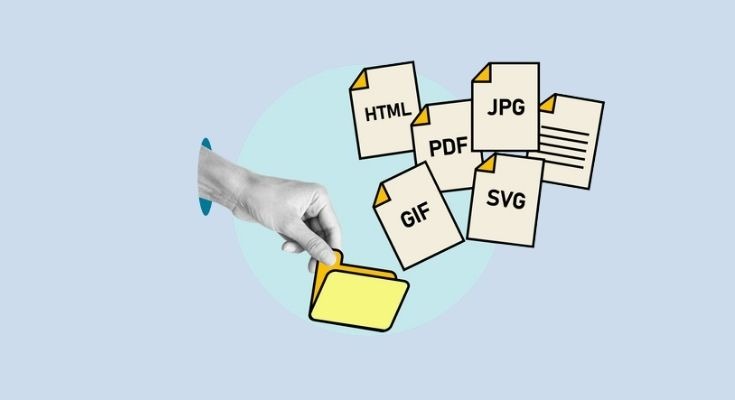
Choosing The Right Format: PDF, GitHub, Or Dedicated Website
Portfolio formats for senior engineers range from static PDFs to GitHub-centric profiles to dedicated sites built with Hugo, Next.js, or Webflow. Each serves a different purpose in the hiring process.
There are various platforms available for creating and hosting engineering portfolios, including Squarespace, Wix, Adobe Portfolio, Google Sites, and Google Slides. Some portfolio platforms are free but may include ads, while others require payment. When selecting a portfolio platform, consider the longevity of the platform, as migrating portfolios can be time-consuming and challenging.
For AI and ML roles, GitHub and notebooks (Jupyter, Colab) are critical for demonstrating technical abilities, but a dedicated website provides narrative context that code repositories often lack. Experienced engineers should maintain a short PDF or slide deck for interviews and a canonical website that centralizes links to GitHub, arXiv, Kaggle, Hugging Face, and production case studies.
Consider simple hosting setups that infrastructure engineers will respect, such as a static site deployed on Netlify or Cloudflare Pages with a custom domain registered since at least 2022 for credibility. Whether you work in robotics, aerospace, electronics, embedded systems, or manufacturing, the same principles of clarity and accessibility apply.
Get Your Portfolio Seen by the Right Teams
A strong engineering portfolio is only valuable if the right people actually see it, and that’s where Fonzi changes the dynamic. Instead of relying on cold applications or hoping a recruiter clicks through your links, Fonzi puts your portfolio in front of companies that are actively hiring and already aligned with your skill set. This shifts the process from passive discovery to intentional matching, where your work, impact, and technical depth are evaluated in context rather than skimmed or overlooked.
Through Match Day, candidates with well-structured portfolios connect directly with hiring teams in a focused, high-signal environment. Recruiters review projects in advance, signal interest early, and enter conversations with a clear understanding of your experience, so your portfolio becomes a core part of the discussion rather than an afterthought. The platform is designed to eliminate bias in recruitment by prioritizing demonstrated skills, real outcomes, and technical contributions over surface-level signals. The result is a faster, more transparent hiring experience where strong portfolios translate into real opportunities.
Adapting Your Portfolio To Different Roles And Hiring Processes
Hiring pipelines vary across research, applied ML, data platforms, and LLM product roles, so your portfolio should be tailored to the audience. Maintain a master portfolio, then create focused versions for specific roles by emphasizing the most relevant projects, skills, and outcomes, and clearly match your skills to the job. Use clear metadata, such as domain, system scale, and technologies, and ensure your work reflects what interviewers evaluate, including system design, coding ability, research depth, and cross-functional impact.
Prioritize unique, high-impact projects over common classwork to better demonstrate real-world experience and stand out. Senior engineers should treat their portfolio like a codebase, with version history, release dates, and a visible “last updated” timestamp, ideally within the last three to six months. Regular updates after major projects or on a set cadence help keep content relevant.
Maintain a changelog to track new projects, updated metrics, and publications, and review your portfolio quarterly to archive outdated work and highlight recent impact. Document each project as you go, since capturing details in real time leads to stronger write-ups, clearer visuals, and more credible evidence of your contributions.
Summary
In 2026, an engineering portfolio is just as important as a resume, especially for AI, ML, and infrastructure roles, because it provides concrete proof of your skills through real projects, code, and measurable outcomes. Strong portfolios focus on a few high-impact projects that clearly show business results, technical depth, and ownership, rather than listing everything you’ve done. Clear structure, consistent formatting, and scannable content are essential, since both recruiters and AI screening tools evaluate portfolios quickly.
To stand out, engineers should create detailed project case studies that explain the problem, their role, the technical approach, and measurable results, while tailoring content to specific roles and keeping it regularly updated. A mix of formats, such as a personal website, GitHub repositories, and a concise PDF, helps present both technical ability and narrative context. Ultimately, a successful portfolio is a living asset that evolves, demonstrating growth, real-world impact, and alignment with modern hiring expectations.
FAQ
What should an engineering portfolio include to stand out to employers?
What are examples of strong engineering portfolios I can learn from?
Should I build my engineering portfolio website from scratch or use a template?
How is an engineering portfolio different from a software engineer's portfolio?
How do I showcase engineering projects if most of my work is under NDA?


