The talent landscape for technical and AI roles has changed dramatically since 2020. Remote work expanded global hiring, and the surge of AI following ChatGPT’s release in 2022 created massive demand for specialists in machine learning, large language models, and AI infrastructure.
As new roles like prompt engineers and LLM specialists emerge, traditional recruiting methods struggle to keep up. Relying on inbound applications or generic outreach often fails to answer key questions about where talent is located, what to pay, or how long hiring will take.
This is where talent market intelligence becomes crucial. By using real-time data and structured analytics, companies can make informed hiring decisions instead of guessing.
In this article, we’ll explore what talent market intelligence is, why it matters for AI hiring today, and how platforms like Fonzi use it to help companies hire top AI engineers faster and more effectively.
Key Takeaways
Talent market intelligence transforms scattered data into hiring clarity. It synthesizes information about talent pools, salary benchmarks, in-demand skills, and competitive landscapes into insights that directly inform where to hire, what to pay, and how long searches will realistically take.
For AI and engineering roles, intelligence-driven hiring cuts time dramatically. When paired with the right process and platform like Fonzi, companies can move from search kickoff to accepted offer in under 3 weeks, compared to the 60-90 day timelines common with traditional recruiting approaches.
It improves speed, quality, and predictability simultaneously. Teams can avoid impossible searches, calibrate requirements to market realities, and present competitive offers on the first attempt, all while preserving a strong candidate experience.
The approach scales from first hire to enterprise. Whether you’re a seed-stage founder hiring your first AI engineer or a global organization adding hundreds of specialists, market intelligence provides the foundation for consistent, repeatable hiring.
This guide covers definitions, concrete examples, a comparison table, implementation steps, and practical FAQs to help recruiting teams get started with talent market intelligence immediately.
What Is Talent Market Intelligence?
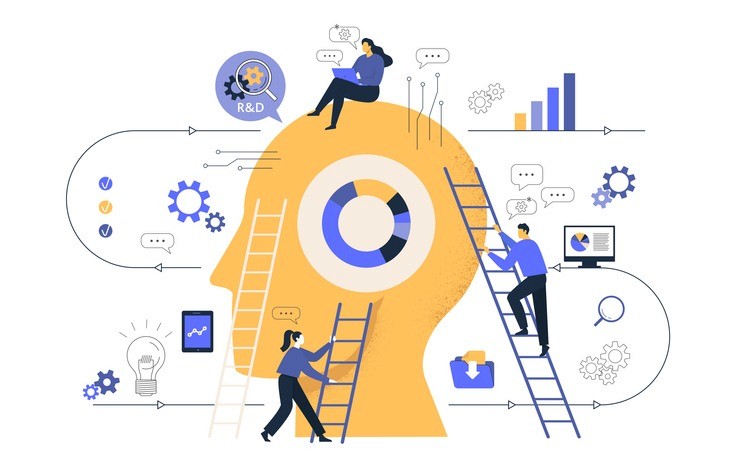
Talent market intelligence is the practice of collecting, analyzing, and applying external talent and labor market data, combined with internal hiring data, to guide recruiting, workforce decisions, and location and compensation strategies. It provides a complete view of the job market, offering insights into candidate availability, salary benchmarks, skills demand, and broader labor market trends.
This goes far beyond basic labor statistics like unemployment rates or general industry employment figures. Talent market intelligence focuses on specific skills, roles, locations, seniority bands, and employer movements that are directly relevant to real hiring decisions. It answers the granular questions that recruiting teams and business leaders actually need answered.
For recruiting teams and founders, talent market intelligence answers questions like:
How many senior LLM engineers are in Toronto with experience in retrieval-augmented generation?
What’s the competitive salary range for ML infrastructure leads in London right now?
Which companies are aggressively hiring for similar roles, and where are they expanding?
If we open a role for an applied research scientist, how long should we realistically expect to fill it?
What emerging skills should we prioritize in job requirements to attract top talent?
Talent market intelligence is related to people, workforce, and skills analytics, but focuses specifically on external data that shapes immediate hiring decisions. For example, a startup building an AI team in London can use it to assess talent availability, competitive pay, and long-term supply, turning hiring from guesswork into strategy.
Core Components of Talent Market Intelligence
Effective talent market intelligence combines three major data streams: external talent data, competitive insights, and your own historical hiring data. Each component provides a different but complementary value for workforce planning and talent acquisition.
External data components form the foundation. This includes skills demand extracted from job postings across markets, candidate profiles and professional backgrounds, education pipelines and graduation rates for relevant fields, compensation benchmarks by role and region, location-specific supply and demand dynamics, and macro trends like remote work eligibility. Organizations analyze this data to understand where professionals with specific skills are concentrated and what the market expects in terms of salary and benefits.
Competitive intelligence provides crucial context. This involves monitoring which companies are hiring for similar roles, where they’re expanding geographically, what tech stacks and benefits they advertise, and how quickly they’re filling positions. By understanding competitor behavior, teams can identify both direct competition for talent and alternative talent pools that may be overlooked.
Internal data integration calibrates forecasts against your own experience. This includes past time-to-fill by role, conversion rates at each funnel stage, offers accepted and declined, and performance or retention of past hires. Your historical data helps predict how future searches will perform and where your organization might face bottlenecks.
How Talent Market Intelligence Works in Practice
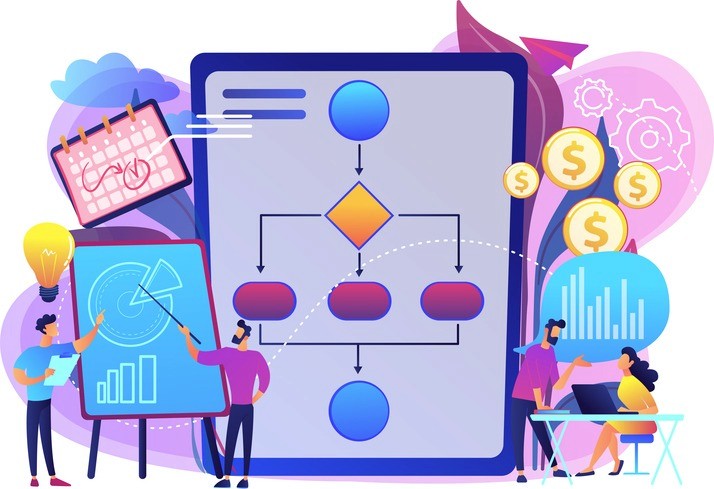
The end-to-end flow of talent market intelligence moves through four stages: data collection, enrichment, analysis, and decision-making embedded into recruiting workflows.
Data collection involves aggregating millions of data points: job postings from hiring platforms, anonymized resume and profile data, compensation disclosures from transparency laws, and company hiring announcements. This spans markets globally, the US, EU, India, APAC, and beyond, to build a comprehensive picture of talent availability.
Enrichment standardizes this raw data into usable formats. Job titles like “AI Engineer,” “Machine Learning Engineer,” and “Applied Scientist” might describe similar roles but use different terminology. Enrichment maps these inconsistent titles into standardized role families, infers skills from projects and experience descriptions, and normalizes compensation bands by region and currency. This makes meaningful comparisons possible.
Analysis surfaces the patterns and insights that matter. Which locations have the deepest talent pools for your target roles? What salary ranges are competitive? How has demand changed over the past six months? What’s the realistic time-to-hire for a senior ML engineer in your preferred market?
Decision-making integration ensures these insights actually reach recruiters and hiring managers when they need them. This might take the form of dashboards showing talent pool sizes, expected time-to-hire, salary bands, and competitive hotspots, all visible before a role is even opened.
Comparison Table: Talent Market Intelligence vs. Traditional Recruiting
Traditional recruiting often fails for AI hiring because it relies on resumes, job titles, and historical pipelines that miss scarce skills, rapidly evolving tooling, and nontraditional AI backgrounds. The following table contrasts traditional recruiting with intelligence-led approaches.
Dimension | Traditional Recruiting | Recruiting with Talent Market Intelligence |
Data Sources | Manual LinkedIn searches, anecdotal recruiter knowledge, and outdated salary surveys | Real-time job posting analysis, live compensation data, professional profile databases, competitor hiring signals |
Speed of Insights | Weeks to compile market research; often relies on the recruiter's “gut feel.” | Insights available in hours or days; continuously updated as market conditions change |
Forecasting Accuracy | Unpredictable; timelines often miss by weeks or months | Calibrated forecasts based on historical patterns and current market dynamics |
Candidate Targeting | Broad outreach to generic talent pools; high volume, low conversion | Precise targeting of qualified candidates in validated talent pools; higher conversion rates |
Compensation Calibration | Based on previous-year surveys or internal precedent, often misaligned with the current market | Based on real-time market data and competitor offerings, offers are competitive from the first attempt |
Time-to-Hire Expectations | Senior ML roles: 60-90 days typical; high variance | Senior ML roles: under 21 days achievable with calibrated sourcing and screening pipelines |
Candidate Experience | Inconsistent communication; process length varies widely | Structured process with clear timelines; candidates approached with relevant roles and accurate expectations |
Platforms like Fonzi embed these intelligence capabilities directly into AI hiring workflows, so teams experience the right-column benefits without building custom analytics infrastructure.
Strategic Benefits for Recruiting Teams and Business Leaders
Talent market intelligence is not just an analytics layer; it’s a strategic capability that transforms how companies plan and execute hiring. The benefits compound across speed, quality, cost, and stakeholder alignment.
Faster hiring: Teams target feasible locations, realistic profiles, and critical roles, avoiding searches that stall due to limited supply.
Higher-quality hires: Clear, market-aligned role definitions attract candidates who truly fit the work and expectations.
Lower costs: Fewer failed searches, reduced agency spend, and better-aligned offers improve efficiency.
Stronger buy-in: Data-backed insights make timelines, budgets, and hiring plans easier to justify to leadership.
Fonzi: Talent Market Intelligence Applied to Elite AI Hiring
Fonzi applies talent market intelligence directly to AI and deep-technical hiring, where guesswork is expensive and speed matters. Unlike generic job boards or ATS tools, Fonzi embeds real market data into every hiring decision, so teams operate with clarity from day one.
Companies see exactly what’s possible before a search begins: pre-vetted AI talent pools by region, live compensation benchmarks for roles like Senior LLM Engineer or ML Infrastructure Lead, and realistic timelines for filling each position. No inflated expectations. No trial-and-error.
Fonzi works equally well for startups hiring their first AI engineer and enterprises scaling global AI teams. The same intelligence-driven system adapts seamlessly from one hire to hundreds.
Three outcomes define Fonzi’s value:
Faster hires: Most roles close within three weeks
Predictable outcomes: Consistent pipelines replace hiring volatility
Scalable growth: From early teams to enterprise programs
Just as important, Fonzi elevates the candidate experience. Engineers engage with relevant roles, transparent compensation, and a respectful, time-efficient process. When both sides operate with real market intelligence, hiring becomes faster, fairer, and far more effective.
Use Cases: How Recruiting Teams Apply Talent Market Intelligence

Talent market intelligence becomes most valuable when tied to concrete recruiting use cases, especially in fast-changing fields like AI, data, and product engineering.
Startup use case: A Series A company in 2025 is planning its first AI team. They need to decide between hiring in San Francisco, London, or going fully remote. Talent market intelligence helps them compare talent pools in each location, determine likely salaries and benefits expectations, and scope realistic timelines. They discover that London offers a strong pool at lower compensation than SF, with faster time-to-hire due to less competition. This market research directly shapes their hiring strategy.
Enterprise use case: A global organization plans to build a 200-person AI platform group across hubs in New York, Berlin, and Bangalore. Talent intelligence helps them sequence site build-outs based on local talent clusters, perhaps starting with Bangalore, where senior ML expertise is concentrated, then expanding to Berlin for specialized research talent. The data prevents costly missteps like building a team in a location where the necessary expertise simply doesn’t exist in sufficient depth.
Competitive intelligence use case: A company monitors which competitors are aggressively hiring for similar roles and spots patterns, emerging tech stacks, specific LLM frameworks gaining traction, and compensation escalation in certain markets. These signals inform future skill requirements and employer brand positioning. Staying ahead of competitors requires understanding what they’re doing.
Summary
Talent market intelligence is no longer optional for companies competing for high-end technical and AI talent. It’s the foundation for realistic planning and efficient execution. Organizations that treat hiring as a data-driven discipline, rather than an art based on intuition and luck, consistently outperform those that don’t.
The key outcomes are clear: faster time-to-hire, higher quality of hire, better alignment between business needs and talent supply, and stronger stakeholder trust in recruiting forecasts. These advantages compound over time, creating a deeper understanding of your talent landscape and more sophisticated workforce planning capabilities.
Founders, CTOs, and recruiting leaders who embed talent market intelligence into their hiring processes will be better positioned to navigate the skill shifts expected through 2030 and beyond. The organizations building AI capabilities today will shape their industries for the next decade, but only if they can hire the talent to execute.
FAQ
What is talent market intelligence, and how is it used in recruiting?
How is talent market intelligence different from regular labor market data?
What tools or platforms do recruiting teams use for talent market research?
How can talent market insights improve hiring speed and quality?
What data points should I look at when doing talent market research for a role?