In 2021, GitHub Copilot changed coding by offering inline suggestions from millions of repos, essentially supercharged autocomplete. By 2022–2023, ChatGPT and similar tools enabled two-way code generation, explanations, and bug fixes, though they still couldn’t run tests or fully understand project context.
By 2026, agentic coding tools like Cursor, Replit Agent, and Google Gemini Code Assist plan tasks, call external tools, iterate on feedback, and complete end-to-end workflows including unit tests and pull requests. This shift created AI engineers who design prompts, context pipelines, and safety checks, orchestrating development around AI tools, and Fonzi AI helps hire this elite talent through structured Match Day events.
This article provides founders and engineering leaders practical guidance on adopting AI coding tools, understanding agentic workflows, avoiding pitfalls, and staffing for the AI-native development era.
Key Takeaways
AI code generation evolved from simple autocomplete to agentic systems by 2026 that can manage entire development tickets end to end.
Modern AI coding agents handle code scaffolding, unit tests, refactoring, and basic infrastructure changes autonomously while still needing human oversight for architecture and security.
Founders and CTOs hire dedicated AI engineers to design these workflows, and Fonzi AI helps source top talent quickly while aligning hiring strategy with the latest tools and trends.
The Evolution of AI Code Generation (2020–2026)
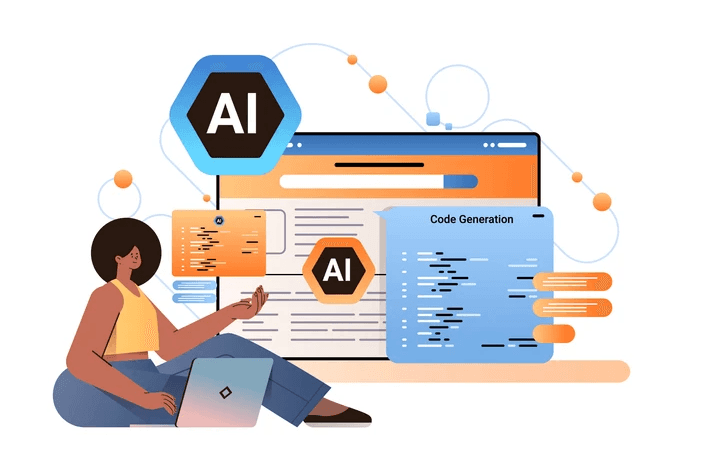
The evolution from code completion to autonomous AI coding agents unfolded in three phases.
Phase 1: Autocomplete Era (2020–2021) saw transformer-based models like OpenAI Codex and GitHub Copilot provide inline suggestions and boilerplate reduction, speeding development but limited to the current file without broader codebase reasoning.
Phase 2: Conversational Coding (2022–2023) introduced natural language interaction with tools like ChatGPT, Replit Ghostwriter, and early Cursor versions, enabling multi-file edits, debugging assistance, and AI as a conversational coding partner.
Phase 3: Agentic Systems (2024–2026) feature autonomous AI agents that create pull requests, run tests, spin up preview environments, perform microservice migrations, and integrate with workflows, requiring engineers who can design AI-assisted processes, guardrails, and manage agentic systems at scale.
Core Capabilities of AI Coding Tools in 2026
Modern AI code generation tools excel across four key dimensions that shape team adoption and effectiveness.
Code Generation tools create end-to-end features from natural language prompts, including API implementations with error handling, front-end components, infrastructure-as-code, and database schemas, while respecting style guides and running linters automatically.
Code Intelligence features enable semantic search across large repositories, cross-file reasoning, inline architecture diagrams, automated documentation updates, and code explanations for complex functions.
Agentic Workflows differentiate 2026 tools by decomposing issues into implementation plans, proposing approaches for human approval, editing multiple files, running tests automatically, and opening pull requests with detailed context.
Multimodal Understanding allows some tools to convert UI screenshots, system diagrams, log files, or design mockups into functional code or debugging artifacts, while Enterprise Features support audit logs, SSO integration, compliance alignment, PII redaction, private model hosting, and multi-language support.
Top AI Code Generation & Agentic Coding Tools for 2026
The market for AI-assisted development has bifurcated into two distinct categories: Extension-based assistants that reside within your existing IDE, and AI-Native IDEs that have rebuilt the coding environment around agentic reasoning. Selecting the right stack requires balancing individual developer velocity with enterprise-level security and context management.
GitHub Copilot
GitHub Copilot remains the market leader for enterprise scale, especially with its 2026 rollout of Agentic Workflows. Moving beyond simple autocomplete, Copilot now allows teams to define automation goals in natural language using Markdown files located in .github/workflows/. These "Agent Skills" can autonomously triage issues, analyze CI failures, and even suggest pull request reviews based on your team's specific style guide. By integrating directly with the GitHub MCP (Model Context Protocol) Server, it gains native access to your entire repository's history, making it the most seamless option for teams already deeply embedded in the Azure and GitHub ecosystems.
Cursor
Widely considered the gold standard for "AI-first" development, Cursor is a VS Code fork that treats the AI as a first-class citizen. Its standout feature, Composer Mode, enables multi-file refactoring that can rename variables, update API endpoints, and adjust frontend components across dozens of files simultaneously. In 2026, its Agent Mode has evolved to include native browser control, allowing the agent to open a local host, capture console errors, and visually compare UI changes against design mockups to "self-heal" CSS bugs before a human ever sees the code.
Google Gemini Code Assist
For organizations prioritizing large-scale reasoning, Gemini Code Assist offers a massive 1-million-token context window. This allows the tool to "read" your entire codebase, documentation, and even historical incident reports in a single pass. Its 2026 Enterprise edition features deep integration with Google Cloud services like Firebase and BigQuery, enabling agents to generate schema-aware SQL and optimize cloud infrastructure through natural language. Its "source citation" feature is particularly valuable for regulated industries, providing transparency on which internal docs or public libraries influenced a code suggestion.
Replit Agent
Replit Agent has transformed from a prototyping tool into a full-stack deployment engine. In 2026, it supports 24/7 autonomous building, where agents can work on separate branches to iterate on features while the developer is offline. Its "Figma-to-Code" capability allows teams to import design frames directly, which the agent then converts into production-ready React or Vue components, complete with backend API scaffolding. It is the go-to choice for rapid MVP development and internal tool automation.
Sourcegraph Cody
Sourcegraph Cody excels in the realm of "Context Engineering" for massive monorepos. By leveraging a search-first, RAG-based (Retrieval-Augmented Generation) architecture, Cody can retrieve relevant snippets from millions of lines of code without requiring local indexing of every file. Its 2026 updates include "Deep Search" entitlements, allowing platform admins to manage AI usage across thousands of microservices while ensuring that sensitive PII (Personally Identifiable Information) is redacted from all LLM prompts.
Agentic Coding Trends: Autonomous AI Devs Inside Your Stack
Agentic coding marks the evolution from AI as a suggestion tool to AI as an active participant in development workflows, with 2026 seeing autonomous AI integrated into IDEs, CLIs, and CI/CD pipelines, producing several key trends.
Trend 1: Ticket-Level Autonomy
Modern agents can take a JIRA or GitHub issue and:
Parse requirements and ask clarifying questions
Design an implementation plan
Modify multiple services with coordinated changes
Write tests covering new functionality
Open a pull request with explanatory notes
This means AI handles initial implementation while engineers focus on code reviews, architecture decisions, and edge cases.
Trend 2: Integrated Tool Calling
Agentic systems invoke external tools automatically:
Linters and formatters (Prettier, ESLint, Black)
Static analyzers (SonarQube, Semgrep)
Test runners (Jest, pytest, Go test)
Secret scanners and security tools
Deployment systems for preview environments
The agent treats these tools as feedback loops, iterating until tests pass and security vulnerabilities are resolved.
Trend 3: Context Engineering
Teams now deliberately construct what the model “sees” to maximize accuracy by building vector databases with embeddings of codebase documentation, per-service context windows with relevant architecture decisions, doc stores containing API contracts and interface specifications, and historical incident records to prevent repeated mistakes.
Trend 4: Human-in-the-Loop Gates
Mature implementations include mandatory review points where senior engineers approve plans before implementation, security teams review diffs touching sensitive systems, architecture reviews cover changes exceeding scope thresholds, and merge policies require human approval on AI-authored code.
Context Engineering: Fueling Accurate AI Code Generation
Context engineering has become a core competency in 2026, focused on shaping what the AI model sees, including code, docs, logs, and tickets, to maximize the accuracy of generated code.
Without proper context engineering, even top-tier models hallucinate APIs, ignore architectural constraints, or break cross-service contracts, while well-constructed context makes AI code generation far more reliable.
Key Techniques
Repo chunking: Breaking large repositories into semantically meaningful chunks that can be retrieved based on relevance to the current task
Semantic search: Using embeddings to find related code, not just keyword matches
Retrieval-augmented generation (RAG): Pulling relevant documentation, examples, and constraints into the prompt before generation
Per-service context windows: Maintaining separate context for microservices that need different architectural knowledge
Exclusion rules: Filtering out sensitive data, deprecated patterns, and irrelevant code from context
Practical Examples
Consider a team working on a payment processing service. Effective context engineering includes:
Architecture decision records explaining why certain patterns were chosen
API contracts defining interfaces with other services
Previous incident reports about edge cases and bug fixes
Current test coverage expectations and code quality standards
When the AI receives a task like “add a new payment method,” this context prevents it from suggesting patterns that violate security requirements or break integrations.
Enterprise-Grade AI Coding: Security, Compliance & Governance
For enterprises, 2026 priorities focus on secure-by-default AI-generated code, traceability, and regulatory alignment, including requirements like the EU AI Act.
Security
Enterprise AI coding tools must:
Auto-generate unit tests and security tests for new code
Scan for OWASP Top 10 issues before code reaches review
Integrate with SAST/DAST solutions already in your CI pipeline
Detect potential bugs and suggest fixes before merge
The question isn’t whether AI-generated code is secure enough for production; it’s whether review processes catch issues the AI introduces, and manual security audits remain essential, but AI can dramatically reduce the surface area requiring human attention.
Compliance
Audit requirements demand:
Logs of all AI-suggested diffs with timestamps
Records of which model version produced each suggestion
Reviewer identity for all approved changes
Post-incident forensics capabilities
This traceability answers the question: “Who or what changed this line, and why?”
Data Governance
Sensitive environments require:
Redaction of secrets and PII from prompts
Private model hosting within your infrastructure
VPC peering for secure communication
Regional data storage in EU, US, and Asia
Policy Controls
Mature implementations include:
Per-repo rules defining what AI can edit
Per-team policies such as AI can modify frontend, not core banking logic
Approval workflows for changes exceeding risk thresholds
Integration with existing code review processes
AI Code Generation for Legacy Modernization & Large-Scale Refactors
The 2024–2026 period saw a surge in AI-driven legacy migrations as organizations move COBOL and Java monoliths to microservices, migrate on-premises applications to cloud-native architectures, and upgrade decades-old frameworks.
Common Use Cases
Cross-language translation: Converting Java to Go, Python to Rust, or COBOL to modern languages
Framework upgrades: Migrating AngularJS to React 18, Rails 4 to Rails 7, or .NET Framework to .NET 8
Schema migrations: Evolving database schemas across large systems while preserving data
API modernization: Converting SOAP services to REST or GraphQL
How Modern Tools Enable This
Long context windows of 128K+ tokens allow AI to reason about entire subsystems rather than isolated files, and repo indexing helps AI understand relationships between components before suggesting changes.
Requirements for Success
Strict test baselines: You need comprehensive tests before AI starts modifying legacy code
Shadow deployments: Run AI-generated code alongside legacy systems to validate behavior
Phased rollouts: Gradual migration with rollback capabilities at each stage
Human expertise: Engineers who understand both the legacy system and the target architecture
Companies often form specialized AI migration teams combining legacy experts with AI-native engineers, and Fonzi AI can quickly fill both sides of this equation.
How AI Code Generation Changes Your Hiring Plan
Tool choice and hiring strategy are now tightly linked because teams that see real productivity gains pair AI coding tools with engineers who can configure, supervise, and optimize them rather than relying on licenses alone.
New Role Archetypes
Role | Primary Focus | Key Skills |
AI Engineer | Prompt design, agent workflow creation | LLM internals, context engineering, safety checks |
AI Platform Engineer | Infrastructure, observability, scaling | MLOps, Kubernetes, monitoring, cost optimization |
AI-Savvy Tech Lead | Team coordination, code reviews, architecture | Traditional engineering + AI workflow integration |
The Rebalancing Effect
Teams are rebalancing composition:
Fewer pure implementers writing routine code
More engineers supervising agents and refining outputs
Increased focus on prompt engineering and coding efficiency
Greater emphasis on code quality review for AI-generated code
Traditional full-stack and ML engineers still matter enormously. But those with hands-on experience orchestrating AI tools deliver outsized impact from day one.
Meet Fonzi AI: The Fast Lane to Hiring Elite AI Engineers
Fonzi AI is a curated talent marketplace connecting elite AI, ML, and software engineers with startups and high-growth tech companies, focusing specifically on the technical talent building AI-native systems.
The Fonzi AI Model
Fonzi operates through structured Match Day hiring events. These time-boxed events bring pre-vetted candidates and committed employers together for rapid, high-signal interviews:
For employers: Access to curated candidates who’ve passed technical screening. You commit to salary ranges upfront, eliminating protracted negotiations. An 18% success fee applies only when you hire with no upfront costs.
For candidates: A free service with concierge recruiter support. Interviews are coordinated efficiently, and salary transparency means no lowball surprises.
Speed and Scale
Most hires through Fonzi AI complete within 3 weeks. The platform supports both early-stage startups making their first AI engineer hire and large enterprises scaling to hundreds or thousands of AI-enabled roles.
How Fonzi Match Day Works for AI Engineering Roles
Match Day is a time-boxed, high-signal hiring event designed for speed and clarity on both sides.
Step-by-Step Flow
Role Intake: Fonzi AI works with you to define the role; salary range, required stack, AI tooling experience, and team context.
Curated Shortlist: Based on your requirements, Fonzi AI presents a shortlist of pre-vetted candidates matching your criteria.
48-Hour Match Day: Interviews happen within a concentrated window. Candidates and companies meet, evaluate each other, and make decisions quickly.
Rapid Offers: Decisions are made during or immediately after Match Day, with offers extended within days rather than weeks.
Salary Transparency
Companies commit to compensation bands before candidates enter the process to eliminate lowball offers, protracted negotiation loops, and candidates dropping out due to misaligned expectations.
Concierge Support
Fonzi AI coordinates interviews, gathers feedback, and manages follow-ups so hiring managers can focus on evaluating talent rather than scheduling logistics.
Optimized for AI Roles
The process is specifically tuned for technical roles touching AI code generation:
AI engineers designing prompts and agent workflows
ML engineers building and deploying models
Full-stack developers experienced with Copilot-style tools
Infrastructure engineers building agent orchestration systems
Why Fonzi AI Is Built for the Era of Agentic Coding
The rise of agentic coding creates specific hiring challenges, requiring engineers who have built production systems using AI code generators, designed context pipelines, and implemented safety checks for autonomous agents.
Bias-Audited Evaluation
Fonzi AI uses standardized rubrics and automated checks to reduce bias in screening, ensuring match quality is based on skills and experience, not pattern-matching on résumés.
High Signal, Low Noise
Unlike generic job boards where hundreds of applications must be sifted through, Fonzi AI’s curation ensures every candidate presented has relevant experience, with deep vetting covering AI/ML skills, coding ability, and experience with modern AI-powered coding assistant tools.
Scalability
Whether you’re hiring your first AI engineer or building out a team of 50, Fonzi’s hiring process scales, giving startups the same quality of candidates as enterprises, matched to different role scopes.
Candidate Experience
The process is fast and respectful, keeping top engineers engaged through concentrated timelines and transparent communication, as slow hiring processes risk losing them to competitors.
Comparing Approaches: DIY Hiring vs. Fonzi AI vs. Traditional Recruiters
Leaders have three main paths when hiring AI engineering talent. Each has tradeoffs.
Approach | Typical Time-to-Hire | Strengths | Weaknesses | Best For |
DIY (Internal Sourcing) | 3–6 months | Full control, no fees | Time-intensive, hard to assess AI-specific skills | Companies with large internal recruiting teams |
Traditional Tech Recruiters | 2–4 months | Broad networks, established processes | Shallow understanding of AI agents, LLM ops, and agentic coding | Generalist engineering roles |
Fonzi AI Marketplace | ~3 weeks | Curated AI talent, Match Day speed, transparent fees, AI expertise | Focused on engineering roles only | Startups and enterprises hiring AI-native engineers |
DIY Hiring
When you source internally, you control every aspect of the process, but the time cost is substantial and engineering leaders spend hours reviewing resumes instead of building products. Without AI specialists on your team, assessing candidates’ experience with code generation tools, context engineering, or agentic workflows is difficult.
Traditional Recruiters
Established tech recruiters have broad networks and proven processes, but most lack deep understanding of AI code generation, LLM operations, or the nuances separating a developer who uses Copilot from one who designs entire agentic pipelines.
Fonzi AI
Fonzi AI combines curated access to AI-specific talent with structured events that compress hiring timelines. The 18% success fee is competitive with traditional recruiters, but you only pay when someone joins your team.
Implementing AI Code Generation in Your Team: Practical Steps
Here’s a practical checklist for founders and CTOs getting serious about AI-assisted development in 2026.
Step 1: Audit Current Workflows
Identify bottlenecks where AI tools create immediate leverage, including boilerplate code that developers write repeatedly, code refactoring tasks that consume sprint capacity, test writing that lags behind feature development, legacy code migrations that never seem to complete, and debug code sessions that drag on.
Step 2: Choose Your Tool Stack
Select a primary agentic coding platform plus complementary tools:
One IDE assistant for inline code completion (Copilot, Cursor, Tabnine)
One repo-level agent for complex tasks (Cody, Cursor Agent)
One security scanner integrated with your CI (Semgrep, Snyk)
Consider free version or free tier options for initial experimentation
Step 3: Design Guardrails
Establish policies before AI touches production, including branch protections preventing direct merges of AI-authored code, test coverage requirements for all AI-generated changes, security scans running on every AI-suggested diff, human review policies defining who approves what, and code structure standards that AI must follow.
Step 4: Hire or Upskill
You need engineers who own tool configuration and optimization, context engineering pipelines, ongoing measurement of quality and velocity, and prompt refinement and AI capabilities development. Fonzi can help you find candidates already experienced with these responsibilities.
Step 5: Run a Pilot
Start with a 3–6 month pilot with clear KPIs, including lead time from ticket to deployment, defect rate in AI-assisted versus manual code, developer satisfaction scores, code review turnaround time, and AI-generated code acceptance rate. Iterate based on data and expand to more teams once you’ve proven value.
Conclusion
AI code generation is now core infrastructure, and in 2026 the winners combine powerful AI tools with skilled AI-native engineers and clear governance, treating AI as a supervised team member rather than a magic solution. Fonzi AI offers fast, curated access to elite engineers through structured Match Day events with transparent, success-based pricing, helping companies hire quickly and scale teams efficiently. Book a demo or submit a request to join the next Match Day and connect with top AI engineering candidates within days to make your hire in weeks.
FAQ
How do autonomous AI coding agents differ from traditional AI code completion tools in 2026?
What are the best AI code generators for large-scale enterprise refactoring and legacy code migration?
Is AI-generated code secure enough for production environments without manual security audits?
How does context engineering improve the accuracy of code-generating AI in complex projects?
Which AI coding tools offer the best support for multimodal inputs like UI screenshots or system diagrams?