Free AI Resume Summary Generator: Create Professional Summaries
By
Samantha Cox
•

Picture this: it’s late 2025, and you’re an AI engineer applying to 30+ roles across San Francisco, New York, and remote positions. You’ve fine-tuned LLMs, scaled training pipelines, and shipped production models handling millions of requests daily. Yet your applications keep disappearing into the void of applicant tracking systems, filtered out before a human ever sees your work.
AI hiring has exploded since 2023. Companies from early-stage startups to Fortune 500 giants are racing to build AI teams. The problem is that many AI and ML candidates still struggle to clearly explain their impact, model scale, and stack in the 4-5 lines at the top of their resume, so hiring managers never get past the first glance and your carefully documented achievements go unnoticed.
A resume summary generator solves this by transforming raw experience such as papers, GitHub contributions, infrastructure metrics, and benchmark results into a sharp, role-aligned professional summary. Instead of spending hours agonizing over word choice, you get a concise summary that immediately signals your value to potential employers. This article will walk you through how responsible AI is used in hiring, how Fonzi’s Match Day works in practice, and concrete tips for landing interviews at top AI teams.
Key Takeaways
A free AI resume summary generator helps AI engineers, ML researchers, infra engineers, and LLM specialists craft 3-5 sentence summaries highlighting model scale, tech stack, and measurable impact while reducing bias by emphasizing shipped models, research output, and infrastructure capacity over keyword matches.
Fonzi’s Match Day gives candidates a specific date when vetted companies reach out, replacing the “spray and pray” application approach with targeted, high-quality conversations.
Hiring uses human-reviewed profiles, privacy-conscious data handling, and work-based matching, and candidates should prepare 3-5 flagship projects with quantified outcomes while maintaining multiple tailored summary versions for research, product, or infra roles.
What Is a Resume Summary for AI & ML Professionals?
A resume summary is a 3-5 sentence section at the top of your CV that captures your role, seniority, tech stack, domain focus, and measurable impact. For AI talent, this might look like “Fine-tuned 13B LLM to reduce hallucinations by 28% on internal evals while cutting inference costs by 40%.”

For AI professionals, an effective summary should mention at least one of the following: model families such as LLaMA, Mistral, GPT-4, or Claude; infra scale like 100+ GPU clusters, Ray, Kubernetes, or distributed training; domain expertise such as recommender systems, RLHF, RAG pipelines, or computer vision; or shipped products with production deployments and real user metrics.
Avoid buzzwords like “AI enthusiast” or “passionate about machine learning.” Highlight concrete achievements such as benchmark wins, real-world deployment details, and quantifiable results. Keep summaries to 2-3 short sentences followed by a brief bulleted list or tight paragraph, ideally 70-90 words, scannable on desktop and mobile. Remember that summaries are employer-focused, showing what you’ve done, not what you want
How a Free AI Resume Summary Generator Works (Step by Step)
The typical workflow for an AI summary generator follows a straightforward process. Input your information by pasting your existing resume, LinkedIn profile, or entering details manually, and optionally add a target job description such as “Staff ML Engineer, Recsys at a Series C startup.” Configure preferences by selecting your seniority level, preferred summary length, and tone, whether research-heavy or production-focused. Generate options by clicking generate to receive 2-3 candidate summaries optimized for your target roles. Edit and refine the output to match your voice and add any missing details.
A strong AI resume summary generator for AI roles parses concrete signals from your inputs including languages like Python, Rust, Go, and C++; frameworks such as PyTorch, JAX, TensorFlow, and Hugging Face; infrastructure like Kubernetes, Ray, Airflow, and Docker; and metrics like latency improvements, throughput gains, and cost savings. The best tools avoid risky patterns like inventing papers or fabricating metrics, ensuring all AI-generated content is grounded in your actual CV, GitHub repos, and portfolio links, keeping summaries truthful and defensible in interviews.
Inside Fonzi’s AI Resume Summary Generator for AI Talent
Fonzi’s generator is free and built directly into candidate profiles, optimized for roles that generic resume builders don’t capture, including Applied LLM Engineer, ML Infrastructure Engineer, Research Scientist, Data Platform Engineer, and AI Product Engineer. Unlike generic tools, Fonzi’s generator prompts for AI-specific inputs during onboarding, such as maximum model size trained, typical latency budgets, experience with RLHF pipelines, and familiarity with vector databases.
The tool produces summaries tailored to different targets: research-heavy summaries emphasize publications, novel architectures, and experimental methodology; production-heavy summaries highlight shipped features, user metrics, and cross-functional collaboration; infra-focused summaries showcase scaling achievements, GPU scheduling, and MLOps maturity. A sample output might read: “Senior LLM Engineer with 6+ years building large-scale NLP systems, specializing in RAG pipelines and LoRA fine-tuning. Led deployment of production retrieval system serving 10M+ daily queries with sub-100ms P99 latency. Expert in PyTorch, vLLM, and Kubernetes orchestration for distributed inference.”
Candidates can generate multiple versions for free and select the one that best fits the roles they are targeting on Fonzi and beyond, allowing them to customize their resume for different applications without starting from scratch each time.
How Fonzi Uses AI in Hiring: Clarity, Not Auto-Rejection
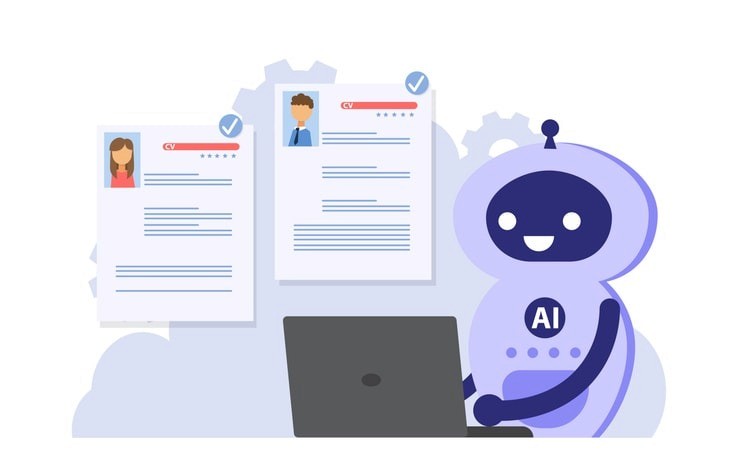
Many AI engineers worry that applicant tracking systems silently discard resumes, with industry data suggesting 75% are rejected before human review, often due to crude rules or outdated keyword lists that miss the nuance of AI work. Fonzi addresses this by structuring and enriching candidate information, normalizing job titles, detecting model types, and inferring domains from projects. The platform surfaces real signals to companies, including shipped LLM features, managed infra capacity, research output, and collaboration history, while de-emphasizing noisy proxies like school names or previous company brands. Human talent partners review AI-generated summaries and profiles before they go live, ensuring accuracy, fairness, and alignment with what companies actually want. This approach helps candidates pass ATS filters while ensuring their key qualifications reach hiring managers, not just algorithms checking for exact keyword matches.
Fonzi Match Day: A High-Signal Way to Get in Front of Top Companies
Match Day is a recurring event, typically held twice monthly, where vetted AI candidates are introduced in batches to pre-screened companies hiring for AI, ML, and infra roles, providing a structured alternative to mass applications. Candidates first complete their profile, generate an AI-powered summary, and add portfolio links, then Fonzi’s team reviews the profile for completeness and accuracy. Once live, companies receive curated candidate batches, express interest, and committed companies respond within 3-5 business days. Participating companies include late-stage startups, research-driven Series B-E firms, infra providers, and labs, all committed to quick follow-ups. Match Day replaces the “spray and pray” approach, giving candidates predictable windows for high-quality conversations while helping hiring managers connect with qualified talent efficiently.
Responsible AI & Candidate Experience: Guardrails Built In
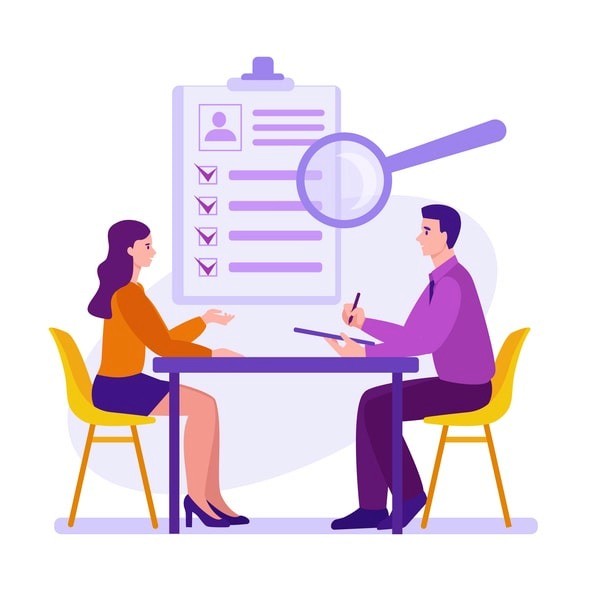
Fonzi uses a human-in-the-loop approach throughout the resume writing and matching process, with AI drafting summaries and suggesting matches while talent partners and hiring managers make final decisions and candidates receive feedback to iterate. Candidate data, including resumes, LinkedIn URLs, and GitHub repositories, is processed under clear privacy guidelines, and Fonzi does not resell profiles or use them as training data for third parties. Bias mitigation is built into the platform by stripping irrelevant personal data, focusing matching on skills and outcomes, and auditing model outputs for fairness across demographic groups. Candidates can review and edit AI-generated summaries before companies see them, maintaining control over voice, emphasis, and personal context, ensuring transparency and a final product that reflects their intentions.
Practical Tips: Getting the Most from an AI Resume Summary Generator
Before using any AI professional summary generator, prepare 3-5 flagship projects with clear scope and outcomes, key metrics such as latency reductions, revenue uplift, cost savings, or model accuracy improvements, your primary tech stack including frameworks, languages, and infrastructure tools, and proof links like GitHub repositories, papers, demos, or your LinkedIn profile. When prompting the generator, be specific; for example, “Generate a 4-sentence resume summary for a Senior ML Engineer specializing in recommender systems, using these projects and metrics from 2022-2024” works far better than “Write a summary for an ML engineer.” Align your summary with a target role rather than a generic one, avoid claims you cannot back up in interviews, quantify impact wherever possible, use action verbs that show ownership such as “architected,” “deployed,” “scaled,” or “optimized,” and maintain a simple summary log with research-leaning, product-leaning, and infra-leaning variations so you can easily customize for each application.
Comparing AI Resume Summary Tools vs. Fonzi’s Approach
Most generic free AI resume tools are designed for broad applicability. They work well for formatting and general keyword optimization but miss the nuances of AI/ML hiring. Here’s how they compare:
Aspect | Generic AI Resume Tools | Fonzi’s AI Generator |
Specialization | Industry-agnostic; optimized for general roles | Built specifically for AI engineers, ML researchers, infra engineers |
Hiring Pipeline Integration | Standalone output; copy-paste to applications | Directly embedded in vetted marketplace where companies actively hire |
Bias Controls | Limited or none; keyword-focused | De-emphasizes school/company pedigree; focuses on observable work |
Human Review | Self-service only | Talent partner review before profiles go live |
Technical Understanding | Basic parsing of skills lists | Understands model families, infra scale, MLOps maturity |
Generic resume templates and professional templates work for quick drafts but often fail to highlight AI-specific achievements like successful A/B tests of ranking models, efficient GPU budget utilization, or research-to-production transitions.
Fonzi embeds the generated summary directly in a marketplace where companies are already searching for AI talent. A strong resume summary becomes real interview opportunities, not just a polished document sitting in your job search folder.
Preparing for AI-Focused Interviews After Your Summary Is Done
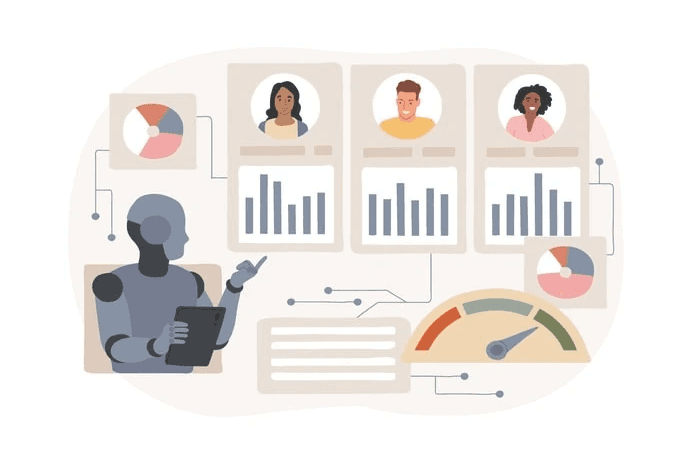
Once your resume summary is sharp and your Fonzi profile is live, the next bottleneck is interview performance. AI-focused interviews typically include system design for ML, research deep dives, and infra architecture discussions.
Build a “story bank” aligned with your AI-generated summary. Prepare 5-7 detailed narratives about key projects covering:
Problem: What business or research problem were you solving?
Approach: What methods did you consider and why did you choose your approach?
Architecture: What did the system look like? What were the key components?
Metrics: What was the measurable outcome?
Trade-offs: What would you do differently?
Practice explaining your work history at different levels of abstraction:
Executive level (1 minute): High-level impact and business value
Peer engineer level (5 minutes): Technical approach and key decisions
Deep dive (20 minutes): Architecture diagrams, metrics, and edge cases
Preparation focus by role type:
Role | Focus Areas |
LLM Engineer | RAG design, fine-tuning strategies, evaluation methodologies |
Infra Engineer | Scaling patterns, observability, GPU scheduling |
ML Researcher | Hypothesis formation, experimental design, handling negative results |
Applied ML | Production deployment, A/B testing, cross-functional collaboration |
Use recent tooling as concrete talking points: Weights & Biases for experiment tracking, MLflow for model registry, Ray for distributed training, LangChain for LLM orchestration, vLLM for inference optimization. These specific skills corroborate the claims in your resume summary and demonstrate current expertise.
Expert advice from career experts: your professional experience tells a story. Make sure each bullet point in your resume has a corresponding narrative ready for interviews.
Turn a Strong AI Summary into Real Opportunities
A precise, quantified resume summary is one of the highest-leverage assets an AI or ML professional can create in 2026. In a market where 99% of Fortune 500 firms use screening software that scans resumes in seconds, a well-crafted summary determines whether you get seen or filtered out.
Fonzi’s free AI resume summary generator is built specifically for AI engineers, ML researchers, infra engineers, and LLM specialists. Unlike generic resume maker tools, it feeds directly into a curated marketplace where companies are actively hiring for roles that match your background and career goals.
Fonzi’s approach to AI in hiring is human-centered. AI handles structure, content suggestions, and matching. Humans handle judgment, feedback, and job offer decisions. This combination reduces noise and bias while keeping the focus on connecting talented people with the right opportunities.
FAQ
What are the best free AI resume summary generators?
How does an AI resume summary writer create personalized summaries?
Are AI-generated resume summaries effective for job applications?
What should I include in the AI professional summary generator prompts?
Can I customize AI-generated resume summaries for different jobs?


