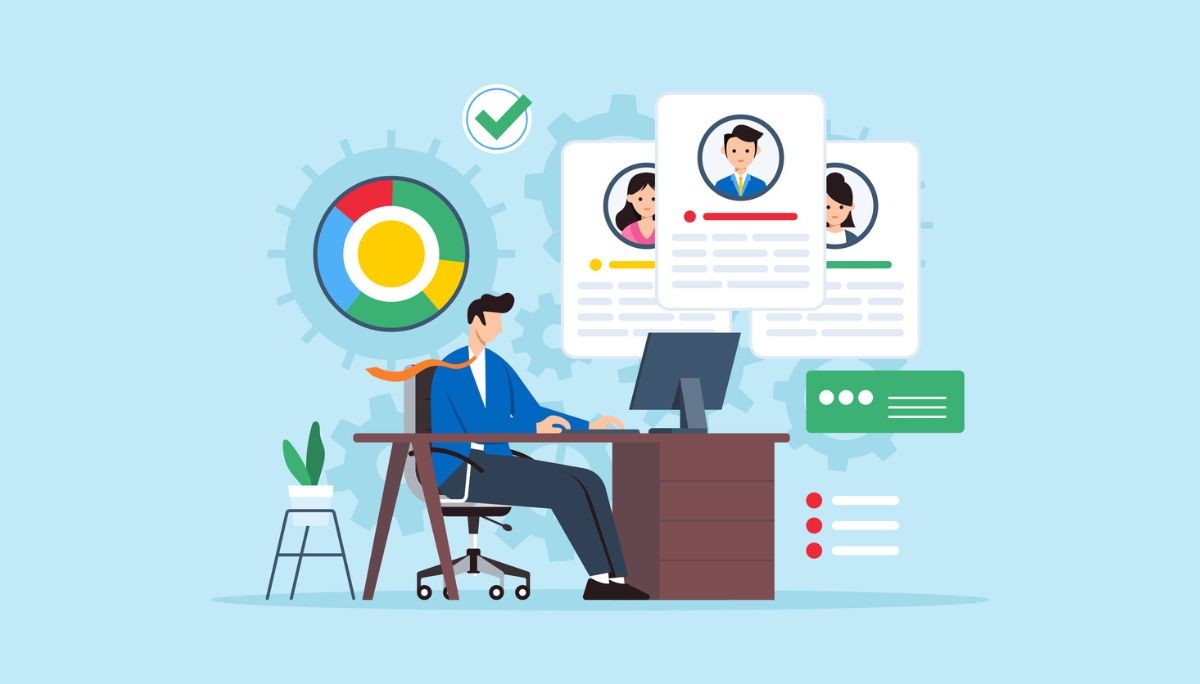
Competition for AI and engineering talent is intense, with top candidates disappearing in 10–14 days while recruiters face tripling application volumes and flat headcount.
Traditional HR systems slow hiring through siloed tools, duplicate data entry, and inconsistent evaluations, costing access to the best candidates. A modern talent management system unifies hiring, growth, and retention, replacing spreadsheets and point solutions with a single platform.
This article explores what TMS platforms do, how AI transforms them, and how to choose the right solution, introducing Fonzi as a talent marketplace built for AI and engineering roles that works alongside existing HR tools, such as background checks.
Key Takeaways
Fast-growing tech companies in 2026 face slow hiring cycles, recruiter overload, and inconsistent candidate quality that traditional HR tools alone cannot solve.
Modern talent management systems unify ATS, performance, learning, and succession planning into one platform, while AI-powered tools like Fonzi automate screening, fraud detection, and structured evaluations with humans retaining final hiring control.
Buyers should evaluate systems based on features, integrations, candidate experience, and AI transparency, adopting a strong TMS foundation and layering specialized AI tools for critical technical roles.
What Is a Talent Management System (TMS)?
A talent management system is an integrated software platform covering the full employee lifecycle: attracting, assessing, onboarding, developing, rewarding, and planning succession. Unlike standalone tools that handle one piece of the puzzle, a TMS connects these processes so data flows seamlessly and decisions become faster.
Think of it as the operating system for your workforce strategy. When a new hire completes onboarding, their profile automatically populates in performance management. When an engineer masters a new competency, that data feeds into succession planning for leadership roles.
Core modules in most talent management software include:
Recruiting and ATS: Job posting syndication, candidate screening, interview scheduling, and pipeline analytics
Employee onboarding: Automated workflows for paperwork, equipment provisioning, and first-week training
Performance management: Goal setting via OKRs and KPIs, continuous feedback, 360-degree reviews, and calibration tools
Learning and development: Personalized learning paths, skills gap analysis, e-learning modules, and progress tracking
Compensation management: Pay structures, merit increases, bonus planning, and equity administration
Succession planning: Identifying high-potential employees, mapping career paths, and mitigating leadership turnover risks
Modern TMS platforms are typically cloud-based SaaS with APIs to connect payroll, collaboration tools like Slack and Teams, and analytics platforms. This is important because your talent data should inform business strategy rather than live in isolation.
The key difference between a TMS and a simple ATS or HRIS is the focus on continuous talent development and internal mobility, not just headcount tracking. An HRIS handles compliance and payroll. An ATS manages applicant flow. A TMS asks how to develop, engage, and retain your best people over time.
For growing tech companies, the practical path is often starting with a few modules such as recruiting and performance and expanding as headcount and complexity grow past 100 to 250 employees.
How Talent Management Systems Work in Fast-Growing Tech Companies
Let’s walk through how a TMS functions inside a Series B or C tech company scaling from 80 to 300 employees. A hiring manager opens a requisition for a senior backend engineer, and the TMS automatically pulls the approved job description template, standardized interview scorecards, and the skills taxonomy your team defined for engineering levels. The job posts to LinkedIn, your careers page, and partner apps simultaneously.
As applications flow in, recruiters use structured profiles stored in the system. Instead of starting from scratch for every role, they reuse skills assessments and interview feedback from previous cycles. When a candidate interviewed for a different role six months ago, that context is immediately visible.
Talent management becomes strategic rather than administrative through:
Structured skills data: Every engineer has a profile with verified competencies, certifications, and learning completions
Connected performance history: Promotion decisions, peer feedback, and manager ratings inform succession planning
Cross-functional visibility: Engineering leadership can see skills gaps across the technical organization
Consistent global processes: Distributed teams in Austin, Berlin, and Singapore follow the same review cycles and development frameworks
Consider a tech company with 200 engineers across four time zones. Without a TMS, each office might run performance reviews differently, making calibration impossible. High performers in one region get promoted while equally strong performers elsewhere stagnate.
With an integrated system, the VP of Engineering can run consistent calibration sessions, track employee engagement scores by team, and identify which managers need development coaching, all from centralized employee data.
When AI tools are layered in, the system gets smarter: matching algorithms surface internal candidates for open roles before external recruiting begins, fraud detection flags suspicious patterns in new applicant profiles, and structured evaluations generate automatically based on role requirements.
Core Features of Modern Talent Management Systems
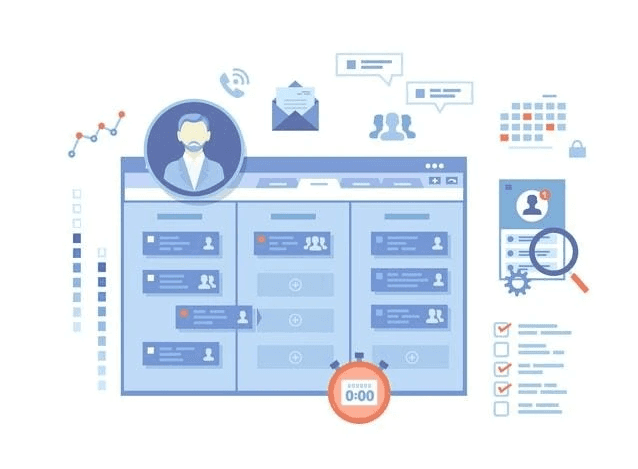
When evaluating talent management solutions, you need a clear feature checklist. Here’s what to look for across the major capability areas.
Recruiting and Talent Acquisition
Your TMS should handle the full recruiting funnel: multi-channel job posting syndication, candidate intake forms with custom screening questions, interview scheduling with calendar integrations, structured scorecards for standardized evaluation, pipeline analytics on conversion rates, time-to-fill, and source effectiveness, and automated workflows for offer letters and background checks.
Performance and development features differentiate talent management tools from basic HR software: continuous feedback beyond annual reviews, goal setting frameworks supporting OKRs, KPIs, or custom methods, 360-degree review capabilities, skills mapping and competency frameworks, personalized learning paths tied to career progression, and manager dashboards for tracking team performance and development.
Engagement and retention require visibility into employee sentiment: pulse surveys for satisfaction and engagement, internal mobility marketplaces, recognition tools, career path visualizations, and attrition risk indicators based on engagement patterns.
Analytics and workforce planning support data-driven decisions: headcount and attrition dashboards, DEI metrics across hiring, promotion, and retention, time-to-fill and quality-of-hire measurements, skills gap analysis, and predictive analytics for workforce planning.
AI capabilities are rapidly becoming essential: automated resume screening and candidate ranking, AI-generated job descriptions and interview questions, intelligent learning recommendations, fraud detection for candidate profiles, and natural language processing for feedback analysis.
Usability factors ensure adoption: employee self-service portals, modern mobile apps, intuitive manager dashboards, single sign-on integration with identity providers, and clean APIs for connecting partner apps and custom workflows
New Challenges: Why Traditional TMS Tools Aren’t Enough for AI & Engineering Hiring
Here’s the uncomfortable truth: most talent management platforms were built for general workforce management and handle the fundamentals well, including performance reviews, learning paths, and succession planning, but technical hiring, especially for AI and engineering roles, exposes their limitations.
Engineering and AI positions are uniquely challenging. Job titles overlap confusingly, for example, is a “Machine Learning Engineer” the same as an “Applied Scientist”? Skills evolve faster than any taxonomy can track, portfolios and GitHub profiles are easy to misrepresent, and the difference between a capable senior engineer and someone who copied Stack Overflow answers takes expertise to spot.
Recruiters at growing tech companies face crushing volume. A Series C startup with 15 open engineering roles might receive 3,000 applications in a month, making manual screening impossible, while coordination across hiring managers consumes hours daily, and when processes break down, the best candidates accept offers elsewhere.
Specific pain points for technical hiring include extended hiring cycles of 45 to 60 plus days for senior roles, inconsistent technical evaluation across interviewers, recruiter bandwidth collapse with 20 plus requisitions per recruiter, candidate fraud escalation through fake GitHub repositories or AI-generated portfolios, and skills verification gaps where generic TMS platforms cannot assess actual proficiency in PyTorch or other frameworks.
The 25 percent surge in AI talent demand has intensified these problems, as companies need ML engineers, data scientists, and LLM specialists, roles that require deep technical vetting that most HR processes were not designed to provide, leaving a gap that specialized AI-driven platforms can fill.
Fonzi: An AI-Native Talent Marketplace for Engineering & AI Roles
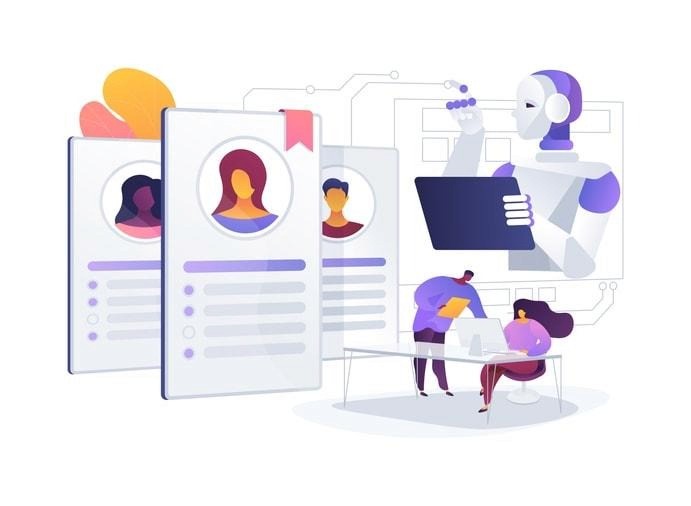
Fonzi is a curated talent marketplace built specifically for hiring senior software engineers, ML engineers, data scientists, and AI platform roles. Unlike traditional TMS platforms that try to serve all functions, Fonzi focuses exclusively on the technical hiring challenge.
The platform uses a multi-agent AI architecture to analyze candidate skills, portfolios, and work histories before they reach a hiring manager. Each agent specializes in a different aspect of candidate evaluation, working together to surface the best matches while flagging potential issues.
This approach addresses the specific challenges tech companies face when hiring for roles where human potential and technical competencies matter equally.
Key differentiators include:
Automated fraud detection: AI agents analyze work histories, portfolio projects, and GitHub contributions to identify suspicious patterns and verify authenticity
Structured skills evaluation: Candidates are assessed against specific technical frameworks, languages, and tools relevant to AI and engineering roles
Evidence-based ranking: Candidates surface based on demonstrated project work, not just keyword matching on resumes
Pre-vetted talent pool: The marketplace curates candidates so recruiters start with quality, not noise
Real-time insights: Hiring managers receive AI-generated summaries explaining why each candidate was recommended
Fonzi integrates with existing ATS and TMS tools using modern APIs, so you do not have to replace your core HR stack but can add a specialized layer for the roles where traditional tools fall short.
Most importantly, Fonzi keeps humans in control. Recruiters and hiring managers review AI-generated shortlists, insights, and candidate summaries before making any decisions. The AI handles repetitive screening and validation work, and humans handle judgment calls, relationship building, and final hiring decisions.
How Fonzi’s Multi-Agent AI Streamlines (Not Replaces) Recruiters
The concept behind multi-agent AI is straightforward: instead of one monolithic algorithm making all decisions, multiple specialized AI agents collaborate to evaluate candidates from different angles, with each agent focusing on what it does best.
Think of it like a well-structured interview panel where each interviewer covers a different competency area. The AI agents work in parallel, processing thousands of candidates simultaneously while human recruiters focus on high-value tasks.
Here’s how specific agents map to recruiter workflows:
Skills parsing agent: Analyzes resumes, GitHub repositories, Kaggle competitions, and published papers to verify depth of experience with Python, PyTorch, TensorFlow, LLM frameworks, and other technical tools
Fraud detection agent: Flags suspicious patterns like identical portfolio projects across candidates, inconsistent employment dates, contributions to “CV factory” repositories, or mismatched skill claims
Structured evaluation agent: Auto-generates interview scorecards aligned with the role’s competency model and your company’s values, ensuring consistent evaluation criteria
Compensation intelligence agent: Provides market data and compensation benchmarks so offers land in the right range
Culture matching agent: Analyzes work preferences, communication styles, and team fit indicators from candidate profiles
What recruiters still own and should always own:
Candidate outreach and storytelling about the company mission and culture
Building relationships with top talent throughout the hiring process
Orchestrating interview logistics and managing hiring manager expectations
Making final hiring decisions based on human judgment
Negotiating offers and closing candidates
The critical difference from black-box AI tools is transparency. Every AI recommendation comes with an explanation. Recruiters can see exactly why a candidate surfaced, including specific skills verified, projects evaluated, and red flags identified. If the criteria need adjustment, recruiters can modify weights and signals rather than accepting opaque rankings.
This audit trail matters for compliance, fairness, and continuous improvement. When a hire succeeds or fails, you can trace back to what the AI saw and refine the model for next time.
How to Choose the Right Talent Management System (and Where Fonzi Fits)
Selecting the right TMS requires mapping your current pain points to available solutions. Here’s a practical buying framework for HR and talent leaders.
Start by documenting where your current process breaks down:
Are hiring cycles too long because of slow approvals and inconsistent interviews?
Do you lack visibility into internal mobility opportunities for existing employees?
Is candidate experience suffering because different teams use different processes?
Are senior engineers and AI specialists slipping through because recruiters can’t properly evaluate technical skills?
Define must-have versus nice-to-have features for the next 18 to 24 months:
Recruiting and ATS capabilities with structured scorecards
Performance management with goal tracking and continuous feedback
Learning and professional development tied to career paths
Compensation management for equitable pay decisions
Analytics dashboards for workforce planning
AI-powered screening and fraud detection for technical roles
Evaluate integration requirements carefully:
Check compatibility with your existing HRIS and payroll systems
Confirm APIs for collaboration tools like Slack and Microsoft Teams
Verify single sign-on support for your identity provider (Okta, Google Workspace, Microsoft Entra ID)
Assess data migration complexity from current systems
Prioritize AI transparency and compliance:
Can you audit how the AI makes recommendations?
Can you customize scoring criteria and weights?
Does the platform support emerging AI hiring regulations in the US and EU?
Is there documentation explaining how bias is monitored and mitigated?
Consider a layered approach for technical hiring:
Fonzi works as the specialized layer for high-stakes AI and engineering roles. It integrates with your existing TMS and ATS, accelerating time-to-hire without requiring you to replace core HR systems.
A practical decision path might look like this: adopt or upgrade a TMS for global workforce management and employee lifecycle processes, then plug Fonzi into your hiring workflow specifically for technical and AI-heavy positions where generic tools underperform.
Implementing AI in Your Hiring Stack Without Losing Control
Risk-averse leaders often hesitate to adopt AI in hiring. Concerns about bias, black-box decisions, and losing the human touch are legitimate. But the alternative, drowning in manual screening while top candidates accept competing offers, isn’t sustainable either.
The key is starting pragmatically and maintaining clear governance throughout.
Begin with low-risk AI use cases:
Automated note summarization from interviews
Intelligent scheduling that coordinates across calendars
Generation of structured interview scorecards based on role requirements
AI-drafted job descriptions that recruiters can edit and approve
Pilot AI-driven screening for specific role families:
Choose a category like backend engineers or ML engineers where you have clear success criteria
Measure results on time-to-shortlist, interview-to-offer ratio, and offer acceptance rate
Compare AI-screened cohorts against traditionally screened candidates for 90-day retention
Establish clear governance from day one:
Document what the AI can do autonomously (parsing, flagging, ranking)
Define what humans must approve (advancing candidates, making offers)
Create audit protocols for reviewing AI recommendations monthly
Assign ownership for addressing algorithmic issues when they arise
Keep the decision loop human-owned:
Fonzi’s model exemplifies this approach. AI prepares ranked shortlists and evidence summaries. Recruiters and hiring managers make the final calls. Every recommendation includes reasoning that humans can evaluate, accept, or override.
Calibrate continuously with hiring managers:
Schedule regular review cycles, monthly or quarterly, where the talent acquisition team and hiring managers examine outcomes together. Identify which AI recommendations led to successful hires and where the model missed, then adjust criteria, weights, and signals based on real hiring data rather than assumptions.
This iterative approach builds confidence in AI tools while keeping human judgment central to hiring decisions.
Benefits of Modern Talent Management Systems for Tech Organizations

Let’s shift from features to outcomes. What actually improves when you implement integrated talent management software with AI-powered capabilities?
Enhanced retention and engagement:
Connected performance and learning systems show employees clear career paths
Internal mobility features reduce turnover by surfacing advancement opportunities
Continuous feedback tools improve employee satisfaction and manager relationships
Recognition programs drive engagement without requiring manual HR administration
Specific benefits for distributed tech teams:
Standardized performance frameworks work consistently across time zones
Transparent career ladders help employees understand growth trajectories
Cross-border hiring becomes manageable with built-in compliance features
Remote employee onboarding follows structured, repeatable processes
Conclusion: Building a Future-Ready, Human-Centered Talent Stack
Winning the AI and engineering talent race requires a strong TMS foundation paired with AI-enabled hiring workflows. Companies that thrive amplify recruiter effectiveness through intelligent automation rather than building bigger teams.
AI should enhance, not replace, human judgment. It can handle repetitive screening, fraud detection, and initial candidate ranking while recruiters focus on relationships, selling your mission, and evaluating fit.
Organizations that adopt AI now with human oversight will stay competitive, while those who wait risk slower cycles and losing top talent. Explore Fonzi to see how multi-agent AI integrates with your TMS and ATS, delivering curated AI and engineering talent while keeping your team in control.
FAQ
What are the best talent management systems?
What features should talent management system software include?
How much does talent management solutions software cost?
What’s the difference between talent management and HR management systems?
Which talent management system integrates best with existing HR tools?


