Designing Big Data Pipelines: Architecture, Automation, & Scalability
By
Samara Garcia
•
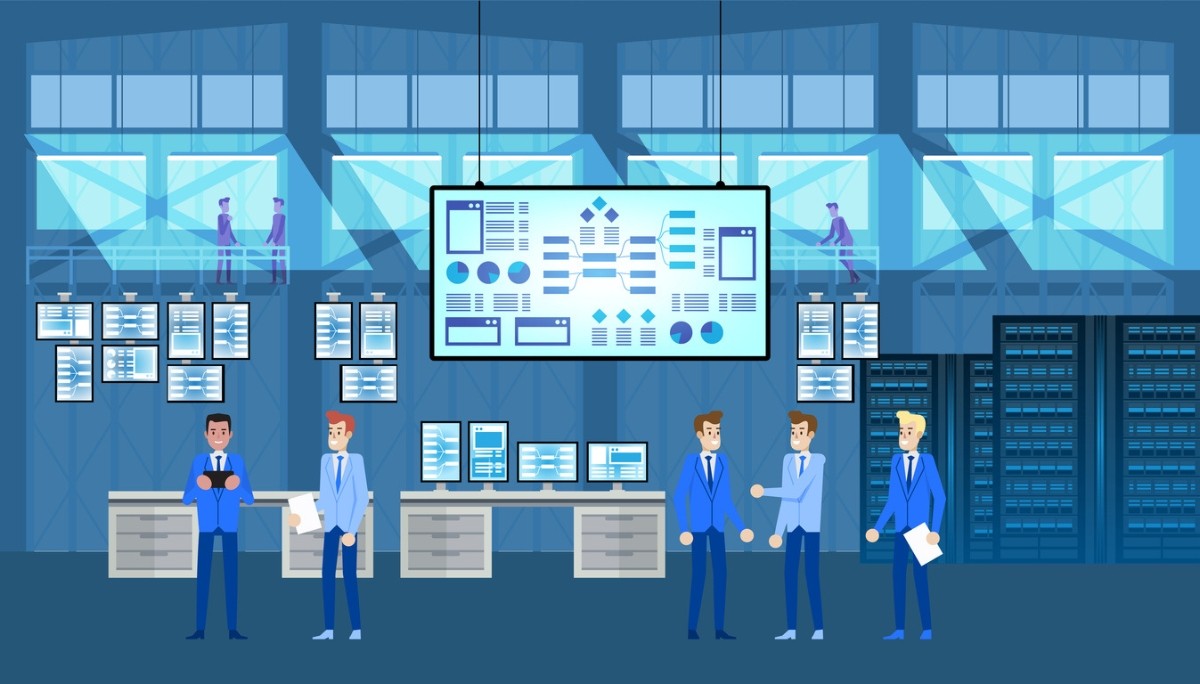
In AI-driven companies, data speed is survival. When pipelines are slow or stale, models fail, and money is lost.
A big data pipeline is an automated system that ingests, processes, and serves massive volumes of data for analytics, ML, and product features. In 2025, with global data creation hitting 181 zettabytes and 80% of it unstructured, getting your pipeline architecture right is no longer optional; it’s the foundation of every AI initiative.
Big data pipelines power real-time decisions, ML systems, and products. Simple pipelines handle reports. The moment you need scale, low latency, or live intelligence, they fall apart.
Key Takeaways
Modern big data pipelines must handle the 5 V’s (volume, velocity, variety, veracity, value) while remaining cost-efficient and cloud-native
Well-architected pipelines are a prerequisite for reliable ML, generative AI, and real-time analytics use cases; without them, models train on stale or inconsistent data
Automation through orchestration, CI/CD, and data observability turns fragile pipelines into maintainable products rather than ad-hoc scripts that break at 3 a.m.
Not all data pipelines are created equal: the jump from simple batch jobs to true big data architectures requires different tools, patterns, and engineering expertise
Fonzi AI is the fastest way for startups and enterprises to hire the senior data engineers and ML engineers needed to design, build, and operate these pipelines at scale. Most hires close in under 3 weeks
Core Components of a Big Data Pipeline
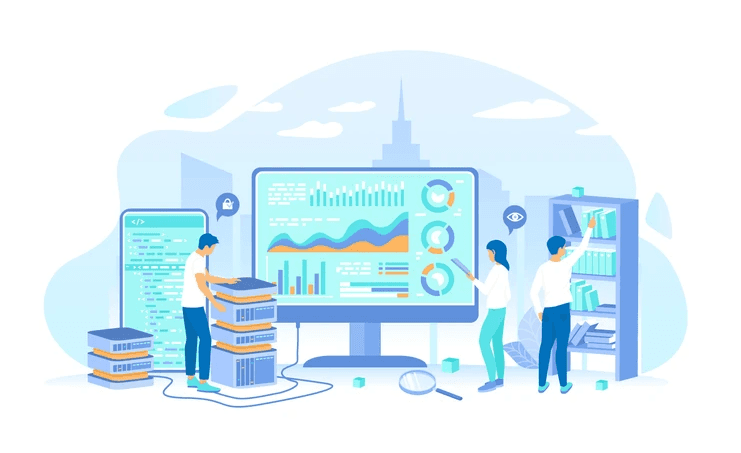
Every robust data pipeline follows a predictable flow: data sources feed into ingestion layers, which route data to storage, where processing engines transform raw data into usable assets, which finally reach serving layers for consumption. Understanding each component helps you make smarter architectural decisions.
Data Sources
Your data sources define what’s possible downstream. Common sources for AI-first companies include:
SaaS products: Stripe transactions, Salesforce contacts, HubSpot activities
Event logs: User clickstreams, application telemetry, error logs
IoT sensors: Device telemetry, GPS coordinates, environmental readings
Mobile apps: Session events, crash reports, feature usage
Legacy OLTP databases: PostgreSQL, MySQL, Oracle production systems
Third-party APIs: Weather data, market feeds, social media streams
Each source produces structured and unstructured data at different velocities. Your data ingestion strategy must account for this variety.
Data Ingestion
Ingestion patterns fall into two broad categories:
Batch ingestion works for data that doesn’t need to be fresh. Think nightly syncs from your CRM or weekly exports from a partner. Tools like Fivetran, Stitch, and AWS Glue handle this well.
Streaming data processing handles high-velocity sources where latency matters. Kafka remains the gold standard for data streaming, handling millions of messages per second. Kinesis and Pub/Sub offer managed alternatives. For database changes, Change Data Capture with Debezium streams incremental updates from transaction logs rather than running expensive full-table scans.
Data Storage
Your storage layer must balance cost, query performance, and flexibility:
Cloud data warehouses (Snowflake, BigQuery, Redshift): Optimized for analytical queries on structured data. Best for business intelligence and SQL-based analytics tools.
Data lakes (S3, GCS, ADLS with Delta Lake or Apache Iceberg): Cost-efficient storage for large datasets, including raw data. Schema-on-read enables exploratory data analysis.
Lakehouses (Databricks, Snowflake): Combine lake flexibility with warehouse semantics. Support both data analytics and ML workloads.
The choice depends on your data volume, query patterns, and downstream use cases.
Data Processing
Processing engines handle data transformation at scale:
Apache Spark: The workhorse for large-scale data processing. Handles batch and microbatch workloads with in-memory processing that’s 100x faster than MapReduce for iterative jobs.
Apache Flink: True streaming engine for when milliseconds matter. Powers, bidding, fraud detection, and real-time data streaming use cases.
dbt: SQL-first transformations running inside your warehouse. Ideal for ELT workflows where you load first and transform raw data later.
Serving Layers
The final mile determines who can access your data and how:
BI tools (Looker, Mode, Tableau): Self-service data visualizations and dashboards
Feature stores (Feast, Tecton): Serve ML features consistently across training and inference
Vector databases (Pinecone, Weaviate, pgvector): Power RAG applications and semantic search
APIs and microservices: Embed data directly into product features
Strong data engineers are required to design interfaces between these layers, manage schemas, and enforce contracts. Without clear ownership, downstream teams, whether data scientists building models or product teams building features, can’t rely on the data.
Architectural Patterns for Big Data Pipelines
Architectural choices determine whether your pipeline handles 1 million events per second or buckles under load. The right pattern depends on your latency requirements, data volume, and team capabilities.
ETL vs ELT
Extract-Transform-Load (ETL) transforms data before loading it into the target system. This pattern dominated enterprise data processing for decades and remains common in strict-governance environments where data must be cleansed and validated upfront.
Extract-Load-Transform (ELT) loads raw data first, then transforms it inside the data warehouse or lake. This pattern exploded with cloud-native stacks around 2017 when Snowflake and BigQuery made compute cheap and elastic. ELT enables faster data ingestion and lets analysts experiment with transformations without engineering bottlenecks.
For most modern data platforms, ELT has become the default. Schema-on-read approaches let you defer costly transformations until query time.
Batch Architectures
Batch data pipelines process data in scheduled intervals, hourly, daily, or weekly. They’re ideal for:
Nightly revenue reconciliation
Marketing attribution models that run at 3 a.m.
Monthly financial reporting
Large-scale backfills and reprocessing
Batch processing is simpler to debug, cheaper to run (you can use spot instances), and perfectly adequate when data freshness requirements are measured in hours rather than seconds.
Streaming Architectures
When latency matters, you need streaming data pipeline architectures. Common use cases include:
Ad bidding decisions in under 100ms
Live inventory updates across retail locations
Anomaly detection in financial transactions
Real-time personalization and recommendations
Netflix processes 1.3 petabytes daily through Kafka-Spark-Flink pipelines for real-time recommendations. Uber’s Michelangelo platform handles 1 trillion events daily. These aren’t edge cases; they’re the new normal for AI-first companies.
Lambda Architecture
Lambda architecture runs batch and streaming layers in parallel:
Batch layer: Processes complete historical data for accuracy (e.g., Hadoop or Spark batch jobs)
Speed layer: Processes recent data for low latency (e.g., Storm or Flink streaming)
Serving layer: Merges results for querying
Example: An e-commerce recommendation engine might use the batch layer to compute lifetime purchase affinity models nightly, while the speed layer captures today’s browsing sessions. The serving layer blends both for fresh, accurate recommendations.
Pros: Robustness, correctness guarantees, handles late-arriving data
Cons: Operational complexity, duplicate code paths, recomputation costs
Kappa Architecture
Kappa simplifies Lambda by treating everything as a stream. All data flows through a single streaming layer (typically Kafka + Flink), with the ability to replay events for reprocessing.
Pros: Simpler infrastructure (Gartner reports up to 50% infrastructure reduction), single codebase, easier debugging
Cons: Requires robust stream processing guarantees, may struggle with very complex historical aggregations
Hybrid and Pragmatic Approaches
Many startups choose pragmatic middle grounds:
Microbatching with Spark Structured Streaming balances latency and complexity
Warehouse-native streaming, like Snowpipe or BigQuery streaming inserts, offers simplicity
Event-driven architectures trigger pipelines based on data arrival rather than schedules
Hiring engineers who’ve actually shipped Lambda/Kappa systems in production, rather than only reading about them, drastically reduces re-architecture risk. This is where Fonzi’s curated talent pool differentiates from generic job boards.
Automation & Orchestration: Turning Pipelines into Reliable Products
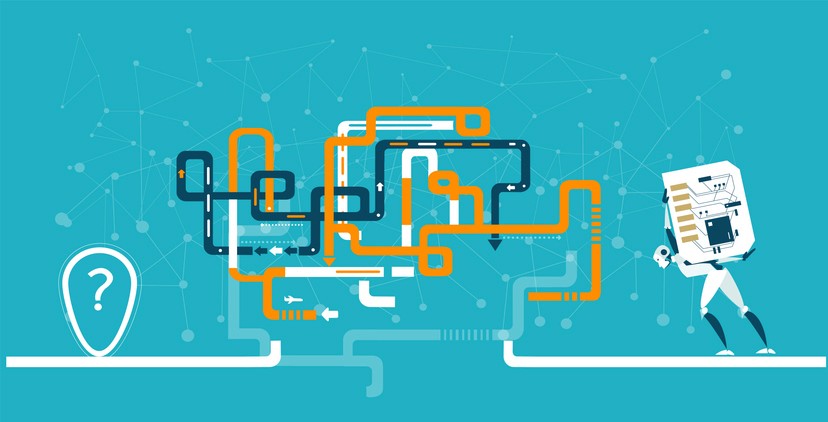
Manual, cron-based scripts don’t scale beyond a handful of data processing jobs. Production complex data pipelines need orchestration, CI/CD, and observability to run reliably at scale.
Orchestration & Reliability
Orchestration tools like Airflow, Dagster, and Prefect coordinate pipeline schedules, dependencies, retries, and alerts. They guarantee tasks run in the right order, failures are handled gracefully, and SLAs are met as data systems grow more complex.
Modern data teams apply software engineering best practices: version control for SQL and workflows, automated tests for schemas and data quality, code reviews, and controlled deployments from development to production. This prevents broken dashboards and corrupted data.
Data Observability
Observability focuses on understanding data health end-to-end. Teams monitor freshness, volume, distributions, schema changes, and lineage so issues are caught early and root causes are clear, reducing time spent firefighting.
Infrastructure Automation
Pipelines run on automated, scalable infrastructure using tools like Terraform, Kubernetes, and serverless data services. This lowers operational overhead and lets engineers treat pipelines as long-lived products with clear SLAs and documentation.
Scalability, Reliability, and Cost Optimization
Scaling a big data pipeline isn’t just “adding more nodes.” It requires architectural tradeoffs across performance, resiliency, and cloud spend. Poor data pipeline management causes 20-30% data loss annually, costing enterprises $15 million on average.
Horizontal Scaling
Scale pipelines by partitioning data, handling backpressure, and processing data close to where it’s stored. Distributed engines like Spark and Dataflow parallelize work across many nodes and auto-scale to handle large volumes efficiently.
Reliability Tactics
Reliable pipelines use exactly-once (or effectively-once) processing, idempotent consumers, checkpoints, and replayable logs. These patterns prevent duplicates, enable safe retries, and allow recovery without data loss.
Cost Optimization
Cloud bills grow quickly with large volumes of data:
Optimization Lever | Implementation | Impact |
Storage tiering | Move cold data to S3 Glacier, BigQuery long-term storage | 50-80% storage cost reduction |
Spot/preemptible instances | Use for batch processing jobs | 60-90% compute cost reduction |
Autoscaling clusters | Right-size based on actual workload | 30-50% compute savings |
Data retention policies | Archive or delete data past its usefulness | Reduces storage bloat |
File optimization | Use Parquet/ORC, partition by date/region | Faster queries, lower scan costs |
Erasure coding | Replace 3x replication with 1.3x encoding | Storage efficiency for large datasets |
Multi-Region and Compliance
Global products or regulated industries may require:
Multi-region replication: Serve users from nearby regions
Data residency: Keep EU data in EU regions (GDPR)
Multi-cloud designs: Avoid vendor lock-in or meet client requirements
Designing Big Data Pipelines for ML, Generative AI, and RAG
ML and generative AI workloads impose new requirements on big data pipelines: feature freshness, vector storage, reproducibility, and governance. Without purpose-built data architecture, your models train on stale data and serve inconsistent predictions.
Feature Pipelines for ML
Strong models depend on reliable feature pipelines: historical backfills for training, feature stores to keep training and inference consistent, and point-in-time correctness to prevent data leakage.
RAG and Vector Pipelines
RAG pipelines ingest documents, chunk them, generate embeddings, store vectors, and retrieve relevant context at query time. They enable LLMs to work with large volumes of unstructured data in production.
Data and AI Observability
Production ML requires monitoring feature values, embedding drift, and model inputs, plus logging prompts and responses to catch issues early and improve performance.
Governance for AI Data
AI pipelines must enforce PII handling, access controls, compliance, and lineage so teams know which data trained which models.
AI-native teams need engineers comfortable across data, ML infra, and application layers. Fonzi’s marketplace is curated specifically for AI/ML, data, and full-stack engineers who build exactly these systems, from raw data ingestion through model serving.
How Fonzi AI Helps You Build Big Data Pipelines Faster
Fonzi AI is a curated marketplace for engineers who actually build and scale modern data pipelines, not generalists on a job board.
Fonzi runs high-signal Match Day hiring events. You define the role, skills, and salary upfront. Fonzi matches you with pre-vetted AI, ML, data, and full-stack engineers who’ve shipped production systems with Kafka, Spark, Databricks, CDC, and cloud-native architectures. Interviews and offers happen in a 48-hour window, and most roles close within ~3 weeks.
Candidates are screened specifically for real pipeline experience, streaming, batch, Lambda/Kappa designs, cloud deployments, and analytics + ML data modeling. Evaluations are structured, bias-audited, and experience is verified.
Standard Data Pipelines vs Big Data Pipelines
Many teams underestimate the leap from simple reporting pipelines to true big-data architectures. The table below clarifies what changes when you need efficient data processing at scale.
Dimension | Standard Data Pipeline | Big Data Pipeline (AI-Ready) |
Data Volume | Gigabytes to low terabytes | Terabytes to petabytes daily |
Latency Requirements | Hours to days acceptable | Seconds to minutes for real-time data |
Architecture Pattern | Batch ETL, simple scheduling | Lambda/Kappa, batch and streaming pipelines |
Typical Tooling | Fivetran + dbt + Snowflake | Kafka + Spark/Flink + Lakehouse + Airflow |
Team Skills Required | SQL, basic Python | Distributed systems, streaming, ML infra |
Observability Needs | Basic monitoring | Full lineage, anomaly detection, and data quality |
Storage Approach | Single data warehouse | Multi-tier: lakes, warehouses, feature stores |
Use Cases | BI dashboards, weekly reports | ML training, real-time analytics, RAG, personalization |
Example | Daily CSV import to Redshift | Real-time user events via Kafka into Snowflake + feature store |
Summary
Your data pipeline architecture isn’t just an implementation detail; it’s the foundation your entire AI strategy stands on. Decisions around ingestion, batch vs. streaming, Lambda or Kappa, and observability don’t stay isolated; they compound over time and determine whether your systems scale smoothly or become a constant source of risk.
For most teams, the bottleneck isn’t access to technology. Anyone can spin up Snowflake, Databricks, or Kafka. The real constraint is talent: engineers who’ve built these systems in production, who know when batch is sufficient and when real-time is mandatory, how to implement CDC safely, and how to preserve data quality as volumes reach petabyte scale.
Fonzi AI removes that constraint. Through its Match Day model, Fonzi connects companies with pre-vetted data, ML, and AI engineers, fast. You get candidates who’ve already solved these problems, and most teams close critical hires in under three weeks. Whether you’re hiring your first data engineer or assembling a full platform team, Fonzi helps you turn data architecture into a competitive advantage.
FAQ
What are the key architectural differences between a standard data pipeline and a big data pipeline?
How do Lambda and Kappa architectures help manage the “Velocity” challenge in big data processing?
What are the best-rated platforms for automating big data pipelines in a cloud-native environment?
How does Change Data Capture (CDC) improve the efficiency of big data integration?
What role does parallel processing play in scaling a big data processing pipeline?


