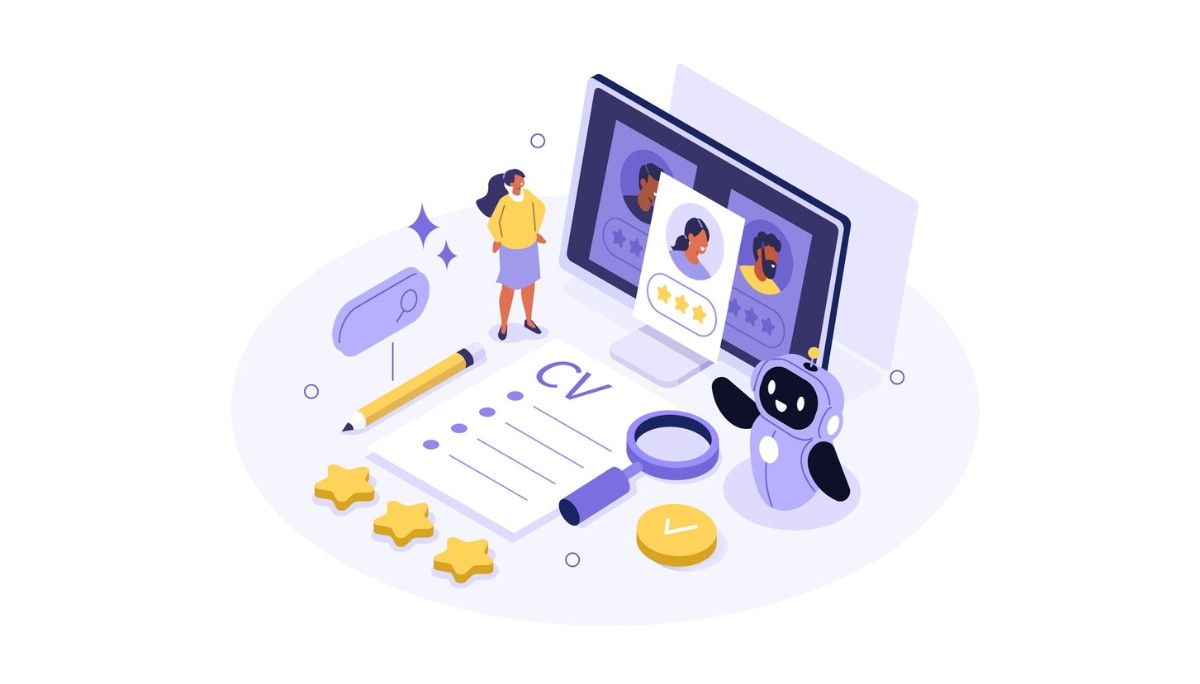
AI recruiting is now essential, but most small teams can’t justify expensive enterprise tools. Affordable solutions mean free tiers or pay-per-hire pricing, not long contracts and unused seats. This guide compares practical AI recruiting options and shows how to use them effectively, without replacing human judgment, through the lens of hiring technical and AI talent with models like Fonzi AI.
Key Takeaways
“Affordable” means either free tiers, low per-seat pricing (under ~$50/user/month), or success-fee models like Fonzi AI that avoid heavy upfront SaaS costs entirely.
AI recruiting tools now cover sourcing, screening, outreach, scheduling, and evaluation, but smart buyers start with their biggest bottleneck rather than buying everything at once.
Fonzi AI is included as an affordable, pay-on-success alternative specifically for technical and AI/ML hires, charging an 18% success fee with no subscription required.
A comparison table later in this article breaks down core features, pricing style, and best use cases for each tool so recruiting teams can quickly shortlist.
The right mix of free utilities, lean SaaS, and outcome-based platforms can outperform bloated enterprise stacks that cost 10x more.
How We Evaluated the Most Affordable AI Recruiting Tools

Not all budget-friendly tools deliver equal value. We evaluated 2026’s AI recruiting platform options using a framework designed specifically for SMBs and startups with limited resources.
Evaluation criteria included:
Transparent pricing under clear thresholds: Entry-level plans under $200/month, or success-based models with no upfront commitment
Ease of onboarding: Tools that teams can implement within days, not months of IT integration work
Strong ratings and adoption: Proven track records with tech companies from 2021–2026, with G2 ratings of 4.5+
Evaluation dimensions:
Core AI depth: Does the tool provide genuine sourcing intelligence, candidate screening automation, or just basic tracking?
User experience: Can recruiters hire faster without a steep learning curve?
Integrations: Compatibility with common ATSs like Greenhouse, Lever, and Workable
Documented ROI: Evidence of time-to-hire reduction, recruiter time saved, or cost-per-hire improvements
The tools highlighted here skew toward lean teams, 1–5 recruiters making 10–50 hires per year, rather than large enterprises with complex HRIS stacks. If you’re running high-volume pipelines with thousands of annual hires, enterprise tools may still make sense.
Fonzi AI is evaluated alongside traditional SaaS tools but positioned uniquely: it’s a curated marketplace plus multi-agent AI automation, not a traditional ATS or chatbot. This means it competes less on features and more on outcomes.
Top Affordable AI Recruiting Tools in 2026
The table below compares 8 concrete tools across core use cases, pricing styles, and best-fit scenarios. Use this to shortlist options based on your budget and the main bottleneck in the recruitment process.
Tool | Core Use Case | Pricing Style (2026) | Best For | Notable AI Features |
Fonzi AI | Talent marketplace for AI/ML & engineering | 18% success fee per hire (no subscription) | Startups hiring AI/ML, full-stack, data engineers | Multi-agent screening, fraud detection, bias-audited evaluation, and 48-hour Match Day offers |
Manatal | Full ATS with AI screening | $15–$628/month | SMBs needing end-to-end recruiting software | AI recommendations, drag-and-drop pipelines, talent pool scanning |
Zoho Recruit | ATS with AI matching | $25/user/month | Growth-stage companies with an existing Zoho ecosystem | Resume parsing, LinkedIn integration, customizable workflows |
Recruiterflow | Agency-focused ATS | $85–$119/user/month | Recruiting agencies, tech staffing firms | In-house AI agents (RF GPT), automated outreach sequences, talent mapping |
Juicebox (PeopleGPT) | Outbound sourcing | $99/month | Teams are heavily reliant on outbound for hard-to-find talent | Access to 800M+ profiles, multi-step campaign automation |
Calendly | Interview scheduling | Free–$20/user/month | Solo recruiters, small teams | Automated scheduling, calendar integrations, and booking pages |
ChatGPT | Writing & analysis assistant | Free–$20/month | Any team needing help with job postings, outreach, or summaries | Personalized outreach drafting, resume analysis, and interview questions |
myInterview | Video interviewing | $59/month (free tier for 10 interviews) | Teams wanting async video interviewing on a budget | AI ranking on keywords/intonation, structured feedback |
Pro tip: Pick one sourcing tool, one workflow/scheduling tool, and one evaluation or marketplace option. This prevents stack bloat while covering your critical funnel stages. Most teams don’t need more than 3–4 tools to save time and improve candidate quality.
Best Budget-Friendly AI Tools for Recruiting Use Case
Rather than overbuying one monolithic platform, smart teams mix and match tools based on where they lose the most recruiter time. This section groups affordable options by the problem they solve.

Affordable AI for Sourcing & Outbound
Outbound sourcing is often the highest-leverage area for AI in 2026, especially for engineers and AI/ML talent. But enterprise sourcing platforms can run $25,000+ annually.
Juicebox (PeopleGPT) at $99/month searches 800M+ candidate profiles and automates multi-step campaigns. It’s not free, but for teams that live in outbound sourcing, the ROI often pays for itself within a single hire.
For leaner budgets, consider:
ChatGPT (free or $20/month) for drafting personalized outreach at scale
Browser extensions or CSV exports from LinkedIn for candidate discovery
Manual lists combined with templated sequences through your email tool
When should you swallow the cost of a dedicated sourcing platform? If you’re spending more than 10 hours per week on candidate outreach and source candidates primarily through cold outreach, the math usually works.
For AI engineers and ML roles specifically, marketplaces like Fonzi AI can replace much of this outbound work entirely. Pre-vetted candidates are surfaced and ready to interview, so your team can skip the weeks of messaging into the void.
Affordable AI for Screening & Shortlisting
Screening is a major time sink. When you’re juggling hundreds of resumes, many from job seekers who clearly didn’t read the job description, hours disappear into manual review.
Manatal ($15/month starting) and Zoho Recruit ($25/user/month) offer AI-powered resume parsing and candidate ranking without enterprise complexity. Both earned 4.8/5 G2 ratings for ease-of-use and delivered solid ROI for SMBs building their first candidate pipeline.
For near-zero cost, generic AI models help too:
Use ChatGPT to summarize resumes against a job description
Extract skills into a spreadsheet for quick filtering
Draft rejection messages that feel personal without eating hours of time
A word of caution: Hard keyword rules can over-filter and exclude nontraditional talent. Use AI as a ranking and signal booster rather than a binary gate. Let the AI assistant surface top candidates, but keep human eyes on edge cases.
Affordable AI for Communication & Scheduling
Communication and scheduling are often the lowest-hanging fruit for automation. The tools are mature, often free, and the time savings are immediate.
Calendly (free or $12–$20/user/month) eliminates the email ping-pong of scheduling interviews. One booking link replaces 5–10 back-and-forth messages per candidate. For automated interview scheduling, it’s the industry standard.
For candidate communication:
ChatGPT drafts personalized outreach, follow-ups, and structured feedback templates
Grammarly (free tier) polishes messaging so every touchpoint reflects your employer brand
Both tools handle multiple languages for global hiring
High-end conversational AI platforms like Paradox are powerful for high-volume hiring (1,000+ hires/year), but they’re likely overkill for early-stage startups. The monthly cost can exceed what you’d pay a part-time recruiter.
Start by integrating scheduling and messaging tools with email and calendar. Skip the full HRIS integration until you’ve proven the workflow. Implementation costs stay near zero.
Affordable AI for Assessment & Structured Evaluation
Structured evaluation, interview scorecards, rubrics, and bias-aware assessment are critical for technical roles. But many assessment suites price themselves for enterprises.
Practical options for smaller teams:
HireVue and pymetrics often offer free trials or pilot programs that small teams can test before committing to enterprise plan pricing
myInterview ($59/month with free tier) provides video interviewing with AI ranking for high volume pipelines
OneWayInterview offers a free basic tier with 1,000+ pre-built interview questions
Interview-intelligence platforms that automate note-taking and candidate evaluation are emerging, but pricing may push them into “nice to have” rather than “must have” for lean budgets.
Fonzi AI embeds structured, bias-audited evaluation directly into its Match Day process. For AI/ML and engineering talent, startups get rigorous assessments without purchasing a separate assessment suite. The multi-agent system handles candidate interviewing prep and evaluates candidates against standardized rubrics.
Budget allocation tip: Prioritize paid assessment tools for roles where the cost of a bad hire is highest, senior ML engineers, founding team roles, or positions that touch production AI systems.
Fonzi AI for AI & Engineering Talent

Fonzi AI is a curated talent marketplace for elite AI, ML, full-stack, backend, frontend, and data engineers. It’s built specifically for startups and high-growth tech companies that need to hire the right talent quickly without the overhead of traditional recruiting.
How Match Day Works
The Match Day hiring event compresses weeks of sourcing and screening into a focused 48-hour window:
Companies commit to salary ranges upfront, no guessing games for candidates
Fonzi AI presents a slate of pre-vetted engineers matched to your requirements
Both sides engage in structured interviews during the event window
Offers typically happen within 48 hours
This format respects everyone’s time. Hiring managers don’t wade through hundreds of unqualified applicants. Job seekers don’t waste energy on companies that can’t meet their salary expectations.
The Pricing Model
Fonzi AI is “affordable” in a fundamentally different way: no annual SaaS subscription, no seat licenses, no enterprise plan negotiations. You pay an 18% success fee when, and only when, you make a hire. For candidates, the service is completely free.
This aligns cost with actual outcomes. If you don’t hire, you don’t pay.
Multi-Agent AI Under the Hood
Behind the marketplace, Fonzi AI’s multi-agent system handles time-consuming manual tasks that would otherwise drain recruiter time:
Automated screening ranks qualified candidates against role requirements
Fraud detection identifies anomalies in candidate profiles and applications
Resume normalization guarantees fair comparison across different formats
Bias-audited evaluation applies standardized rubrics to provide a fair candidate evaluation
This means recruiters focus on high-touch work, interviewing, team alignment, and closing, while AI handles the pattern recognition and triage.
How to Build a Lean, AI-Enhanced Recruiting Stack on a Budget
Most teams don’t need a dozen tools, just a thoughtful combination that covers key funnel bottlenecks without unnecessary spend.
A simple 3-step approach: identify where hiring slows down, apply 1–2 affordable tools to those specific bottlenecks, and pilot them for 60–90 days. Track time-to-hire, recruiter hours saved, and candidate experience, and drop anything that doesn’t show a clear impact.
Example Stack: 20–50 Person Startup
Bottleneck | Tool | Cost |
Messaging & job postings | ChatGPT + Grammarly | Free–$20/month |
Scheduling | Calendly | Free |
ATS & screening | Recooty or Manatal | $15–$50/month |
AI/ML & engineering roles | Fonzi AI | 18% success fee on hire |
For roughly the cost of one recruiter’s daily rate, these tools can automate an entire month of outreach and scheduling.
Example Stack: Series B In-House TA Team
Bottleneck | Tool | Cost |
Core tracking | Existing ATS (Greenhouse, Lever) | Existing contract |
Outbound sourcing | Juicebox (PeopleGPT) | $99/month |
Specialist technical roles | Fonzi AI | 18% success fee on hire |
This stack layers AI on top of existing tools without ripping out infrastructure. HR teams stay aligned with the sales team on candidate communication through the primary ATS while leveraging specialized tools for hard-to-source talent.
Key advice: Start with free trials and pilots before locking into year-long contracts. In 2026, most vendors will negotiate month-to-month or quarterly terms if you ask. The AI features at free tiers are often sufficient for small teams just getting started with ai powered recruiting.
Avoiding Common Pitfalls with Cheap or “Free” AI Tools
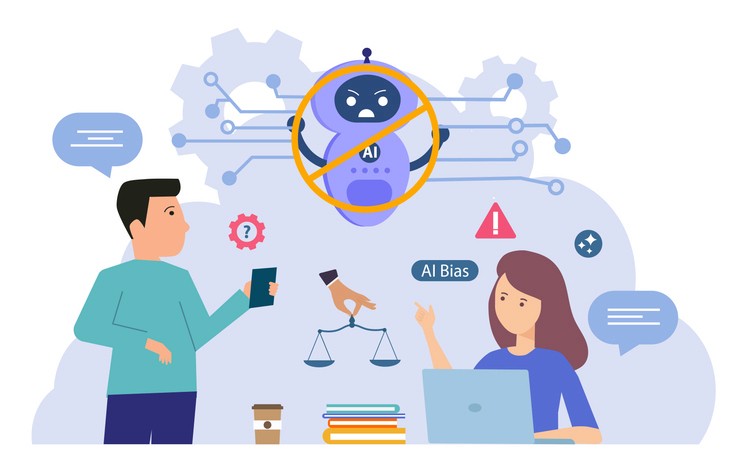
Some low-cost or free AI tools create hidden costs: compliance risks, poor candidate experience, and inconsistent data quality. Here’s how to stay aligned with best practices.
Don’t Over-Automate Candidate Communication
Robotic outreach sequences and generic follow-ups hurt your employer brand. Candidates can tell when personalized outreach is actually a mail merge. Preserve human touch for critical stages:
First outreach (make it feel personal)
Interview process scheduling confirmations
Offer conversations
Rejections for finalists who invested significant time
Protect Candidate Data
Avoid uploading sensitive candidate information into generic AI tools without checking the terms of service. Key questions:
Where is data stored?
Can it be used to train models?
Does it meet GDPR/CCPA requirements?
For recruiting software specifically built for HR, these concerns are typically addressed. For general-purpose tools like ChatGPT, be more careful with what you paste.
Address Bias Head-On
AI tools trained on historical data can amplify bias if not audited. Training data inherits societal biases, and “AI” doesn’t magically eliminate them.
Choose vendors that:
Explicitly test models for bias in scoring
Provide transparency into how recommendations are generated
Combine AI scoring with human oversight rather than fully automated decisions
Simple Governance Practices
Define which steps can be automated (screening, scheduling) vs. require human review (final decisions, offers)
Regularly audit AI-assisted recommendations for fairness and accuracy
Keep a human in the loop for any decision that affects someone’s employment
The AI interviewer shouldn’t replace the interview. It should make the interview process more efficient and less biased, not remove human judgment entirely.
Summary
AI recruiting tools in 2026 can dramatically reduce time-to-hire and recruiter workload, even for small talent teams, without requiring enterprise-level budgets. The tools exist. The pricing models have evolved. The barrier now is knowing which ones to pick and how to combine them.
“Affordable” doesn’t mean “low quality.” The right mix of free utilities, lean SaaS, and outcome-based platforms like Fonzi AI can outperform bloated stacks that cost 10x more. A 20-person startup with $200/month in tools and a Fonzi AI success fee can hire faster than a Series C company drowning in $100k of underused enterprise software.
But human judgment must stay at the center. AI should handle pattern recognition, triage, and logistics. Hiring managers and recruiters own values alignment, culture add, and final decisions. The tools that work best are the ones that make humans more effective, not the ones that try to replace them.
FAQ
What are the most affordable AI recruiting tools for small businesses and startups in 2026?
How do AI recruiting solutions help reduce time-to-hire and improve the quality of candidates?
What is the difference between a standard ATS and an AI-powered recruiting software?
Can AI recruiting tools really help eliminate bias in the hiring and screening process?
What are the key features to look for when choosing an ML and AI recruitment company for technical hiring?


