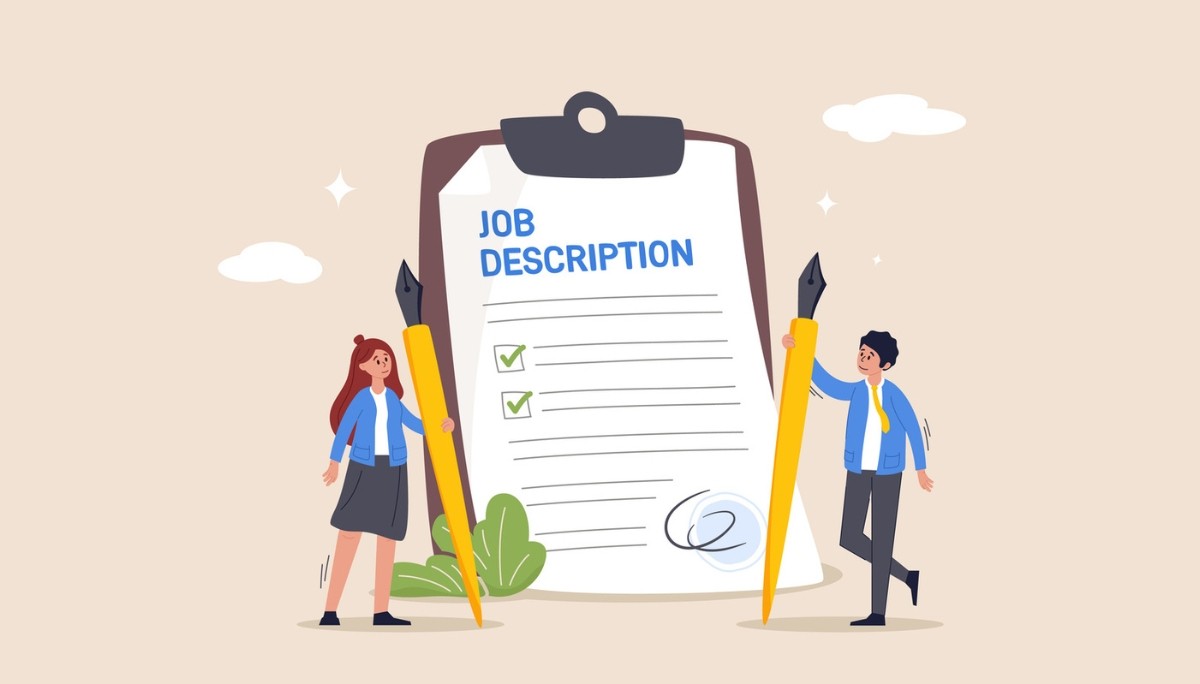
In 2026, a Series B startup spent over 60 days hiring an AI engineer, only for the candidate to decline because the role’s duties were unclear. Job titles label a role, job descriptions explain it, and duties define daily tasks and outcomes.
AI roles evolve rapidly, remote teams need clear expectations, recruiters manage high volumes, and candidates expect transparency in salary and growth. Fonzi AI uses structured, bias-audited duties and Match Day events to match top talent with high-growth companies in under 48 hours, with humans making the final decisions.
This article provides a framework, examples, templates, and guidance on using AI responsibly in hiring.
Key Takeaways
Clear, concrete job duties help hiring managers write better descriptions, evaluate candidates consistently, and speed up decisions.
Vague duties create inefficiency, as recruiters struggle to screen, candidates cannot self-select, and interviewers ask inconsistent questions.
This article provides actionable frameworks for 2026 tech hiring leaders scaling AI and engineering teams under tight timelines and budgets.
Foundations: What Is a “Professional Job Duty” and How Is It Different From Responsibilities?

A professional job duty is a specific, observable task or outcome a role is accountable for, usually written as a bullet with an action verb and measurable result, for example, “Deploy containerized ML models to production Kubernetes clusters, maintaining 99.9% uptime.”
Here’s how to differentiate the levels:
Job duty (daily or weekly task): “Review and merge 10+ pull requests per week, providing actionable code review feedback”
Job responsibility (broader ownership area): “Own frontend application reliability and developer experience”
Job objective (business outcome): “Reduce customer-facing bugs by 40% to improve retention”
These distinctions matter for several reasons in 2026 hiring norms:
Level | Purpose | Example |
Duty | Specific tasks for screening and performance evaluations | “Write and maintain dbt models for core business metrics” |
Responsibility | Defines scope of ownership for leveling | “Ensure data quality across the analytics stack” |
Objective | Aligns role to business goals | “Enable self-serve analytics for GTM teams” |
Structured job duties are essential for legal compliance, pay transparency, remote performance management, and feeding AI-powered evaluation tools. The Equal Employment Opportunity Commission and the Americans with Disabilities Act require clearly defined essential functions, and vague duties create legal risk.
The next sections provide a repeatable formula and real examples of job responsibilities for tech-heavy roles, including AI/ML, engineering, product, data, and leadership.
How to Write Strong Job Duties: A Simple Formula for Hiring Teams
Hiring managers often default to generic bullets such as “responsible for projects” or “collaborate with teams,” which do not help recruiters, job seekers, or AI tools assess fit and waste everyone’s time.
Here’s a simple formula that works:
Action Verb + Task + Tools/Context + Measurable Outcome + Timeframe
Let’s see this in action:
Weak Duty | Strong Duty |
“Responsible for machine learning projects” | “Design and deploy transformer-based models using PyTorch, reducing inference latency by 35% by Q3 2026” |
“Works with the sales team” | “Partner with the sales team to build custom demo environments, increasing deal close rates by 20%” |
Here are the high-level guidelines for writing an effective job description with strong duties:
Use present tense for current roles and past tense for resumes
Avoid unnecessary words and internal jargon, as candidates may not know your acronyms
Include metrics where possible; even ranges or targets help clarify expectations
Keep bullets single-focus, with one duty per bullet for clarity
Tie duties to team or company OKRs to connect tasks to business goals
Reference tools and tech stack to help match required skills
The next five sections provide 2026-ready job duty examples for specific roles and guidance on adapting them for job postings, resumes, and performance reviews.
Job Duty Example #1: Senior AI / Machine Learning Engineer (2026)

This role is at a Series B AI startup working on production LLM systems and real-time inference. The company is hiring via Fonzi’s Match Day, seeking candidates who can ship models to production rather than only experiment in notebooks.
Sample Job Duties
Design and deploy transformer-based models for production NLP applications, achieving 99.5% uptime SLAs
Optimize GPU utilization on Nvidia H100 clusters, reducing compute costs by 25% while maintaining inference quality
Reduce model inference latency from 200ms to under 75ms by Q3 2026 through architecture optimization and quantization
Build and maintain ML pipelines using Kubeflow and MLflow, enabling weekly model refresh cycles
Partner with product managers and data scientists to translate business requirements into technical specifications
Implement bias detection and safety checks aligned with company responsible AI policy, documenting all model decisions
Conduct code reviews for ML infrastructure, maintaining test coverage above 85%
Mentor junior ML engineers through pairing sessions and design reviews
Formatting Differences: Job Posting vs. Resume
For a job posting, group duties by ownership area such as modeling, infrastructure, and collaboration, use slightly more technical language to target expertise, and keep each bullet concise.
For a candidate’s resume, quantify all results, name the tech stack explicitly, and lead with the biggest impact, for example: “Reduced inference latency by 52% on Nvidia H100 clusters, saving $180K per year in compute costs.”
Job Duty Example #2: Full-Stack Software Engineer (Remote-First, 2026)
This role supports a global SaaS product team in 2026, collaborating asynchronously across time zones. Responsibilities emphasize documentation, autonomous work, and clear communication, which are essential for remote success.
Sample Job Duties
Build and maintain customer-facing features using TypeScript, React, and Node.js, deploying 10+ features per quarter
Design and optimize PostgreSQL schemas and queries, maintaining p99 latency under 100ms for core workflows
Own CI/CD pipeline reliability using GitHub Actions, achieving a 95%+ deployment success rate
Maintain detailed technical documentation in Notion, enabling asynchronous onboarding for new team members
Participate in async design reviews via Loom and GitHub, providing feedback within 24 business hours
Manage on-call rotations across US and EU time zones, resolving P1 incidents within a 30-minute SLA
Collaborate with product and design to scope the quarterly roadmap, balancing technical debt with feature delivery
Implement observability using Datadog, maintaining dashboards for key performance indicators
Remote-First Specific Duties
Include at least one duty that explicitly addresses async collaboration, for example: “Document all architectural decisions in ADRs within 48 hours of implementation, enabling team-wide visibility without synchronous meetings.”
Formatting for Internal vs. External Use
Internal leveling documents include more detail on scope, decision rights, and expected autonomy. Public job descriptions use slightly simplified, candidate-friendly language and avoid internal jargon while maintaining precision.
Fonzi’s Filtering Approach
Fonzi’s platform uses granular, full-stack duty descriptions to identify candidates with the right portfolio, GitHub history, and remote collaboration experience, emphasizing async communication skills in addition to coding ability.
Job Duty Example #3: Product Manager for AI Features
The growing demand in 2026 for product managers who can translate AI capabilities into user-facing value is significant. These PMs must work closely with ML engineers, understand experimentation frameworks, and avoid over-hyping or under-specifying requirements.
Sample Job Duties
Define AI feature roadmaps aligned with company OKRs, prioritizing based on model performance, user impact, and engineering feasibility
Partner with ML engineers to design experimentation frameworks, running three or more A/B tests monthly with clear success metrics
Write detailed PRDs for AI-powered features, including edge cases, failure modes, and fallback experiences
Prioritize backlog based on statistical data from user research, model accuracy metrics, and revenue impact
Own customer success metrics for AI features, targeting a 25% improvement in task completion rates
Ensure data privacy and model transparency compliance with legal and policy teams, documenting all data usage decisions
Run weekly syncs with engineering, design, and data science to unblock dependencies and align on priorities
Present findings from feature launches to leadership, translating technical results into business impact
Ethical and Legal Considerations
Include at least one duty referencing responsible AI practices, for example: “Review all AI feature releases with legal counsel to ensure compliance with data privacy regulations and model transparency requirements.”
Rewriting for Resumes
When employees or job seekers convert duties to resume bullets, emphasize shipped features, user adoption, and cross-functional leadership, for example: “Launched AI-powered recommendation engine increasing user engagement by 40% and driving $2M in incremental ARR.”
Fonzi’s Evaluation Approach
Fonzi AI evaluates product candidates against these duties using structured interview scorecards and bias-audited reviewer feedback, looking for evidence of shipped AI products rather than strategy decks.
Job Duty Example #4: Data Engineer / Analytics Engineer
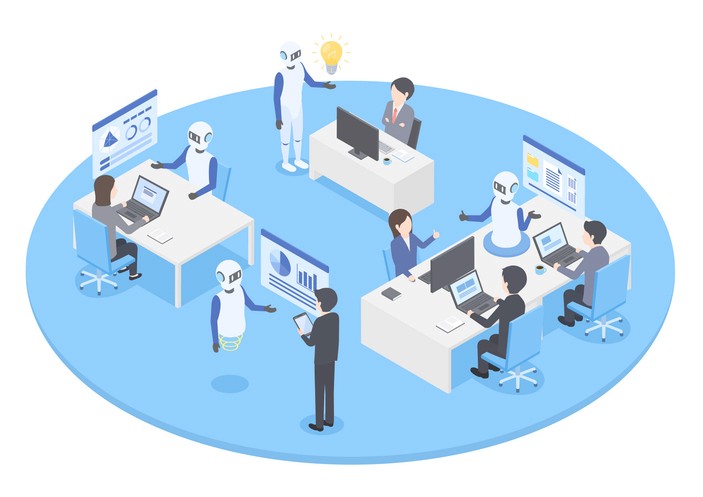
This data engineer role is at a high-growth company building analytics infrastructure to support AI, growth, and operations teams. The goal is a self-serve analytics environment where business users can answer questions without filing tickets.
Sample Job Duties
Design and maintain dbt models for core business metrics, ensuring data freshness SLAs under four hours
Build and optimize data pipelines using Airflow and Kafka, processing over 10 million events daily with 99.9% reliability
Manage Snowflake warehouse compute costs, reducing monthly spend by 30% through query optimization and resource scheduling
Implement data contracts between producer and consumer teams, reducing breaking schema changes by 80%
Monitor pipeline health using Monte Carlo or similar tools, resolving data quality issues within a two-hour SLA
Partner with analytics and operations teams to understand reporting needs and translate them into technical requirements
Document data models and lineage in a data catalog, enabling self-serve discovery for non-technical stakeholders
Support compliance and audit requirements by maintaining data retention policies and access controls
Data Quality and Governance
Include at least one duty referencing governance, for example: “Implement data quality checks using Great Expectations, maintaining a 99.5%+ pass rate on critical business metrics.”
Using Duties for Interview Design
Recruiters and the HR department can use these duties to craft interview questions aligned to real on-the-job tasks:
Duty | Interview Question |
“Optimize Snowflake compute costs” | “Walk me through a time you reduced warehouse costs. What was your approach?” |
“Implement data contracts” | “How have you handled breaking schema changes across teams?” |
“Support compliance requirements” | “Describe your experience with data retention policies and audit processes” |
Job Duty Example #5: Head of Engineering / VP Engineering
This Head of Engineering role is at a Series A–C company scaling from 10 to 60+ engineers, with a strong focus on AI initiatives. Responsibilities span strategy, hiring, and culture.
Sample Job Duties
Define the engineering org structure and career ladder, enabling clear growth paths for 60+ engineers across multiple departments
Own the engineering hiring bar, partnering with talent teams to adopt AI tools responsibly and institute structured interviews
Manage an engineering budget of $5M+, allocating resources across infrastructure, headcount, and tooling
Establish security and reliability practices, maintaining SOC 2 compliance and 99.9% uptime for customer-facing systems
Foster a culture of technical excellence through design reviews, post-mortems, and knowledge sharing
Partner with product and business leadership on an 18-month technical roadmap, balancing innovation with operational targets
Ensure diversity and inclusion in hiring pipelines, targeting 40%+ underrepresented candidates in final interview rounds
Build scalable on-call and incident management processes as the team grows, reducing MTTR by 50%
Hiring System Ownership
A critical duty for engineering leaders: “Partner with Fonzi AI and internal recruiting to run quarterly Match Day hiring events, reducing time-to-hire from 45 days to under two weeks for senior engineering roles.”
Differences from Line Manager Roles
These duties differ from an operations manager or engineering manager role:
Leadership Level | Focus Areas |
Engineering Manager | Individual feature delivery, team health, 1:1s with other employees |
Head/VP Engineering | Strategy, budgeting, cross-functional alignment, org design, hiring system |
Fonzi’s Support for Leaders
Fonzi AI supports engineering leaders by hosting Match Day hiring events, providing vetted candidates, and generating structured duty sets for new leadership roles, helping you hire the right talent faster so you can focus on building.
Comparison Table: Weak vs. Strong Job Duty Statements (and Where AI Helps)
One of the fastest ways to improve your job posting is to audit your duty statements. Below is a comparison table contrasting vague vs. specific job duty bullets for common tech roles.
Role | Weak Duty Example | Strong Duty Example | What Changed |
AI Engineer | “Work on ML projects” | “Design and deploy transformer-based models using PyTorch, reducing inference latency by 35% by Q3 2026” | Added metrics, tools, timeframe, specific outcome |
Full-Stack Engineer | “Build features” | “Ship 10+ customer-facing features per quarter using TypeScript and React, maintaining 95% deployment success rate” | Added volume, tech stack, quality metric |
Product Manager | “Manage product roadmap” | “Define AI feature roadmaps, running 3+ A/B tests monthly with clear success criteria tied to user retention” | Added specificity, experimentation, business link |
Data Engineer | “Maintain pipelines” | “Build Airflow pipelines processing 10M+ events daily with 99.9% reliability and 4-hour freshness SLA” | Added scale, reliability target, SLA |
Sales Manager | “Lead sales team” | “Lead 8-person sales team to 120% quota attainment, maintaining 98% customer satisfaction through structured account reviews” | Added team size, quota, satisfaction metric |
Customer Service Representative | “Handle customer inquiries” | “Resolve 50+ customer interactions daily at 95% satisfaction rate, reducing escalations by 30% through proactive problem solving” | Added volume, satisfaction target, outcome |
Administrative Assistant | “Support executives” | “Manage calendars for 3 VPs across multiple departments, coordinating 40+ meetings weekly with 98% on-time start rate” | Added scope, volume, quality metric |
Using AI to Build, Evaluate, and Maintain Job Duties (Without Losing Control)
Common fears among tech leaders in 2026 include losing human judgment, introducing bias, or over-automating hiring through black-box AI tools, and these concerns are valid but addressable.
How Fonzi AI Maintains Human Oversight
Fonzi AI uses multiple specialized agents:
Resume parsing agent: Extracts skills, experience, and achievements from candidate materials
Fraud detection agent: Flags inconsistencies between claimed experience and evidence, catching problematic resumes
Keyword extraction agent: Maps candidate backgrounds to specific job duties
Rubric generation agent: Creates structured evaluation criteria based on duty statements
Critically, all outputs are transparent and surfaced for human review. No black boxes.
Final Authority Stays Human
Hiring managers at Fonzi’s partner companies approve final job duty sets before Match Day to ensure alignment with real business goals, preferred qualifications, team culture, special expertise needs, and physical or environmental factors for specific roles.
Practical Advice for Adoption
Keep a single source of truth for duties that feeds job postings, interview scorecards, and performance evaluations
Review duties at least annually or when the role scope changes significantly
Use AI as a drafting assistant, not a final authority, treating suggestions like input from a junior team member
Document your job description process for legal compliance and Americans with Disabilities Act requirements
Start Small, Measure, Expand
Begin with one role, instrument the hiring process for time-to-hire, candidate quality, and offer-acceptance rate, and expand AI use only where it proves beneficial, with most teams seeing a reduction in screening time within the first quarter.
Conclusion
Professional job duty statements are essential for modern hiring, structured interviews, fair evaluations, performance reviews, and promotion decisions.
The five examples, AI/ML Engineer, Full-Stack Engineer, Product Manager, Data Engineer, and Head of Engineering, show specific tasks, measurable outcomes, and tools that clarify success for candidates.
Fonzi AI helps companies hire engineering and top AI talent in days through Match Day events, pre-vetted candidate profiles, bias-audited evaluations, and concierge recruiter support.
These examples can also be used for internal leveling guides, promotion criteria, and performance evaluations to keep expectations consistent.
FAQ
How do I write a professional description of duties for a resume to stand out to recruiters?
What is the difference between a job responsibility and a daily job duty in a job description?
Can you provide a job role example for a remote-first position in 2026?
How many bullet points should I include in a job duties description sample for a senior-level role?
Should I include AI-tool proficiency in my examples of job duties for office and tech roles?


