
In 2026, AI and ML teams face pressure from regulators and customers to ensure fairness and explainability, including requirements from the EU AI Act and New York City’s Local Law 144. Diversity hiring is now a core risk-mitigation strategy that improves product accuracy, safety, and adoption.
Fonzi AI helps startups and fast-growth tech companies build elite, diverse engineering teams through bias-audited Match Day events, pre-vetting candidates, requiring upfront salary commitments, and delivering offers within 48 hours.
This article covers the modern definition of diversity hiring, its business case, a six-step implementation framework, scalable technology, and success metrics.
Key Takeaways
Diverse AI teams are more likely to outperform homogeneous peers on innovation and profitability while reducing the risk of shipping biased models that trigger regulatory scrutiny or user backlash.
Modern diversity hiring uses structured, merit-based evaluation with standardized rubrics, skills-first assessments, and blind screening to actively remove bias without lowering technical standards.
Fonzi AI helps fast-growing tech companies hire diverse, high-caliber AI engineers in days through multi-agent AI, bias-audited workflows, upfront salary transparency, and structured Match Day events, supported by a practical six-step framework and a 90-day implementation plan.
What is Diversity Hiring in the Context of AI Teams?

Diversity hiring is a structured, merit-based recruitment process that intentionally removes bias from sourcing, screening, interviewing, and selection for AI/ML, data, and engineering roles. It is not about filling quotas or compromising on technical standards. It ensures your hiring process does not systematically exclude qualified candidates based on factors unrelated to job performance.
For AI teams specifically, diversity spans two dimensions. Demographic diversity includes gender, race, age, disability status, LGBTQ+ identity, and nationality. These perspectives matter because the populations your AI serves are diverse, and teams that reflect that diversity are more likely to anticipate how models will perform across different groups. Cognitive diversity encompasses varied domain backgrounds such as healthcare, finance, robotics, or linguistics, non-traditional education paths, and self-taught engineers. A team where everyone learned ML the same way at the same institutions will have similar blind spots, while a team with a former nurse, a physics PhD, and a bootcamp graduate approaches problems differently.
Diversity hiring differs from quota-based hiring. Candidates must still demonstrate strong experience in Python, PyTorch, distributed systems, LLM deployment, or the technical stack your roles require. The difference is that your hiring process evaluates those skills consistently across all candidates rather than filtering based on pedigree proxies.
Why diversity matters for AI teams:
Diverse teams catch bias in training data and labeling processes that homogeneous teams miss
Varied perspectives improve ethical reasoning about edge cases and potential harms
Models built by diverse teams generalize better across populations, reducing costly post-launch fixes
Fonzi AI operationalizes this definition through our marketplace:
Pre-vetting for technical excellence across AI/ML, data science, and engineering disciplines
Anonymized profiles in early screening stages to reduce pattern-matching on names or backgrounds
Bias-audited rubrics during Match Day that focus evaluation on demonstrated skills rather than pedigree signals
Diversity vs. Inclusion vs. Equity: How They Affect AI Product Outcomes
Understanding the distinction between diversity, inclusion, and equity clarifies where your organization should focus and which interventions actually drive better AI products.
Diversity is who is in the room. It refers to the demographic and cognitive composition of your team. Inclusion is who is heard. It measures whether diverse team members can influence decisions, raise concerns about model behavior, and shape product direction. Equity is who has fair access to opportunity and advancement. It ensures underrepresented engineers have the same shot at high-impact projects, promotions, and leadership roles.
Hiring processes that reflect equity include standardized interview loops where every candidate faces the same evaluation criteria, transparent levels and salary bands that do not vary based on negotiation skill or background, and structured evaluation rubrics calibrated for different role types such as ML research, MLOps, or data science.
The Business Case: The ROI of Equity for AI and Engineering Teams
Research on diverse teams driving better business outcomes is well-established. McKinsey’s 2020 and 2023 reports found that companies in the top quartile for ethnic diversity are 35 percent more likely to outperform peers on profitability. Gender-diverse executive teams yield 15 percent higher returns. Boston Consulting Group research shows diverse management teams are 19 percent more innovative and deliver 27 percent higher market performance.
For AI teams specifically, these numbers translate into measurable advantages. Diverse teams catch cultural and demographic blind spots before launch, reducing expensive pivots. Models built by homogeneous teams show higher rates of bias-related failures that require costly remediation, retraining, or public apologies. Inclusive environments where diverse employees thrive reduce turnover in a talent market where replacing a senior ML engineer costs six to twelve months of productivity. Top AI talent increasingly evaluates company culture and diversity track records when choosing offers in markets such as San Francisco, New York, London, and Bangalore.
Between 2018 and 2023, multiple companies faced public fines, regulatory scrutiny, and reputational damage from unfair automated decision systems. Amazon scrapped an AI recruiting tool in 2018 after discovering it penalized resumes containing the word “women’s.” Apple’s credit card algorithm faced investigation for offering lower credit limits to women. These incidents required engineering resources to fix and eroded customer trust.
Equity in hiring directly affects the economics of your AI team. Fair access to roles and predictable compensation improves employee lifetime value by reducing early departures. Clear expectations and structured onboarding reduce ramp times for senior ML hires. Consistent evaluation reduces bad hire costs, which can exceed 30 percent of annual salary plus the opportunity cost of unfilled roles.
Modern Hiring Challenges for AI Teams (and Why Traditional Recruiting Breaks)
The hiring environment from 2021 has been defined by explosive demand for AI talent. LLM engineers, MLOps specialists, data platform architects, and applied ML scientists are among the most sought-after roles in tech. Meanwhile, recruiting teams remain lean, competition from big tech and well-funded startups is fierce, and traditional methods cannot keep pace.

Specific pain points that undermine both speed and diversity:
Multi-month hiring cycles for senior ML roles: Average time-to-hire for AI positions exceeds 42 days, and senior roles often take 60 to 90 days from first contact to signed offer
Recruiter overwhelm: Inbound applicants frequently include inflated or fraudulent claims, forcing recruiters to spend disproportionate time on verification rather than relationship-building
Signal-to-noise problems: Differentiating genuine expertise from impressive-sounding but shallow experience in portfolios, GitHub repos, and Kaggle competitions requires domain knowledge many recruiters lack
Interview panel fatigue: Technical interviewers at high-growth companies often conduct 5 to 10 interviews per week, leading to inconsistent feedback and declining assessment quality
Additional issues compound the diversity challenge:
Poorly calibrated bar-setting for newer AI roles (prompt engineer, LLM ops, AI safety) leads to arbitrary filtering
Inconsistent feedback across interviewers creates noisy signals that disadvantage candidates who don’t pattern-match to existing team members
Over-reliance on “culture fit” assessments that often measure similarity rather than complementary perspectives
All of this undermines diversity systematically. Time-pressed teams default to referrals and pedigree (FAANG-only, certain schools) because these feel like safe shortcuts. But these shortcuts structurally narrow the funnel and exclude high-potential candidates from non-traditional backgrounds, including self-taught ML engineers, career changers from healthcare, and bootcamp graduates who have shipped production models.
The solution requires AI augmentation and structured marketplaces:
Automated screening and fraud detection that handle volume without introducing new biases
Workflow orchestration that frees recruiters to focus on candidate experience and alignment
Pre-vetted talent pools that expand access beyond traditional pipelines
How AI Can Power Fairer, Faster Diversity Hiring (Without Losing Human Oversight)
Let’s address the elephant in the room: AI in hiring can either amplify bias or reduce it. The difference lies entirely in how the system is designed, governed, and audited. Amazon’s failed recruiting tool proved that training AI on historical hiring data simply replicates historical biases. But properly designed AI systems can standardize evaluation, expand sourcing, and detect fraud, all while keeping humans in control of final decisions.
Key areas where AI helps (with appropriate controls):
High-volume resume parsing: AI can process thousands of applications and surface candidates who meet technical requirements, but feature sets must exclude proxies for protected classes such as zip codes, graduation years, and names
Skills-based matching: Algorithms can match candidate skills to role requirements more consistently than human reviewers suffering decision fatigue, but matching criteria must be regularly audited for disparate impact
Fraud and deepfake detection: As AI-generated code samples and video interviews become more sophisticated, AI tools can verify the authenticity of coding samples, projects, and video submissions
Workload automation: Scheduling, reminders, and logistics coordination free recruiters for high-touch work such as candidate relationship-building and culture conversations
Bias auditing is non-negotiable:
Regular disparate impact checks comparing pass-through rates by demographic group at each funnel stage
Transparent feature sets documented and reviewed by diverse stakeholders
Human override capability for all AI-generated recommendations
Fonzi separates concerns for better governance:
One agent validates skills and experience against role requirements
Another agent checks for fraud, inconsistencies, or red flags in profiles
Another handles role matching based on skills, preferences, and company needs
Another structures interview logistics and candidate communication
Human recruiters oversee all outputs and make final recommendations
The goal isn’t to replace human judgment. It’s to make structured, equitable processes scalable across multiple open AI and engineering roles simultaneously.
Framework: A 6-Step Diversity Hiring Strategy for AI and Engineering Roles
This framework is designed for VPs of Engineering, Heads of Data, and Talent Leaders building or scaling AI teams between 10 and 500 engineers. Whether you are at a Series A startup making your first ML hire or a growth-stage company building out an AI platform team, these steps provide a roadmap.
The six steps are: Audit, Define Goals, Redesign Sourcing, Structure Evaluation, Standardize Offers, and Measure/Iterate.
Each subsection below walks through concrete actions, timelines within the next 90 days, and examples specific to AI and ML roles. Treat the bullets as a checklist you can adapt to your organization.
Step 1: Audit Your Current AI Hiring Funnel for Equity Gaps
Before adding new tools or sourcing channels, you need to understand where your current hiring process creates barriers. A diversity audit reveals patterns you can’t see without data.
Data points to collect for AI roles:
Demographics by stage: Applied, screened, onsite, offer extended, offer accepted, broken down by gender, race/ethnicity, and other trackable dimensions
Source of hire: Percentage from referrals versus inbound versus platforms versus outbound sourcing
Time-to-hire by demographic: Does the process move faster for certain groups?
Pass-through rates by stage: Where do underrepresented candidates drop off most significantly?
Common patterns to look for in AI hiring:
Heavy reliance on referrals from homogeneous founding teams (if your first 10 engineers were Stanford CS grads, referrals perpetuate that)
Sharp drop-off of women or underrepresented minorities at technical interview stages (may indicate interviewer bias or poorly calibrated assessment)
Initial screens filtering heavily on school and company pedigree rather than demonstrated skills
Set a two-week timebox for this audit. Establish a baseline you can compare against after implementing changes.
Step 2: Define Clear, Business-Linked Diversity Goals for AI Hiring
Abstract diversity goals, such as “hire more diverse candidates,” fail because they are unmeasurable and disconnected from business outcomes. Effective goals tie directly to product and risk outcomes.
Example goals with timelines:
Increase representation of women or non-binary ML engineers from 15% to 25% within 12 months
Ensure at least two underrepresented candidates reach onsite interviews for every Staff+ AI role
Achieve 40% of AI engineering hires from non-traditional backgrounds (bootcamps, self-taught, career changers) within 18 months
These goals should focus on process commitments rather than rigid quotas:
Every job posting reviewed for inclusive language before publication
Structured rubrics documented and calibrated for all AI interview loops
Interviewer training completed by 100% of technical interviewers within 60 days
Strengthen business alignment by linking hiring goals to product fairness metrics. For example: “After diversifying the recommendation model team, demonstrate measurable improvement in fairness metrics across user segments within two quarters.”
Step 3: Redesign Sourcing for Diverse, High-Signal AI Talent
Traditional sourcing, including LinkedIn-only, network-heavy, and referral-dominated approaches, fails for diverse AI talent because it repeatedly taps the same demographic pools. The Hewlett Packard study found women apply only when meeting 100 percent of job criteria versus men at 60 percent. This means vague or aspirational job descriptions systematically exclude qualified female candidates.
Diversified sourcing tactics for AI roles:
Partner with global AI communities: Organizations focused on underrepresented groups in ML, women in data science, and regional AI meetups beyond traditional tech hubs
Leverage inclusive job boards: Platforms specifically designed to reach underrepresented candidates in technical fields
Scout open-source contributions: GitHub, Hugging Face, and Kaggle contributions reveal skills regardless of credentials
Engage bootcamps and self-taught communities: Many strong ML practitioners learned through non-traditional paths
Salary transparency and role clarity function as specific levers:
Job seekers from underrepresented groups are often skeptical of opaque compensation practices
Clear job descriptions that distinguish must-haves from nice-to-haves expand the applicant pool
Explicit DEI statements signal that your company culture values diverse perspectives
Fonzi AI’s marketplace provides immediate access to a pre-vetted diverse talent pool of AI engineers, data scientists, and full-stack builders from multiple geographies. Profiles include bias-audited skills data rather than pedigree signals.
Pilot new sourcing channels alongside Fonzi’s Match Day events for 30 to 60 days to compare incoming pipeline diversity and quality.
Step 4: Implement Structured, Skills-First Evaluation for AI Roles
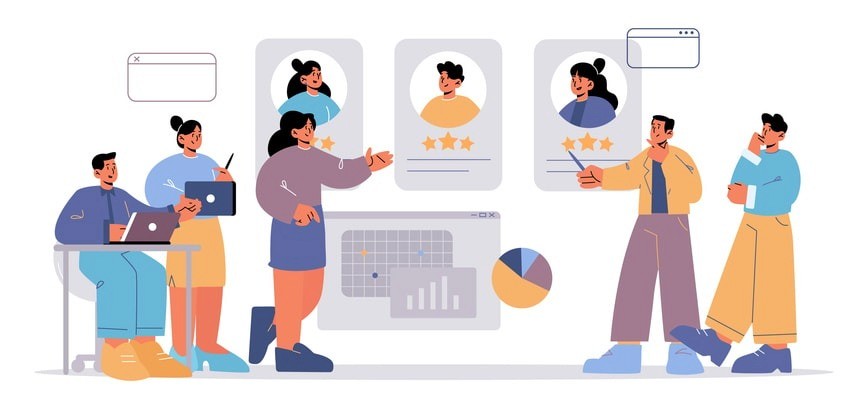
Structured evaluation is the heart of eliminating bias in technical hiring. Same questions, same rubrics, same scoring criteria across all candidates. Studies show structured interviews yield 20 to 50 percent fairer outcomes than unstructured conversations.
Elements of a structured AI hiring loop:
Role-specific competency matrices: Define what “meets bar” looks like for applied ML, research, and ML infrastructure roles
Standardized technical assessments: Take-home projects or live coding sessions with consistent evaluation criteria, not interviewer intuition
Behavioral interviews with consistent questions: Focus on collaboration, ethical reasoning, and problem-solving rather than cultural fit
Clear rubrics for each interviewer: Every evaluator knows exactly what criteria they are assessing
Separate must-have technical skills, such as deploying models to production and working with distributed systems, from nice-to-have pedigree signals, such as specific schools or companies. Over-filtering on nice-to-haves disproportionately excludes underrepresented candidates
Fonzi AI pre-screens candidates with project-based signals and structured evaluations:
Model design reviews that assess ML thinking
Code quality checks across relevant languages
Data-reasoning assessments for data science roles
Structured rubrics that reduce bias and workload on internal teams
Consider blind hiring practices early in the funnel. Anonymize resumes by removing names, schools, and photos from initial coding assessments to reduce unconscious bias before interviewers form impressions.
Step 5: Standardize Offers, Compensation, and Leveling for Equity
Inequitable offers can undermine diversity efforts even when your pipeline is strong. If underrepresented candidates systematically receive lower base salaries, less equity, or lower levels than peers with equivalent experience, you have created an equity problem that will eventually surface through attrition, Glassdoor reviews, or legal risk.
Create a clear compensation framework for AI and engineering roles:
Defined levels with explicit expectations (L3, L4, L5, Staff, Principal, etc.)
Salary bands for each level, updated annually based on market data
Equity ranges tied to level rather than negotiation outcome
Bonus structures applied consistently across demographics
Common pitfalls that create inequity:
Negotiating harder with candidates from certain demographic backgrounds
Assigning lower levels despite equivalent experience because the candidate did not push back
Offering less equity to external hires from non-traditional backgrounds
Step 6: Measure, Iterate, and Communicate Progress
Diversity hiring is an ongoing loop, not a one-time initiative. As your AI team evolves, new roles emerge, and the talent market shifts, your processes need continuous refinement.
Core diversity metrics to track:
Representation at each funnel stage: Applied, screened, onsite, offer, accepted, for critical AI roles like ML Engineer, Data Scientist, and MLOps
Pass-through rates by demographic segment: Where underrepresented candidates fall out compared to overall rates
Offer acceptance rates for underrepresented candidates: Low acceptance may indicate compensation issues, culture concerns, or interview experience problems
Retention and promotion rates over 12 to 24 months: Hiring diverse employees only matters if they stay and advance
Combine quantitative data with qualitative sources:
Candidate experience surveys sent to all interviewees (hired and not hired)
Exit interviews specifically analyzed for AI and data roles
Focus groups with underrepresented engineers on their experience
Share progress transparently with leadership and teams:
Quarterly updates on key performance indicators and trends
Honest acknowledgment of areas needing improvement
Celebration of wins to maintain momentum and avoid diversity fatigue
Comparison Table: Traditional Hiring vs. AI-Augmented, Equity-Focused Hiring
A side-by-side comparison clarifies how adopting AI and structured processes transforms diversity hiring outcomes for AI teams. This table highlights differences across key dimensions, from sourcing to candidate experience to business outcomes. Fonzi combines automation with human oversight, rather than relying on fully automated decision-making.
Dimension | Traditional Hiring | Generic AI Tools | Fonzi AI Marketplace |
Time-to-Hire for Senior ML Roles | 60-90 days average | 40-50 days (faster screening) | 48-hour Match Day offer windows |
Sourcing Approach | Referrals and top-5 schools | Broader reach but unvetted quality | Curated global AI talent pool with pre-vetted profiles |
Bias Controls | Dependent on interviewer training | Risk of algorithmic bias if unaudited | Bias-audited evaluation rubrics for AI roles |
Fraud Detection | Manual verification (time-intensive) | Basic automated checks | Built-in fraud detection on profiles, projects, and code samples |
Candidate Experience | Inconsistent, often slow feedback | Faster but impersonal | Concierge recruiter support throughout |
Salary Transparency | Often opaque until offer stage | Varies by platform | Required upfront salary commitment from companies |
Recruiter Workload | High (100+ applications per role) | Reduced screening burden | Pre-vetted candidates reduce screening 80%+ |
Diversity Outcomes | Limited by narrow sourcing | Mixed (depends on training data) | Diverse slates from global, multi-background talent pool |
How Fonzi Supports High-ROI, Diversity-Centered Hiring for AI Teams
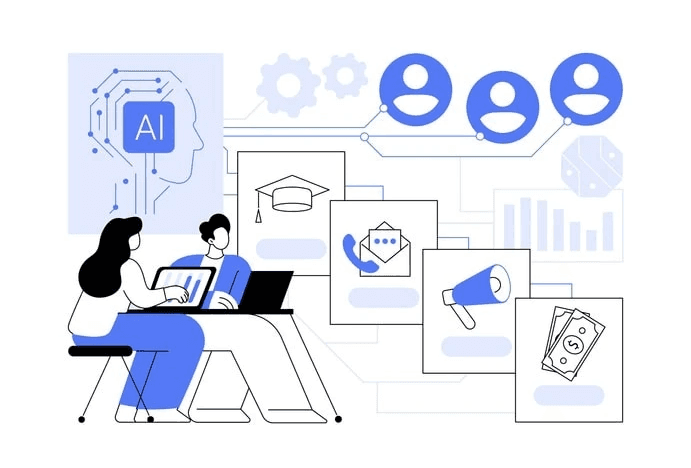
Fonzi is a curated talent marketplace purpose-built for AI, ML, and engineering hiring. We focus on three outcomes: speed (offers in days, not months), quality (elite pre-vetted candidates), and fairness (bias-audited processes that expand access).
Core product pillars:
Pre-vetted elite talent: AI/ML engineers, data scientists, full-stack developers, and specialized roles evaluated for technical excellence before entering the marketplace
Structured Match Day events: 48-hour hiring windows that create urgency and consistency, with all candidates evaluated on the same timeline
Bias-audited evaluations: Standardized rubrics, anonymized early screens, and skills-first assessments that reduce pattern-matching on pedigree
Concierge recruiter support: Human oversight throughout with interview logistics, candidate communication, and hiring manager calibration
Our multi-agent AI system handles discrete tasks with appropriate governance:
One agent validates skills and experience against role requirements
Another checks for fraud, inconsistencies, or red flags
Another handles role matching based on skills and preferences
Another structures interview logistics
Human recruiters oversee all outputs and maintain final decision authority
How Fonzi AI advances your diversity hiring goals:
Global reach beyond SF, NYC, and Seattle with candidates from emerging tech hubs worldwide
Anonymized early-stage profiles reduce bias before interviewers form impressions
Standardized rubrics focus evaluation on demonstrated skills rather than credentials
Upfront salary transparency removes negotiation-based inequity
Implementation Timeline: Rolling Out an Equity-Focused AI Hiring Process in 90 Days
This is a pragmatic, quarter-long rollout plan for talent leaders at AI-first startups and scaling tech companies. The timeline assumes you have active AI hiring needs and can dedicate focused time to process improvement.
Days 1-30: Assess and Design
Complete diversity audit of current AI hiring funnel, including demographics by stage, source of hire, and pass-through rates
Define 2-3 concrete diversity hiring goals linked to business outcomes
Map current interview loops and evaluation criteria for all open AI roles
Identify gaps in interviewer training on bias awareness and structured evaluation
Select initial roles for pilot, recommending 1-2 high-priority positions like Senior ML Engineer or Staff Data Scientist
Days 31-60: Pilot and Calibrate
Launch new sourcing channels alongside existing pipelines
Onboard Fonzi AI for pilot roles and participate in first Match Day event
Implement structured interviews with standardized rubrics for pilot roles
Train interview panels on blind hiring techniques and consistent scoring
Begin anonymizing early-stage assessments (remove names, schools from code reviews)
Document compensation framework for AI roles if not already formalized
Days 61-90: Scale and Measure
Measure funnel metrics comparing pilot roles to historical baselines
Adjust evaluation rubrics based on interviewer feedback and calibration sessions
Conduct candidate experience surveys for all interviewees
Refine compensation framework based on offer acceptance data
Plan next cycle of Match Day events with specific diversity and business goals
Present initial results to leadership with recommendations for scaling
Conclusion: Building Equitable AI Teams is a Business Decision, Not a Side Project
Diverse and equitable AI teams create fairer, more resilient models that perform better across user populations while reducing regulatory and reputational risk. Structured, bias-audited hiring processes raise the bar by evaluating candidates on skills rather than proxies, and AI-powered tools make these processes scalable without replacing human judgment. Fonzi AI provides fast, curated access to elite and diverse AI talent through structured Match Day events that compress time-to-offer, maintain technical rigor, and ensure fairness. By leveraging Fonzi AI, your team can build the AI workforce your products and business deserve, combining speed, quality, and equity in every hire.
FAQ
What is the modern definition of diversity hiring in the tech industry?
How does diversity hiring impact the performance and innovation of AI development teams?
What are the most effective strategies to eliminate unconscious bias in the recruitment process?
How can companies attract diverse talent for highly specialized roles like Machine Learning?
What tools and metrics should be used to track the success of a diversity hiring initiative?


