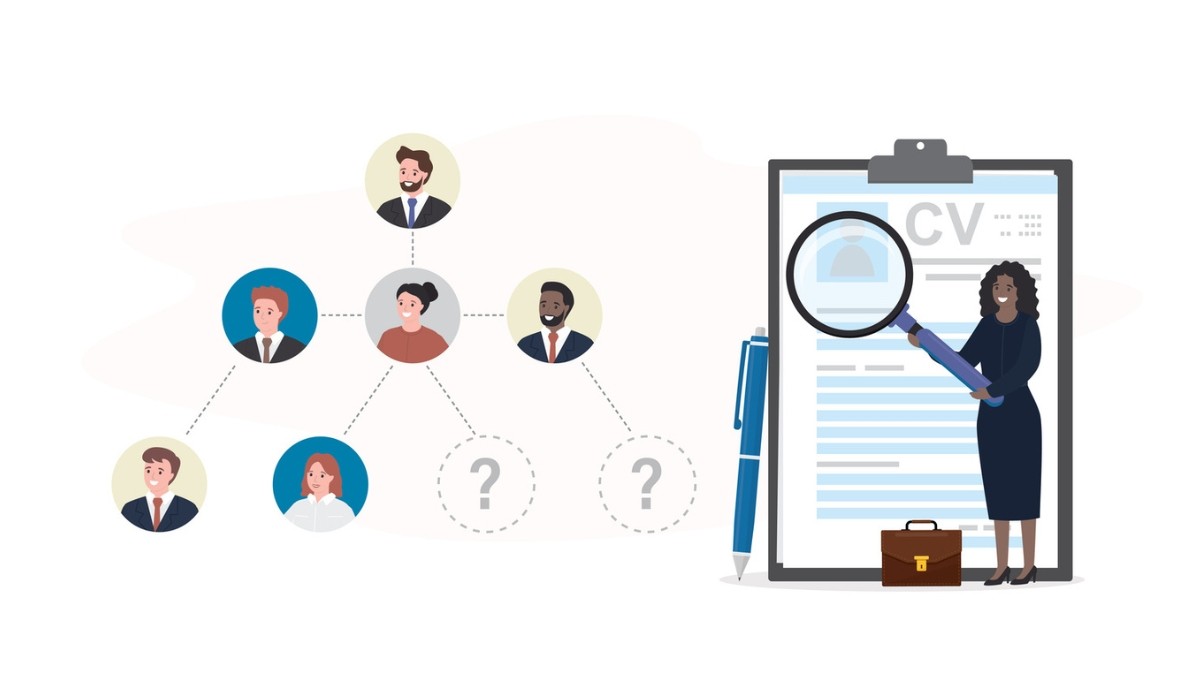
Tech roles now take 42 days to fill on average, and AI or engineering positions can stretch 60-90 days, enough for top candidates to accept elsewhere. Hiring is often fragmented: multiple sourcing channels, unstructured interviews, and inconsistent offers. A recruitment flowchart maps every step, decision, and owner to keep teams aligned and candidates engaged. Fonzi plugs in here, using multi-agent AI for screening, fraud checks, and structured evaluations, so recruiters can focus on closing top talent.
Key Takeaways
Tech hiring is bottlenecked by slow cycles, recruiter overload, inconsistent interview quality, and rising fraud in AI and engineering applications. Flowcharts make these issues visible so you can fix them.
Combining a clear recruitment flowchart with AI (like Fonzi's multi-agent system) can automate screening, detect fraud, and standardize evaluations while leaving final decisions fully in human hands.
This article includes ready-made recruitment process flowchart templates (linear, swimlane, phased, and candidate-journey views) plus a comparison table for where to apply AI vs. humans at each step.
Hiring Challenges at Fast-Growing Tech Companies
Scaling AI and engineering teams in 2026 means hiring under intense pressure with limited recruiter bandwidth. Before fixing your recruiting process, it is critical to understand where it breaks down.
The biggest issue is speed. Top ML and infrastructure engineers are often off the market within 48 hours of final interviews, while many companies still take weeks to make decisions. Slow feedback loops and long interview cycles do not just delay hiring; they remove you from consideration entirely.
At the same time, recruiters are overwhelmed. Managing dozens of roles and thousands of applications leads to burnout and rushed screening, reducing evaluation quality and limiting the time needed to engage and sell top candidates.
Inconsistency also creates risk. When hiring decisions rely on mixed approaches such as structured scorecards and gut feel, outcomes vary, and candidate experiences suffer. Poor processes spread quickly through engineering networks and damage an employer's reputation.
Finally, rising application noise makes hiring even harder. Misrepresented experience, AI-generated portfolios, and copied work mean manual screening is no longer sufficient, allowing unqualified candidates to slip through and consume valuable interview time.
What Is a Recruitment Process Flowchart?
A recruitment process flowchart is a diagram using standard symbols, rectangles for actions, diamonds for decision points, arrows for directional flow, and swimlanes for ownership, to represent each recruitment stage from start to finish.
For tech teams in 2026, the essential stages on your map include:
Planning: Headcount approval and JD development.
Sourcing: Activating referrals and marketplaces.
Screening: Filtering resumes and detecting "AI-fraud" in portfolios.
Deep-Vet: Technical coding trials and system design sessions.
The Close: Fast-tracked offer negotiation and onboarding.
The hiring process flowchart makes intangible processes visible: who does what, when, with which tools. Your applicant tracking system, coding platforms, assessment tools, and talent marketplaces like Fonzi all have their place in the visual representation.
The ROI of Mapping
A clear flowchart eliminates "dead zones" where candidates stall, standardizes the experience to protect your employer brand, and provides a data-driven reference for identifying bottlenecks. It guarantees everyone, from the recruiter to the CTO, is moving at the same pace to land top talent before the competition does.
Types of Recruitment Process Flowcharts for Tech Hiring
Different visuals suit different hiring environments. A five-person startup might start with a simple linear flowchart, while a multi-team engineering organization often needs swimlanes and phased diagrams to manage complexity.
This section introduces four common types, each with specific use cases for AI and engineering roles. You can also mix types, using a linear overall map plus a detailed swimlane for technical screen and onsite interviews, for example.
Linear Recruitment Process Flowchart
A linear flowchart moves top-to-bottom or left-to-right in a simple sequence: Requisition approved → Job posted → Applications received → Screening → Interviews → Offer → Onboarding. It works best for early-stage companies with small hiring teams and one or two decision-makers per role, offering clarity and minimal maintenance.
Limitations: The linear flowchart struggles to represent re-loops (sending a candidate back for an additional interview) or parallel steps (like reference checks and final approval happening simultaneously). For complex hiring, you'll need a more sophisticated format.
Swimlane Flowchart
Swimlanes assign steps to stakeholders: HR/Recruiting, Hiring Manager, Interview Panel, and Tools/AI. For a senior ML engineer: Recruiters source and screen, Hiring Managers review and decide, Interview Panel conducts technical rounds, and Fonzi handles initial screening and fraud checks. Swimlanes make handoffs and bottlenecks visible, keeping fast-growing teams aligned and accountable.
Phased Flowchart
Breaks hiring into macro stages: Planning, Sourcing, Screening, Evaluation, Decision & Offer, and Onboarding. Each phase can be optimized individually, e.g., reducing Screening time before improving Evaluation efficiency. Sub-flowcharts handle detailed steps like system design interviews.
Candidate Journey Flowchart
Focuses on the applicant experience: Job ad → Application → Recruiter call → Technical test → Panel interview → Feedback → Offer/onboarding. Highlights drop-off points and communication gaps. AI tools like Fonzi can automate updates and reminders, keeping candidates engaged while easing recruiter workload.
Standard Steps in a Recruitment Procedure Flow Chart
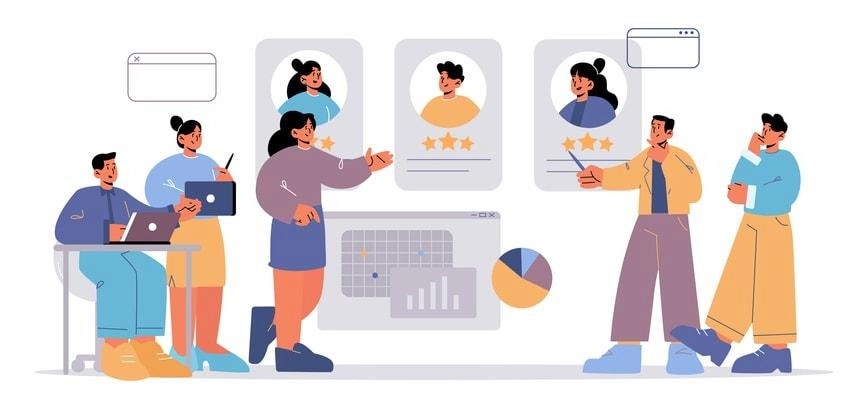
While every company is unique, most tech hiring flowcharts share recurring steps from headcount planning to onboarding. Here's what the key stages look like for a typical software or ML engineer hire:
Workforce Planning and Requisition
The process starts when a team identifies a hiring need. The hiring manager submits a request, Finance confirms the budget, and leadership approves the scope and timing, ensuring alignment before moving forward.
Job Description and Approval
The hiring manager defines the role, the recruiter refines it for market fit, and HR or Legal ensures compliance. A strong job description clearly outlines responsibilities, required skills, tech stack, and 90-day success metrics.
Sourcing
Candidates are sourced through internal mobility, referrals, job boards, niche communities, and curated platforms like Fonzi. Teams should track which channels deliver the highest quality candidates.
Screening
Applications are reviewed alongside portfolios and GitHub profiles, followed by initial recruiter screens. This stage focuses on qualification checks and filtering out low-quality or misrepresented candidates early.
Technical and Behavioral Evaluation
Candidates complete structured assessments such as coding tests, system design interviews, and behavioral rounds. Consistent scorecards ensure fair and objective evaluation across all candidates.
Decision and Offer
Interview feedback is consolidated, and hiring teams make a final decision. Offers should be prepared and extended quickly, ideally within 24 to 48 hours, to secure top talent.
Pre-Boarding and Onboarding
After acceptance, teams handle paperwork, account setup, and equipment while assigning employee onboarding support. The first 90 days should be structured with clear goals, milestones, and expectations.
Recruitment Process Flowchart for Tech Hiring
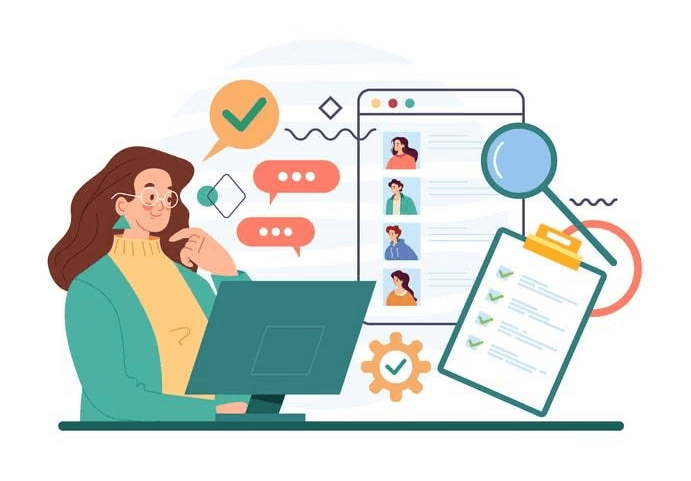
Phase 1: Planning & Definition
Move from "we need a hire" to a live role in under 72 hours.
The Action: Hiring Managers (HM) define KPIs and technical impact areas.
AI Integration: Use LLMs to benchmark 2026 market compensation and map required skills (e.g., RAG, Agentic workflows) against current industry standards.
Goal: Secure budget approval and finalize a "high-signal" job description.
Phase 2: Sourcing & Screening
Cast a wide net across internal, referral, and niche networks simultaneously.
The Funnel: LinkedIn, GitHub, and specialized communities (Rust/ML-Ops).
Automated Vetting: Use multi-agent AI to rank profiles based on public signals, like repository commits and research papers, rather than just resume keywords.
Fraud Detection: Deploy AI agents to flag "red flags" such as plagiarized code samples or AI-generated portfolios.
Phase 3: Structured Evaluation
Standardized testing helps eliminate bias in recruitment while maintaining a high technical signal.
Technical Trials: 90-minute coding or system design sessions focused on real-world production tasks, not abstract puzzles.
Behavioral Rounds: Cross-functional peer interviews to assess culture and communication.
Decision: Score candidates in your ATS within 24 hours to maintain momentum.
Phase 4: Offer & Integration
In a competitive market, speed is your best closing tool.
The Close: Deliver a verbal offer the same day as the final decision; follow with a digital contract within 24 hours.
Onboarding: Transition into a 30/60/90-day plan. Aim for a "first code contribution" within the first week to build early momentum.
AI vs. Human in the Recruitment Process

This comparison table helps hiring leaders decide where to apply AI within their flowchart template for maximum impact and minimal risk.
Recruitment Stage | Primary Owner | AI Support (Fonzi Example) | Risks of Fully Automated |
Headcount Planning | Leadership / Finance | Historical data analysis, market benchmarking | Loses strategic context and business judgment |
Job Description | Hiring Manager | Skills benchmarking, inclusive language checks | Generic roles that fail to attract the right candidates |
Sourcing | Recruiter | Profile matching, outreach personalization | Misses passive candidates who need human engagement |
Application Screening | Recruiter + AI | Resume parsing, fraud detection, qualification scoring | False positives or negatives without human review |
Technical Assessment | Interview Panel | Structured scorecards, performance comparison | Cannot assess creativity, communication, or potential |
Behavioral Evaluation | Hiring Manager | Interview note summarization | Misses cultural nuance and interpersonal dynamics |
Offer Decision | Hiring Committee | Market data, competing offer insights | Legal, equity, and judgment risks require human oversight |
Onboarding | HR + Manager | Task automation, documentation delivery | Lacks a human connection needed for successful integration |
AI is best placed where there is repeatable pattern recognition (screening 200 resumes) and high-volume coordination (scheduling across time zones). Humans remain responsible for contextual, high-consequence decisions that determine whether someone will thrive in your organization's culture.
Recruitment Process Flowchart Templates and Examples
Most hiring managers want starting points they can adapt instead of designing from a blank page. Here are three templates tailored for tech hiring:
Standard Tech Hiring Flowchart Template
Maps the entire hiring process from requisition to onboarding for roles like Software Engineer, Data Scientist, and DevOps Engineer. Includes 10-12 boxes covering planning, sourcing, screening, evaluation, offer, and onboarding with decision diamonds at each key stage.
Best for: Early-stage startups and companies with straightforward, single-track hiring processes.
Swimlane Template for Cross-Functional Engineering Hires
Features five lanes:
Talent Acquisition: Sourcing, screening, scheduling, and offer administration
Hiring Manager: Requirements definition, shortlist review, final decision
Engineering Panel: Technical interviews, coding assessments, system design
Leadership: Headcount approval, offer approval for senior positions
Fonzi/AI Tools: Automated screening, fraud detection, candidate matching
Best for: Series A-C companies with dedicated recruiting functions and multiple interviewers per role.
Candidate Journey Template
Focuses on the applicant's experience with specific SLAs:
"Acknowledge application within 24 hours."
"Provide recruiter screen outcome within 48 hours."
"Deliver final decision within 5 business days of last interview."
Maps every touchpoint from job posting discovery to offer acceptance, highlighting where candidates typically drop out.
Best for: Organizations prioritizing candidate experience and employer brand in competitive talent acquisition markets.
You can rebuild these templates in Lucidchart, Miro, Whimsical, or Figma. Fonzi's team can also share sample diagrams tailored specifically to AI and engineering hiring; just reach out.
Summary
Tech hiring in 2026 is slow, fragmented, and noisy, with roles taking 42–90 days to fill and top candidates often lost before decisions are made. A recruitment process flowchart brings clarity by mapping each step, owner, and decision point, helping teams move faster and reduce bottlenecks.
The most effective approach combines structured workflows with AI support. Platforms like Fonzi streamline sourcing, automate screening, detect fraud, and standardize evaluations, while keeping final decisions human. Different flowchart types, from simple linear to detailed swimlanes, help teams adapt the process to their needs.
By structuring each stage, from planning to offer, companies improve speed, consistency, and candidate experience. The result is a more efficient hiring system that consistently attracts and closes top talent.
FAQ
What should be included in a recruitment process flowchart?
Where can I find free recruitment flowchart templates?
How do you create an effective recruitment procedure flow chart?
What are the standard steps in a recruitment flowchart?
How can recruitment process flowcharts improve hiring efficiency?


