By 2026, more than 30 public SaaS companies will be valued at above $10B, with hundreds of private unicorns close behind. Their edge isn’t just what they sell, but how they build, ship, and scale software.
SaaS delivers cloud-based applications through subscriptions, a model that has dominated enterprise software for over a decade. With global SaaS spending projected to reach nearly $300B in 2025, the shift to the cloud has lowered costs, increased flexibility, and accelerated innovation.
This article highlights 50 billion-dollar SaaS companies and the patterns they share across product, pricing, distribution, and especially AI strategy. It also introduces Fonzi, a hiring platform that helps founders and CTOs build elite AI teams in under three weeks.
By the end, you’ll understand what top SaaS leaders do differently and how to apply those lessons by hiring the AI talent that drives real scale.
Key Takeaways
Software-as-a-service companies have fundamentally reshaped how businesses buy, deploy, and scale technology. Today, more than 100 SaaS companies have surpassed the $1 billion valuation threshold, with leaders such as Salesforce, Snowflake, and Shopify commanding market caps exceeding $ 50 billion. This article spotlights 50 of them, plus Fonzi, the fastest way to hire the AI talent behind these products.
SaaS has produced hundreds of billion-dollar companies across CRM, AI, cybersecurity, fintech, and vertical software, proving the scale of subscription businesses.
The top performers focus on one core problem, align pricing to clear customer value, and win through product-led growth before expanding.
AI is now table stakes, with leading SaaS products embedding analytics and machine learning at the core.
Elite AI engineers are the key differentiator behind top valuations at companies like Databricks, Anthropic, and CrowdStrike.
Fonzi helps founders and CTOs hire top AI talent in about three weeks and scale teams as their AI-powered SaaS grows.
The DNA of Billion-Dollar SaaS Companies

Between Salesforce’s 1999 founding and the rise of Wiz and Notion in the 2020s, billion-dollar SaaS businesses share consistent traits that separate them from the rest. Here’s what they do differently.
Relentless focus on a single wedge problem before expanding: Salesforce owned CRM. Shopify owns online stores for merchants. Snowflake owns the cloud data warehouse. Only after dominating their core did they expand.
Product-led growth and consumer-grade UX, even for B2B: The best B2B SaaS companies ship products that users actually want to use, not just what procurement approved.
Data and AI embedded as a product advantage: HubSpot uses predictive analytics for lead scoring. CrowdStrike uses AI for threat detection. Zoom uses AI for transcription and summaries.
Disciplined unit economics and efficient go-to-market motions: Top SaaS platforms achieve 120%+ net revenue retention and keep customer acquisition cost in check.
Hiring unusually strong technical talent early and protecting that bar as they scale: Engineering culture compounds over time.
AI engineering talent is now directly tied to modern SaaS defensibility. Companies like OpenAI, Anthropic, and Databricks are valued almost entirely on the quality of their AI research and engineering teams. Their moat isn’t patents or distribution, it’s people.
50 SaaS Companies Worth Billions
The 50 companies below are grouped by functional category: CRM & GTM, Finance & Fintech, Data & AI, DevTools & Cloud, Collaboration & Productivity, and Vertical/Industry SaaS.
Each category includes a curated mix of public and private leaders, plus a short note on what they do differently. Revenue, valuation, and headcount numbers use the latest available figures circa 2024–2026.
Individual company descriptions are tight 3-4 bullets each, focused on product, scale, and one distinctive strategic move. This section is designed to be a modern, data-backed reference for 2026, not a generic SaaS list from years past.
Customer Platforms, CRM, and GTM SaaS
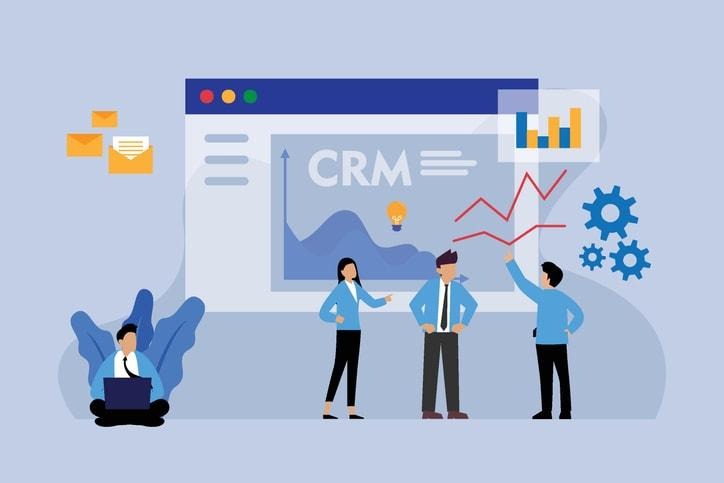
These companies dominate the customer relationship layer by becoming systems of record for revenue, marketing, and customer data.
Salesforce: Pioneered cloud CRM, integrating AI and building a broad ecosystem to lock in customers.
HubSpot: Grew through product-led strategies, using a free CRM to drive adoption across marketing, sales, and service.
ServiceNow: Expanded IT service management into enterprise workflows, achieving high retention through land-and-expand motions.
Zendesk: Stands out with consumer-grade UX and AI-driven support automation for faster adoption.
ZoomInfo: Uses proprietary GTM data and intent signals to create strong network effects and defensibility.
Finance, Payments, and Fintech SaaS

These platforms monetize transaction flows and regulated workflows with high switching costs.
Stripe: Developer-first APIs for global payments, making integration a core advantage.
Intuit: Offers tax, accounting, and marketing tools, embedding AI to streamline workflows.
Block (Square): Connects physical and digital commerce through POS, Cash App, and embedded finance.
Xero: Cloud accounting for SMBs with an API-first ecosystem for extensibility.
Bill.com: Automates AP/AR for mid-market businesses, using AI to improve invoicing and payments.
Data, Analytics, and AI-First SaaS

These companies sell data infrastructure or core AI capabilities, often commanding $10B+ valuations because they sit at the foundation of modern software.
Snowflake: Leads cloud data warehousing with usage-based, multi-cloud pricing.
Databricks: Evolved from Apache Spark into a lakehouse platform, now AI-driven and enterprise-focused.
Palantir: Combines analytics platforms with hands-on deployment for government and enterprise decision-making.
OpenAI: Provides AI infrastructure powering ChatGPT and APIs embedded across SaaS products.
Anthropic: Develops frontier AI models with a safety-first, enterprise-oriented approach.
Cohere: Builds enterprise-native LLMs optimized for retrieval and secure deployment.
All of these companies rely on elite AI engineers, making top-tier hiring a strategic advantage for modern SaaS businesses.
DevTools, Cloud, and Observability SaaS

These companies power modern SaaS by selling to engineers and scaling with developer velocity.
Atlassian: Self-serve project tools that scaled without a traditional sales team.
Datadog: Unified observability platform using a land-and-expand motion.
MongoDB: Open-source database monetized through its cloud-managed Atlas service.
GitHub: Default developer platform fueled by network effects and integrated workflows.
GitLab: All-in-one DevOps platform replacing fragmented toolchains.
Collaboration, Productivity, and Work Management SaaS

Post-2020, collaboration tools became essential, with multibillion-dollar valuations driven by network effects and daily usage.
Microsoft 365: Bundled Office, Teams, and Copilot AI create high switching costs.
Google Workspace: Fast, real-time collaboration across Docs, Sheets, and Meet.
Zoom: Frictionless video adoption with AI meeting assistants.
Slack: Consumer-style messaging driving organic growth, now part of Salesforce.
Notion: Flexible workspace replacing docs, wikis, and project management.
monday.com & Asana: Customizable work management for teams at scale.
Canva: AI-powered design tools democratizing creativity for millions.
Vertical and Industry-Specific SaaS

Vertical SaaS focuses on industries like healthcare, logistics, construction, and education, building deep expertise and regulatory moats.
Veeva Systems: Life sciences CRM and clinical solutions with strong compliance-driven switching costs.
Samsara: IoT and fleet management platform with AI-powered telematics for operations and safety.
Procore: Construction management SaaS owns the end-to-end project lifecycle.
Veracyte: Genomic diagnostics and precision medicine software for healthcare decision support.
Coursera: Education platform leveraging university partnerships to create a unique content moat.
AI increasingly powers forecasting, risk scoring, and decision support, raising the demand for elite AI engineering talent.
What These Billion-Dollar SaaS Companies Do Differently
Beyond subscription revenue, the world’s most valuable SaaS companies follow consistent strategies: they obsess over a core customer segment, choose pricing that scales with value, and use product-led growth and virality to reduce acquisition costs. Many build platforms rather than point solutions, extending their products through partner ecosystems, while embedding AI natively into core workflows to enhance user value.
Organizational practices compound these advantages: cross-functional squads, rapid experimentation, and remote-first cultures attract top global talent. Executing these patterns requires elite engineers and data scientists, especially for AI integration, complex systems, and scalable architecture, making talent strategy as critical as product or go-to-market execution.
How Top SaaS Companies Price, Grow, and Use AI (With Examples)
This section unpacks three levers: pricing, growth motion, and AI strategy, using concrete examples from the 50 companies. Benchmark your own SaaS against these patterns.
Pricing Models
Model | Examples | When It Works |
Salesforce, HubSpot, Zoom, Slack | Value scales with users; predictable for buyers | |
Snowflake, Datadog, Stripe, OpenAI | Value scales with consumption; aligns cost with outcomes | |
Tiered freemium | Slack, Notion, Canva, Dropbox | Consumer-like adoption; conversion to paid via feature limits |
Hybrid | Snowflake (minimum + usage), HubSpot (seats + contacts) | Captures both predictability and upside |
Growth Motions
Sales-led enterprise: ServiceNow and Veeva deploy dedicated account teams for large deals. This works for complex products with high contract values and long sales cycles.
Product-led self-serve: Slack, Canva, and Notion let users sign up and start using them immediately. Conversion happens through feature gates and team adoption.
Ecosystem-driven: Shopify’s app store and Stripe’s partner program let third parties drive customer acquisition. This amplifies marketing strategies without linear headcount growth.
Channel and VAR heavy: NetSuite and Guidewire use implementation partners for distribution. This extends reach into industries where direct sales would be inefficient.
Fonzi: The Fastest Way to Hire Elite AI Engineers for Your SaaS

Fonzi is an end-to-end hiring platform for AI engineers, ML scientists, and AI-savvy full-stack developers. Designed for founders and CTOs, it helps SaaS startups and enterprises build world-class AI teams in under 3 weeks.
Why It Works
Deep technical vetting by AI experts, not keyword recruiters
Focused on AI/ML roles for high-quality candidates
Standardized, transparent process keeps top talent engaged
How It Works
Define the role, source from a vetted network, run structured technical evaluations, get a curated shortlist, and rely on Fonzi to manage final rounds and offers. From first hire to scaling thousands, Fonzi delivers faster hires, consistent quality, and a superior candidate experience.
Why Billion-Dollar SaaS Companies Invest Heavily in AI Talent
Top SaaS companies win through AI, personalization, automation, forecasting, and intelligent workflows, but that depends entirely on elite engineers. OpenAI, Anthropic, Snowflake, and Databricks show that without top-tier AI talent, the product and value vanish.
AI engineers are rare, combining deep ML, software skills, and product sense, and traditional hiring channels struggle to find them. A bad hire is costly: wasted compute, fragile systems, and expensive rewrites. Building a strategic AI hiring function, like Fonzi, is now as critical as sales or product for scaling a SaaS business.
Summary
The next $50B SaaS giants won't just be "in the cloud", they’ll be AI-native. While legends like Salesforce and Shopify mastered the subscription, the new winners are building autonomous platforms where AI isn't just a feature, but the core engine of value. In this landscape, your competitive moat is no longer just your code; it’s the elite engineers who can actually put AI into production.
The bottleneck to this future is the 12-week hiring drag. Fonzi breaks it, placing top 1% AI talent into your team in just three weeks. By replacing outdated resume-matching with high-signal, production-ready vetting, we help you hire the builders who turn AI hype into a billion-dollar reality. Stop hunting for talent and start shipping with Fonzi.
FAQ
What are the most successful SaaS companies in 2026?
What makes popular SaaS companies stand out from competitors?
How do SaaS companies use AI to gain a competitive edge?
How do top SaaS businesses structure their pricing and growth?
What industries have the most successful SaaS companies?