The internet is drowning in AI-generated content that looks polished but says very little. Feeds are packed with recycled takes, fake stories, and surface-level advice churned out for clicks and SEO. This flood of “AI slop” pollutes data, misleads customers, and makes it harder to spot real expertise. For founders and hiring teams, cutting through this noise has become critical, especially when identifying truly skilled AI engineers.
Key Takeaways
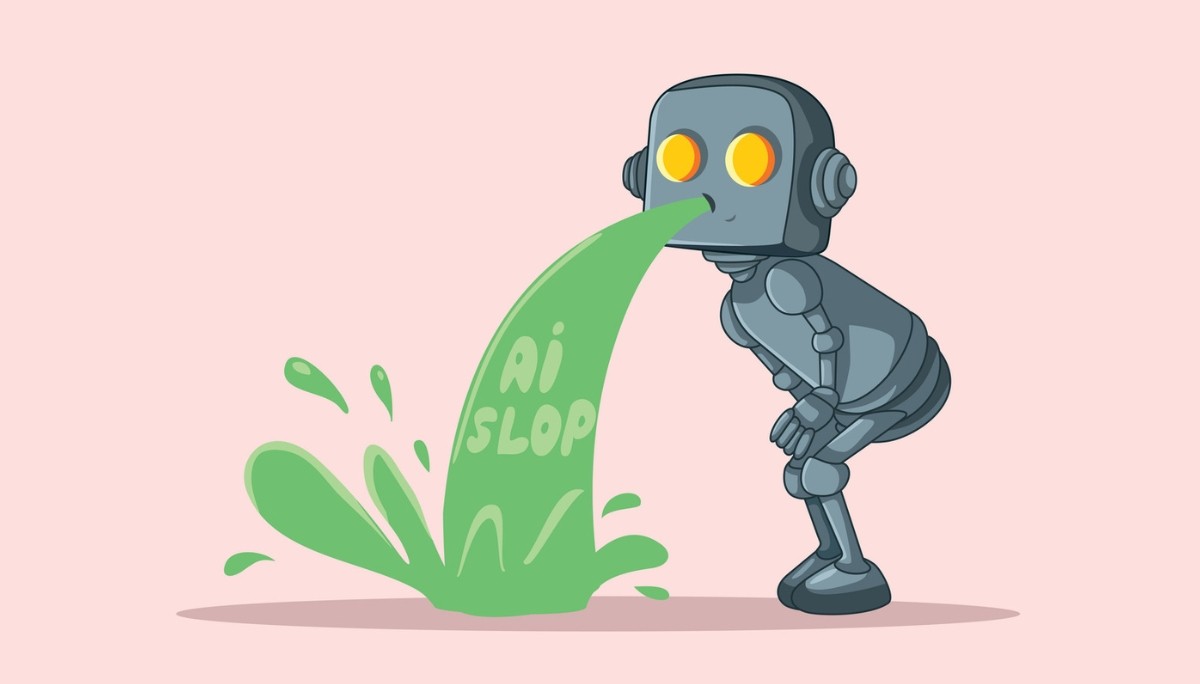
AI slop refers to low-quality, high-volume AI-generated content that clutters social media feeds, search results, and even hiring pipelines, distinct from “hallucinations,” which are specific factual errors inside otherwise coherent outputs.
In 2026, slop has spread everywhere: viral AI-generated image posts on Facebook, Sora-style slop videos on YouTube, generic SEO articles, and even fake candidate profiles flooding recruiting workflows.
The business costs are real: eroded brand trust, SEO penalties from search engines cracking down on thin content, and hiring pipelines clogged with noise that makes finding elite engineers harder.
Fonzi AI operates as a slop-free, curated talent marketplace, using bias-audited evaluations, fraud detection, and human vetting to guarantee both candidates and companies avoid digital junk in the hiring process.
This guide provides practical tools: visual and textual cues to detect slop, a comparison table distinguishing junk from quality, and a checklist that founders and hiring managers can apply immediately.
What Does “AI Slop” Actually Mean?
The word “slop” has a history. It traditionally referred to cheap animal feed or low-quality mass-produced food, the idea of something that fills the stomach but offers no real nutrition. Now, it’s applied to the digital world.

AI slop means:
Low-quality, high-volume content generated by AI systems
Repetitive, shallow, and often misleading or visually uncanny outputs
Material created primarily for engagement metrics rather than genuine value
The term gained widespread traction by mid-2024 across X, Reddit, and TikTok. Users started calling out obviously AI-generated images, the ones with extra fingers, impossible reflections, or uncanny facial expressions, and boilerplate blog posts that read like they were spit out by a prompt generator in thirty seconds.
Here’s the critical distinction: AI slop vs. hallucinations.
A hallucination is when an AI model fabricates a specific false fact or detail, like inventing a non-existent research paper, citing a fake statistic, or claiming Martin Luther King Jr. said something he never said. The output might look polished and coherent, but there’s a verifiable lie embedded in it.
Slop, on the other hand, is about the overall junky nature and purpose of the content. It’s not necessarily lying; it’s just vacuous. Its content exists to chase clicks, fill SEO gaps, or generate ad impressions. A Sora-style ai generated video might be technically impressive (high-res, smooth motion), but if it’s just an endlessly looping Disney-style mashup with no point, that’s slop.
The world is now flooded with content that’s polished on the surface but hollow underneath. That’s the new challenge.
Where AI Slop Shows Up in 2026
AI slop has moved from a niche novelty in 2023 to a dominant layer across the internet. By 2026, it’s everywhere, not just on social platforms, but in search results, workplace tools, and even your hiring pipeline.
Social Platforms
Social media is ground zero. Here’s what you’ll find:
Viral AI-generated video clips: Zombie soccer matches, endlessly looping surreal clips, Disney-style mashups that spread across TikTok and YouTube without any original art or human creativity involved
“Feel-good” fake images: Invented charity scenes, photos of soldiers reuniting with families that never existed, AI-created images of Martin Luther King Jr. in contexts that never happened, designed to trigger shares
Pseudo-inspirational quote posts: Images of sunsets with text attributed to famous figures who never said those words
Search and SEO
Content farms have weaponized generative AI. The pattern:
Thousands of long-form articles generated on topics like “best AI tools for startups.”
90% identical phrasing across competing sites
Thin, generic advice that fails to answer real user questions
Sites optimized for virality rather than utility
Google and other search engines have rolled out updates targeting “scaled content abuse,” but the arms race continues. Many report that low-quality content still clogs results for even specific technical queries.
E-commerce and Reviews
Online content on shopping sites is increasingly synthetic:
AI-written product descriptions with repetitive phrases
Fake five-star reviews that contradict actual product details
Generic listings that could apply to any competitor’s product
Workplace and B2B
Researchers have identified a phenomenon called “workslop”:
Auto-generated newsletters and slide decks pasted verbatim from AI tools
Sales outreach emails that misname the recipient’s company or skills
Reports and analysis documents filled with filler that sounds professional but says nothing
Talent and Hiring
This is where so many people in tech leadership feel the pain directly:
AI-written resumes with identical phrasing (“results-driven AI engineer passionate about innovation”)
Generic GitHub READMEs auto-generated without real project details
Fabricated or heavily embellished portfolio case studies
Outreach messages that reference the wrong skills or experience
The result? Hiring managers drown in noisy applications while serious candidates become less responsive to what feels like automated, impersonal recruiting.
AI Slop vs. High-Quality AI Content

Not all AI content is slop. Many teams, including Fonzi AI, rely on artificial intelligence responsibly for code assistance, research, and writing. The difference is human expertise, fact-checking, and clear ownership.
Here’s how to distinguish slop from quality:
Aspect | AI Slop | High-Quality AI-Assisted Content | Why It Matters for Startups/Hiring |
Intent | Optimized for clicks, volume, or SEO gaming | Optimized for user insight, long-term trust, and real value | Slop attracts low-intent clicks; quality builds reputation |
Effort | Copy-paste prompts, no editing, published verbatim | Expert review, editing, and domain knowledge layered in | Slop is cheap but disposable; quality compounds over time |
Accuracy | Unverified, often contains hallucinated facts | Sources cited, cross-checked, especially for dates and metrics | Slop spreads misinformation; quality protects your brand |
Attribution | Hides or fakes sources, vague “studies show” claims | Transparent about data, authors, and AI tools used | Slop erodes trust; quality stands up to scrutiny |
Specificity | Generic advice (“leverage AI for growth”) | Concrete examples, named tools, and real metrics | Slop is interchangeable; quality is quotable |
Impact on Brand | Makes a company look generic or spammy | Differentiates the brand, attracts press and partners | Slop hurts SEO and reputation; quality drives inbound |
Impact on Hiring | Attracts low-intent applicants, generic profiles | Draws serious engineers, provides clear signals | Slop wastes recruiter time; quality helps close hires faster |
Longevity | Quickly outdated, no update cadence | Refreshed with new data, remains relevant | Slop decays; quality keeps ranking and earning trust |
Why AI Slop Is a Real Problem for Brand Trust and SEO in 2026
By 2026, search engines and users alike are overwhelmed by the flood of AI-generated content. Google, OpenAI Search, and Perplexity have rolled out anti-slop ranking updates and authenticity signals. But the damage is ongoing.
Brand Trust Risks
Users can increasingly spot AI slop and openly call out brands whose content looks generic or inaccurate. When blogs or visuals feel machine-generated, credibility drops quickly, and customer trust erodes.
SEO Impact
Search engines now penalize sites that publish low-quality AI content at scale. Even strong pages can lose visibility if they live alongside thin, low-engagement content.
Real World Patterns
Platforms across the web have tightened rules to fight AI spam, from magazines rejecting synthetic submissions to Pinterest and Wikipedia limiting AI-generated content after user backlash.
Data Ecosystem Pollution
Training models on AI-generated content creates feedback loops that degrade accuracy over time. This “model collapse” makes future systems less reliable as errors compound.
The Hiring Connection
Generic, AI-written job posts and employer branding are easy for senior talent to spot. When hiring content lacks specificity and substance, it signals weak standards and drives strong candidates away.
How AI Slop Creeps into Hiring: Resumes, Outreach, and Fake Signals

The same forces flooding social media feeds are now flooding recruiting workflows. Auto-generated resumes, templated outreach, and even entirely synthetic candidate profiles are becoming harder to distinguish from legitimate applications.
AI-Written Résumés
Telltale signs include repeated, generic phrasing across multiple candidates, unrealistically broad skill lists that span many frameworks and tools, and bullet points that avoid concrete metrics, projects, or measurable impact. The writing is often perfectly structured and grammatically flawless, but lacks personality, specificity, or any clear signal of real hands-on experience.
Generic Employer Branding
On the company side, career pages and LinkedIn posts increasingly read like ChatGPT defaults:
“We are a dynamic, fast-paced environment empowering innovation.”
“Join our world-class team of passionate technologists."
“Competitive salary and benefits” with no specifics
When every startup sounds the same, candidates can’t tell who’s serious and who’s just filling a job board.
Fake or Low-Signal Portfolios
GitHub and portfolio sites are filled with:
Repositories with auto-generated READMEs that describe the project in generic terms
Copy-pasted tutorial code with no original commits
AI-generated case studies with no process notes, commit history, or evidence of real engineering work
Photos and images that look polished but reveal nothing about actual capabilities
How Fonzi AI Stays Slop-Free in a Slop-Heavy Hiring World
Fonzi AI is a curated, human-led marketplace for elite AI and software engineers. We built it specifically to reduce noise, fraud, and slop in technical hiring.
Here’s how the platform works:
Match Day: Structured Hiring Events
Instead of endless back-and-forth, Fonzi uses a structured event format called Match Day:
Pre-vetted candidates and committed employers meet within a tight time window
Offers typically happen within 48 hours of each Match Day event
Most completed hires close within approximately 3 weeks
This structure eliminates the slow-motion chaos of traditional recruiting, where candidates ghost, companies delay, and everyone’s time gets wasted.
Fonzi AI cuts through hiring noise by pairing real human judgment with rigorous technical vetting. Every candidate is reviewed beyond keywords, using bias-audited rubrics, hands-on assessments, and deep dives into real GitHub work to filter out generic or synthetic profiles. Salary bands are set upfront, replacing vague promises with real transparency, while dedicated recruiters handle interviews and communication with a personal, human touch.
Practical Checklist: How to Spot AI Slop in the Wild

Whether you’re evaluating articles, video clips, résumés, or social posts, this checklist will help you filter out the noise and focus on the signal.
Textual Signs
Repetitive phrasing across multiple pages or profiles
Overuse of clichés: “revolutionizing,” “unlocking the power of AI,” “cutting-edge solutions,” with no concrete details
Vague claims without dates, metrics, or named tools (“increased efficiency significantly”)
Filler intros: “In today’s rapidly evolving landscape…” or “When it comes to…”
Monotonous sentence structures that feel formulaic
Visual and Video Signs
Anatomical glitches: extra fingers, misaligned eyes, impossible shadows
Over-smooth motion in videos, physics-defying action, or weird looping artifacts
Uncanny expressions: faces that look almost right but not quite human
Watermarks or signature styles from known AI models (if visible)
Surreal compositions: clips that look like they could happen in any velvet sundown dreamscape but make no logical sense
Behavioral and Context Signs
Accounts posting 24/7 at high volume with no breaks
Dozens of nearly identical posts across platforms
Profiles with stock-photo avatars and little to no personal history
Comments that don’t address the actual content of the post
Hiring-Specific Signs
Résumés with an identical bullet structure as generic templates
LinkedIn profiles were completely rewritten in 2026 with suspiciously “perfect” language but missing older activity
Portfolios that are static image dumps with no accompanying code, process notes, or commit history
Cover letters that could apply to any company without changing a word
Summary
AI slop is now a permanent part of the internet, showing up across social feeds, search results, and hiring pipelines. In a landscape flooded with low-quality content, the teams that stand out are the ones that know how to recognize it and refuse to rely on it. The answer isn’t rejecting AI, it’s using it with intention, demanding accuracy, specificity, and clear human ownership in every piece of content, communication, and hiring decision.
Fonzi AI exists as a curated, slop-free marketplace for elite AI, ML, and software engineers. We combine rigorous human vetting with smart automations to keep noise and fraud out, so you can focus on building, not filtering.
For founders and CTOs: If you’re tired of sifting through generic applications and want to hire vetted AI engineers in under 3 weeks, book an intro call or apply to join the next Match Day.
For engineers: Apply to Fonzi AI for free. Get help rebuilding your resume, and access high-signal roles at AI startups and high-growth tech companies where your work matters.
The internet is full of slop. Your hiring pipeline doesn’t have to be.
FAQ
What is the literal meaning of “AI slop” and how does it differ from a “hallucination”?
What are the most common examples of AI slop found on social media and search engines today?
Why is “digital junk” or slop becoming a major problem for brand trust and SEO in 2026?
Can you provide a checklist of “telltale signs” to help users identify AI-generated slop?
What are “digital tar pits” and other things that can “scare” or deter AI slop bots?