
The AI boom that began in 2023 has only intensified, driving unprecedented demand for engineers who can build, deploy, and scale AI and machine learning systems. Yet many hiring teams still operate reactively, posting roles, sifting through hundreds of unqualified applicants, and often losing top talent to faster-moving competitors. Today’s most competitive teams treat hiring like a supply chain, forecasting needs, nurturing candidate relationships, and leveraging AI to manage volume while keeping human oversight. Fonzi AI addresses this reality with a curated talent marketplace for AI, ML, full-stack, backend, frontend, and data engineering roles, using structured Match Days to provide pre-vetted candidates, transparent salary ranges, and offers often extended within 48 hours. This article explores why traditional hiring fails, what a modern AI talent pipeline looks like, and practical steps to build a sustainable pipeline starting this quarter.
Key Takeaways
Just-in-time hiring is costly, with reactive recruitment increasing cost-per-hire and extending time-to-fill beyond 60 days for senior AI and engineering roles.
Strategic talent pipelines maintain warm, pre-qualified candidate pools for forecasted roles, especially for AI, ML, and staff-level engineering positions that often sit open for months.
AI-driven tools can automate screening and evaluation while keeping humans accountable, and Fonzi AI’s Match Day compresses hiring into 48 hours with pre-vetted candidates, salary transparency, and recruiter support.
From Just‑in‑Time Hiring to Continuous Talent Pipeline Management
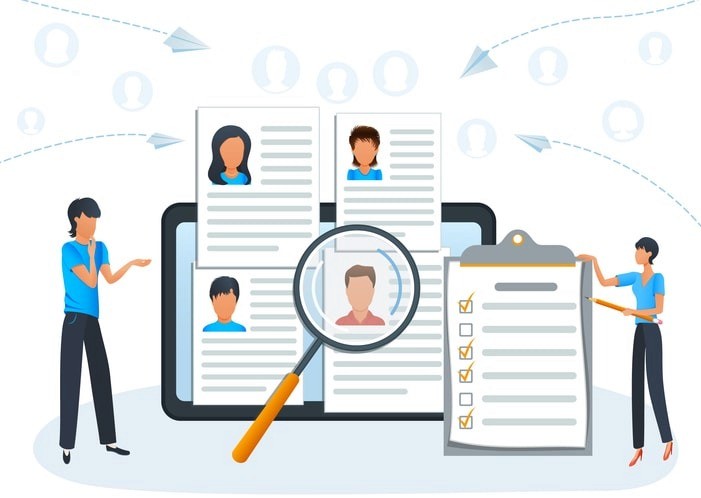
Picture two Series C AI startups, both looking to hire senior ML engineers. Company A waits for budget approval, posts the role, and spends the next 10 weeks sifting through 400+ applications, 75 percent of which are unqualified. Company B opens the same role but fills it in 18 days because they had been nurturing a candidate pipeline for six months. Same talent shortages. Same competitive job market. Wildly different outcomes.
A 2026 talent pipeline refers to a curated set of pre-engaged, pre-qualified candidates, both internal and external, mapped to specific future roles. This is not a static spreadsheet of names. It is a dynamic, role-specific cohort of skilled candidates who have been warmed through ongoing communication, skill assessment, and relationship-building. For AI/ML and engineering teams, this typically means pipelines organized by role family such as LLM engineers, ML infrastructure, data platform, and full-stack, as well as by seniority tier, critical skill tags, and compensation brackets.
It helps to distinguish related concepts. A talent pool is broader, including anyone you have ever touched, often a database of thousands with minimal engagement. A talent pipeline is narrower and warmer, consisting of qualified individuals relevant to specific positions who have been vetted and nurtured. A talent community is broader still and refers to your employer brand audience in Slack groups, newsletters, or industry events.
When you have a healthy candidate pipeline, recruiter behavior changes fundamentally. Instead of sending 200 cold outreaches per role, your team has relationship-based conversations with people who already know your company. Instead of paying agency fees when in-house teams cannot keep up, you are drawing from a steady stream of pre-qualified talent.
2026 Reality Check: Why Just‑in‑Time Hiring is Costing You
Recruiter hours on unqualified applicants. That is hundreds of hours per quarter spent on people who were never going to get hired.
Agency fees when internal teams cannot keep up. When recruiters are drowning in volume, companies turn to external agencies charging 20 to 25 percent of first-year salary. For a $200,000 senior ML engineer, that is $40,000 to $50,000 per hire.
Engineering time lost to poor-fit interviews. Every interview loop with an unqualified candidate costs your engineering team four to eight hours of productive work. Multiply that across a dozen bad-fit interviews, and you have lost a full sprint.
Opportunity cost of delayed features. A senior ML engineer role sitting open for 90 days does not just cost money. It delays product launches, slows iteration, and creates technical debt as existing engineers stretch thin.
Beyond the numbers, there are qualitative costs that compound over time. A disorganized recruitment process damages your employer brand. Candidates talk, and top talent avoids companies known for slow, chaotic hiring. Candidate frustration with slow communication means your best prospects drop out mid-process. Internal stakeholder fatigue sets in when hiring managers conduct the same brief interview five times for candidates who should not have made it past screening.
What a Modern Talent Pipeline Looks Like for AI & Engineering Teams
In 2026, the most effective talent pipelines are role-specific and dynamic. They are not Excel files gathering dust in a shared drive. They are living systems that map future roles to current candidates with clear stages, SLAs, and engagement cadences.
For AI/ML, data, and full-stack engineering pipelines, key components include:
Role families: LLM engineers, ML infrastructure, data platform, backend, frontend, full-stack, DevOps/MLOps
Seniority tiers: Mid-level (3-5 years), senior (5-8 years), staff+ (8+ years), leadership
Critical skill tags: PyTorch, TensorFlow, LangChain, CUDA, Kubernetes, distributed systems, RAG architectures
Geographic/time-zone preferences: Remote-first, hybrid in specific metros, async-compatible
Compensation brackets: Aligned to your budget before candidates enter the pipeline
A strong talent pipeline includes both internal and external elements. On the internal side, you are tracking high-potential engineers ready for stretch assignments, staff+ ICs with leadership potential, and existing employees interested in career pathways to adjacent roles.
On the external side, you are maintaining relationships with previously engaged silver-medalist candidates, community contributors active in open-source projects or industry conferences, and referrals from your network.
Pipeline stages should be clearly defined with corresponding expectations:
Identified: You have sourced them, but no relationship exists yet
Warmed: Initial outreach completed, candidate has expressed some interest
Pre-vetted: Skill assessment completed, fraud checks passed, aligned to specific roles
Ready-to-interview: Candidate is actively interested and available within 30 days
Each stage determines the expected SLA and personalized communication cadence. Identified candidates might receive quarterly check-ins. Pre-vetted candidates get notified within 24 hours when a matching role opens.
Just‑in‑Time Hiring vs. 2026 Talent Pipeline Model
The following table summarizes operational differences between reactive hiring and a pipeline-led model integrated with AI. If you’re evaluating whether to shift your hiring process, these dimensions represent the biggest areas of impact.
Dimension | Just‑in‑Time Hiring | Pipeline-Based Hiring with AI (Fonzi AI) |
Trigger for Hiring | Role opens after budget sign-off; sourcing starts from scratch | Role forecasted 90 days in advance; candidates pre-matched before approval |
Candidate Source | Job boards, cold outreach, reactive inbound applications | Pre-vetted pipeline of passive candidates, Match Day alumni, internal talent |
Screening & Verification | Manual resume review; 75% unqualified; fraud detection rare | AI-powered screening with fraud detection; bias-audited evaluations; only high quality candidates reviewed |
Time-to-Offer | 45-90 days for senior AI/ML roles | 20-30 days typical; 48 hours via Match Day events |
Recruiter Workload | High volume, low signal; burnout common; 40+ hours/week on admin | AI handles 70-90% of volume tasks; recruiters focus on relationships and strategy |
Candidate Experience | Slow communication; unclear timelines; frustration and drop-off | Salary transparency upfront; structured process; offers within defined windows |
Cost-per-Hire | $20K-$40K including agency fees and internal costs | $10K-$15K with 18% success fee model; no upfront costs |
Data & Insights | Limited visibility; decisions based on gut feel | Dashboards showing pipeline velocity, source effectiveness, bias audits; data driven decisions |
How AI Actually Fits Into Pipeline Management (Without Losing Control)
One of the most common fears among business leaders is that AI will either replace recruiters entirely or make hiring decisions that humans cannot understand or override. Both fears are misplaced, at least when AI is implemented correctly.
The concept of multi-agent AI is simpler than it sounds. Instead of one monolithic system doing everything, specialized AI agents handle different tasks under recruiter supervision. One agent parses resumes and GitHub profiles. Another flags inconsistencies or potential fraud, which is prevalent in 15 to 20 percent of tech resumes according to industry data. A third generates structured scorecards based on role competencies. A fourth summarizes interview feedback across panels. Each agent is purpose-built, auditable, and supervised.
Here is what AI is well-suited for in talent pipeline management:
Parsing and synthesizing candidate profiles across resumes, GitHub, LinkedIn, and ArXiv to surface relevant experience
Flagging inconsistencies or potential fraud through behavioral analysis and verification algorithms
Auto-generating structured scorecards based on predefined role competencies, ensuring consistent evaluation
Summarizing interview feedback across multiple panels to highlight consensus and divergence
Proposing candidate rankings based on rubric scores, not gut feel or pedigree bias
Here is what AI does not do when implemented responsibly: make final hiring decisions, assess culture fit through unstructured intuition, or override human judgment. Recruiters and hiring managers remain accountable. AI surfaces information and handles volume; humans make decisions.
Fonzi AI Match Day: A Live Talent Pipeline for AI & Engineering Roles
Imagine compressing what usually takes eight to twelve weeks of hiring into a single 48-hour window. That is the premise behind Fonzi AI’s Match Day, a recurring, structured hiring event that functions as a live talent pipeline for AI and engineering roles.
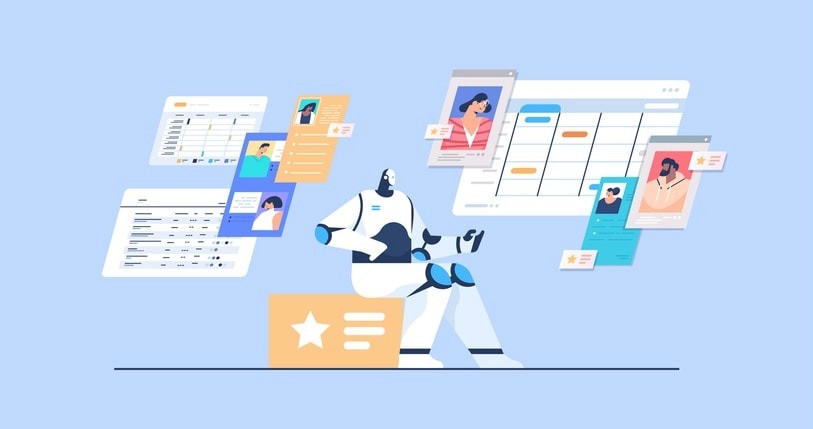
Here is how Match Day works for employers:
Salary commitment upfront: Companies commit to salary ranges before the event, for example $180,000 to $230,000 base for senior ML roles. This creates transparency that attracts high-intent candidates and eliminates wasted interviews where compensation expectations do not align.
Curated candidate slate: Based on your role requirements, you receive a shortlist of pre-vetted candidates who have already passed technical assessments, fraud checks, and structured evaluations. No sifting through hundreds of applications.
Coordinated interview logistics: Fonzi’s concierge recruiter support handles scheduling and logistics, freeing your team to focus on evaluation.
Offers within 48 hours: The event is designed for speed. Hiring managers interview, debrief, and extend offers within the Match Day window, typically 48 hours from first interview to offer.
What makes this effectively a live pipeline rather than just a hiring event:
Candidates are pre-engaged. Many have participated in prior Match Days or have been nurtured through Fonzi’s community. They are not cold leads.
AI has already done the heavy lifting. Fraud checks, skill assessment, and structured evaluations are complete before you see a single profile.
Hiring managers only see high-signal, high-intent candidates. No time is wasted on job seekers who are not serious or qualified.
For employers, the pricing model is straightforward: 18 percent success fee on hires. There are no upfront costs. For candidates, the service is completely free, which encourages more experienced leaders and senior engineers to participate.
Think of Match Day as a recurring pipeline mechanism. Many companies participate quarterly, aligning Match Days with anticipated headcount approvals. This creates a continuous flow of future opportunities mapped to your roadmap, without the scramble of reactive hiring.
Building Your 2026 Talent Pipeline: A Practical Step‑by‑Step Approach
This section is your mini playbook, with clear steps you can start implementing this quarter to build an inclusive pipeline that delivers results.
Step 1: Forecast Critical Roles for the Next 6-12 Months
Partner with finance and product leadership to understand your roadmap and funding milestones. Which roles will you need to fill key positions as you scale? Identify critical positions prone to long vacancy times: staff engineers, ML leads, heads of data, senior backend engineers.
Do not wait for headcount approval to start building your pipeline. The best companies forecast key roles 90 days in advance and begin sourcing before the role officially opens.
Step 2: Define Role-Based Pipelines and Personas
Create specific candidate personas for each role family: AI/ML, data, backend, frontend, and full-stack engineers. Capture must-have skills, nice-to-haves, values, and working style preferences, such as remote or hybrid work and async communication.
This is not just about technical requirements. Consider career advancement opportunities candidates are seeking, cultural values that matter for your team, and growth opportunities that will attract ambitious engineers.
Step 3: Audit and Regroup Your Existing Talent
Review silver-medalist candidates from the last 12 to 24 months. These are quality candidates who finished second in prior searches and are often still interested if the right role opens.
Tag and segment high-potential internal candidates for future growth roles. Your existing employees often represent your most efficient hire source, with faster ramp times and higher retention.
Step 4: Layer in AI-Enabled Sourcing and Evaluation
Use platforms like Fonzi to add pre-vetted external candidates to your pipeline. These candidates have already passed technical assessments and fraud detection, reducing your screening burden.
Adopt structured scorecards and bias-audited scoring methods instead of unstructured interviews. This ensures consistent evaluation across all candidates and reduces the influence of unconscious bias.
Step 5: Operationalize Nurturing and Engagement
Set cadences for ongoing communication with pipeline candidates, including check-ins, newsletters, invites to product demos or networking events, and technical talks. The goal is to keep your employer brand top-of-mind through continuous learning opportunities.
Ensure SLAs for responding to pipeline candidates are under 48 to 72 hours when roles open. Speed matters; top candidates will not wait.
Step 6: Integrate Match Days Into Your Hiring Calendar
Schedule Fonzi AI Match Day participation 30 to 60 days before anticipated headcount approvals. Align hiring manager calendars so they can make informed decisions quickly during the 48-hour window.
Treat Match Days as a recurring component of your hiring calendar, not a one-off event. Participating quarterly creates a sustainable talent pipeline that delivers candidates exactly when you need them.
Measuring the Health and Velocity of Your Talent Pipeline
In 2026, talent pipeline management is incomplete without clear metrics and regular reviews. You cannot improve what you do not measure.

Pipeline health metrics:
Number of qualified candidates per critical role family. Target: 15 or more pre-vetted candidates for high-priority roles such as ML engineers.
Percentage of roles filled from the existing pipeline versus net-new sourcing. A higher pipeline fill rate indicates more efficient future growth.
Diversity representation at each stage of the pipeline. Are you building an inclusive pipeline, or does drop-off disproportionately affect underrepresented groups?
Velocity metrics:
Time-to-first-interview from role approval. Target: under five days for pipeline candidates.
Time-to-offer and time-to-accept for pipeline versus non-pipeline hires.
Conversion rates from “warmed” to “interviewed” and from “interviewed” to “offer.”
Review these metrics monthly or quarterly with cross-functional projects spanning recruiting, hiring managers, and leadership. Use the data to iterate on where to invest more, whether that is additional Match Days, internal mobility programs, development opportunities for high-potential employees, or specific sourcing through multiple channels.
The goal is continuous improvement in organizational health, not just filling the current quarter’s headcount.
Conclusion: Turn Your Talent Pipeline into a Competitive Advantage
Just-in-time hiring is no longer viable for AI and engineering talent. The costs are too high when vacancies delay product launches and bad hires cost six figures.
Building a living, AI-assisted talent pipeline is essential for fast-growing tech companies. Those treating it as a strategic priority today will have a competitive edge in attracting top talent through 2028 and beyond.
Fonzi AI provides a clear path forward: a curated marketplace and Match Day events that deliver a ready pipeline of pre-vetted AI, ML, and engineering talent. With transparent compensation, bias-audited evaluations, and concierge recruiter support, you can move from reactive hiring to a proactive, data-driven process.
Book a Match Day this quarter to start making offers in 48 hours instead of eight weeks. Companies that master their talent pipeline in 2026 will win the AI talent race for years to come. The question is not whether to build a talent pipeline but whether you will build one before your competitors do.
FAQ
What is the difference between traditional recruitment and talent pipeline management in 2026?
How can companies build a sustainable pipeline for specialized AI and machine learning roles?
What are the key metrics for measuring the health and velocity of a recruitment pipeline?
How does a “passive talent pipeline” reduce cost-per-hire for enterprise tech teams?
What role does AI play in managing and nurturing a talent pipeline without recruiter burnout?


