In 2026, ten frontier AI models, including GPT-5, Claude 4.5 Sonnet, Gemini 3 Pro, Meta Llama 4, DeepSeek V3.1, Amazon Nova Premier, Alibaba Qwen 3, xAI Grok 4, Moonshot Kimi K2, and Mistral Large 3, power applications from coding assistants to enterprise copilots, making model choice a critical decision for AI-forward companies. Model size now emphasizes capability such as reasoning, multimodality, long context, latency, and cost, rather than raw parameters, with smarter architectures often outperforming brute-force scale. Since the transformer’s debut in 2017 and GPT-3 in 2020, models now handle text, code, images, audio, and video while acting as autonomous agents in real-world workflows. This article helps founders, CTOs, and AI leads quickly assess models and understand which engineers to hire, with rankings, comparisons, and guidance on using Fonzi AI to staff teams.
Key Takeaways
In 2026, frontier large language models like GPT-5, Claude 4.5 Sonnet, Gemini 3 Pro, Llama 4, and DeepSeek V3.1 power production systems for coding, reasoning, and multimodal workflows, with GPT-5 serving as the default general-purpose model and open weight models offering cost-efficient alternatives.
Choosing the right model depends on matching infrastructure, budget, and team capabilities, and pairing it with retrieval-augmented generation, evaluations, and monitoring for reliable production performance.
Fonzi AI helps startups and enterprises hire elite AI engineers to deploy, fine-tune, and productionize these models quickly, with most hires shipping production LLM features in under three weeks through a structured, bias-audited Match Day process.
2026 Top 10 Large Language Models: Quick Ranking
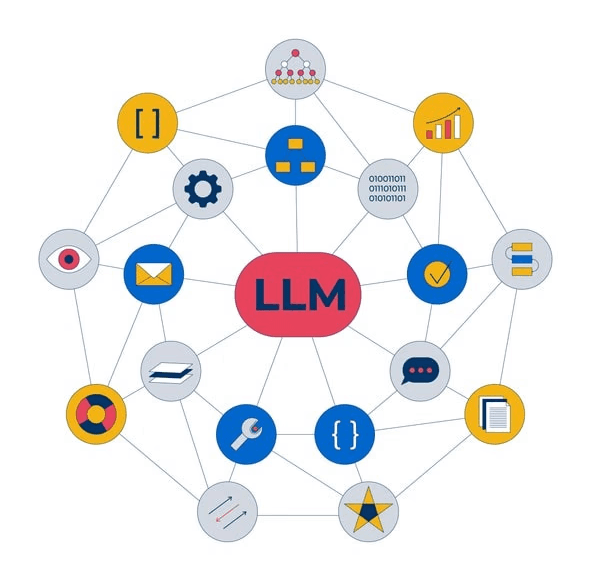
This ranking reflects real-world popularity in 2026 based on production adoption, API usage, industry reports, and open-source community activity, emphasizing both popularity and impact rather than strict benchmark scores.
GPT-5 (OpenAI, 2025): The default general-purpose and reasoning large language model worldwide, with best-in-class benchmarks and the largest ecosystem of tools and integrations.
Claude 4.5 Sonnet (Anthropic, 2025): Safety-focused deep reasoning model preferred for legal, research, and enterprise documentation workflows, known for careful and interpretable outputs.
Gemini 3 Pro (Google DeepMind, 2025): Google’s flagship model with massive multimodal scale, tight integration with Workspace and Vertex AI, and context windows up to 2 million tokens.
Meta Llama 4 Scout/Maverick (Meta, 2025): Leading open-weight frontier model family, with Scout optimized for speed and Maverick for maximum capability, supporting context windows up to 10 million tokens.
DeepSeek V3.1 (DeepSeek, 2025): Open reasoning model with exceptional math and coding performance, trained for compute efficiency and available via API or download.
Amazon Nova Premier (Amazon, 2025): AWS-native enterprise choice with deep integration into Bedrock and other Amazon cloud services.
Alibaba Qwen 3 (Alibaba Cloud, 2025): Multilingual, cost-efficient model excelling in Asian and emerging-market languages with strong coding and reasoning performance.
xAI Grok 4 (xAI, 2025): Real-time web and social-aware assistant with a 2M token context window, offering fast, opinionated answers and X (Twitter) integration.
Moonshot Kimi K2 (Moonshot AI, 2025): Trillion-parameter open-weight mixture-of-experts model for teams seeking frontier-level performance with open licensing.
Mistral Large 3 / Pixtral Large (Mistral AI, 2025): European frontier models emphasizing efficiency, multilingual support, and open weights, delivering roughly 92% of GPT-5’s performance at lower cost.
The next sections provide detailed profiles and a comparison table to guide choosing the right model for your engineering roadmap.
How We Ranked the Most Popular LLMs in 2026
This ranking is based on practical adoption and engineering value rather than marketing claims or selective benchmarks.
Models were evaluated across six criteria: production usage in startups and enterprises, benchmark performance on reasoning and coding tasks including GPQA, SWE-Bench, MMLU, and AIME 2025, multimodal capabilities across text, code, images, audio, and video, context window size and stability, pricing and latency, and ecosystem strength including SDKs, hosting, RAG tooling, and community support.
The ranking prioritizes models actually chosen by hiring managers and AI leads for customer-facing products, LLM agents, and internal copilots rather than research demos or benchmark stunts.
The “best” model for a company depends on having engineers experienced with that model family, as building RAG on Amazon Nova differs from fine-tuning Llama 4 or implementing guardrails for Claude deployments.
This methodology mirrors Fonzi AI’s candidate screening, emphasizing real-world problem solving, comparative evaluation under constraints, and experience deploying AI systems in production with cost and latency considerations.
Model Profiles: The 10 Most Popular Large Language Models
This section provides detailed profiles for each model, following a consistent structure: quick stats, standout strengths, typical use cases, and hiring considerations for teams deploying these models effectively.
1. GPT-5 (OpenAI) – The Default General-Purpose & Reasoning LLM
GPT-5 launched in August 2025 as OpenAI’s flagship model, combining multimodality with deep chain-of-thought reasoning in a single model. It features a 400,000-token context window and achieved a near-perfect score on the AIME 2025 math benchmark. The model excels at complex reasoning, code generation, and multi-step tasks, supporting text, code, image, audio, and video inputs, with tool use for API, database, and software integration.
Common deployments include enterprise copilots, data analysis agents, AI coding assistants, and autonomous workflows in CRM, support, and internal tools. The trade-offs are higher token costs and vendor lock-in, but skilled engineers can offset these through caching, model distillation, and smart routing. Fonzi frequently places engineers experienced with GPT-5 who build production-grade evals, guardrails, and observability, helping companies ship features in weeks.
2. Claude 4.5 Sonnet (Anthropic) – Safety-Focused Deep Reasoning
Claude 4.5 Sonnet is Anthropic’s hybrid reasoning model, known for long, coherent analysis and a strong safety posture using constitutional AI methods. It has a 200,000-token context window with a beta 1-million-token extension and features for agentic applications like screen navigation. Claude produces focused, less verbose outputs and shines in careful interpretation, nuanced analysis, and minimizing hallucinations. Legal tech, policy research, enterprise documentation, and regulated industries favor Claude for tasks where interpretability and conservatism matter.
It also performs strongly on coding benchmarks. Trade-offs include slightly higher latency on deep reasoning tasks and a cautious output style, which can limit consumer-facing applications but benefits regulated workflows. Many Fonzi senior candidates have experience building bias-audited evaluation pipelines on Claude, aligning with responsible AI practices.
3. Gemini 3 Pro & Flash (Google DeepMind) – Multimodal at Massive Scale
Gemini 3 consolidated Google’s earlier Gemini 2.5 and 1 series into a family centered on Gemini 3 Pro for complex reasoning and coding, plus Gemini 3 Flash for high-volume, low-latency tasks. Gemini 3 Pro offers context windows up to 2 million tokens and integrates seamlessly with Google Cloud via Vertex AI and AI Studio, as well as Workspace apps like Docs, Sheets, and Gmail. Common deployments include analytics copilots in BigQuery, document and slide generation for sales, and multimodal agents that read PDFs, screenshots, and dashboards. Challenges include region availability and a less mature ecosystem compared to OpenAI, which may increase onboarding time for teams not invested in GCP. Fonzi’s talent pool includes engineers specializing in Gemini architectures for organizations standardized on GCP and Workspace.
4. Meta Llama 4 (Scout & Maverick) – The Leading Open-Weight Frontier Model
Llama 4, launched in 2025, is Meta’s mixture-of-experts, mostly open-weight family, with Scout optimized for speed and Maverick delivering frontier-scale capability. The family ranges from roughly 109 billion parameters in Scout to multi-trillion-parameter MoE configurations in Maverick, with enterprise variants supporting a 10-million-token context window. Open-source tooling is strong, including Hugging Face, vLLM, Ollama, and Kubernetes operators, enabling on-premises, private cloud, or hybrid deployment. The model excels at code generation, document analysis, and long-context research, and some teams fine-tune variants for domain-specific applications. Engineering deployments require expertise in GPU orchestration, inference optimization, quantization, and techniques like LoRA and QLoRA.

5. DeepSeek V3.1 – Open Reasoning Powerhouse from China
DeepSeek V3.1 evolved from the DeepSeek R1 series into a 671-billion-parameter-class mixture-of-experts reasoning model. It is available for both API access and download, positioning it uniquely among frontier models as both a competitive performance leader and open alternative.
The model earned popularity in technically demanding use cases such as quantitative research, algorithmic trading tools, advanced code refactoring, and mathematical reasoning. Its symbolic importance as a state-of-the-art model from a Chinese lab has attracted significant attention from the global AI community.
DeepSeek’s training efficiency is noteworthy, with the team achieving competitive results on relatively modest computing power compared to Western frontier models. This efficiency extends to inference, making the model attractive for cost-conscious deployments.
Practical considerations for Western enterprises include cross-border data concerns, legal and compliance issues, and potential geopolitical constraints. Engineering teams need to evaluate these factors alongside technical capabilities.
6. Amazon Nova Premier & Pro – The AWS-Native Enterprise Stack
Amazon rolled out the Nova family across 2024–2025, with Nova Premier and Pro serving as top general-purpose LLMs hosted on Amazon Bedrock. Context windows extend up to approximately 1 million tokens in Premier configurations.
Nova is commonly used by enterprises standardized on AWS to build customer support bots, internal knowledge agents, and task-specific copilots. Tight integration with AWS services such as Lambda, DynamoDB, S3, and OpenSearch simplifies architecture for teams already comfortable with Amazon’s ecosystem.
Strengths include tight IAM integration for security, enterprise SLAs, and simplified procurement that satisfies CIOs and security teams. Even if raw benchmarks slightly trail GPT-5 in some tasks, the reduced friction for AWS-native organizations often makes Nova the practical choice.
Nova’s real value emerges when paired with engineers who understand Bedrock, RAG architectures on AWS, and cost-optimization patterns for large-scale inference workloads.
Fonzi regularly matches AWS-native teams with AI/ML engineers who have shipped Nova-based agents and can navigate complex corporate environments while moving quickly on implementation.
7. Alibaba Qwen 3 – Multilingual, Cost-Efficient, and Open-Friendly
Qwen 3 represents Alibaba Cloud’s flagship model family, covering general-purpose, code, math, and vision-language variants. The family scales up to approximately 235 billion parameters with context lengths exceeding 1 million tokens in Turbo configurations. Qwen achieved 92.3% accuracy on AIME 2025 and 74.1% on LiveCodeBench v6, outperforming many Western alternatives on key benchmarks.
The model’s multilingual capabilities stand out, with strong performance across 119 languages, particularly Asian and emerging-market languages often underserved by Western models. This makes Qwen popular for localized chatbots, e-commerce assistants, and multilingual RAG systems serving global customer bases.
Competitive pricing positions Qwen as a cost-efficient alternative to GPT-5 for organizations with budget constraints or high-volume inference needs. While some model weights are open and deployable on non-Alibaba infrastructure, many teams pair Qwen with Alibaba Cloud services for optimal performance and support.
8. xAI Grok 4 – Real-Time Web & Social-Aware Assistant
Grok 4 from xAI is known for its integration with X (formerly Twitter) data, delivering fast and opinionated answers with strong performance on reasoning and coding benchmarks. The model offers a 2-million-token context window and “Think” modes for deep chain-of-thought reasoning when needed.
Key capabilities include “DeepSearch” style internet research for real-time information retrieval and tight coupling with social media data streams, making Grok appealing for social listening copilots, live-news aggregation, trending-topic research, and conversational coding support.
Engineering considerations include dependence on xAI’s APIs, an evolving ecosystem compared to more mature providers, and the need to design around real-time data freshness requirements.
9. Moonshot Kimi K2 – Trillion-Parameter Open-Weight Giant
Kimi K2, released in 2025 by Moonshot AI, represents approximately 1 trillion parameters in an open-weight mixture-of-experts architecture and provides frontier-level performance under a relatively open license for teams seeking maximum control.
The model delivers exceptional long-context reasoning, competitive coding performance, and agentic features branded as “OK Computer” for multi-step web and application workflows, making it appealing to organizations wanting frontier capability without full dependence on proprietary models.
Running Kimi efficiently requires substantial infrastructure expertise including GPU clusters, advanced serving stacks, quantization, and sharding strategies, so Fonzi helps companies find engineers who have tuned and deployed multi-trillion-parameter MoE architectures like Kimi or Llama 4 Maverick without wasting cloud resources.
10. Mistral Large 3 & Pixtral Large – Efficient European Frontier Models
Mistral Large 3 and its multimodal sibling Pixtral Large are Europe’s leading frontier models, building on earlier releases to deliver improved reasoning, coding, and vision capabilities with a focus on efficiency.
They feature approximately 100 billion+ parameter dense or mixture architectures, 128K or higher context windows, strong multilingual support, and competitive benchmark performance.
European enterprises valuing data residency, open-source compatibility, and cost control have widely adopted Mistral, and Fonzi helps companies find engineers experienced with Mistral’s stack for compliance, localization, and efficient inference needs.
How Founders & CTOs Actually Choose Between LLMs
Most technical leaders do not simply pick the biggest name or highest benchmark score. Instead, they solve for a combination of latency, quality, unit economics, data governance, and vendor risk. The selection process involves structured evaluation rather than gut instinct.
Five dimensions typically drive decisions. Performance versus cost: can you afford to run this model at scale for your expected query volume? Control versus convenience: do you need to self-host for compliance reasons, or is API access sufficient? Data residency and compliance: where does training data come from, where is inference performed, and what audit trails exist? Ecosystem and tooling: how mature are the SDKs, monitoring tools, and integration options? Team expertise: do your engineers have experience with this model family’s specific quirks and optimization patterns?
Concrete scenarios illustrate these trade-offs. A seed-stage AI startup might choose GPT-5 via API for maximum speed of iteration, accepting higher costs to ship faster. A large bank might choose Llama 4 on private infrastructure for control and compliance, accepting the higher engineering investment required. A European healthtech might select Mistral for data residency and cost, even if raw benchmarks slightly trail American alternatives.
A practical evaluation workflow starts with prototyping on two or three top candidates, running structured evals on your own data, measuring latency and cost under realistic load, and only then standardizing your default model. Many teams maintain routing between two models, one for complex tasks and one for simpler high-volume queries.
The quality of these evaluations and pilots depends heavily on the engineering team doing them. This is exactly the kind of work Fonzi-screened candidates excel at: structured thinking, ability to compare options under constraints, and experience shipping real AI products.
Why Talent Matters More Than the “Largest” Model (and Where Fonzi AI Fits)
In 2026, most competitive AI products are not differentiated by which frontier LLM they use. They are differentiated by how well engineers orchestrate models, tools, data, and feedback loops into coherent systems that deliver value.
The real edge comes from RAG architectures, fine-tuned models optimized for specific domains, comprehensive eval suites, production guardrails, custom agents with tool use capabilities, and tight integration with product UX and backend systems. A brilliant model behind poor infrastructure and monitoring delivers worse outcomes than a good model behind excellent engineering.
Fonzi AI is a curated talent marketplace that matches elite AI/ML, full-stack, backend, frontend, and data engineers with AI startups and high-growth tech companies. Unlike traditional recruiting, Fonzi operates through Match Day, a structured hiring event where pre-vetted candidates and companies commit to serious conversations, with salary ranges agreed upfront and offers typically extended within a 48-hour decision window per event.
Fonzi handles sourcing, screening, interview logistics, and scheduling. The platform provides bias-audited evaluations and fraud detection, ensuring a high-signal, low-friction experience for both employers and candidates. The result is faster, more consistent hiring without the typical months of back-and-forth.
Many engineers on Fonzi have hands-on experience building with GPT-5, Claude 4.5, Gemini 3, Llama 4, DeepSeek V3.1, Nova, and recent frontier models. Employers can hire people who already understand the trade-offs, reducing ramp-up time significantly.
Most Fonzi hires reach productivity quickly and typically help teams ship production LLM features in under three weeks. This applies whether you are an early-stage AI startup making your first technical hire or a large enterprise scaling to thousands of AI-infused workflows.
How Fonzi AI Works for Employers
The employer journey through Fonzi is straightforward and designed to minimize time-to-hire while maintaining quality.
It begins with defining your role and technical requirements, such as “GPT-5 plus RAG on AWS” or “Llama 4 on-prem with fine-tuning capability.” Fonzi’s team helps clarify requirements to ensure you target the right candidate profile for your actual needs rather than a generic ML engineer description.
You then join an upcoming Match Day. Fonzi provides a curated shortlist of pre-vetted engineers who match your requirements. These candidates have already demonstrated relevant experience and expressed interest in roles like yours.
Interviews happen during a tightly scheduled 48-hour window. This format keeps both sides focused and prepared, eliminating the weeks of calendar coordination that typically slow technical hiring. When you find the right candidate, you extend an offer immediately.
The platform scales from startups making their first AI hire to larger organizations hiring dozens or hundreds of AI/ML engineers across multiple teams. Built-in safeguards include fraud detection on candidate profiles, bias-audited evaluation rubrics, and structured scorecards to keep decisions consistent across interviewers and roles.
How Fonzi AI Works for Engineers

For senior engineers, data scientists, and ML specialists, Fonzi offers a streamlined alternative to the typical job search grind.
Candidates apply once and go through a rigorous but fair vetting process that includes technical screens, portfolio review, and relevant take-home or live coding exercises. The evaluation focuses on practical ability in LLM, RAG, and infrastructure work rather than abstract algorithm puzzles.
Once vetted, candidates are invited to Match Days with pre-qualified, high-intent companies. The service is completely free for candidates, and interviews are condensed into a focused period rather than stretched across months. Salary ranges are transparent from the start, avoiding mismatches.
Fonzi often provides light-touch support on resume positioning, portfolio framing for LLM projects and open-source contributions, and interview prep tailored to AI/ML roles, ensuring your experience is clearly communicated to companies that value it.
Candidates get to work with top LLMs daily on production systems, joining teams that are shipping real AI products and tackling meaningful problems.
Conclusion
The 2026 LLM ecosystem is led by GPT-5, Claude 4.5, Gemini 3, Llama 4, DeepSeek V3.1, Nova, Qwen 3, Grok 4, Kimi K2, and Mistral Large 3, each suited to different use cases, costs, and infrastructure needs. Smarter engineering, including well-designed RAG, model routing, monitoring, and evals, matters more than picking the largest model. Fonzi AI helps teams quickly assemble high-caliber engineers with experience deploying these models. Founders and CTOs can schedule a call or join the next Match Day and AI/ML engineers can apply to get matched with companies building the future.
FAQ
Which LLM currently holds the record for the largest parameter count in 2026?
What are the most popular open-source alternatives to GPT-5 for enterprise deployment?
How do the reasoning capabilities of Claude 4.5 compare to Gemini 3 and GPT-5?
What is the most popular large language model for specialized coding and engineering tasks?
Why are smaller “distilled” models becoming more popular than the largest language models?