
In 2026, remote work is standard for AI and software teams, and limiting hiring to a single city means competing with Big Tech for a shrinking pool of senior talent. AI and ML roles are especially challenging, with just 2.5 applicants per opening versus 10+ for general tech positions. Weeks can be lost to screening resumes and verifying experience, while top candidates accept competing offers. This article is for hiring managers, recruiters, and founders who need to hire remote AI/ML, data, and full-stack engineers quickly without lowering the bar, covering the best agencies, marketplaces, and AI-driven platforms like Fonzi AI that compress time-to-hire while keeping humans in control of final decisions.
Key Takeaways
Remote-first hiring is now standard for AI and engineering roles, and specialized remote staffing agencies can fill senior positions faster through pre-vetted talent pools.
AI startups face challenges like slow time-to-hire, limited recruiter bandwidth, and inconsistent candidate quality, which modern remote staffing addresses with AI-assisted sourcing, fraud detection, and structured evaluations while keeping humans in control.
Fonzi AI is a curated talent marketplace for elite AI/ML and software engineers that delivers offers quickly through structured Match Day events and complements mainstream platforms like Toptal, Upwork, and Remote.com.
What Makes a “Best” Remote Staffing Agency for AI & Tech?
Not all remote staffing agencies are designed for deeply technical, high-impact roles like Staff ML Engineer, LLM Engineer, or Senior Platform Engineer. Agencies that fill administrative support or sales roles operate on a completely different playbook than what you need for AI and engineering talent.
Here’s what matters specifically for remote AI/tech hiring in 2026:
Rigorous technical vetting through multi-stage assessments, including live coding, system design, and domain-specific evaluations for AI/ML roles
Global reach with timezone alignment, providing access to talent in Latin America, Eastern Europe, and Asia for async collaboration
Fraud detection and identity verification to catch cloned profiles, fabricated experience, and AI-generated resumes
Salary transparency with upfront compensation ranges to move quickly
Bias-audited evaluations using structured scorecards that prioritize skills and outcomes over pedigree
Speed without sacrificing signal, presenting a tight slate of 5-8 calibrated candidates instead of dozens of unqualified resumes
High-growth startups need partners that emphasize signal over volume, as every open headcount represents blocked roadmap items and stretched teams cannot review a vast pool of marginally qualified applicants.
AI-enabled workflows, including multi-agent systems that summarize profiles, flag anomalies, and standardize scorecards, are now standard for efficient tech recruiting. The best remote staffing agencies integrate these capabilities while keeping experienced recruiters in the loop for judgment calls.
The following sections compare generalist remote staffing options with specialized AI and engineering platforms, leading into Fonzi AI’s approach to these challenges.
The Urgent Remote Hiring Challenges Facing Tech Teams
Engineering offers often take 60-90 days from job posting to signed contract, and senior AI roles can sit open for months while product timelines slip and team members burn out covering gaps.
Fully remote searches add complexity with compliance across jurisdictions, evaluating candidates without in-person signals, and coordinating interviews across time zones.
Recruiter bandwidth limits create bottlenecks at the top of the funnel, as a single technical recruiter handling 15-20 open roles cannot manually review hundreds of applications and perform personalized outreach for each candidate.
Inconsistent technical evaluation standards make comparisons across panels slow and subjective, with some managers prioritizing take-home projects, others live coding, and others system design whiteboarding.
The rise of LLM-generated resumes and new roles like prompt engineers has made resume triage harder, as candidates sometimes list AI experience that does not hold up under technical scrutiny.
These challenges drive demand for remote staffing partners and AI tools that reduce screening noise and standardize evaluation while keeping humans in control of final hiring decisions.
How Remote Staffing Agencies Work for Distributed Tech Teams
Remote staffing agencies and talent marketplaces source, screen, and present remote-ready candidates so internal teams can focus on high-signal interviews. The basic model shifts upstream work, such as job posting distribution, initial interviews, and skills verification, to specialists who handle it at scale.
Core services remote staffing agencies provide for tech roles include global sourcing, technical assessments, remote readiness screening, interview coordination, and offer support.
For companies hiring remote engineers across borders, Employer of Record (EOR) providers manage international compliance, payroll, and IP protection, becoming the legal employer while the engineer works embedded in your team and ensuring adherence to regulations like GDPR and CCPA.
Some remote workforce agencies bundle EOR services with recruiting, while others focus solely on sourcing and vetting. The next section compares different types of providers to help you find the right remote staffing partner.
Spotlight: Best Remote Staffing Agencies for AI & Tech Roles

This curated rundown covers notable remote staffing options that can credibly fill engineering and AI roles, not just generic remote jobs. Each subsection describes the provider’s focus, how they vet technical talent, and what types of remote arrangements they support.
Toptal
Toptal positions itself as a network of the top 3% of freelance developers, designers, and finance experts. Their screening process includes extensive skill reviews, live coding exercises, and assessments for remote readiness such as asynchronous communication and timezone adaptability. Companies submit a project or role description, and Toptal matches them with contractors within days. Hourly rates start around $60 for junior developers and can exceed $200 for senior specialists. The model works well for project-based or fractional engineering needs, ideal if you need a seasoned professional for a three-month buildout rather than a permanent position on your team. Trade-off: higher cost structure and primarily contractor-focused, which may not align with companies hiring for long-term, product-embedded roles.
Upwork
Upwork operates as a massive global freelance marketplace where companies can post remote jobs for software development, data engineering, DevOps, and more. With millions of remote workers on the platform, the scale is unmatched. Strengths include a variety of price points, built-in contracting and time tracking features, and flexibility for hourly or fixed-price engagements. For job seekers and employers alike, the platform offers accessibility that traditional agencies do not match. Trade-offs are significant for senior AI roles: manual screening burden falls entirely on the employer, quality varies widely, and there is no standardized vetting for deep AI/ML expertise. Upwork suits exploratory or budget-constrained work better than strategic engineering hires.
Remote.com
Remote.com primarily acts as a global Employer of Record, enabling companies to compliantly hire full-time remote employees in 80+ countries without establishing local entities. They handle payroll, benefits, taxes, and employment contracts. The platform also offers recruiting tools and HR support, making it a reasonable bundled solution for companies scaling international remote teams. For issues like IP protection and compliance with local labor laws, Remote.com addresses what many startups lack the expertise to handle internally. Clarification: Remote.com is best combined with a separate sourcing and vetting partner for AI and tech roles, as it solves employment infrastructure but is not itself a curated engineering marketplace and will not find talent for you.
We Work Remotely
We Work Remotely is a popular job board for companies listing remote-first roles in engineering, product, design, and support. The community skews heavily toward candidates already experienced with remote work arrangements. Advantages include a large remote-native candidate audience and strong visibility for startups hiring fully remote teams, as posting a job here reaches people who have deliberately chosen the remote workforce lifestyle. The catch is that hiring teams remain responsible for all screening, assessment, and fraud detection, which can strain internal recruiter capacity for demanding AI/ML roles. Job alerts go out to thousands, and filtering the signal from noise is the employer’s responsibility.
CyberCoders (or Similar Tech-Focused Agency)
CyberCoders represents traditional tech staffing agencies that support remote and hybrid engineering placements across the U.S. and increasingly globally. They combine recruiters with proprietary search technology, typically on a contingent fee basis. The model works for broad software roles where speed matters and you are comfortable with agency-led screening. Robert Half and similar agencies operate comparably for finance and administrative roles, while CyberCoders focuses on technical placements. Limitations for AI hiring include general software vetting methodologies that may not catch nuances in ML experience, variable salary transparency, and a process that can feel opaque compared to marketplace models.
Specialized AI & ML Recruiting Boutiques
Small boutique agencies focus exclusively on placing machine learning engineers, data scientists, and MLOps specialists in tech hubs like SF Bay Area, NYC, and London, and many now work with remote-first AI startups. Strengths include deep networks in AI research and applied ML, hands-on recruiter involvement, and strong understanding of what separates a genuine ML engineer from someone who has completed a few online courses. Placement fees tend to be high, reflecting specialized expertise. Constraints include slower cycles due to manual-heavy processes, limited bandwidth when multiple clients scale simultaneously, and a typical focus on direct hire rather than contract arrangements. For companies hiring one or two strategic AI roles per quarter, boutiques can work, but capacity becomes an issue when scaling a dedicated team.
Fonzi AI (Curated Remote Talent Marketplace for AI & Engineering)
Fonzi AI is a curated, remote-friendly talent marketplace built specifically for AI, ML, data, and senior software engineers at high-growth AI startups and modern tech companies. Unlike job boards or traditional agencies, Fonzi operates through structured Match Day events.
How Match Day works: Time-boxed hiring events where employers commit to salary ranges upfront, review a small slate of pre-vetted candidates, and can move from intro to offer in approximately 48 hours per event. Companies see 5-8 calibrated candidates rather than hundreds of resumes, allowing businesses to focus interviewing energy on genuinely qualified professionals.
AI capabilities: A multi-agent system handles resume parsing, fraud detection for cloned profiles and suspicious work history, and bias-audited structured evaluations. This reduces screening time while surfacing consistent signals across candidates. Human lead recruiters review and finalize candidate profiles before presenting them, ensuring the process remains transparent.
Commercial model: 18% success fee on hires for employers, completely free for candidates. This aligns incentives toward successful placements rather than volume. The model suits recurring hiring of remote AI and top engineering talent, whether building an initial team or scaling a growing organization.
Fonzi AI focuses on the sourcing and vetting layer, integrating with your existing ATS, job boards, and EOR providers for onboarding and long-term management. For companies hiring senior remote engineers who want speed without sacrificing evaluation rigor, this approach addresses the core bottlenecks.
How AI is Transforming Remote Tech Staffing (Without Replacing Recruiters)
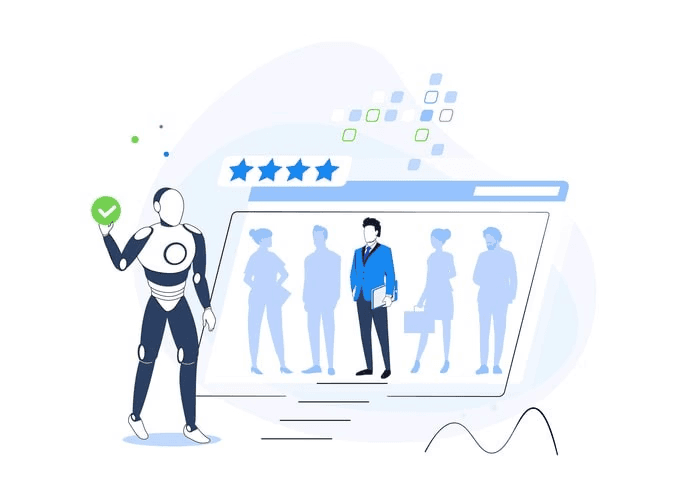
“AI in recruiting” should not mean letting algorithms make hiring decisions; its value lies in handling repetitive, low-leverage tasks, freeing experienced recruiters to focus on relationship-building, nuanced evaluation, and candidate experience.
Concrete AI use cases for remote tech hiring include:
Screening large inbound pools: Parsing thousands of applications to surface candidates meeting baseline requirements
Detecting anomalies: Flagging inconsistencies in resumes and GitHub histories, catching plagiarized code samples or fabricated employment dates
Summarizing interviews: Converting unstructured interview notes into standardized scorecards for easier comparison
Standardizing technical evaluations: Ensuring every candidate is assessed against the same rubric regardless of interviewer
Fonzi AI uses a multi-agent system for tasks like fraud detection, skills extraction, and bias-audited scoring, while human lead recruiters review and finalize candidate profiles before presenting them. This division of labor creates efficiency without removing accountability.
Benefits for hiring managers: higher-quality shortlists, consistent evaluation signals across candidates, and reduced recruiter burnout, resulting in faster and more confident hiring decisions for roles that would otherwise take months to fill. Human oversight remains central, with final interview decisions, culture fit assessment, and offer approvals staying with the hiring company; AI assists the process without controlling it.
Examples of AI-Driven Hiring Workflows in Practice
Scenario 1: A Series B startup needs a remote Senior ML Engineer and, using Fonzi AI’s Match Day, receives 5 calibrated candidates within 48 hours, each with standardized evaluation reports covering technical depth, remote readiness, and red-flag checks; the hiring manager conducts final interviews with 3 candidates and extends an offer within the same week.
Scenario 2: An AI agent flags a candidate whose claimed employment at a well-known AI lab overlaps impossibly with another full-time role on their resume, prompting the recruiter to investigate and uncover fabricated credentials, saving the company from a costly mis-hire.
Scenario 3: Bias-audited evaluations ensure scorecards prioritize skills and project outcomes over pedigree markers like university name or employer brand, which is particularly important when hiring talent from Latin America or non-traditional backgrounds who bring equivalent capabilities without conventional resume signals.
Choosing the Right Remote Staffing Partner (and Where Fonzi AI Fits)
Different growth stages require different hiring stacks. Early-stage founders may start with job boards and referrals, while scaling Series B+ companies need higher-signal pipelines for hard roles where competition for talent is intense.
Use job boards or freelance marketplaces for transactional or experimental work, budget-constrained projects, or roles where you can absorb high screening effort internally.
Traditional agencies work well for broad generalist roles, high-volume hiring, or positions with less specialized technical requirements.
Curated tech marketplaces for AI and engineering are best for strategic, high-impact hires where evaluation quality matters as much as speed, mis-hires are costly, or internal recruiting teams are stretched thin on technical screening.
Fonzi AI is ideal for hiring remote or hybrid AI/ML engineers, data scientists, or experienced full-stack and backend engineers through a structured, fast, and transparent process anchored in human-centric AI, with a 48-hour Match Day model addressing competitive hiring urgency.
FAQ
Which remote staffing agencies specialize specifically in AI and Machine Learning roles for 2026?
What is the average time-to-hire when using a remote-first recruiting agency for senior engineers?
How do remote recruitment agencies handle international compliance, payroll, and IP protection?
How do top remote staff companies vet candidates for “remote readiness” and asynchronous communication skills?
Are there remote employment agencies that offer a “try-before-you-buy” contract-to-hire model for global talent?


