Engineering Manager: What Nobody Tells You Before You Take the Job
By
Liz Fujiwara
•
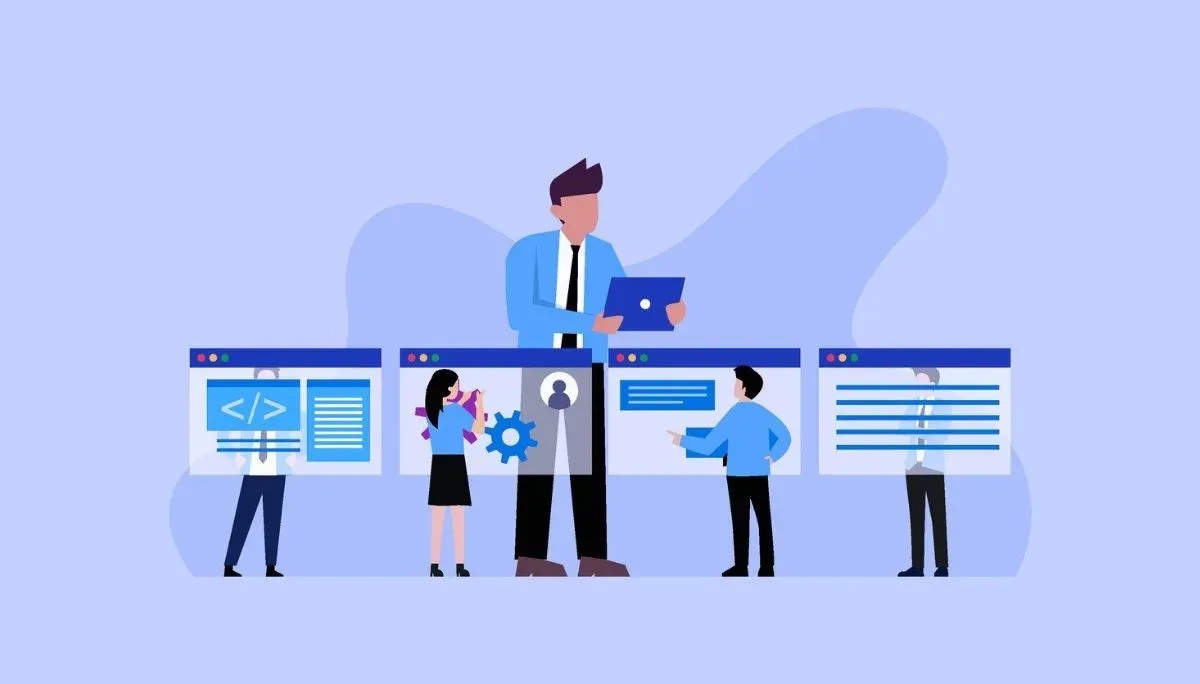
You picture yourself standing at a whiteboard, sketching system architecture for a new LLM feature while a room of engineers listens intently, imagining making the final call on whether to use a vector database or a custom retrieval system, with more pay, more influence, and the respect that comes with “Manager” in your title.
Then you actually take the engineering manager role.
Your first week looks nothing like that fantasy: Tuesday is back-to-back 1:1s with six direct reports, one frustrated about a promotion timeline and another struggling with a teammate who doesn’t pull their weight. By Wednesday, you’re deep in a hiring pipeline open for eight weeks with no strong candidates. Thursday brings an incident review for an MLOps failure in production, and you realize you’re accountable for a system you didn’t design and barely understand.
This is engineering management in 2026, especially on AI and ML teams where technology moves faster than your ability to stay technically current. Responsibilities stretch across people, process, delivery, and hiring, requiring technical credibility while spending almost no time building things and balancing team growth with defending headcount in budget meetings.
Key Takeaways
The engineering manager role is not a promotion from senior IC as it requires a different skill set, comes with unique stresses, and offers distinct rewards that are often underestimated until on the job.
Expect to spend most of your time in meetings handling 1:1s, hiring panels, and planning syncs, rather than coding or making architectural decisions.
Emotional and hiring pressures are high, especially on AI/ML teams, but platforms like Fonzi AI can reduce the burden by providing pre-vetted engineers through structured Match Day events in about three weeks.
What Engineering Managers Actually Do (vs. What Everyone Assumes)

Most engineering manager job descriptions read like fantasy documents. “Drive technical strategy.” “Own architectural decisions.” “Lead high-performing teams.” These phrases sound impressive but tell you almost nothing about how you’ll actually spend your time.
Here’s what engineers typically expect when they imagine the EM role: deep involvement in technical decision making, reviewing code with their team, being the smartest person in the room, and having significant control over how systems get built. The reality diverges sharply from this vision.
The actual calendar of a 2026 engineering manager looks roughly like this:
50-70% meetings: 1:1s with direct reports, hiring loops, cross-functional syncs with product managers and other departments, planning sessions, incident reviews
10-20% strategy and roadmap work: aligning with leadership, prioritizing projects, negotiating scope
10-20% technical review: architecture discussions, code reviews, evaluating ML research spikes
Near-zero uninterrupted coding time
Your Tuesday might break down like this: three 1:1s in the morning, one incident review before lunch, a roadmap sync with your Director of Engineering, a hiring panel for a backend candidate, and a skip-level meeting with a staff engineer who reports to one of your tech leads. By the end of the day, you’ve had perhaps 45 minutes of contiguous focus time.
People management work includes:
Performance reviews and calibration sessions with other engineering managers
Promotions, compensation discussions, and managing career development for team members
Coaching engineers who are struggling technically or interpersonally
Resolving conflicts between staff members
Creating training opportunities and employee development plans
Operational responsibilities mean:
Ensuring engineering projects ship on time and within budget
Unblocking dependencies across multiple teams
Owning on-call health and incident response processes
Being “the adult in the room” when things go sideways
Tracking budgets, resource allocation, and headcount planning
On AI-heavy teams, you face an additional challenge: you need enough working knowledge of ML/LLM details to challenge tradeoffs and make informed decisions without writing most of the models yourself. You’re evaluating whether a retrieval-augmented generation approach makes sense, whether to fine-tune a foundation model or use prompting, whether inference costs are sustainable. But you’re doing this as a generalist manager, not as the hands-on expert you used to be.
This is the core shift that catches most new engineering managers off guard. Your technical skills matter, but they’re now table stakes rather than your primary contribution. The job is fundamentally about making your engineering team effective, not about being the best individual contributor in the room.
The Hidden Tradeoffs: What You Give Up When You Stop Being an IC
Most conversations about becoming an engineering manager focus on what you gain such as title, salary, scope, influence. Almost nobody talks honestly about what you lose.
Loss of maker time and deep work
As an individual contributor, you probably spent large chunks of your day in flow state. You owned technical artifacts that you could point to and say “I built that.” As an EM, those long stretches of focused development disappear. Your “output” becomes your team’s performance, culture, and delivery stability. It’s real work, but it’s invisible in a way that coding never was.
Ambiguity of impact
When you ship a PR, you can measure it. When you improve a team’s velocity and quality over 6 to 12 months, attribution gets murky. Did the project succeed because of your leadership, or despite it? Were you a multiplier, or just not in the way? This ambiguity can be uncomfortable for engineers who are used to clear, demonstrable impact.
Emotional load
You now absorb your team’s stress, career anxieties, interpersonal conflicts, and disappointment. When layoffs happen, you are the one delivering the news. When promotions do not come through, you are managing the fallout. When two engineers have a communication breakdown, you are mediating. This emotional labor is exhausting in ways that technical work rarely is.
Political navigation
Managing up becomes a core skill. You are negotiating scope with product, defending your team’s priorities in planning meetings, and fighting for budget and headcount. You are making the case for initiatives to upper management and competing with other engineering managers for resources. This political dimension of the leadership role surprises many new managers who assumed that doing good work would be enough.
AI/ML team tensions
If you manage an AI or ML team, you sit at the intersection of long-term research and short-term product tasks. Non-technical leaders chase GenAI headlines and want features shipped yesterday. Your engineers want time to experiment and iterate. You are caught in the middle, translating between worlds that speak different languages. The pressure to deliver on hype while maintaining quality standards creates constant friction.
Engineering Manager vs. Staff/Principal IC vs. Tech Lead
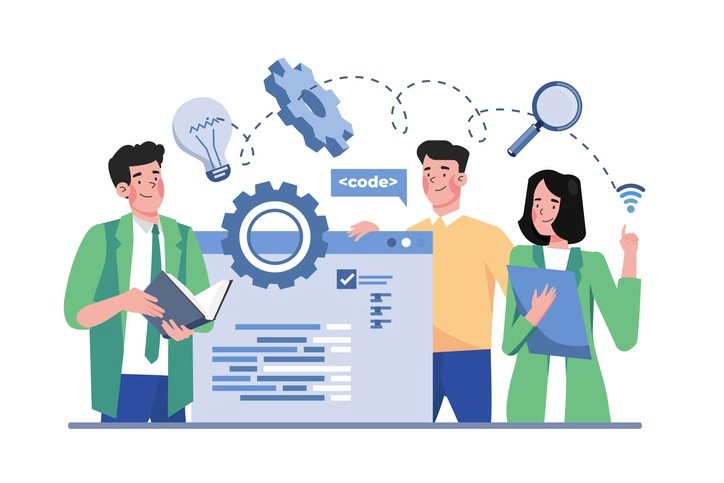
One of the biggest sources of career confusion in tech is the blurry line between engineering manager, tech lead, and staff or principal IC roles. Misunderstanding these distinctions leads to bad promotions and miserable careers.
Engineering Manager
The EM is accountable for people, process, hiring, performance, and delivery. You have direct reports. You own headcount decisions. You run 1:1s, write performance reviews, and manage career development. Your success is measured by your team’s output, health, and retention. Project management skills matter, but so do interpersonal skills, communication skills, and the ability to resolve conflicts.
Staff/Principal IC
Staff and principal ICs have few or no direct reports. They exercise deep technical leadership and cross-team influence. They drive architecture and technical strategy, often spanning multiple teams. Their job title says “engineer,” not “manager,” and their calendar looks radically different, with more design work, more code reviews, and more focused technical problem solving.
Tech Lead
The tech lead is usually a senior engineer with temporary or scoped leadership responsibility on a specific project or domain. They handle technical direction and execution but typically don’t own people management duties like performance reviews, hiring decisions, or career conversations. The tech lead role can be a stepping stone toward EM, but it’s not the same job.
Compensation reality
At FAANG-type companies, an EM at L5-L6 equivalent often earns roughly similar total compensation to a staff-level IC. Principal ICs frequently out-earn line managers, especially when equity is factored in. The idea that becoming a manager is always a path to higher pay is simply wrong, as compensation bands overlap heavily at senior levels.
How to choose
Ask yourself what you want your calendar to look like. If you get energy from mentoring, resolving conflicts, and orchestrating teams, the engineering management role may fit. If you prefer deep technical problems and long stretches of focus, the staff or principal IC track is likely better. Don’t chase the manager title for status. Choose based on what actually energizes you.
Day-to-Day Reality: A Week in the Life of an EM on an AI Team
Here’s what a typical week looks like for an engineering manager at a high-growth AI startup in 2026. The constant context switching is the defining feature, and you rarely have more than 30 to 45 minutes of contiguous time.
Monday
Morning standup with your small team working on the LLM feature integration
Planning session with product managers to prioritize technical debt versus new feature work
Triaging an urgent request from the chief technology officer about GPU capacity
Reviewing last week’s incident where a model inference pipeline failed under load
Async Slack updates to keep remote team members in the loop
Tuesday
1:1s with 6-8 engineers (30 minutes each)
Working on a performance improvement plan for an engineer who’s struggling
Reviewing an ML research spike from your senior engineer on a new embedding approach
Quick sync with infrastructure team about resource allocation for training jobs
Responding to a candidate who has questions about the role
Wednesday
Hiring loop: screening 2-3 candidates, participating in technical interviews
Debrief with other hiring managers to calibrate on candidates
Pushing an offer to a strong backend candidate before they accept elsewhere
Sync with recruiting (or a platform like Fonzi AI) about your candidate pipeline
Writing a job description for a new ML engineer role
Thursday
Cross-team architecture review for a retrieval-augmented generation system
Alignment meeting with data science and security teams
Code reviews to maintain some technical credibility with your engineering team
Preparing talking points for tomorrow’s calibration with engineering leadership
Dealing with an escalation from a frustrated team member
Friday
Sprint review and retrospective with your team
Calibration session with other EMs and the Director of Engineering
Writing promotion packets and feedback documents
Planning for next week’s Match Day cohort if you’re working with Fonzi
Maybe 30 minutes to finally read a technical paper
Where Hiring Breaks: The Part of the EM Job Nobody Trains You For
Ask any engineering manager what consumes the most time and energy, and hiring is usually near the top. For AI and ML roles, it is often the single biggest time sink and the most broken part of the job.
The typical broken hiring loop looks like this:
Low-signal inbound resumes from generic job boards flood your pipeline
You spend hours interviewing candidates who looked good on paper but cannot pass a basic technical screen
Role definitions are vague, such as an “AI engineer” who turns out to be a data analyst or vice versa
Long, inconsistent processes lose strong candidates to companies that move faster
Your recruiting partners do not understand the technical skills you actually need
Specific challenges:
Evaluating genuine AI/ML expertise versus buzzword-heavy profiles is incredibly difficult
Avoiding bias in selection while still moving quickly creates tension
Salary bands and expectations shift monthly in hot AI markets (SF, NYC, London, Berlin)
Candidates with real LLM, MLOps, or systems experience can field multiple offers simultaneously
The invisible work engineering managers do:
Writing and rewriting job descriptions that accurately describe the computer science and technical background requirements
Reviewing take-home assignments and coding exercises
Fighting for compensation approvals with finance and HR
Selling skeptical candidates on the company’s mission and culture
Coordinating interview schedules across busy engineering teams
Debriefing after every interview loop to build consensus
None of this shows up in the typical engineering management job description. It is not glamorous work, but bad hiring makes everything else impossible. You cannot build great products with the wrong team members.
How Fonzi AI Turns Engineering Managers Into Force Multipliers

Fonzi AI is a curated talent marketplace designed specifically for elite engineers. Instead of endless recruiting loops with low-signal candidates, Fonzi runs structured hiring events called Match Day that dramatically compress the hiring timeline.
How Match Day works:
Companies define roles, tech stack requirements, compensation ranges, and location preferences up front. Salary transparency is built in, so candidates know what to expect before they ever interview.
Fonzi pre-vets candidates technically, including AI/ML coding, system design, and data depth, as well as behaviorally. This includes fraud detection and bias-audited evaluation to ensure fair, consistent selection.
In each Match Day event, candidates and companies meet in a concentrated 48-hour high-signal window. All interviews and debriefs are tightly coordinated by Fonzi’s concierge recruiters.
Most offers are extended within about three weeks from initial engagement, drastically faster than traditional pipelines that drag on for 8 to 12 weeks.
Why this matters for engineering managers:
Less time reading random resumes
Higher confidence that candidates actually match your stack (PyTorch, LangChain, Kubernetes, Rust backends, or whatever you need)
Built-in interviewer support and logistics handled by Fonzi, reducing your calendar chaos
Transparent upfront salary commitments eliminate awkward late-stage comp surprises that blow up offers
Bias-audited evaluation helps you build diverse teams while meeting deadlines for hiring
Scaling from first hire to enterprise:
For seed/Series A founders: your first AI hire or first 3-5 engineer pod is existentially important. Fonzi brings you candidates you couldn’t find through job boards.
For large organizations: repeatable, consistent process that works for your 100th or 10,000th hire without degrading candidate experience.
Fonzi charges employers an 18 percent success fee per hire. Candidates use the service for free. This aligns incentives, as Fonzi wins only when you make a successful match.
Traditional Hiring vs. Hiring With Fonzi AI for Engineering Managers
Here’s a direct comparison of what engineering managers experience with traditional hiring versus using Fonzi AI for their AI and ML engineering searches:
Aspect | Traditional Hiring | With Fonzi AI |
Time to hire | 8-12+ weeks, often unpredictable | Most hires within ~3 weeks after Match Day |
Candidate quality | Mixed signal; heavy resume screening required | Pre-vetted elite engineers with verified technical skills |
Calendar load for EM | 15-25+ hours per open role across screening, interviews, debriefs | Dramatically reduced; concierge scheduling handles logistics |
Salary transparency | Compensation discussions often delayed until late stages | Upfront salary commitments from companies before candidates engage |
Bias and fairness | Inconsistent interview practices; bias risks | Built-in bias-audited evaluation and fraud detection |
AI/ML expertise evaluation | Often superficial; hard to distinguish hype from depth | Technical pre-vetting for AI, ML, LLM, data engineering competencies |
Candidate experience | Fragmented, slow, frustrating for top talent | High-signal 48-hour Match Day with structured, respectful process |
Process consistency | Varies by interviewer, team, and week | Repeatable framework from first hire to 10,000th |
The biggest delta for engineering managers is reclaimed time. Every hour you are not screening unqualified candidates or coordinating interview schedules is an hour you can spend on improving processes, developing your team, or actually reviewing technical work. Fonzi does not just make hiring faster; it makes engineering managers more effective at everything else.
Should You Actually Become an Engineering Manager?

Not everyone should become an EM. Staying on a staff or principal individual contributor track can be equally (or more) prestigious and lucrative. Before you take the leap, run through this simple self-assessment:
Questions to ask yourself:
Do you get more energy from mentoring people than from solving the hardest technical problems personally?
Are you comfortable having your success measured indirectly (team health, long-term delivery) rather than visible code artifacts?
Are you willing to spend most of your week in meetings and written communication?
Can you handle the emotional load of managing performance issues, conflicts, and disappointment?
Are you prepared to develop new skills in areas like effective communication, delegating responsibilities, and organizational skills?
If you answered “no” to most of these, the staff or principal IC track is probably a better fit. There is no shame in that; great engineering managers need great ICs to lead.
On reversibility:
Many companies now accept and even encourage moves from EM back to IC. It’s increasingly common to see people try management, realize it’s not for them, and return to hands-on engineering. However, the longer you stay away from coding and system design, the more intentional you’ll need to be about rebuilding technical depth.
AI/ML-specific considerations:
For some people, the joy is in pushing frontier models and staying at the cutting edge of continuous learning in machine learning. For others, it is in scaling teams that productize those models and building organizations. Be honest with yourself about which energizes you more.
Conclusion
The engineering management role is a different craft than senior engineering. It requires new skills, including leadership, project management, and the ability to communicate effectively across organizational boundaries, and it creates new stress. It is not a promotion; it is a career change.
The job can be deeply rewarding if you genuinely care about people, systems, and organizations. Watching team members grow, seeing a team run smoothly and ship consistently, and building something larger than any individual could create are real satisfactions that technical work alone does not provide.
One of the biggest leverage points for engineering managers is how they hire and grow their teams. Good hiring makes everything else easier, including better technical skills on the team, fewer conflicts, higher velocity, and less burnout. Bad hiring makes everything else impossible.
FAQ
What do engineering managers actually do vs what engineers think they do?
Should I become an engineering manager or stay on the staff/principal IC track?
How much more do engineering managers make than senior engineers at FAANG?
Can you go back to being an IC engineer after managing for several years?
What’s the difference between an engineering manager and a tech lead?


