Harvard Resume Template: Official Format, Download & How to Use It
By
Samara Garcia
•

Imagine submitting your ML resume in 2026, only for it to be filtered by ATS, LLM screeners, and automated rankings before a human sees it. Years of expertise in models and inference pipelines don’t matter if your resume fails the first gate.
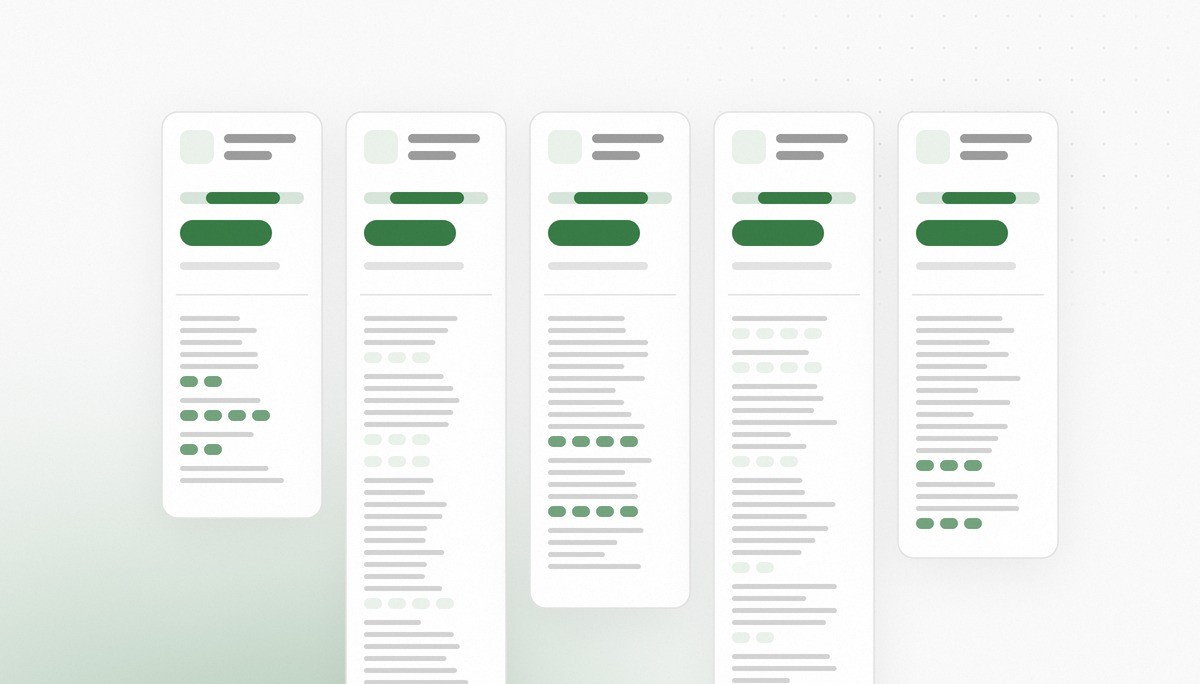
The Harvard resume template solves this. One-page, results-focused, and refined by Harvard’s Mignone Center, it prioritizes clarity, measurable impact, and high-density info that algorithms and humans parse easily. For AI, ML, and infra roles, it emphasizes strong action verbs and quantified achievements: not “worked on ML models,” but “Reduced inference latency by 40% on NVIDIA A100s through kernel optimization.”
Key Takeaways
Official templates: Download from Harvard’s Mignone Center or Extension School (use harvard.edu domains).
AI/ML-optimized: Highlights metrics, model performance, infra wins, and research impact on one page.
ATS-friendly: Clean layout, consistent margins, and keyword-rich bullets pass AI filters.
Fonzi-ready: Pair with Fonzi’s curated AI talent marketplace and Match Day events.
Practical examples: Includes STAR bullets, role-specific phrasing, and template comparisons.
Official Harvard Resume Template: Format, Sections & Download

Harvard’s Mignone Center and Extension School provide official one-page resume templates (Word & PDF), updated regularly; the 2025 version is current as of 2026. Always use harvard.edu sources; third-party copies often break ATS compatibility.
Formatting:
Margins: 0.5–1 inch
Fonts: Garamond, Times New Roman, Calibri, 10–12 pt
Length: 1 page preferred (2 max for senior roles)
White space: Balanced for readability
Core Sections in a Harvard-Style Resume for AI & ML Roles
The classical Harvard structure adapts remarkably well to AI-focused careers. Whether you’re targeting an AI engineer role at Anthropic, ML infra at Databricks, or LLM research at an early-stage startup, the same foundational sections apply, just with technical depth layered in.
Mandatory sections in order:
Education: List Harvard and non-Harvard degrees, concentrations, and GPA if 3.5 or above. For AI candidates, include relevant coursework like CS 181: Machine Learning or CS 285: Large-Scale Machine Learning Systems. Mention honors (Phi Beta Kappa, Dean’s List 2022-2024) and thesis work if applicable.
Experience: Internships, research positions, and full-time roles in reverse chronological order. Each entry includes organization name, location, position title, and employment dates in month-year format. Use 3-6 bullet points per role, focusing on accomplishments, not responsibilities.
Projects: Essential for AI candidates with limited formal work experience. Include open-source contributions, research code, Kaggle competitions, and hackathon wins with specific metrics (dataset sizes, speedups, GitHub stars).
Skills: Languages, frameworks, MLOps tools, and infrastructure knowledge organized into labeled clusters. Avoid generic proficiency ratings; just list what you’ve used in the last 2-3 years.
Optional sections: Publications (arXiv, NeurIPS, ICML), Teaching experience (TF/TA roles), Leadership (AI clubs, open-source maintainership), and Research Experience for those on academic-leaning paths.
All content must fit on a single page for most AI industry roles. The exception is faculty or senior research positions where a curriculum vitae (CV) is standard, and length constraints don’t apply.
How to Write Each Section: Harvard Resume Template for AI, ML & LLM Roles
This section walks through how an AI engineer or ML researcher should fill each part of the Harvard template with high-signal content. The goal is instructional: tangible, technical examples that you can adapt to your own experience.
Key Tips:
Use concise, impact-focused bullets; no personal pronouns.
Keep consistent tense (past for previous roles, present for current).
Anchor every claim with specifics and metrics.
Education: Showcasing Harvard and Other Credentials
List full degree, institution, GPA ≥3.5, and relevant coursework.
Include honors, thesis/capstone if AI-relevant.
Example: “Harvard University, A.B. Computer Science, GPA 3.8; CS 181/285; Phi Beta Kappa; Thesis: Efficient Fine-Tuning for LLMs (2025)”
Experience: Quantifying Research, Engineering & Infra Impact
Reverse chronological. 3–6 STAR bullets per role.
Quantify results: time, cost, adoption, accuracy, throughput.
Example: “Deployed RAG system reducing customer support handle time by 32% for 1.5M tickets (2023)”
Highlight internships, research assistantships, ML infra, and GPU clusters.
Include relevant tools/frameworks: PyTorch, JAX, Ray, Kubernetes, Argo, MLflow.
Projects: Highlighting Open-Source, Research & Hackathons
Focus on open-source, research, and hackathons with measurable outcomes.
Example: “Implemented LoRA adapter for Llama 3; adopted by 500+ users (2023-2024)”
Limit 1–3 entries; 2–3 bullets each. Include short GitHub/arXiv links.
Skills: Stacking Your AI Tooling & Infra Knowledge
The Harvard template generally uses a single Skills section, but AI candidates should structure it into labeled clusters for easy scanning:
Example format:
Programming: Python, C++, Go, Rust
ML/AI: PyTorch, TensorFlow, JAX, scikit-learn, NumPy
LLMs: LangChain, OpenAI API, vLLM, Anthropic Claude API
Infra: Kubernetes, Docker, Terraform, Ray, MLflow, Weights & Biases
Avoid overly long skills lists. Focus on tools you’ve used in the last 2-3 years and that are relevant for AI roles. Including “Microsoft Word” wastes space that could showcase MLOps expertise.
Mention language proficiency only when meaningful: “Fluent in English and Mandarin; conversational Japanese.” Avoid rating bars or graphics; they break the Harvard template’s clean style and often don’t parse correctly through ATS systems.
Using AI to Write, Edit & Optimize a Harvard-Style Resume
In 2026, candidates regularly use ChatGPT, GitHub Copilot, and other generative tools to draft and refine resumes. Harvard career centers explicitly recommend using AI as an editor, not as the primary author. The distinction matters: AI can help you tighten bullet phrasing and identify keyword gaps, but it can’t authentically represent your unique experience.
Key principles for AI-assisted resume writing:
Maintain authenticity; AI outputs should refine your ideas, not replace them
Avoid generic language that could apply to any candidate
Always fact-check metrics and claims AI suggests
Personalize every output before including it in your resume
As an AI engineer, you understand how models work. Treat generative tools as assistants that can improve clarity and keyword alignment, not as ghostwriters. Generic resume bots produce generic resumes. Curated, human-reviewed platforms like Fonzi use AI to augment, not replace, human judgment in evaluating candidates.
Prompting AI to Improve, Not Replace, Your Content
Effective prompting produces better results than generic requests. Instead of asking AI to “write my resume,” use targeted prompts that leverage your existing content:
Useful prompt patterns:
“Rewrite this bullet using the XYZ formula (Accomplished X as measured by Y by doing Z) and keep all numbers accurate.”
“Suggest 3 alternative action verbs for ‘implemented’ that fit ML engineering contexts.”
“Identify which technical skills from this job description are missing from my resume.”
“Shorten this bullet to under 15 words while preserving the quantified impact.”
Preserve your voice, technical accuracy, and truthfulness. Harvard’s guidance from 2023 onward emphasizes checking AI outputs for bias, hallucinations, and overclaiming, especially around metrics and security-sensitive work.
Never paste entire job descriptions and copy AI’s suggested bullets verbatim. Use outputs as starting points, then edit heavily to match your experience. A good resume sounds like you, not like a language model’s median output.
Keyword Optimization vs. Authenticity in ATS Screening
Modern companies use ATS and basic LLM-based filters to match resumes to job descriptions. For AI and ML roles, critical keywords often include Python, PyTorch, Kubernetes, “LLM fine-tuning,” “distributed training,” and specific model families like Llama or GPT.
How to optimize without losing authenticity:
Identify critical keywords from job postings, especially model families, frameworks, and infrastructure tools
Weave keywords naturally into Experience and Skills bullets; don’t force them
Mirror the exact phrasing from job descriptions when your experience genuinely matches
Include both acronyms and full terms when space allows (e.g., “retrieval-augmented generation (RAG)”)
Keyword stuffing destroys readability and often backfires. ATS systems have grown more sophisticated, and hiring managers immediately recognize resumes that read like keyword salads. Harvard-style resumes must remain readable for humans while incorporating relevant information for machines.
How AI Is Changing Hiring, and Where Fonzi Fits In

Since 2020, AI and ML hiring has become highly automated. Resumes are parsed by ATS, interview scheduling is automated, and some companies even use AI to generate or grade coding assessments. For candidates, this means low response rates, applying to 100 jobs, hearing back from 3, and opaque rejection reasons. Keyword filters and generic recruiters often misroute qualified applicants, especially when differentiating ML infra from LLM research.
Fonzi is a curated marketplace for AI engineers, ML researchers, infra engineers, and LLM specialists. Unlike generic job boards, AI assists with matching while humans review final decisions. The platform prioritizes real skills, projects, and outcomes, reducing bias and compressing timelines from months to weeks.
Automated systems can perpetuate bias, oversimplify filtering, and overvalue brand names. Fonzi instead uses AI as a triage tool, surfacing candidates based on projects, GitHub repos, metrics, and interview performance, while humans provide feedback and context.
The platform understands nuanced AI roles: foundation models, RLHF, distributed infra, and evaluation frameworks. Candidate profiles mirror Harvard-style resumes; Education, Experience, Projects, Skills, but include technical depth and links to repos, papers, and deployed systems. Strong STAR-format resumes translate directly into high-signal Fonzi profiles.
Harvard Resume vs. Typical Tech Resume vs. Fonzi Profile
Understanding how different resume formats serve different purposes helps you use each strategically. The following table compares the Harvard resume template, generic tech resumes, and Fonzi candidate profiles across key dimensions.
Format | Primary Audience | Key Strengths | Common Weaknesses | Best Use Case |
Harvard Resume Template | Recruiters, hiring managers, and ATS systems | Clean structure, education-forward, impact-focused bullets, ATS-friendly, one-page clarity | Limited space for deep technical portfolios, less visual differentiation | Initial applications, career fairs, Match Day submissions, and formal job applications |
Generic Tech Resume | Technical recruiters, startup founders | Design flexibility, room for personality, can include graphics | Often over-designed, ATS parsing issues, inconsistent structure, sometimes heavy on buzzwords | Portfolio-driven roles, creative tech positions, and startup applications where brand matters less |
Fonzi Profile | Curated AI/ML hiring marketplace, specialized recruiters | Deep technical metadata, GitHub/paper links, structured for AI skills, company-facing presentation | Platform-specific, requires profile creation, not portable to external applications | Fonzi Match Days, curated introductions, and companies specifically recruiting through Fonzi |
The Harvard template excels at academic credibility and ATS compatibility. Generic tech resumes offer design freedom but often sacrifice parsing reliability. Fonzi profiles integrate Harvard-style clarity with deeper technical metadata, model architectures, infrastructure tools, and research papers that AI-focused companies specifically want to see.
Preparing for AI & ML Interviews After You Nail the Harvard Resume

Once your Harvard-style resume and Fonzi profile are ready, the next bottleneck is interviews. Technical screens, research deep dives, system design sessions, and behavioral rounds all demand role-specific prep; generic advice rarely applies. An ML infra engineer needs different prep than an LLM researcher, but both must explain resume bullets in depth.
Technical Prep
Focus on areas aligned with your role:
Algorithms & coding: ML-context problems (attention mechanisms, gradient computations)
ML theory: Bias-variance, regularization, optimization, evaluation metrics
Deep learning: Transformers, CNNs, RNNs; training tricks; debugging instability
LLMs: Tokenization, attention, fine-tuning (LoRA, QLoRA), inference optimization (quantization, KV caching)
Always be ready to explain your bullets: “Reduced inference latency by 40%” → kernel fusion, batching, quantization, hardware choices. Reference realistic tech stacks: PyTorch 2.x, JAX, Hugging Face, Triton, Ray Serve, Kubernetes. Expect questions on any papers or projects cited.
Behavioral & Storytelling
Even technical roles require clear narratives. Prepare 5–7 STAR stories based on your resume:
Hard debugging or failed experiments
Successful launches and specific contributions
Cross-functional collaboration
Disagreements and tradeoff decisions
Tie stories to Harvard-style bullets; your “RAG system cut handle time 32%” bullet becomes a 2-minute story about the problem, your approach, and measurable results.
Conclusion
A Harvard-style resume gives you the foundation: clear structure, quantified impact, and ATS-friendly formatting that works for both humans and algorithms. But in today’s crowded AI job market, even strong resumes can get lost in hundreds of applications and opaque rejections.
Fonzi bridges that gap. By pairing your Harvard-format resume with Match Day, you move from endless applications to focused conversations with vetted companies. AI is used responsibly to surface your strengths and match you with the right opportunities, while humans guide final decisions.
Create your Fonzi profile, upload your one-page resume, and join Match Day to land your next role. Clear, human-centered resumes, backed by measurable outcomes, remain the best way to prove your expertise and stand out in AI hiring.
FAQ
Where can I download the official Harvard resume template?
What makes the Harvard resume format different from other templates?
What are Harvard University’s resume format guidelines?
Are there sample Harvard resumes I can reference?
Should I use the Harvard CV format or a different template?