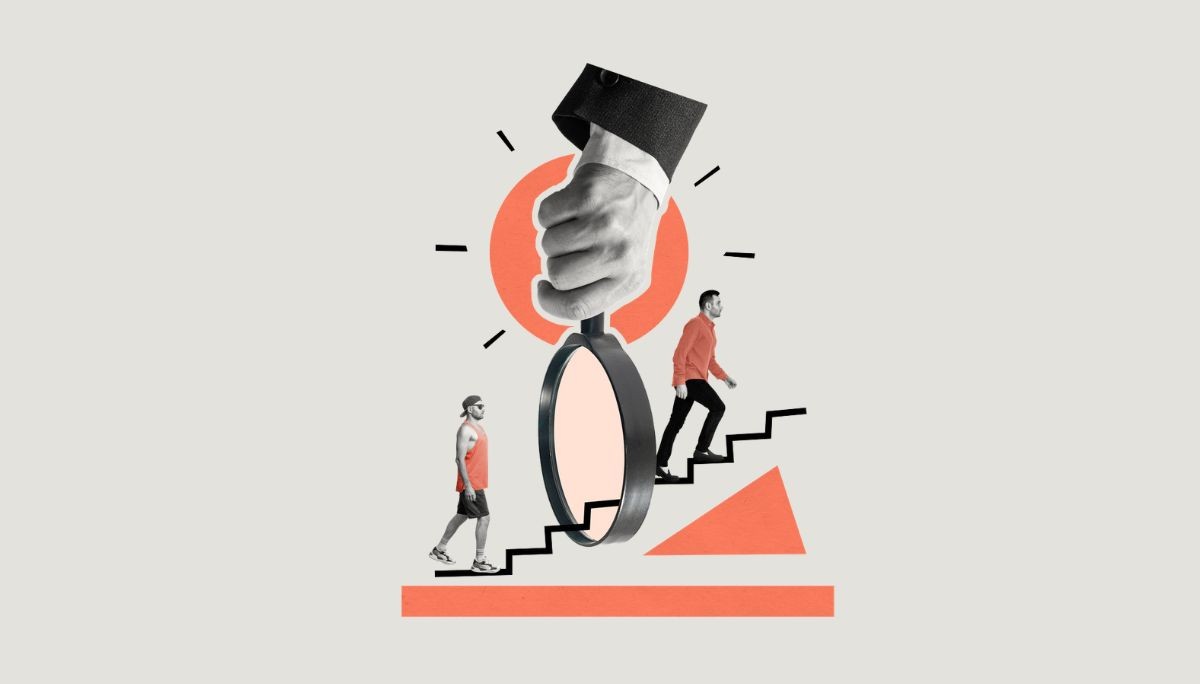
A "personality hire" is someone brought on more for their interpersonal style or social presence than for demonstrated technical ability. The term gained traction around 2023 as startups and fast-scaling tech firms placed greater emphasis on culture fit and team dynamics alongside hard skills, and it's since become a recurring debate in founder circles and recruiting conversations.
The reality is more nuanced than the discourse suggests. Communication, collaboration, and adaptability genuinely matter in modern engineering organizations, especially on cross-functional AI product teams. But hiring too heavily on personality without structured evaluation can create skill gaps and inconsistent decisions. In this guide, we'll talk about where personality adds real value, where it becomes a liability, and how to strike the right balance.
Key Takeaways
A personality hire is someone recruited primarily for their interpersonal skills and behavior rather than their technical skills or experience, often seen in roles requiring strong client interaction.
Fast growth, remote culture pressures, and unstructured interviews push many tech companies toward personality-driven hiring, sometimes unintentionally.
Benefits include improved collaboration and morale, while risks include eroded trust, delivery slips, and resentment from teammates covering skill gaps.
Structured interviews, validated personality assessments, and clear performance expectations help balance personality fit with technical competence.
Hiring managers should treat personality as one weighted dimension in a scorecard, not a primary criterion that overrides demonstrated ability.
What Does “Personality Hire” Mean?
A personality hire is someone chosen mainly for charisma, sociability, or “vibe” rather than demonstrated job competence or relevant experience. This is different from simply valuing soft skills, since a personality hire often has noticeable gaps against the role’s technical bar. Signs that you may be a personality hire include being the person who brings the team together, having informal interviews focused more on personality than skills, and being recognized for your ability to build relationships rather than deliverables.
The term evolved online around 2021 as a semi-ironic label, then became a serious topic in talent and HR discussions by 2024. In tech, personality hires are most often discussed in early customer success teams, founding operations roles, and community positions. For engineering and AI roles, concerns usually surface when delivery slips and teammates perceive that the charismatic person is not pulling their weight.
At Fonzi, we sometimes hear founders ask for “culture and personality fit first.” Our recruiters know this request needs translation into structured requirements to avoid unstructured interview processes where strong personalities overshadow skill gaps.
Core Traits Commonly Associated With Personality Hires
Typical personality traits associated with personality hires include:
Extroversion and high social energy
Humor and verbal presence in meetings
Quick rapport-building and emotional intelligence
Strong communication style in interviews
These contrast with greater, job-relevant soft skills like reliability, ownership, and structured communication that are harder to observe in a single interview. Employers increasingly prioritize personality traits such as agreeableness and emotional stability over technical qualifications, especially in roles involving client interaction.
Personality hires can also be introverted. The “wise counselor” type who is very likeable and trusted but light on actual output also qualifies. The key distinction is between “people who are enjoyable to be around” and “people whose skills and behaviors directly support business goals.”
Why Tech Companies End Up Making Personality Hires
Fast growth, limited recruiting capacity, and pressure to maintain a strong company culture can push hiring teams to overweight personality in decisions. Founder bias plays a significant role, particularly in pre-Series B environments where founders hire people resembling early teammates or social circles.
Remote and hybrid work has made “culture carriers” more valued, which can unintentionally favor personality hires over deep experts. Gallup research shows that only one-third of U.S. employees are engaged, and nearly half report stress, making visible energy and positivity appealing qualities. Unstructured interviews, such as free-flowing chats without scorecards, enable strong personalities to overshadow skill gaps. Early-stage AI and engineering teams under time pressure might skip systematic evaluation, increasing the odds of a personality-driven choice.
Cultural alignment in hiring can reduce turnover rates by up to 20%, which partially explains why many organizations prioritize it. However, this benefit disappears when alignment is conflated with charisma.
Legitimate Reasons to Prioritize Personality in Specific Roles
Interpersonal style is mission-critical in certain customer-facing roles:
Enterprise sales for AI platforms
Customer success for complex SaaS products
Developer advocacy and community management
Founding operations roles requiring stakeholder alignment
High extraversion is beneficial for roles that require high social interaction. In these positions, relationship building, resilience, and trust can drive revenue and retention as much as pure technical knowledge. Hiring for personality can be sensible when the team has mature technical depth already, and the new hire’s primary job is influence, alignment, or external storytelling.
Even in these cases, companies should still define hard requirements such as learning velocity, domain familiarity, and basic analytical skills. Personality hires often contribute to a positive work environment by being friendly and outgoing, which can improve overall morale and retention within the organization, but only when paired with baseline competence.
Benefits and Risks of Personality Hires for Engineering Teams
Personality hires are neither purely good nor purely bad. Impact depends heavily on the surrounding team and expectations. The presence of personality hires can lead to enhanced creativity and innovation in the workplace, as they help create an atmosphere where employees feel comfortable expressing their ideas. However, risks compound when skill gaps persist.
Leaders should evaluate these tradeoffs against their current team composition:
Potential Benefits | Potential Risks |
Bridges communication gaps between research and product | Erodes trust if code quality or model rigor is weak |
Boosts morale during high-stress delivery cycles | Creates resentment if colleagues cover responsibilities |
Improves stakeholder management in cross-functional settings | Causes delivery slips in execution-heavy roles |
Enhances team chemistry and aids retention | Amplifies affinity bias and halo effects in future hiring |
Hiring based on personality can enhance workplace culture | May result in higher turnover if hires lack desire to learn |
Strengthens client and coworker relationships | Can lead to greater conflict if skills gaps create friction |
Seed-stage AI startups may tolerate more personality weighting for rapid alignment, but public tech firms demand balanced profiles to sustain scale. A Monster survey reveals 48% of workers self-identify as personality hires, with 85% claiming strengthened client and coworker relationships. However, four in ten traditional hires believe personality hires get undeserved opportunities, creating potential friction points.
How to Evaluate Personality Fit Without Lowering the Technical Bar
Personality should be treated as one structured dimension among several in your hiring process, not a vague feeling that overrides evidence. The goal is an objective, repeatable evaluation that the hiring team can defend.
Build a role scorecard that lists technical competencies, soft skills, and values alignment with clear weighting. For example: 60% technical skills, 25% soft skills, 15% values alignment.
Convert vague preferences into observables. Transform “we want someone fun and positive” into behaviors like “handles conflicting priorities calmly” or “gives clear written updates under pressure.”
Use structured interviews. Behavioral and situational prompts probe for reliability, ownership, and collaboration style rather than superficial charm. Ask questions like “Describe how you handled feedback loops in ML pipelines” rather than open-ended chats.
Include work simulations. At least one exercise should simulate real work: a code review, system design discussion, or ML model critique. This anchors the decision in concrete evidence rather than interview charisma.
Data-driven decisions using tools like DISC assessments can help hiring managers understand candidates’ behavior under stress. Using pre-employment assessments can help objectively measure candidate traits, and using assessments early in the recruitment process helps filter out unqualified candidates.
Reducing Bias While Assessing Personality
Personality judgments are susceptible to affinity bias, halo effect, and stereotyping, especially across cultures and communication styles. Hiring based on extraversion can be ethically similar to discrimination based on race or gender, as it violates the Relevance Principle and the Fairness Principle in employment ethics. Bias in the hiring process can occur when candidates are judged primarily on their personality, potentially excluding more qualified individuals.
Many popular personality tests lack predictive validity for job performance, raising ethical concerns about their use in hiring decisions and the potential for misrepresentation of candidates’ abilities. Integrating validated personality assessments into recruitment provides a scientific, less biased framework for evaluating growth potential.
Practical steps to reduce bias:
Use diverse interview panels so no single impression of “likable” dominates
Apply standardized rating scales for behavioral dimensions with examples of low, medium, and high performance
Write evidence-based notes tied to specific answers, not phrases like “great vibe.”
Train interviewers on these practices, especially for distributed teams hiring across regions
Personality Hire vs Culture Fit vs Culture Add
Leaders often conflate personality, culture fit, and culture add, creating confusion and risk in hiring decisions.
Term | Definition | Risk |
Personality hire | Primarily charisma-based selection | Overlooks skill gaps |
Culture fit | Alignment with current norms and behaviors | Creates homogeneous teams |
Culture add | Complementary perspectives supporting stated values | Requires a clear values definition |
Overusing “culture fit” from 2010 to 2020 led to homogenous teams and reduced diversity in many tech companies. The shift toward “culture add” in the mid-2020s reflects companies seeking people who align with values like ownership and transparency while adding new backgrounds, working styles, or problem-solving approaches.
For engineering and AI roles, values alignment and culture should matter more than whether someone is outgoing or prefers social gatherings. Effective teams require a mix of complementary traits to ensure innovation and high-quality execution. Strategic team composition based on personality helps leverage diverse strengths and manage potential friction points. Diverse personalities in a team improve adaptability to uncertainty and change.
Examples of culture add for technical teams:
Research rigor expertise, joining a fast-moving product squad
Enterprise security depth was added to a team focused on rapid experimentation
Strong conflict resolution skills in a team of junior roles with new ideas
Documentation excellence complements a team of rapid prototypers
Recognizing When “Personality” Is Standing In For Something Else
Examine when phrases like “great personality” or “great attitude” mask a lack of skill, role clarity, or compensation competitiveness. Understanding individual communication styles allows managers to address potential conflict before it escalates.
Conduct post-hire reviews after 6 to 12 months to see whether supposed personality hires are actually outperforming on measurable outcomes. Employees whose personalities match their roles are generally more engaged and satisfied. Document the original rationale for each hire, including which competencies were weighed most heavily, to allow honest retrospectives. Update the hiring rubric if traits called “personality” were actually indicators of resilience, ownership, or product sense.
Practical Rules for Using Personality Wisely in Tech Hiring Decisions
Apply these rules to upcoming searches as a VP of Engineering or Head of Talent:
Never hire someone for personality if existing team members will need to cover core responsibilities for more than three months
Require at least one strong signal of learning velocity before accepting a skill gap
Define personality as a tiebreaker only when two candidates are comparable on technical skills
Conscientiousness is the strongest predictor of job performance, focusing on responsibility, organization, and achievement striving. Weight it accordingly.
Agreeableness indicates a cooperative and empathetic team member, while openness to experience suggests curiosity and adaptability. Look for both.
Emotional stability is essential for handling stress at work and maintaining composure in fast-paced roles
Document rationale for each hiring decision to enable retrospectives
Revisit personality weighting after each major funding round or reorg
Understanding personality traits allows organizations to evaluate a candidate’s behavioral fit, which is a powerful predictor of long-term success and team cohesion. Using personality as a considered input improves both delivery and retention outcomes for engineering and AI teams.
Conclusion
Personality absolutely matters in engineering and AI hiring, but it cannot substitute for demonstrated technical competence. The strongest teams are built by leaders who evaluate communication style, collaboration, and cultural contribution as one structured part of the hiring process rather than allowing charisma alone to drive decisions. In fast-growing technical organizations, balancing interpersonal strengths with measurable execution is what creates resilient, high-performing teams over the long term.
A useful next step is to review your hiring scorecards, interviewer training, and recent hiring outcomes to see whether personality traits are being weighted too heavily compared to technical signal and real-world impact. Aligning recruiters, engineering managers, and founders around consistent evaluation criteria can significantly improve hiring quality and reduce bias. Platforms like Fonzi support this kind of structured hiring by helping teams combine technical assessments, project-based signals, and broader candidate context into a more balanced and evidence-driven evaluation process.
FAQ
What does personality hire mean, and where did the term come from?
Is hiring for personality a good strategy, or does it lead to weaker teams?
What is the difference between a personality hire and hiring for culture fit?
How do I evaluate personality fit during an interview without introducing bias?
Can someone be a personality hire and still be great at their job?


