In 2021, you might have been a two-person team in a shared workspace, piecing together an LLM prototype on a tight budget. Today, that same startup could be a 200-person AI organization expanding internationally and preparing for an IPO. The jump between those stages is significant, and many teams underestimate how different the operational and hiring challenges become as they scale. This article breaks down the key stages of a startup, from early development through growth and potential exit, using concrete markers like funding rounds, revenue milestones, and team size.
Key Takeaways
Startups move through distinct phases, from early validation to growth, expansion, and potential exit, each with different goals, risks, and investor expectations.
The early phase (pre-seed, seed, and early traction) is where you validate the problem–solution fit, product market fit, and establish your first repeatable hiring process.
Expectations from early investors and potential customers shift dramatically as you progress from seed to series A funding and beyond, particularly around consistent revenue, reliability, and team maturity.
Fonzi is a specialized, tech-driven hiring partner that helps founders and hiring managers consistently hire elite AI engineers in as little as 3 weeks, from the first AI hire to large-scale team builds.
Treating hiring as a stage-aware, repeatable system rather than an ad-hoc effort is critical to surviving the high-failure early stages and scaling efficiently.
The Main Stages of a Startup: From Idea to Exit
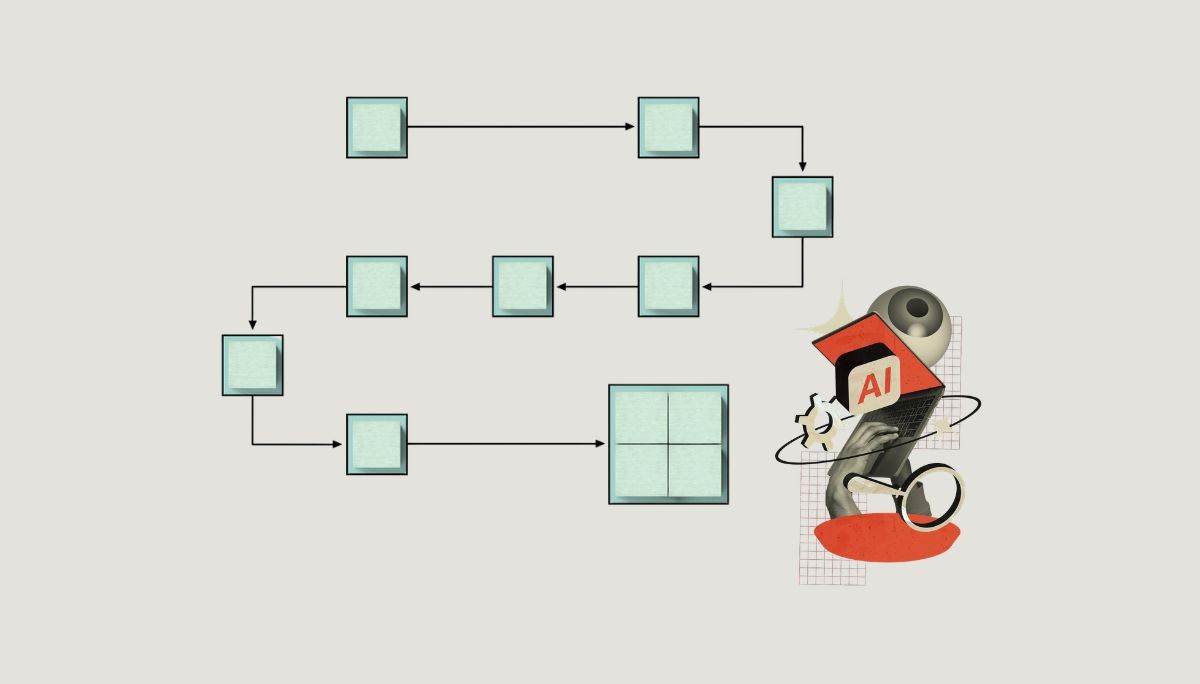
In practice, most technology startups pass through six to seven recognizable phases, even if they don’t raise venture capital at every step. For our example we’ll use a pragmatic six-stage model: Pre-seed, Seed, Early Stage (often Series A), Growth (Series B/C), Expansion & Late Stage, and Exit.
Each startup funding stage is defined by a mix of factors: clarity of the problem you’re solving, product maturity (from raw idea to minimum viable product to full platform), market traction, team size, and available capital. These stages represent a progression, but the timelines vary. Between 2021 and 2026, AI startups have seen compressed development cycles thanks to accessible LLMs and unprecedented seed funding.
Founders should treat these labels as tools, not rigid rules. Many bootstrapped companies follow similar stages without formal funding rounds. The underlying dynamics (validation, traction, scale, maturity) remain consistent.
Consider an AI startup that began with a GPT-3 prototype in 2022 during its pre-seed phase. By 2025, that same company might have a multimodel production system, 100+ engineers, and be firmly in the growth stage. The progression is real, even if the path isn’t linear.

Pre-Seed: Problem, Insight, and Validation
The pre-seed stage is the “insight and hypothesis” phase. It typically lasts 6–18 months, during which founders test whether a real, urgent problem exists and whether AI or software is the right lever to solve it.
Activities at this funding stage include deep customer interviews (often 50–100 conversations), market research, and early technical experiments. For AI startups, this might mean quick LLM prototypes on OpenAI or Anthropic APIs, often costing under $1,000 to validate technical feasibility.
Typical funding sources during the pre-seed phase (2022–2026) include founder savings, friends and family checks, small angel investors, and occasional pre-seed funds. Total capital raised at this stage usually ranges from $10K to $250K. Many founders use their own money to get started.
Hiring is minimal. The team might consist of a technical co-founder, a part-time contractor, or an early AI generalist. Most work is done by 1–3 founders. This is not the time for a complex org chart.
The emphasis here is on lean experimentation. Avoid premature scaling. Robust hiring processes, like engaging a partner such as Fonzi, usually start at late pre-seed or seed when founders know they need strong AI engineering capacity and can’t afford to spend months on a single hire.
Seed: Building the MVP and Proving Problem–Solution Fit
The seed stage begins once the problem is validated. This phase runs through building and launching a real minimum viable product to early customers. For seed stage startups, the goal is to prove that your solution actually works for paying customers.
Seed funding norms show rounds in the low-to-mid seven figures, typically $1M to $5M (median around $2.5M for AI firms, per Carta data). This capital comes from angel investors, accelerators like Y Combinator, and early-stage venture capitalists. Investors expect a working MVP, a few design partners, and early revenue signals (perhaps $10K–$50K MRR or 1,000 monthly active users).
For AI startups, the seed stage is when you move from a hacked-together notebook to a deployable service with monitoring, data pipelines, and basic MLOps infrastructure. Technical debt accumulates fast during rapid iteration, this is expected, but it needs to be managed.
Hiring at seed typically means growing from 2–3 people to 5–10. The focus is on versatile AI engineers, founding ML engineers, and full-stack generalists who can ship quickly under uncertainty. Statistics show that seed-stage teams with strong founding engineers achieve 2x faster MVP launches.
Fonzi helps at this stage by sourcing rare “builder” AI engineers who thrive in ambiguity, engineers comfortable with evolving specs and small codebases. Instead of spending 2–4 months sourcing, founders can secure funding for growth and make key hires within weeks.
Early Stage (Often Series A): From MVP to Product–Market Fit
The early stage marks the transition from a promising MVP to a product that reliably solves a recurring problem and begins to scale across your target market. This phase often coincides with Series A funding.
Series A rounds often range in the eight-figure territory for strong AI startups, typically $10M to $30M (up 50% from 2022 due to compute demands, per PitchBook). Venture capital firms at this stage expect credible unit economics, retention indicators above 40%, and a clear go-to-market motion. The LTV:CAC ratio should ideally exceed 3:1.
Operational focus shifts significantly. Founders move from building features to improving reliability (99% uptime targets), tightening feedback loops, formalizing onboarding and support, and reducing technical debt from fast MVP builds. A/B testing frameworks become standard.
Hiring becomes more structured. Early-stage startups start building dedicated AI teams, typically 3–10 AI/ML engineers, along with a core platform or infra team and first dedicated roles like product managers or data engineers. Team size grows to 10–30 people.
This is where ad-hoc, founder-led recruiting breaks down. Y Combinator notes this as the stage where inconsistent evaluations cause failure rates to spike by 30%. Fonzi plugs in here to standardize interviews, surface top 1–2% AI talent, and maintain a strong candidate experience across dozens of interviews.

Growth Stage (Series B/C): Scaling Product, Revenue, and Team
The growth stage begins once product-market fit is clear. Associated with series B funding and series C funding between 2022 and 2026, growth-stage startups are expected to prove they can scale revenue efficiently. Rounds typically range from $50M to $200M.
At this funding stage, founders focus heavily on process: repeatable sales cycles, reliable infrastructure with strict SLAs, data governance, and performance observability for AI workloads. Revenue growth targets often hit 20–30% month-over-month, with ARR reaching $5M–$20M.
Hiring shifts from “finding a few generalist stars” to “building entire AI-function capabilities.” This means hiring research engineers, infra/ML platform engineers, applied ML engineers, prompt engineers (commanding $250K–$400K salaries), data scientists, and managers. Team size balloons to 50–150 people.
The risk at this stage is inconsistent hiring quality and interviewer fatigue. Interviewers burn out, processes diverge across teams, and cycle times stretch to 8+ weeks. McKinsey reports that 40% of growth-stage hires underperform due to fragmented processes. This hurts both speed and candidate experience.
Fonzi serves as a scaling lever here: a consistent evaluation framework for AI roles across multiple teams, calibrated assessments, shortlisted candidates in under 3 weeks, and a candidate journey that feels premium even when hundreds of applicants are screened. Case studies like Scale AI’s growth from 100 to 500+ AI engineers illustrate how consistent frameworks cut time-to-hire by 50%.
Expansion and Late Stage: Multiple Products, New Markets, and Efficiency
Expansion and late stage describe the period when the core business is solid, annual revenue reaches tens or hundreds of millions, and the company explores new markets, product lines, or geographies. This is where international expansion becomes a real priority.
Typical activities include launching AI-powered add-ons, moving into Europe or APAC markets, layering enterprise offerings on top of earlier SMB solutions, and integrating acquisitions. Companies may pursue further expansion through strategic partnerships with established companies.
Operational focus shifts toward efficiency and margin improvement. Late-stage startups aim for 40%+ margins via cost-optimized inference (using techniques like vLLM quantization to reduce GPU needs). Compliance becomes critical, as data privacy regulations, EU AI Act requirements, and security posture for large customers all demand attention.
Hiring focuses on senior and leadership AI roles: Head of AI, Director of ML Platform, Staff/Principal Engineers (commanding $500K+ total compensation). Companies build layered teams beneath these leaders, with formalized talent operations using ATS platforms like Greenhouse. Team sizes exceed 200 people.
Fonzi’s value here is supporting both volume and senior searches. Large enterprises and scaleups can hire their 100th or 10,000th AI engineer with the same rigor as their first, while maintaining a consistent, brand-aligned candidate experience globally. Private equity firms and corporate investors entering at this stage expect this level of operational maturity.
Exit: IPO, Acquisition, or Long-Term Independence
The exit phase can mean going public, being acquired, or intentionally remaining private but mature. Not all startups reach or desire a traditional exit, and that’s fine.
An initial public offering for a late-stage startup typically requires audited financials, predictable revenue ($100M+ ARR for AI unicorns), strong governance via SOX compliance, and investor relations capabilities. This often follows years of later-stage investments and private rounds totaling $500M or more.
Acquisition scenarios vary. Strategic buyers, like established tech giants, may acquire AI startups for their technology, talent, or market position. This can happen as early as post-Series A for standout AI companies, though most acquisitions occur later.
During exit preparation, hiring slows or becomes highly selective. The focus shifts to critical leadership gaps, compliance roles, and integration specialists where mistakes are costly. Investment banks may advise on the transaction, requiring specific expertise.
Fonzi can still play a role here by filling essential AI engineering and leadership gaps quickly during delicate transition windows. This minimizes disruption to product roadmaps and post-merger integration efforts, critical when the stakes are highest.
How Priorities Shift Across Stages
The table below compares key dimensions across the different stages of a startup. Use it to understand how product focus, funding, team size, and hiring needs evolve as you progress.
Stage | Primary Goal | Typical Funding & Timeline | Core Product Focus | Team & Hiring | Role of Fonzi |
Pre-Seed | Validate problem and insight | $10K–$250K / 6–18 months | Prototypes, experiments | 1–3 founders, minimal hiring | Late intro for first AI hire |
Seed | Build MVP, prove problem–solution fit | $1M–$5M / 12–24 months | Deployable AI service, basic MLOps | 5–10 versatile engineers | Source first AI builders in weeks |
Early Stage (Series A) | Achieve product–market fit | $10M–$30M / 18–36 months | Scalable product, reliability | 10–30 people, structured AI teams | Repeatable evals, standardized hiring |
Growth (Series B/C) | Scale revenue and infrastructure | $50M–$200M / 24+ months | Enterprise-ready, observability | 50–150 specialists, managers | Multi-team scaling, consistent quality |
Expansion & Late Stage | New markets, efficiency, compliance | $500M+ / Ongoing | Multi-product platform | 200+ with senior leadership | Volume hiring, senior searches |
Exit | IPO, acquisition, or independence | Variable | Mature, audited | Selective for critical gaps | Fill leadership gaps during transitions |
This reflects patterns observed across many startups. Your business model and market may shift these timelines, but the underlying progression remains consistent.
Why Hiring Breaks as You Scale
A few years ago, founders personally sourced and interviewed early AI engineers. Networks, LinkedIn outreach, and word-of-mouth worked well enough for the first few hires. Today, founders discover that the same approach fails once they need dozens of hires across multiple teams.
The failure modes are predictable:
Inconsistent evaluation: Different interviewers use different rubrics, leading to 25% bad-fit hires.
Slow feedback loops: Cycle times stretch beyond 4 weeks, and top candidates accept other offers.
Hero bottlenecks: One or two strong interviewers become overloaded, slowing everything down.
Degraded candidate experience: Lever data shows 80% of top talent is repelled by poor interview experiences.
Most Fonzi clients fill AI roles within about 3 weeks. Offer-acceptance rates exceed 90% because candidates feel respected and well-informed throughout the process. Whether you’re hiring your first AI engineer or your hundredth, the system flexes to your stage and team maturity, ensuring a proven track record of quality hires.
Conclusion
Understanding the stages of a startup, from pre-seed insight to scaled expansion and potential exit, helps founders and technical leaders set realistic expectations and avoid misallocating time, capital, and headcount. Each phase comes with its own challenges and advantages, and investors expect you to clearly understand where you are and where you’re going. Just as important, each stage demands a different hiring approach: early teams rely on a small group of highly adaptable AI generalists, while later stages require more structure, with managers, specialized engineers, and clearly defined roles.
One of the most common and avoidable failure points is inconsistent hiring quality as teams scale. Treat hiring as a strategic, stage-aware system rather than a reactive series of job posts. Platforms like Fonzi AI help companies do exactly that, giving founders and CTOs a faster, more reliable way to bring in vetted AI talent aligned with their current stage. Whether you’re building your first product or scaling toward profitability, having the right team in place is what turns a strong idea into a durable, successful business.
FAQ
What are the main stages of a startup company?
What should founders focus on during the early stage of a startup?
How do you know when a startup is ready to move from one stage to the next?
What are the biggest challenges at each phase of a startup?
How does hiring change at different stages of a startup?