What Is a Data Pipeline? How They Work & AI Tools for Automation
By
Ethan Fahey
•
Picture this: it’s 2026, and you’re a Series A SaaS startup trying to reconcile product events from Segment, billing data from Stripe, and CRM records from HubSpot. Metrics don’t line up, dashboards tell different stories, and your data team is stuck chasing inconsistencies instead of driving insights. When your data doesn’t flow cleanly, decision-making slows, and the business feels like it’s operating in the dark.
That’s where data pipelines come in. Think of them as the infrastructure that turns raw, messy inputs into reliable, analysis-ready data your teams can trust. As AI features, personalization, and real-time analytics become table stakes, solid pipelines are no longer “nice to have,” they’re foundational to everything from product analytics and fraud detection to LTV modeling and recommendations. And building them well requires experienced data and AI engineers. Platforms like Fonzi help startups and growing companies connect with exactly that talent, pairing AI-assisted screening with human judgment so you can hire engineers who know how to design and scale these systems, not just talk about them.
Key Takeaways
A data pipeline is an automated system that moves raw data from sources (apps, databases, events) through transformations into destinations (warehouses, lakes, BI tools), enabling teams to trust and act on their data.
Modern pipelines increasingly rely on AI tools for automation across monitoring, schema detection, data quality enforcement, and Python-based analysis workflows.
Understanding the difference between batch processing pipelines, streaming pipelines, and ETL pipelines helps you choose the right architecture for your specific business needs.
Building and maintaining reliable data pipelines requires experienced data engineers and data scientists who understand both technical implementation and business context.
Fonzi is an AI-powered hiring solution that helps companies staff elite data and AI engineers needed to design, build, and maintain these pipelines at scale, with most hires happening within 3 weeks.
What Is a Data Pipeline? (Clear Definition & Core Concepts)
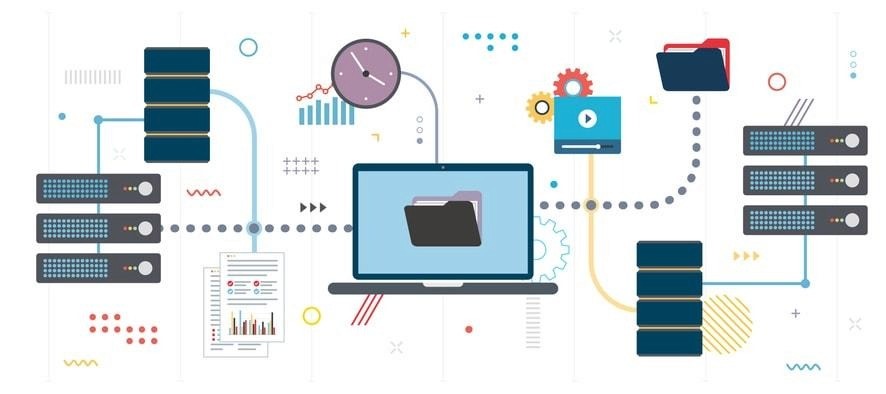
A data pipeline is a set of automated processes and tools that move, transform, and deliver data from multiple sources to a destination such as a data warehouse, data lake, feature store, or analytics tool. Think of it as the circulatory system of your data infrastructure, constantly moving data from where it’s generated to where it’s needed.
Pipelines can be straightforward or highly complex. A simple pipeline might involve daily CSV ingestion into BigQuery. A sophisticated enterprise pipeline might include multi-stage streaming into Snowflake, real-time data processing for ML features, and reverse ETL back into Salesforce for sales team consumption.
The business outcomes of well-designed data pipelines are concrete:
Reliable dashboards that don’t break before board meetings
Accurate cohort analysis for product decisions
Robust machine learning models trained on clean, consistent data
Compliance-ready audit logs for sensitive data handling
Good pipelines emphasize automation, observability, and data quality. They reduce manual spreadsheet work, eliminate ad hoc SQL firefighting, and ensure that enterprise data flows seamlessly from source to destination without constant human intervention.
The rest of this article will unpack data pipeline architecture, explore the types of data pipelines (batch vs streaming), clarify the data pipeline vs ETL distinction, and show where AI tools and expert data engineers fit into the picture.
Why Data Pipelines Are Critical for Data- and AI-Driven Teams
Modern teams rely on dozens of tools in their daily operations. Snowflake for warehousing, dbt for transformations, Fivetran for ingestion, Kafka for streaming, Looker for BI, Salesforce for CRM, plus internal microservices generating event logs. Without pipelines to connect them, you end up with data silos, isolated pockets of information that can’t talk to each other.
Reliable data pipelines connect operational tools like HubSpot, Salesforce, Stripe, and PostgreSQL into unified stores. Whether you’re using Redshift, BigQuery, or Databricks, the goal is the same: create a single source of truth for business intelligence, data analytics, and ML.
Common use cases that data pipelines enable include:
Revenue dashboards tracking MRR, churn, and expansion
Marketing attribution connecting ad spend to conversions
Product funnel analysis identifying drop-off points
Recommendation systems serving personalized content
Fraud detection flagging suspicious transactions in real time
LTV prediction forecasting customer lifetime value
The business risks of poor pipelines are equally concrete. You get inconsistent KPIs across teams, with marketing reporting different numbers than finance. Dashboards break before critical meetings. ML models underperform because they’re trained on stale or dirty data. Sensor data and transactional data sit unused because nobody trusts it.
Building and maintaining high-quality pipelines is non-trivial. It typically requires experienced data engineers who understand that data pipelines consist of interconnected components that must work together reliably. This creates a hiring bottleneck, one that Fonzi specifically solves by connecting companies with vetted engineers who’ve built these systems in production.
Key Components of a Modern Data Pipeline
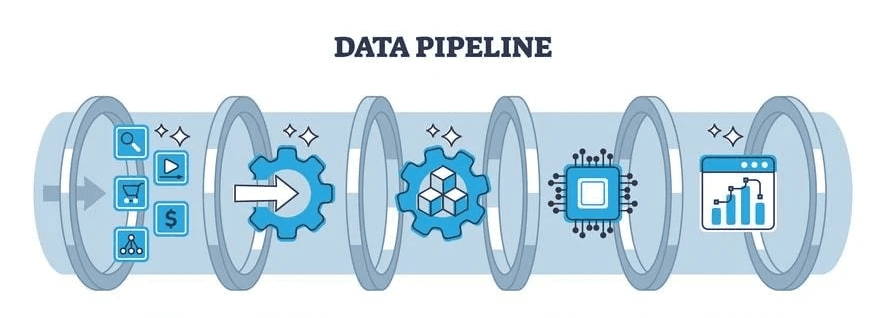
While specific tools differ across organizations (Airflow vs Dagster, Kafka vs Kinesis), most pipelines share common architectural components that manage data flows from end to end. Understanding these components helps you design systems that scale and hire engineers who can build them.
The major components of any data pipeline architecture include:
Data sources — where information originates
Ingestion layer — how data enters the pipeline
Processing/transformations — how raw data becomes useful
Storage destinations — where processed data lands
Orchestration & scheduling — how jobs coordinate and run
Monitoring & observability — how you know things are working
Data governance — how you maintain security and compliance
In scalable architectures like those used at Netflix or Uber, these components are decoupled to allow independent scaling, resilience, and evolution. Each piece can be upgraded or replaced without rebuilding everything else.
As organizations grow, they standardize these components into platform-like internal “data platforms.” This makes hiring senior engineers with platform experience highly valuable—they’ve seen what works at scale.
Data Sources: Where Pipeline Data Comes From
Data sources represent the origin points for your pipeline. Common categories include:
Source Type | Examples | Typical Data |
Application databases | PostgreSQL, MySQL, MongoDB | User records, orders, accounts |
Event streams | Segment, Kafka, user actions | Clicks, page views, feature usage |
SaaS APIs | Salesforce, Stripe, HubSpot | CRM data, payments, marketing |
IoT devices | Sensors, connected products | Sensor data, telemetry, status |
Legacy systems | Mainframes, flat files | Historical data, batch exports |
Data ingestion mechanisms vary by source. You might use direct database replication with tools like Debezium or Fivetran, APIs and webhooks for SaaS integrations, file-based ingestion from S3 buckets, or pub/sub messaging for event streams.
Understanding source schemas, update patterns, and SLAs is crucial. You need to know: Does this API rate-limit? How often does this database schema change? What’s the latency between an event happening and it appearing in the source system?
Data engineers often work closely with application teams to design trackable events and clean schemas from day one. Getting this right upstream saves enormous pain downstream. Fonzi candidates are specifically screened for experience integrating these real-world diverse data sources in production environments.
Transformations: Turning Raw Data into Analytics-Ready Assets
Data transformation is where the magic happens. Raw, messy data gets converted into structured, consistent, business-friendly tables or ML features. This is where you standardize timestamps across time zones, normalize currencies, deduplicate records, and encode business logic.
Common transformation tasks include:
Cleaning — removing invalid records, handling nulls
Deduplication — eliminating duplicate events or rows
Normalization — standardizing formats (dates, currencies, IDs)
Reshaping — pivoting between wide and long formats
Joins — combining data from different data sets
Aggregations — computing daily/weekly/monthly rollups
Business logic — defining “active customer” or “qualified lead”
Popular tools for transformations include dbt (for SQL-based modeling), Spark (for large datasets), and Pandas-based Python scripts for custom processing. Many teams process data directly in cloud data warehouse environments like Snowflake or BigQuery using SQL.
There’s an important distinction between in-pipeline transformations (traditional ETL) and post-load transformations (ELT). We’ll compare these explicitly in a later section.
Well-designed transformations are version-controlled, tested, and documented. Multiple teams should be able to trust and reuse transformation logic across products and machine learning models without rebuilding from scratch.
Destinations: Warehouses, Lakes, and Operational Tools
Data storage destinations represent where processed data ultimately lands. The choice depends on your use case:
Cloud data warehouses (Snowflake, BigQuery, Redshift) are ideal for BI, metrics, and SQL-based analysis. They offer structured and unstructured data support with excellent query performance for data visualizations and dashboards.
Data lakes (S3, Azure Data Lake Storage, GCS with Parquet format) work well for raw data retention, unstructured data sets, semi-structured data, and scenarios where you want maximum flexibility. You can store data first and decide how to use it later.
Operational tools receive data via reverse ETL, pushing transformed data back into Salesforce, ad platforms, or product databases for real-time personalization.
Good pipelines retain both raw and transformed versions of data. This enables reproducibility, debugging, and future advanced analytics. You might want to retrain models in 2026 using 2024 data, or investigate why a metric changed three months ago.
Governance and access control are critical at the destination layer. Role-based access, data catalogs, and audit logs help prevent data leaks and ensure consistent data quality for compliance requirements. Patient records and other sensitive data require particularly careful handling.
Fonzi engineers are evaluated on their ability to design destination schemas that scale with the business, not just “make the data land somewhere,” but architect storage that supports long-term growth.
Orchestration, Scheduling, and Monitoring
Orchestration coordinates tasks and dependencies in a pipeline, ensuring jobs run in the right order and recover gracefully when things go wrong. It’s the conductor making sure all instruments play together.
Popular orchestration tools include:
Apache Airflow — the industry standard for DAG-based workflows
Dagster — modern alternative with strong typing and testing
Prefect — Python-native with excellent developer experience
Google Cloud Composer — managed Airflow
AWS Step Functions — serverless orchestration
Scheduling matches business needs and SLAs. You might need “daily revenue report ready by 8 a.m. PST” or “fraud alerts within 5 seconds of transaction.” Batch processing typically runs at scheduled intervals (hourly, daily), while real-time processing triggers continuously.
Monitoring and observability keep everything running. This includes:
Pipeline health dashboards showing job status
Alerting on failures, delays, or anomalies
Data quality checks using tools like Great Expectations or Monte Carlo
Lineage tracking to understand data dependencies
Elite pipeline engineers understand not just code but reliability engineering—how to build systems that fail gracefully, alert appropriately, and recover automatically. This is a key component in Fonzi’s vetting process.
Types of Data Pipelines: Batch, Streaming, and Hybrid
Not all data pipelines work the same way. Most organizations end up with several pipeline types, each tuned to data velocity, large volumes of information, and specific business needs.
The three main categories are:
Pipeline Type | Data Velocity | Latency | Typical Use Cases |
Batch | Scheduled intervals | Minutes to hours | Financial reports, model training |
Streaming | Continuous | Milliseconds to seconds | Fraud detection, live dashboards |
Hybrid | Mixed | Varies by layer | Most modern architectures |
Choosing the right pipeline type impacts both infrastructure cost and required engineering skill level. Real-time streaming data processing requires more specialized expertise than batch processing pipelines, which directly informs whom you need to hire.
Batch Processing Pipelines
Batch pipelines ingest and process data at fixed intervals, such as hourly, daily, or weekly. They’re closely associated with traditional ETL pipelines and remain the workhorse of most data infrastructure.
Typical use cases for batch processing pipelines include:
Monthly financial close and revenue reconciliation
Marketing attribution analysis
Churn analysis and customer segmentation
Board reporting that relies on complete historical data
Weekly model retraining for recommendation systems
Technologies commonly used include cron-scheduled scripts, Airflow DAGs, Spark jobs on Databricks, and SQL-based transformations running directly in warehouses.
Benefits of batch processing:
Simpler to reason about and debug
Easier data quality checks on complete data sets
Predictable load on systems
Often cheaper infrastructure for early-stage startups
Trade-offs to consider:
Data latency (yesterday’s numbers instead of live data stream)
Potential backlog issues if jobs fail or data volumes spike
Not suitable for real-time analytics requirements
Streaming and Real-Time Pipelines
Real-time data pipelines handle event data continuously, processing information as it’s generated rather than waiting for scheduled batches. Data flows through message brokers like Apache Kafka, AWS Kinesis, or Google Pub/Sub.
Concrete real-time use cases in 2026 include:
Ride ETA updates for transportation apps
Dynamic pricing based on demand signals
Instant fraud scoring for payment processors
Real-time inventory management
In-app personalization based on user behavior
Key technologies for streaming pipelines include Kafka, Flink, Spark Structured Streaming, Apache Beam, and managed services like Confluent Cloud. Stream processing requires understanding concepts like exactly-once semantics, backpressure handling, and monitoring at scale.
Streaming pipelines often pair with ELT patterns, landing raw events quickly into a data lake or warehouse, then transforming on demand. This gives you the best of both worlds: real-time availability with batch transformation flexibility.
The complexity of streaming means experienced stream processing engineers are scarce and highly valuable. These aren’t skills you pick up in a weekend tutorial; they require production experience with high-throughput systems.
Data Pipeline vs. ETL: What’s the Difference?
One of the most common points of confusion: what’s the difference between ETL and a data pipeline?
ETL (Extract, Transform, Load) is a specific workflow pattern, while “data pipeline” is a broader term covering any automated movement and processing of data. All ETL pipelines are data pipelines, but not all data pipelines are ETL.
ETL typically refers to batch jobs that transform data before it lands in a destination. You extract from sources, apply transformations in a staging area, and then load clean data into a warehouse. Traditional ETL dominated the data world for decades.
ELT (Extract, Load, Transform) flips the order. You load raw data first, then transform it in place using the warehouse’s compute power. Modern data platforms often use ELT with tools like Fivetran (for extraction and loading data) plus dbt (for transformation).
Data pipelines may include additional steps beyond ETL/ELT:
Machine learning feature generation
Reverse ETL to operational tools
Data quality checks and governance workflows
Real-time streaming data processing
Exploratory data analyses automation
Comparing ETL Pipelines and General Data Pipelines (Table)
Aspect | ETL Pipeline | General Data Pipeline |
Scope | Extract, transform, load pattern | Any automated data movement and processing |
Timing | Typically batch at scheduled intervals | Batch, streaming, or hybrid |
Transformation location | Before loading (in staging) | Before or after loading (ETL or ELT) |
Flexibility | Structured, predictable workflow | Can include ML, reverse ETL, real time |
Typical tools | Informatica, Talend, SSIS | Fivetran + dbt, Kafka, Airflow, custom code |
Example | Nightly job loading Salesforce data into Snowflake | End-to-end system streaming events to feature store for recommendations |
Complexity | Moderate | Varies from simple to highly complex |
Most modern stacks use a mix of ETL and ELT patterns inside larger, orchestrated data pipelines. The extract, transform, and load workflow remains relevant, but it’s now one component of a broader data infrastructure.
How a Data Pipeline Works End-to-End
Let’s walk through a realistic pipeline from source to destination. Imagine a consumer subscription app tracking user behavior and billing events, think a streaming service or SaaS product.
Step 1: Event Capture Users interact with the app, signing up, browsing content, starting trials, and upgrading subscriptions. Each action generates events captured by the front-end and back-end code.
Step 2: Data Ingestion Events flow to Segment (for behavioral data) and Stripe webhooks (for billing). A Kafka cluster handles high-volume event streams. Database replication captures changes in the PostgreSQL production database.
Step 3: Landing in Storage Raw events land in an S3-based data lake in Parquet format. Fivetran syncs Stripe and Salesforce data directly to BigQuery. All raw data is preserved for future analysis.
Step 4: Transformation Daily dbt models run in BigQuery, transforming raw events into clean “fact” and “dimension” tables. Business logic defines what counts as an “active subscriber” or “churned customer.”
Step 5: Consumption Growth and product teams query transformed data in Looker dashboards. Data scientists pull data points for churn prediction models. Marketing receives audience segments via reverse ETL to ad platforms.
Step 6: Machine Learning ML pipelines consume feature tables to train and serve models, churn prediction, content recommendations, and fraud detection. Predictions flow back into the product for personalization.
Throughout this flow, automation handles schema detection, retry logic catches failed jobs, data quality tests flag anomalies, and monitoring dashboards track pipeline health.
Both batch and streaming components coexist. Real-time fraud alerting runs alongside nightly revenue consolidation. The architecture supports different latency requirements within a unified system.
Example: Product Analytics Pipeline for a SaaS Startup
Let’s get specific. A SaaS startup in 2026 has:
React front-end sending events via Segment
Node.js backend logging API calls and errors
PostgreSQL database storing users, subscriptions, and feature flags
The pipeline architecture looks like this:
Ingestion: Segment collects front-end events. Backend logs go to CloudWatch, then S3. Fivetran replicates PostgreSQL tables to Snowflake.
Storage: Raw data lands in Snowflake’s “raw” schema. Historical data accumulates for trend analysis.
Transformation: dbt models create staging tables, then intermediate aggregations, then final “mart” tables for analytics. Business definitions are codified: “What’s an activated user? What’s the activation window?”
Consumption: Looker dashboards display funnel metrics, activation rates, and cohort retention. Product managers monitor A/B test results.
ML Extension: When ready, a churn prediction model using Python and scikit-learn plugs into the existing pipeline. Features come from the same transformed tables; no re-architecture needed.
This is exactly the “full lifecycle” pipeline design that Fonzi candidates are tested on, from instrumentation strategy through last-mile analytics and ML deployment.
AI Tools for Automating Data Pipelines and Python Analysis
As data stacks become more complex, AI tools are increasingly used to automate repetitive work, assist with code generation, and detect anomalies before they become incidents.
Categories of AI assistance for pipelines include:
Pipeline design and documentation — AI suggests architectures and generates diagrams
Python code generation — LLMs write transformation scripts and Spark jobs
Data quality automation — ML-based validation and testing
Anomaly detection — Catching metric issues before humans notice
Intelligent alerting — Reducing noise, prioritizing real problems
These tools don’t replace pipeline engineers; rather, they amplify productivity, allowing smaller teams to manage more complex stacks. A data science team using AI effectively can deliver data visualizations and models that previously required twice the headcount.
Hiring strong engineers who know how to leverage AI tools effectively is now a competitive advantage. The best candidates aren’t just coding from scratch; they’re using AI to accelerate development, testing, and documentation while maintaining quality standards.
AI Tools for Python-Based Data Analysis Pipelines
AI code assistants have transformed how data engineers write Python code for ETL jobs, Pandas transformations, and Spark applications.
Code generation and refactoring: Tools like GitHub Copilot and Claude-based assistants help generate boilerplate code, suggest optimized approaches, and refactor messy notebooks into production-ready modules. What used to take hours of Stack Overflow searching now happens in minutes.
Query optimization: AI can analyze SQL and Python transformations to detect inefficient joins, suggest index usage, and recommend parallelization strategies for processing large datasets.
Documentation automation: Emerging tools auto-generate docstrings, README files, and data flow diagrams from Python codebases. This is invaluable for onboarding new team members and satisfying audit requirements.
Test generation: LLMs can suggest data quality tests based on schema analysis and historical distributions. They examine your tables and propose: “This column should never be null. This ID should always exist in the parent table. This timestamp should always be after the account creation date.”
Top-tier engineers are increasingly evaluated on their ability to integrate these AI tools into robust development workflows, not replacing their expertise, but extending it.
AI for Monitoring, Anomaly Detection, and Data Quality
Beyond code generation, AI is reshaping how teams monitor and maintain pipeline health.
Trend analysis: AI-driven monitoring platforms analyze patterns in pipeline performance, job durations, and error rates. They learn what’s “normal” and alert when something deviates, before downstream dashboards break.
Data anomaly detection: ML models trained on historical patterns catch unusual drops in signups, revenue spikes, schema drifts, and null values appearing in critical columns. These tools watch the actual data, not just the pipeline execution.
Observability platforms: Tools like Monte Carlo and Bigeye provide end-to-end data observability. They track data lineage, detect freshness issues, and help teams ensure consistent data quality across the organization.
Custom ML integration: Some teams build custom anomaly detection scripts integrated directly into Airflow or Dagster workflows. Python-based models run as DAG tasks, checking data quality before downstream jobs execute.
AI-enhanced monitoring reduces on-call burden and downtime. But it still requires humans to design detection strategies, interpret alerts, and respond appropriately. Teams benefit from engineers who understand both ML fundamentals and production operations, precisely the hybrid profile Fonzi specializes in sourcing.
Building and Maintaining Efficient Data Pipelines
Building efficient pipelines is as much about process and architecture as it is about specific tools. This is especially true for companies scaling from hundreds to billions of events.
Core principles for well-organized data pipelines include:
Modular architecture — components can be upgraded independently
Idempotent jobs — running twice produces the same result
Clear SLAs — teams know when data will be fresh
Documentation — anyone can understand what exists
Testing — transformations are verified before deployment
Observability — issues are detected quickly
The build-vs-buy decision is critical. When should you use managed tools like Fivetran, Stitch, or Hevo for data integration versus custom Python, Spark, or Kafka code?
Approach | Best For | Trade-offs |
Managed tools | Standard sources, quick setup | Less flexibility, per-row costs at scale |
Custom code | Unique sources, performance needs | More engineering time, maintenance burden |
Hybrid | Most real companies | Complexity in managing both |
Maintenance is ongoing work. As schemas evolve, pipelines need refactoring. Performance optimizations become necessary as data volumes grow. New data sources and destinations get added. Governance and compliance requirements expand.
Experienced data engineers foresee scaling challenges and design pipelines that won’t need complete rebuilding every 6–12 months. This foresight comes from having built and maintained systems in production.
Best Practices for Scalable, Reliable Pipelines
Version control everything: Pipeline code, transformation logic, and configuration should live in Git. CI/CD pipelines should test changes before deployment, including data quality checks on sample data.
Design for backfills: Build replayability from the start. When you discover a bug or change business logic, you need to recompute metrics or features. Pipelines designed with backfills in mind make this routine rather than heroic.
Use modular transformation layers: The staging → intermediate → mart pattern (popularized by dbt) keeps complexity manageable. Raw data gets cleaned in staging, business logic applies in intermediate, and final tables serve specific use cases in marts.
Document for non-engineers: Data catalogs help non-technical stakeholders understand what fields mean and how metrics are defined. Clear documentation reduces “what does this column mean?” questions and builds trust in the data.
Align SLAs with business events: Don’t set arbitrary freshness targets. Align pipeline schedules with business-critical events: end-of-month billing, major marketing campaigns, earnings reports. This focuses engineering effort where it matters most.
Why Hiring the Right AI & Data Engineers Is Critical (and Hard)
Even with great tools, poorly designed or brittle pipelines create operational drag. The quality of your data infrastructure is directly linked to the caliber of engineers designing it. No amount of tooling compensates for fundamental architecture mistakes.
The current market reality:
High demand for senior data engineers with production experience
ML engineers who understand both models and infrastructure are scarce
Analytics engineers who bridge data and business are highly sought after
Competition for talent with cloud data warehouse and streaming experience is intense
Generic hiring channels such as job boards or unscreened agencies often yield inconsistent candidate quality and slow hiring cycles. For specialized roles requiring specific tool experience (Kafka, Airflow, dbt, Spark), the problem compounds.
Founders, CTOs, and AI leads frequently spend months searching for the right pipeline and ML talent. Key initiatives stall: the AI feature that could differentiate your product, the analytics platform that could inform strategy, the data quality improvements that could make your entire team more effective.
This hiring bottleneck is exactly what Fonzi solves.
Introducing Fonzi: The Fastest Way to Hire Elite AI & Data Engineers

Fonzi is a specialized platform that helps startups and enterprises hire top-tier AI, ML, and data engineers; candidates vetted specifically for building and scaling data pipelines and AI systems.
Most hires through Fonzi happen within approximately 3 weeks. Compare that to traditional recruiting methods that often take 2–4 months for senior technical roles.
Fonzi supports organizations across the entire growth spectrum:
Your very first AI or data hire at a seed-stage startup
Growing from 1 to 50+ engineers as you scale
Augmenting a 10,000-person engineering organization with specialized talent
The platform optimizes both sides of the marketplace. Companies get consistent, high-signal candidates who’ve been pre-vetted for relevant experience. Engineers get a curated, respectful, and transparent process that respects their time.
How Fonzi Works
Intake process: Fonzi learns about your company’s stack, including Snowflake, dbt, Kafka, Python, whatever you’re using. They understand your data maturity: are you building from scratch or optimizing existing infrastructure? They map your specific pipeline or AI roadmap goals.
Candidate vetting: Fonzi pre-vets engineers with hands-on experience in data pipelines, ML, and AI tooling. Technical assessments and portfolio reviews focus on production systems, not just theoretical knowledge or side projects.
Matching: A combination of expert review and AI-driven matching surfaces a short list of highly relevant candidates. You get 3–5 strong options rather than 50 resumes requiring hours of screening.
Speed: The process moves quickly. Interviews are streamlined, feedback loops are tight, and offers typically go out within weeks. Fonzi integrates with your existing hiring processes rather than forcing a complete overhaul.
Why Fonzi Is Ideal for Data Pipeline and AI Roles
Fonzi’s specialization means candidates are filtered for real experience with tools like Airflow, dbt, Kafka, Spark, Python, and data observability platforms. They’ve actually used these tools in production, not just listed them on a resume.
The vetting evaluates:
Architecture decisions (batch vs streaming, ETL vs ELT)
Trade-offs under scale (cost, latency, reliability)
Real-world incidents (pipeline outages and how they were remediated)
AI tool fluency (using LLMs and automation to accelerate work)
This combination of deep data engineering expertise and AI fluency is exactly what modern teams need. Engineers who can design scalable pipelines and leverage AI tools to accelerate development, testing, and documentation.
Using Fonzi reduces hiring risk: fewer false positives, better long-term fits, and a faster path to a functioning analytics and AI stack.
Preserving and Elevating the Candidate Experience
Fonzi treats candidates as long-term partners. This means:
Clear communication throughout the process
Realistic role descriptions without hype
Transparent feedback regardless of outcome
Respect for candidates’ time and existing commitments
This approach produces more engaged candidates who are genuinely interested in roles and more likely to be strong culture and skill matches.
Consistent, respectful processes strengthen your employer brand. In tight-knit data and AI communities, reputations spread quickly. How you treat candidates during hiring affects your ability to attract future talent.
Happy candidates produce better technical signal during interviews. They’re more likely to accept offers without drawn-out negotiations. The result: faster closes, higher acceptance rates, and a more engaged engineering team ready to own critical data pipeline and AI systems.
Build the Right Pipelines and the Right Team
At this point, one thing should be clear: data pipelines aren’t just a technical detail; they’re the backbone of any serious data or AI initiative. From ingesting data at the source to transforming it for analytics or machine learning, strong pipelines depend on the right architecture and the engineers who know how to design, operate, and evolve them under real business constraints. Tools alone won’t get you there; expertise still matters.
That’s where Fonzi fits in. Fonzi helps companies hire elite AI, ML, and data engineers who’ve actually built and scaled production pipelines, not just experimented with them. By combining a curated talent marketplace with AI-assisted evaluation, Fonzi makes it possible to meet qualified engineers in days instead of dragging out hiring cycles for months. As data volumes grow and AI use cases become more demanding through 2026 and beyond, the teams that win will be the ones that pair solid pipeline infrastructure with top-tier talent, and Fonzi is built to help you do exactly that.
FAQ
What is a data pipeline and how does it work?
What are the main components of data pipelines?
What AI tools help automate Python data analysis pipelines?
What’s the difference between ETL and data pipelines?
How do you build and maintain efficient data pipelines?


