Data Science & AI: How They Work Together & Career Paths
By
Samantha Cox
•
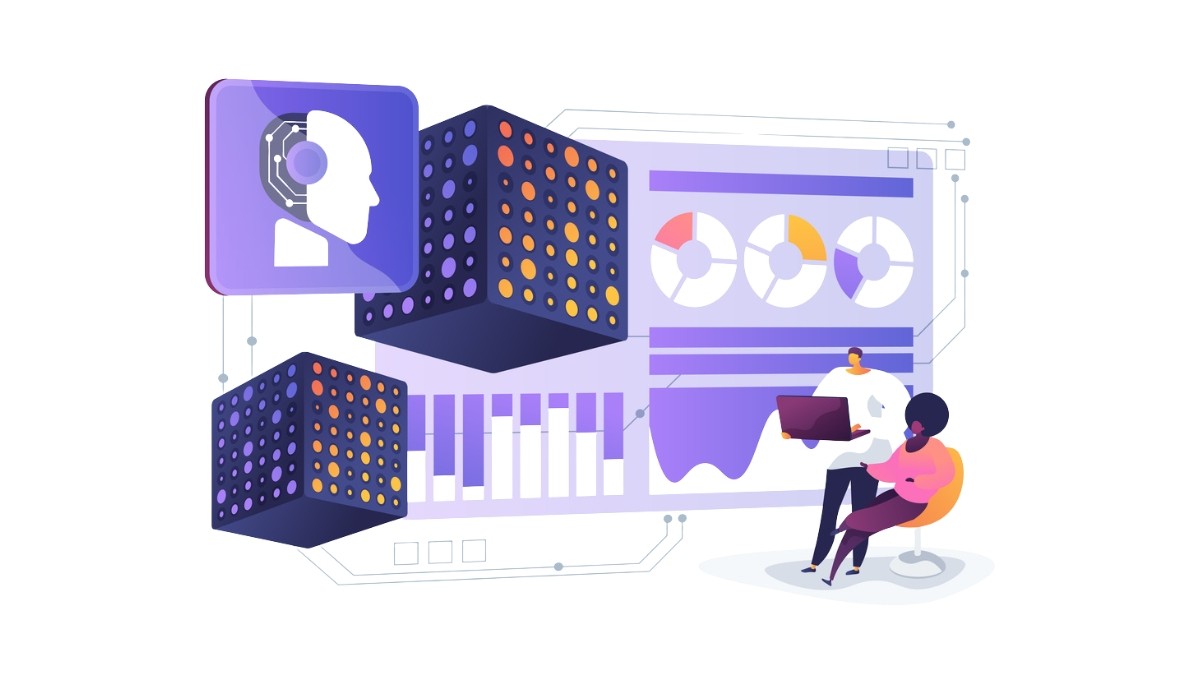
Between 2023 and 2026, AI adoption went from experimental to existential for most companies. ChatGPT’s breakout moment, the rise of Gemini and Claude, and the spread of open-source LLMs forced startups and enterprises alike to rethink how they build AI teams. What used to be cleanly separated roles have converged: data scientists and AI engineers now share the same languages, frameworks, cloud infrastructure, and increasingly, the same day-to-day work. The strongest teams are built around people who can move fluidly between analysis, modeling, and production.
That convergence has created a real hiring bottleneck. Demand for senior AI and data talent far outstrips supply, while traditional hiring cycles still drag on for months with uneven technical vetting. Fonzi is built specifically to solve that problem. As an AI-native hiring platform, it continuously evaluates and curates elite AI and data professionals based on real, production-level skills, allowing many teams to hire in under three weeks. Whether you’re a founder making your first AI hire or a recruiter scaling a global engineering org, Fonzi helps you build high-impact teams faster, with consistency and confidence.
Key Takeaways
Data science and artificial intelligence are converging rapidly in real-world teams. What used to be distinct career tracks now share tools, infrastructure, and overlapping responsibilities. For startup founders, CTOs, and AI team leads, this convergence creates both opportunities and hiring challenges. Fonzi helps startups and enterprises hire elite talent across both areas in under 3 weeks.
Data science focuses on turning raw data into insight, and while AI focuses on building intelligent systems that act on those insights autonomously, modern roles increasingly blend both skill sets.
Fonzi pre-vets AI and data talent with consistent, role-specific technical evaluations so hiring managers only see candidates who can deliver in production.
Speed matters in today’s market: most Fonzi hires happen within 3 weeks, compared to 2-4 months with traditional recruiting.
Fonzi supports companies at every stage, from your first AI or data hire to scaling to thousands of engineers, while preserving an excellent candidate experience.
Data Science vs Artificial Intelligence: Definitions & Overlap
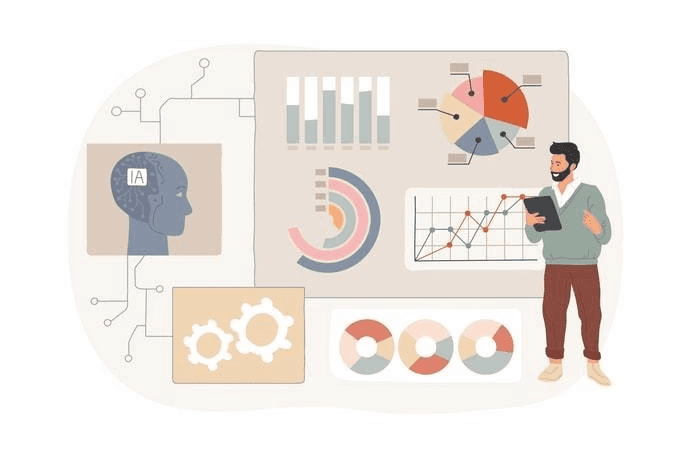
Data science and artificial intelligence are complementary disciplines. Data science extracts insights from data through statistical analysis and exploratory data analysis. Artificial intelligence builds systems that act on those insights with minimal human input, making predictions and decisions autonomously.
Data science involves a structured workflow: collecting data from sources like product logs, CRM systems, and sensors; cleaning and transforming that data to ensure quality; running statistical and machine learning analyses to uncover patterns; and communicating findings through data visualization and written reports for stakeholders. Data professionals in this field often focus on answering business questions, analyzing data to understand customer behavior, forecasting future sales, or identifying operational inefficiencies.
Artificial intelligence goes a step further. AI involves designing algorithms and models, machine learning, deep learning, reinforcement learning, and generative models that can classify, predict, generate, or control outcomes, often in real time. This includes natural language processing for chatbots, computer vision for image recognition, and neural networks that power recommendation engines.
The key differences come down to focus. Data science often addresses questions like “Why did churn rise in Q3 2024?” through exploratory analysis and hypothesis testing. AI focuses on building systems—recommendation engines, fraud detection models, autonomous agents—that act continuously without human intervention.
In modern AI product teams, data scientists and AI engineers share tooling (Python programming, scikit learn, cloud platforms) and collaborate on the same pipelines. The boundaries between roles are increasingly fluid.
Fonzi’s talent network is curated around this hybrid reality. Rather than relying on outdated, siloed job labels, Fonzi evaluates candidates on practical knowledge that spans both data analysis and AI systems development.
Real-World Use Cases of Data Science & AI Working Together
The synergy between data science and AI becomes clearest through concrete examples across industries.
A fintech startup launched between 2022 and 2026 provides a compelling case. Their data scientists analyze transaction data to understand fraud patterns, running statistical analysis on large volumes of payment records to identify anomalies. Meanwhile, their AI engineers build and deploy a real-time anomaly detection model, using logistic regression and deep learning techniques, that blocks suspicious payments before they clear. The data shows patterns; the AI acts on them at scale.
Consider an e-commerce company using data science to segment customers based on 2024 purchasing cohorts. Data scientists conduct exploratory data analysis to understand buying behavior, while AI models power personalized product recommendations and dynamic pricing. The combination of extracting insights from customer data and building models that serve those insights in real time drives measurable revenue increases.
A healthtech company demonstrates another pattern. Data scientists run survival analyses and cohort studies on patient populations, turning large datasets into actionable clinical insights. AI engineers then ship imaging models that flag anomalies in radiology scans, using convolutional neural networks for computer vision, helping clinicians make faster, more accurate diagnoses.
The pattern is consistent: data science uncovers the “what and why,” AI operationalizes those findings at scale. This is precisely the combination Fonzi optimizes for when screening candidates, evaluating their ability to both analyze and build.
Core Skills: Data Scientist vs AI Engineer (and Hybrid Roles)
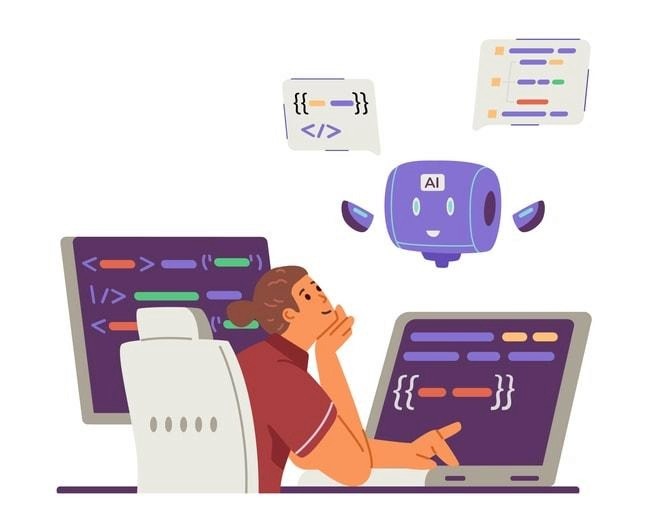
Job titles vary significantly by company, but core skills tend to cluster around three archetypes: data scientist, AI/ML engineer, and hybrid roles like analytics engineer or ML product engineer. Understanding these distinctions helps hiring managers target the right candidates.
Fonzi’s assessments are mapped to these role archetypes, ensuring that evaluations match the specific skills each position requires.
Data scientist skills center on analysis and experimentation:
SQL for querying databases and extracting insights
Python or R for statistical analysis and building models
Statistics fundamentals, including hypothesis testing and regression
Experimentation design for A/B tests and causal inference
Business acumen to translate technical findings into recommendations
Familiarity with machine learning libraries like scikit learn and XGBoost
AI/ML engineer skills emphasize software development and deployment:
Strong software engineering in Python, Java, or C++
Deep learning frameworks (PyTorch, TensorFlow) for training models
Knowledge of LLMs and vector databases for modern AI applications
Production deployment tools (Docker, Kubernetes, AWS/GCP/Azure)
Understanding of MLOps for model monitoring and maintenance
Experience integrating AI into existing systems
Hybrid skills bridge the gap between analysis and production:
Familiarity with DBT and modern data warehouses (Snowflake, BigQuery)
Feature engineering for machine learning algorithms
MLOps practices for version control and automated pipelines
Close collaboration with product teams to ship experiments quickly
Writing code that scales from prototype to production
Both paths share essential soft skills:
Communicating results to non-technical stakeholders through dashboards and presentations
Understanding product context and user impact
Problem-solving under ambiguity and time pressure
Fonzi encodes these differences into role-specific evaluation tracks. A founder can select “Senior LLM Engineer” or “Product Data Scientist” and instantly tap into a pool of vetted candidates who have demonstrated the relevant skills through practical assessments.
Comparison Table: Data Scientist, AI Engineer & ML Engineer
The following table breaks down how these roles differ and where Fonzi provides the most value in sourcing talent.
Role | Primary Focus | Typical Tools/Tech | Key Responsibilities | Where Fonzi Helps Most |
Data Scientist | Analyzing data, building models for insights | Python, SQL, pandas, scikit learn, Tableau | Exploratory data analysis, experimentation, predictive modeling, stakeholder communication | Sourcing product data scientists who can own experiment design for B2B SaaS |
AI Engineer | Building and deploying intelligent systems | PyTorch, TensorFlow, LangChain, vector databases | Training deep learning models, LLM orchestration, real-time inference systems | Quickly sourcing senior LLM engineers for RAG systems and AI agents |
ML Engineer | Productionizing and scaling ml models | Airflow, MLflow, Docker, Kubernetes, Vertex AI | Model deployment, monitoring, MLOps pipelines, infrastructure optimization | Staffing MLOps specialists who maintain production AI at scale |
Hybrid AI/Data Scientist | End-to-end from analysis to deployment | Snowflake, dbt, PyTorch, cloud platforms | Full-stack ownership of data pipelines and model development | Finding versatile talent for early-stage startups needing generalists |
This table highlights why Fonzi’s role-specific vetting matters. Rather than presenting generic “machine learning” candidates, Fonzi matches the specific profile—whether you need someone building systems from scratch or optimizing existing pipelines.
How AI is Changing Data Science Workflows
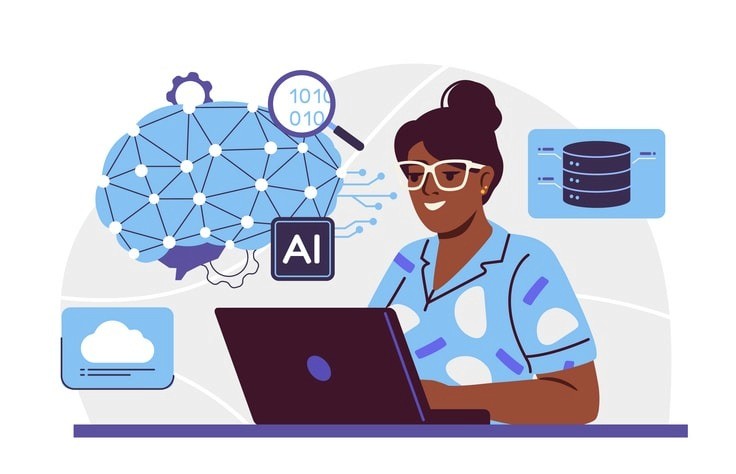
From 2023 onward, generative AI, code assistants, and AutoML have fundamentally changed how data teams work. The shift has moved focus from manual pipeline work to higher-level modeling and product impact. Data science professionals who embrace these AI tools are dramatically more productive than those stuck in pre-2020 workflows.
AI automates many time-consuming daily tasks:
Data cleaning and transformation: Automated data quality checks flag anomalies in new data before analysis begins
Feature engineering: AutoML tools suggest and generate features from raw data, cutting development time significantly
ETL optimization: Intelligent suggestions help refactor complex data collection pipelines
Modern data scientists increasingly use LLM-based tools for:
Generating SQL queries from natural language descriptions
Writing first-draft analysis code and documentation
Quick hypothesis testing through conversational interfaces
Creating data visualization code from simple prompts
AI improves predictive modeling workflows through automated hyperparameter tuning, model selection algorithms, and production monitoring that catches performance drift before it impacts decision making.
Consider a concrete scenario: a data scientist needs to refactor a complex Airflow DAG that has grown unwieldy over two years. Using an AI copilot, they describe the desired end state in natural language, receive refactored code suggestions, and complete in hours what previously took days of manual work. This is the new baseline productivity expectation.
Fonzi screens for candidates who can effectively leverage these AI accelerators, not those threatened by them. This ensures teams are future-ready rather than anchored in outdated practices.
Generative AI in Data Science Teams
Generative AI, including LLMs, code copilots, and content generation tools, has become embedded in data science workflows since 2023. Understanding how to leverage these tools is now a core competency.
LLMs assist data teams in multiple ways:
Writing SQL queries from plain-English descriptions
Producing first-draft analytics reports in natural language
Generating dashboard specifications and experiment summaries for stakeholders
Documenting complex pipelines for knowledge transfer
Synthetic data generation has emerged as a critical capability for domains with rare events or privacy constraints. Healthcare and finance teams use generative AI to create training data that preserves statistical properties without exposing patient or customer information. Important caveats apply: validation and bias checks remain essential.
AI engineers and data scientists now need prompt engineering literacy and understanding of RAG (retrieval-augmented generation) architectures. Knowledge of vector stores, embedding models, and evaluation metrics unique to LLMs has become table stakes for senior roles.
Fonzi’s evaluation process tests practical genAI skills. Candidates might build a simple retrieval-augmented QA system, design a prompt-chaining workflow, or debug a malfunctioning LLM integration. This goes beyond theoretical knowledge to assess what candidates can actually ship.
Career Paths: From Analyst to AI Leader
Both data science and AI offer multi-decade, well-paid career ladders. Roles range from individual contributor positions to VP and C-level leadership. Understanding this progression helps both candidates and hiring managers set appropriate expectations.
Early-career roles (0-3 years experience):
Data analyst: Routine queries, basic data visualization, Excel and SQL proficiency
Junior data scientist: Learning supervised learning and unsupervised learning techniques
MLOps engineer: Supporting production ML models with monitoring and deployment
Junior ML engineer: Building models under senior guidance
Mid-level roles (3-7 years experience):
Data scientist: Model ownership, cross-functional collaboration, mentoring juniors
AI engineer: Leading building systems projects, owning end-to-end pipelines
ML engineer: Production-grade model deployment, infrastructure decisions
Analytics engineer: Bridging data engineering and analysis with tools like dbt
Applied scientist: Research-informed approaches to real-world problems
Senior and leadership paths (7+ years experience):
Staff/Principal individual contributors with company-wide technical influence
Heads of Data or Heads of AI/ML managing teams and strategy
VP of Data or VP of AI setting organizational direction
Chief Data Officer or Chief AI Officer at the executive table
Cross-functional leadership paths are increasingly common. AI-savvy product managers and growth leaders often come from data or ML backgrounds, leveraging their technical skills in business-focused roles.
Fonzi works across this entire spectrum. A seed-stage startup in 2026 might use Fonzi to make its first senior AI hire. A global enterprise might use Fonzi to consistently staff hundreds of AI engineers across multiple regions. The platform scales to meet both needs.
Compensation evolves significantly with seniority. Data scientists earn median salaries around $103,500, while AI specialists with deep learning and LLM expertise command premiums 20-30% higher. Career progression from analyst to senior IC to leadership can represent a 3-4x increase in total compensation over a decade.
Choosing a Path: Data Science, AI, or Both?
The choice between specializing in data science or AI, or building skills in both, depends on your goals and the type of company you want to build or join.
Prioritize data science first when:
You’re an early-stage B2B SaaS needing analytics, segmentation, and experimentation before heavy personalization
Your product requires strong business intelligence before AI features
You need to understand weather patterns or customer behavior before making predictions
Stakeholders need dashboards and written reports before automated systems
Prioritize AI engineering first when:
You’re building an AI-first product like an LLM-based copilot (e.g., launched in 2024)
Your core value proposition depends on machine learning models in production
Real-time inference or generative capabilities are central to your product
You need specialists capable of training models and model deployment at scale
Build a blended team for most scenarios:
Data scientists for insight, experimentation, and answering business questions
AI engineers for productizing and scaling those models
Hybrid profiles that can bridge both worlds
Fonzi’s matching engine takes a company’s stage, product type, and technology stack into account. Rather than just recommending “more headcount,” Fonzi helps identify the right mix of roles, whether that’s a senior data scientist who can own analytics or an AI engineer who can build your first production LLM integration.
How Fonzi Makes Hiring Elite AI & Data Talent Fast and Scalable
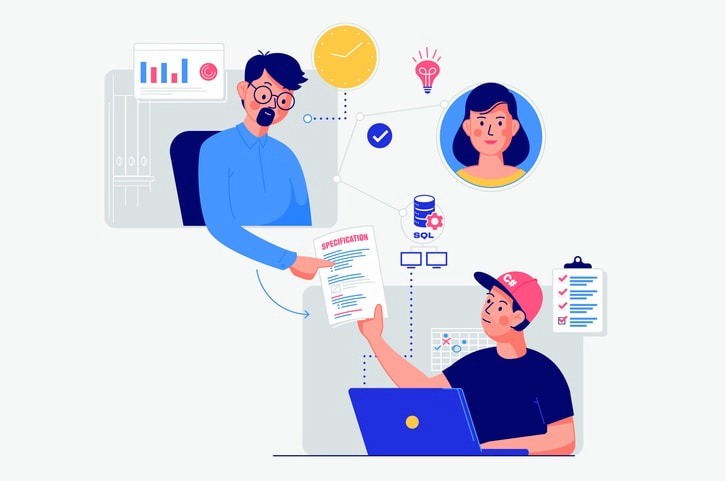
Fonzi is a specialized hiring platform built for AI, ML, and data roles. Designed by technical leaders who have run large-scale AI teams, Fonzi addresses the specific challenges of hiring in this highly competitive market.
The platform continuously sources candidates from global talent pools, then subjects them to standardized, deeply technical evaluations tailored to AI and data roles. These aren’t generic coding screens. Assessments cover specific competencies like LLM engineering, recommender systems, causal inference, and production MLOps.
The 3-week hiring outcome:
Founders and hiring managers receive a short list of pre-vetted candidates within days
Interviews can focus on culture fit and specific role alignment rather than basic skill verification
Offers close in 2-3 weeks instead of the 2-4 months typical of traditional recruiting
Evaluations emphasize real-world skills that matter in production:
Debugging a broken ETL job
Optimizing a transformer model for latency
Designing an A/B test with proper statistical rigor
Building a minimal RAG pipeline from scratch
This practical focus means candidates arrive ready to contribute, not just pass theoretical assessments.
Fonzi scales for enterprise needs: Clients can spin up repeatable hiring pipelines for dozens or hundreds of similar roles across regions, with consistent bar and criteria for every candidate.
Candidate experience is protected and elevated: Transparent expectations, relevant challenges, timely feedback, and roles matched to seniority and interests keep top talent engaged throughout the process.
Companies that struggled to make a single senior AI hire have used Fonzi to build entire pods of engineers and data scientists in a single quarter. The platform handles both the first hire and the thousandth with the same rigor and speed.
Why Fonzi Beats Traditional Recruiting for AI & Data Roles
Traditional recruiting agencies often lack deep AI/ML literacy. Recruiters who can’t distinguish between supervised learning and reinforcement learning end up sending poorly-filtered candidates. CTOs and team leads waste interview cycles on people who can’t actually build what the role requires.
Fonzi’s vetting is run by practitioners who understand modern stacks and tasks. Evaluations are calibrated against current industry standards: LLM orchestration, offline evaluation pipelines, MLOps best practices, and the specific algorithms used in production systems today.
Consistency matters enormously when you’re hiring at scale. Every candidate for a given level and role is assessed against the same high, transparent bar. This makes cross-candidate comparisons rigorous rather than based on the interviewer's mood or varying question difficulty.
This rigor, combined with a large curated pool of pre-vetted talent, is what enables Fonzi clients to consistently hire within approximately 3 weeks. Whether it’s your first AI engineer or your 10,000th, the process remains fast, consistent, and predictable.
Building the Right AI & Data Team, Faster
Data science and AI have effectively merged into the backbone of modern products. The companies pulling ahead are the ones that use data science to deeply understand their domain and AI to turn those insights into real, scalable systems. That shift has made engineers and scientists who can operate across both worlds: analytics, modeling, and production, with some of the most in-demand hires in tech. But tools alone don’t create an edge; it comes from hiring people who can actually do the work, from extracting signal out of messy data to shipping reliable AI systems that impact the business.
The challenge is that traditional hiring is too slow and noisy for how competitive AI has become. Spending three months trying to close a senior ML hire often means falling behind. Fonzi is built specifically for this moment, offering a faster, more consistent way to hire for AI and data roles by giving teams access to a curated pool of pre-vetted candidates evaluated on real-world skills, not keywords. Whether you’re filling a single senior role or scaling an entire AI org, building this kind of talent pipeline now is a strategic investment that compounds as AI continues to reshape products over the next decade.
FAQ
What’s the relationship between data science and artificial intelligence?
How is an AI data scientist role different from a traditional data scientist?
What skills do you need for artificial intelligence and data science careers?
How is AI used in data science workflows and analysis?
Should I specialize in data science, AI, or learn both?


