Are Unpaid Internships Worth It in 2026? Legal Rules and Career ROI
By
Liz Fujiwara
•

Despite record investment in AI talent and rapid growth in ML, data, and LLM roles, unpaid internships still exist. In 2026, early-stage startups continue to advertise “AI Research Intern” positions with no pay, often framed as learning experiences or equity opportunities.
Imagine you are a CS master’s student finishing a thesis on retrieval-augmented generation. A seed-stage startup offers an unpaid AI research internship for the summer. At the same time, platforms like Fonzi AI connect candidates to vetted, paid roles at Series A to Series C companies, sometimes delivering offers within 48 hours during Match Day. Which option actually moves your career forward?
This article helps AI, ML, and infrastructure engineers evaluate unpaid internships by examining legal risk, financial impact, and long-term career outcomes. We cover the FLSA primary beneficiary test, compare real career trajectories, and explain when unpaid internship programs may be reasonable and when it is not.
Key Takeaways
In 2026, U.S. law still applies the Primary Beneficiary Test under the Fair Labor Standards Act, and most unpaid AI and ML internships at for-profit startups do not meet the legal standard.
Unpaid internships in tech generally underperform paid roles and structured programs like Fonzi AI’s Match Day in long-term salary growth and career return on investment.
Most AI and ML internships in 2026 are paid, with compensation for a 12-week program often ranging from $22,000 to $35,000 or higher depending on the company and location.
How Unpaid Internships Work: Definition, Expectations, and 2026 Trends
An unpaid internship is a temporary work arrangement where you provide labor to an organization without receiving a paycheck. The promise is typically some combination of work experience, networking, academic credit, or a possible path to future employment. In theory, the arrangement should primarily benefit you as a learner rather than the employer as a recipient of unpaid labor.
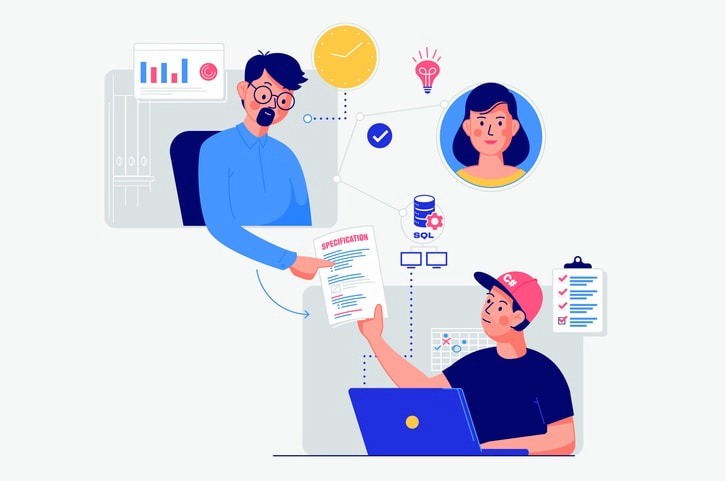
Here’s what unpaid internships typically look like in tech in 2026:
Time commitment: 10 to 20 hours per week for 8 to 12 weeks
Titles: “AI Intern,” “ML Research Assistant,” “Data Science Fellow”
Settings: Early-stage startups (pre-seed to seed), remote-first arrangements, university-affiliated labs
Deliverables: Applied work such as trained models, dashboards, prototypes, or documentation
“AI intern” positions have increased as more companies attempt to add machine learning capabilities. Remote research assistant roles have become more common post-pandemic. Open-source or contribution-based internships have also emerged as an alternative model, where candidates contribute to public projects in exchange for experience.
The expectation gap is significant. Even when labeled as “educational,” many unpaid internships involve meaningful deliverables. Rather than observing or shadowing senior engineers, interns may be writing code, training models, or supporting internal systems.
Some universities still offer course credit for unpaid internships in 2026, but faculty oversight has increased compared to before. Many schools now require written learning objectives, periodic check-ins, and documentation showing that the intern’s work complements rather than replaces paid employees.
Legal Framework: When Can an Internship Be Unpaid Under the FLSA?
The Fair Labor Standards Act governs minimum wage and overtime requirements for employees in the United States. The key question for unpaid interns is whether they legally qualify as “employees” under the Act. If they do, they must receive at least federal minimum wage.
As of 2026, U.S. courts continue to rely on the Primary Beneficiary Test rather than a rigid checklist when evaluating intern–employer relationships. This test asks who benefits more from the arrangement: the intern or the company.
If the company is the primary beneficiary of the work, such as shipping production code, generating customer-facing output, or maintaining essential systems, the intern may be considered an employee under the law and therefore entitled to pay. This distinction is particularly relevant for AI and ML roles:
Courts have often found that interns performing work similar to that of paid employees are at risk of being misclassified
An “educational” label alone does not exempt a role from wage requirements
Cases such as Glatt v. Fox Searchlight Pictures (2013) and Benjamin v. B & H Education, Inc. illustrate that courts examine the actual work performed rather than relying on job titles
Technical roles that contribute directly to a company’s products, customers, or core infrastructure tend to face higher scrutiny under this standard.
The Primary Beneficiary Test: 7 Factors, Applied to Tech Interns
Courts weigh seven non-exhaustive factors to determine who primarily benefits from an internship arrangement, the intern or the employer. No single factor is decisive, and the analysis is holistic. Here’s how each factor applies to AI and ML internships:
Expectation of compensation: Both parties must clearly understand there is no expectation of pay. If the company implies future compensation or the intern expects eventual payment, this factor can weigh toward employee status.
Training similar to an educational environment: The internship should provide structured learning comparable to a classroom. An AI intern who receives formal mentorship, training sessions, and feedback on learning objectives is more likely to meet this criterion than one who is simply assigned tasks.
Tied to formal education: Internships connected to a degree program with integrated coursework receive greater legal protection. Summer internships aligned with the academic calendar and offering academic credit are generally safer.
Accommodates academic commitments: The internship’s duration and schedule should accommodate school obligations. Year-round or full-time internships during academic semesters can raise red flags.
Limited duration: The arrangement should last only as long as the learning period is beneficial. A defined 10-week summer program differs from an open-ended “AI research” role.
Work complements rather than displaces: This is especially important for tech roles. If an unpaid intern is performing work that would otherwise be done by a junior ML engineer or data scientist, the company may be benefiting from unpaid labor. Intern work is more defensible when it is genuinely supplementary.
No entitlement to a job: The internship should not function as a trial period or extended job interview. If conversion to full-time employment is treated as an expectation rather than a possibility, this factor may weigh toward employee status.
For AI and ML roles specifically, factors five and six are where many for-profit arrangements struggle. If you are the sole maintainer of an inference API, shipping production LLM features, or responsible for ML operations pipelines, you are likely performing work that would normally require a paid employee. Companies cannot rely on the “internship” label alone to avoid wage obligations under the FLSA.
Exceptions for Government, Nonprofits, and Volunteering
The FLSA does allow unpaid volunteers in specific contexts. Federal government agencies and nonprofit, religious, charitable, or humanitarian organizations may accept volunteers without violating wage laws.
Many AI “fellowships” at universities, research labs, or NGOs in 2026 can legally be unpaid if they are structured as genuine educational or volunteer opportunities. A graduate student conducting research in a university lab for academic credit, under faculty supervision, in a role clearly tied to their education operates under different legal standards than an intern at a venture-backed startup.
The contrast with for-profit AI startups is significant. When a company exists to generate profit and an intern contributes to that profit-generating activity, courts apply much stricter scrutiny. Educational framing alone often does not hold up when examined closely.
For international readers, this legal discussion is U.S.-specific. The EU, UK, Canada, India, and other jurisdictions often apply stricter rules to unpaid work. In many EU countries, internships lasting more than a short period generally require compensation. Always review local labor law before accepting an unpaid position.
Career ROI: Unpaid vs. Paid Internships for AI & ML Engineers

Career ROI for early-stage engineers includes more than immediate compensation. It reflects skills development, network access, portfolio quality, compensation trajectory, and time to full-time offers. For technical roles in 2026 such as LLM engineers, ML operations specialists, and data engineers, paid arrangements have become the dominant model.
Available data suggests that the majority of AI and ML internships in 2026 are paid, at a higher rate than general tech internships. Well-funded startups and established technology companies have largely shifted toward paid programs, driven by both legal risk and competition for talent. In major U.S. tech hubs, paid AI and ML internships commonly offer hourly compensation in the range of standard market rates, translating to meaningful earnings over a 12-week summer program.
Unpaid internships may still offer career value in limited situations, such as early-stage academic research groups or highly selective research institutions where the experience materially improves PhD or fellowship prospects. However, this typically comes with a real financial tradeoff. The opportunity cost of several months of unpaid work can be substantial once foregone wages and living expenses are considered.
Research and industry reporting consistently indicate stronger outcomes for paid interns:
Conversion rates: Paid interns are more likely to receive full-time offers from the same organization than unpaid interns
Starting compensation: Candidates with paid internship experience tend to enter the market at higher salary bands for AI and ML roles
Interview volume: Paid internship experience is associated with more interview opportunities in subsequent job searches
Comparison Table: Unpaid vs. Paid Internships vs. Fonzi AI Match Day
Factor | Unpaid Internship at For-Profit Startup (2026) | Traditional Paid Internship (Tech) | Fonzi AI Match Day (Full-Time or Contract) |
Compensation | $0 | $35–$55/hour ($15,000–$25,000 for 12 weeks) | Market-rate salary, disclosed upfront |
Time to First Offer | 8–12 weeks minimum, often no offer | 10–12 weeks, with conversion decision at end | Offers typically within 48 hours per Match Day cycle |
Nature of Work | Often production work labeled as “learning” | Mix of learning and contribution | Full engineering responsibilities, paid appropriately |
Mentorship Quality | Variable, often minimal | Usually structured | Company-dependent, but vetted employers |
Legal Risk | High for candidate and company | Low | None (all roles are paid) |
Location Flexibility | Often remote | Mix of remote and on-site | Flexible based on role requirements |
Long-Term Salary Impact | Negative (10–15% lower starting salaries) | Positive | Positive (transparent salary benchmarking) |
Accessibility | Requires financial privilege | More accessible | Designed for engineers with 3+ years experience |
Fonzi AI’s Approach: Using AI Responsibly in Hiring
AI is widely used in recruiting in 2026, including resume parsing, automated screening, video analysis, and keyword matching. For candidates, the process can feel opaque. Applications disappear into automated systems, and resumes are often filtered out without meaningful review.
Fonzi AI uses AI with a different goal: increasing clarity. The platform matches AI, ML, data, and infrastructure engineers to roles based on skills, preferences, and salary expectations, rather than relying solely on keyword filters or rigid pattern matching.
Key elements of Fonzi AI’s approach include:
Bias-audited evaluation: Models are tested for disparate impact and regularly reviewed by human recruiters. AI supports the process but does not make final hiring decisions.
Fraud detection: Automated systems identify fake profiles and misrepresented credentials, helping protect employers and legitimate candidates.
Interview logistics automation: Scheduling and coordination are handled automatically, allowing recruiters and engineers to focus on technical conversations.
Candidate-first economics: Fonzi AI charges employers a success fee on hires, not candidates. This aligns incentives around placing engineers into paid roles rather than maximizing application volume or unpaid placements.
The platform is built on the principle that AI should support human judgment, not replace it.
Match Day: A High-Signal Alternative to Unpaid Internships
Match Day is a structured hiring event where startups and growth-stage companies commit in advance to salary ranges and accelerated decision timelines. It is designed to compress a lengthy job search into a focused window.
Here’s how it works:
Single profile creation: Candidates create one detailed profile covering skills, projects, salary floor, and location preferences.
Vetting and matching: Fonzi AI’s team reviews profiles and matches candidates with relevant employers who are actively hiring.
Match Day event: During the event window, candidates are introduced to multiple vetted companies.
Rapid decisions: Offers typically arrive within roughly 48 hours of the event window.
How to Decide: Is an Unpaid Internship Worth It for You in 2026?

Making this decision requires honest self-assessment across several dimensions:
Finances: Can you realistically afford 8 to 12 weeks without income? Factor in living expenses, debt payments, and the opportunity cost of not earning. For most people, this represents a significant financial sacrifice.
Visa status: If you are an international student on F-1 or J-1 status, unpaid work introduces additional complications. CPT or OPT authorization is required for most positions, and your school’s international office should review any arrangement before you accept.
Existing experience: If you already have two to three or more years of professional experience, unpaid internships in AI rarely make sense. Your skills have market value. Focus on paid opportunities, including platforms like Fonzi AI.
Alternative paths: Consider how else you could use the same time. Comparing months of unpaid work with months spent on interview preparation, portfolio development, or participation in structured hiring events like Match Day often favors the latter.
For undergraduates with no prior experience, the calculation may differ slightly. Even so, the tech industry offers more structured paid internship programs than it did in the early 2010s, and expectations have shifted accordingly.
Situations Where an Unpaid Internship May Make Sense
Unpaid arrangements are not always exploitative. In limited circumstances, they may provide real value:
Short-term lab internships lasting four to six weeks with defined research deliverables, connected to a university program and supervised by faculty
High-prestige AI research groups where the experience materially improves PhD admissions or fellowship prospects, such as leading university labs or research institutes
Formal university programs tied directly to academic credit, with documented learning objectives and regular faculty oversight
Volunteer roles at nonprofits or government agencies engaged in public-interest or socially beneficial work
Even in these cases, interns should receive meaningful mentorship, clear learning goals, and written expectations around time commitment. The role should be explicitly time-bound, not an open-ended arrangement at a for-profit startup.
Before accepting any unpaid position, review applicable labor laws and consult your university’s career office or a legal clinic. The risk of making incorrect assumptions is high.
Red Flags: When to Walk Away From an Unpaid Offer
Some unpaid offers are clearly problematic. Walk away if you encounter:
Promises of future pay with no timeline or documentation
Expectations of 40-hour workweeks, which resemble full-time employment rather than an internship
Responsibility for production systems such as inference APIs, customer-facing ML features, or security infrastructure
Lack of a written agreement outlining duties, duration, and learning objectives
Pressure to bypass legal paperwork or skip formal onboarding
For AI engineers specifically, these red flags are especially concerning:
Being the sole maintainer of a production ML pipeline
On-call responsibilities for outages
Ownership of critical infrastructure or security tasks
Shipping customer-facing LLM features without appropriate supervision
Any “internship” that mirrors a regular full-time role in responsibilities is likely misclassified under U.S. law. In those cases, companies may face legal exposure, and interns may be entitled to back wages.
Practical Tips: Maximizing Value From Any Internship or Early Role
Whether paid or unpaid, early roles should be approached strategically. The objective is to build demonstrable skills, a portfolio of real work, and references who can speak to your capabilities.
Set personal learning objectives. Before starting, define specific outcomes such as shipping an end-to-end ML pipeline, contributing to an open-source LLM framework, or owning a small infrastructure project. Clear goals help maintain focus and create concrete interview examples.
Maintain a work log. Track achievements and outcomes throughout the experience. Document models trained, systems built, and problems solved. These records become useful material for resumes and Fonzi profiles.
Network intentionally. Schedule one-on-one conversations with senior engineers, attend team or lab meetings, and ask about career paths. Staying in touch after the role ends helps maintain long-term professional relationships.
Build a public portfolio. When possible, contribute to open-source projects or publish technical write-ups. Public work allows hiring managers to evaluate skills directly.
Fonzi AI profiles can highlight projects from internships, research roles, and open-source contributions. Demonstrated work often provides a stronger signal to hiring managers during Match Day than credentials alone.
Interview Preparation for AI, ML, and Infra Roles
Strong preparation separates successful candidates from the competition. Focus on these key areas:
Algorithms and data structures: Core computer science fundamentals remain essential, particularly for coding interviews
Probability and statistics: Important for ML roles, including distributions, hypothesis testing, and Bayesian reasoning
ML fundamentals: Model selection, training procedures, evaluation metrics, overfitting, and regularization
System design for data and infrastructure: Designing data pipelines, handling scale, and understanding trade-offs in distributed systems
LLM-specific topics: Prompt engineering, fine-tuning approaches, evaluation methods, and retrieval-augmented generation
For portfolio projects, prioritize relevance to current hiring needs. Build one or two focused projects such as a retrieval-augmented generation application, a multimodal model demo, or a data pipeline with observability and monitoring.
Practice with realistic interview formats, including coding challenges in collaborative editors, whiteboard-style problem solving, and end-to-end architecture discussions. Recording yourself while explaining technical decisions can help improve clarity and communication.
Negotiating Compensation When Offered an Unpaid Tech Internship

Some “unpaid” offers can be converted into paid arrangements with the right conversation. Companies may default to unpaid roles not because they are unable to pay, but because the role was not budgeted or candidates are unlikely to push back.
Before the conversation:
Research market rates for comparable roles. In 2026, junior AI and ML intern-level roles in major U.S. cities commonly fall within standard market ranges.
Prepare a clear list of responsibilities you would take on. Be specific, for example: “I’ll be building the data pipeline for X” or “I’ll be training models for Y use case.”
Anchor on a realistic hourly rate or stipend. Framing the request around scope and market norms is generally more effective than a vague ask.
During the negotiation:
Ask about alternatives if full pay is not possible, such as reduced hours, a defined stipend, relocation assistance, or a clear path and timeline to conversion.
Raise legal considerations carefully. For example: “I want to make sure we structure this in a way that complies with the FLSA’s primary beneficiary test. How has this been reviewed?”
Frame the discussion as collaborative rather than adversarial. Express interest in the role while seeking a workable structure.
Available survey data and industry reporting suggest that a meaningful share of candidates who push back on unpaid offers are able to negotiate some form of compensation. The conversation is often worth having.
If negotiation fails and the company insists on unpaid work that closely resembles employment, it is generally better to focus on paid opportunities.
Conclusion
Unpaid internships at for-profit tech firms are rarely necessary or optimal in 2026 for AI, ML, and infrastructure engineers. Most AI internships are now paid, legal scrutiny of unpaid arrangements has increased, and there are more direct paths to employment.
Under the FLSA’s primary beneficiary test, many unpaid tech internships, especially those involving production work, are legally questionable. The limited cases where unpaid roles make sense are typically short-term, tied to formal education, and based in nonprofit or research settings with clear learning objectives.
Your skills have real market value. You do not need to work for free to prove yourself. If you are ready to pursue paid roles with companies that respect your time and expertise, Fonzi offers a clear alternative.
FAQ
What are the legal requirements for a “non-paid internship” under the Fair Labor Standards Act?
How do unpaid internships compare to paid positions in terms of long-term career outcomes?
Can international students take an unpaid internship on a J-1 or F-1 visa?
What is the “Primary Beneficiary Test” used to determine if an internship can be unpaid?
How can I negotiate a paid salary if I am offered an unpaid internship in a tech role?


