It’s 2026. You’re a founder juggling a fundraise, a product launch, and building an AI team. At 11 PM, you open an app and talk to an AI coach that remembers your goals from last month.
Advances in large language models and behavioral science made this possible. AI coaches track progress, ask follow-ups, and help you reflect without judgment.
Fonzi uses the same approach for hiring. It runs structured candidate conversations, keeps evaluations consistent, and provides data-driven feedback. Startup founders and AI leaders often hire elite engineers within three weeks.
This article will explain AI coaches, their benefits, top apps, and how they are shaping hiring with Fonzi.
Key Takeaways
The term “AI coach” includes everything from simple chatbots to specialized platforms that use behavioral science, progress tracking, and structured programs, not just casual conversations.
The same AI coaching principles that power life coach apps in 2026 also drive Fonzi, enabling teams to evaluate and hire elite AI engineers in under three weeks.
The most effective AI coaches combine personalized guidance, data-driven insights, and human-centered design to provide consistent, scalable support while complementing, not replacing, human coaches or therapists.
What Is an AI Life Coach and How Does It Work?
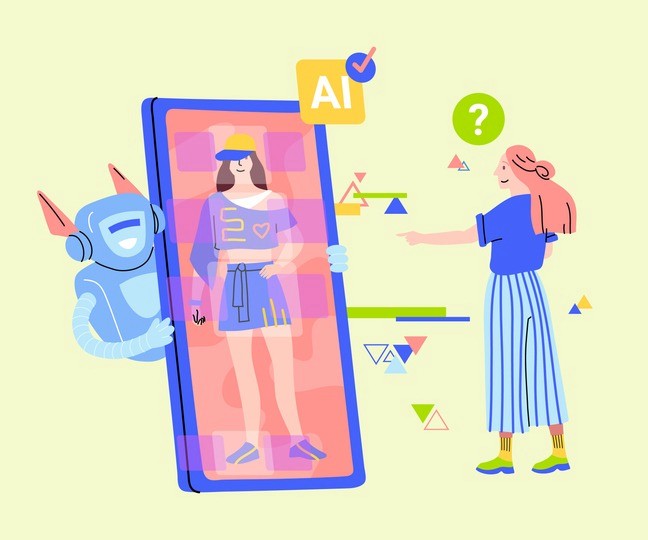
An AI life coach is an application that uses artificial intelligence to guide users through goal setting, self-reflection, and behavior change via structured conversations and tailored plans. Unlike a generic chatbot that simply responds to prompts, an AI life coach offers a comprehensive experience: it tracks your progress over time, revisits your goals, and adapts its communication style based on what works for you.
Compare this to basic journaling apps that only record your thoughts, or simple chatbots that react to your first message and then forget the context. An AI life coach is proactive. It asks clarifying questions, helps you build habits, and sends reminders based on your schedule and preferences.
Here’s the core workflow:
You state a goal (e.g., “run a 5K by September 2026” or “ship my MVP by Q3”).
The AI coach asks clarifying questions about your constraints, timeline, and motivation.
Together, you co-create a plan with milestones, habits, and action steps.
The AI sends personalized prompts, reminders, and check-ins at the right moments.
You have regular reviews where the AI helps you track progress, identify patterns, and adjust your plan.
Modern AI life coaches typically combine three engines:
Conversational engine: Powered by large language models, this handles dialogue, maintains memory, and adapts tone.
Habit/goal engine: Implements S.M.A.R.T. goals, streaks, visual milestones, and habit loop tracking.
Personalization engine: Learns from your history, preferences, and metrics (like which time of day you respond best) to tailor coaching style.
Similar coaching engines are what allow Fonzi to run structured technical interviews, score candidates consistently, and adapt questions to each engineer’s background. The principles are the same: structured guidance, data-driven feedback, and consistency at scale.
Typical Features of Modern AI Coaching Apps
Here are the features you’ll find in most AI life coach platforms in 2026:
Goal setting: Define long-term goals and break them into actionable subgoals.
Habit tracking: Daily habits, streaks, and visual milestones to help you stay consistent.
Mood and emotion check-ins: Log how you feel, track stress levels, and support mental well-being.
Daily or weekly reflections: Prompts to review progress, reflect on challenges, and adjust plans.
Conversational Q&A: Talk to your own AI coach via text or voice in real time.
Personalized prompts: Reminders triggered by your schedule, behavior, or performance.
Integrations: Connect with Apple Health, Google Calendar, Notion, or Slack for context-aware nudges.
Analytics dashboards: See your progress over time, identify patterns, and receive insights.
Many apps now use evidence-based coaching methods, including CBT-inspired prompts and motivational interviewing techniques, rather than only generic advice. The best platforms are GDPR compliant and transparent about how they use your data.
AI Coach vs Human Coach
Factor | AI Coach | Human Coach |
Availability | 24/7, always on | Scheduled sessions |
Cost | $7–$40/month (consumer apps) | $100–$400+ per session |
Consistency | Same approach every time | Varies by coach |
Emotional depth | Good for daily support | Better for complex emotional processing |
Scalability | Deploy to thousands at once | Limited by coach capacity |
Personalization | Data-driven, learns over time | Intuitive, relational |
AI coaches are unbeatable on availability, consistency, and price. Human coaches still excel at deep emotional attunement, sensitive topics, and major life transitions. In 2026, the best setups are hybrid: AI handles daily check-ins and micro-decisions, while humans handle infrequent but deeper strategic or emotional sessions.
Key Benefits of Using an AI Life Coach
People adopt AI coaches for affordability, consistency, and structure, especially in high-pressure roles like founders, executives, and knowledge workers who can’t always wait for a human coach’s calendar to open up.
Here are the concrete benefits:
24/7 support: Talk to your AI life coach whenever you need to, whether it’s 6 AM or midnight. No more waiting.
Lower cost: Consumer apps typically cost $7–$40 per month, compared to $100–$400 or more per session for human coaches.
Better habit consistency: Daily nudges and streak tracking help you stay focused and build habits over time.
Unbiased reflections: An AI won’t judge you for missing a workout or skipping a task. It just helps you get back on track.
Data-driven insights: See patterns in your mood, productivity, and progress that you might not notice on your own.
Reduced decision fatigue: The AI can help plan your week around investor calls, deep work, and family time, then adjust based on your weekly reflection.
Scalable for organizations: Deploy AI coaching to thousands of employees at once, creating a shared language of goals, feedback, and improvement.
For example, a founder might use an AI life coach to plan each week around fundraising calls, product reviews, and personal recovery time. The AI tracks what works, suggests ways to improve, and helps the founder stay consistent without burning out.
Best AI Life Coach Apps and Platforms in 2026
Choosing the right AI life coach depends on your goals. Look for coaching depth, personalization, transparency, data privacy, integrations, and price. This section highlights several notable solutions, each with its own strengths.
Habit Coach AI
Best for: Habit formation and daily accountability
Key features: Choose your coach persona, schedule reminders, track streaks and milestones, optional voice calls
Pricing: Starter tier around $9/month, Pro tier around $39/month with voice calls, Pro+ tier ($149/month) includes access to a human coach
Standout: Transparent pricing and a clear focus on behavior change
Noom + Welli
Best for: Weight management, nutrition, and lifestyle change
Key features: AI companion called Welli for food logging, photo-based meal recognition, dynamic recommendations, hybrid model with human coaches in the loop
Standout: Combines AI with human coaching for a more supportive coach experience
Rocky.ai (Growth AI Coach)
Best for: Self improvement, motivation, and emotional support
Key features: Daily motivation, goal setting, positivity prompts, flexible pricing ($3–$60/month with free trial)
Standout: Lightweight and affordable, good for users wanting motivation and self awareness rather than clinical coaching
BetterUp / CoachHub (Enterprise)
Best for: Leadership development and enterprise-scale coaching
Key features: Growth roadmaps, micro-coaching, AI-driven insights from millions of sessions, integrations with workflow tools
Standout: CoachHub’s AIMY saw continuation rates above 84%; BetterUp’s AI features showed 95% satisfaction in early usage
General LLM Assistants (e.g., Claude, ChatGPT)
Best for: Ad-hoc coaching, brainstorming, and general-purpose support
Key features: No specialized coaching workflow, but highly flexible; users can create their own coaching prompts
Standout: Useful for those who want to design their own AI coach experience, but lacks built-in progress tracking and habit analytics
Where does Fonzi fit?
Fonzi applies AI coaching logic to a related domain: guiding your hiring process instead of personal growth. Startup founders and enterprise leaders use Fonzi to “coach” their hiring funnel with the same structure and consistency that AI life coach apps bring to individual development. If you’re building an AI team, Fonzi is an effective way to evaluate and hire elite AI engineers.
Popular AI Coaching Apps vs Fonzi (Hiring-Focused AI Coach)
Platform | Primary Use Case | Best For | Key Strengths | Typical Timeline / Cadence |
Habit Coach AI | Personal habits | Daily habit-building | Streaks, voice calls, human coach add-on | Daily check-ins |
Noom + Welli | Lifestyle change | Weight, nutrition | Hybrid AI + human, photo meal logging | Daily/weekly |
Rocky.ai | Emotional support | Motivation, self improvement | Affordable, flexible | Daily prompts |
BetterUp/CoachHub | Enterprise coaching | Leadership development | Analytics, integrations, scalability | Weekly sessions |
Fonzi | Hiring AI engineers | Startups & enterprises | Structured interviews, bias-audited, scalable | ~3 weeks to hire |
How AI Coaching Principles Power Fonzi for Hiring AI Engineers
The same principles that make AI life coach apps effective, such as structured questions, data-driven feedback, and accountability, can also apply to hiring workflows. Fonzi is an “AI coach for your hiring process” that runs standardized technical evaluations for AI and ML roles, scores candidates consistently, and provides clear recommendations to your team.
Fonzi supports both early-stage startups making their first AI hire and large enterprises scaling to hundreds or thousands of AI engineers. This is similar to making AI coaching available across an organization, not just for executives.
Here’s how Fonzi works:
Define precise role requirements: Specify the skills, experience, and context you need.
Generate role-specific assessments: Fonzi creates structured interview scripts and work sample challenges tailored to AI/ML engineering.
Run AI-led technical interviews: Candidates receive consistent, thoughtful questions that reflect real-world skills rather than rote puzzles.
Summarize each candidate: Fonzi provides structured scorecards and written feedback, so your team can make decisions quickly.
This “coaching-like” system improves the candidate experience: every candidate is asked role-relevant questions, receives a fair evaluation, and interacts with a process that feels modern and respectful. There’s no more scheduling chaos or arbitrary interviews.
Why Fonzi Is the Most Effective Way to Hire Elite AI Engineers Today
If you’re a startup founder, CTO, or AI leader struggling to hire strong AI engineers quickly, here’s why Fonzi stands out:
Speed: Most hires happen within about three weeks, compared to months-long cycles at many companies.
Consistency: Every candidate is evaluated against the same criteria, reducing variation between interviewers and roles.
Bias reduction: Fonzi uses bias-audited processes and structured interviews to minimize subjective judgment.
Scalability: Whether you’re making your first AI hire or your 10,000th, Fonzi scales with you.
Alignment with real AI skills: Evaluations focus on actual engineering ability and shipped products, not just algorithmic puzzles.
Candidate experience preserved: Structured challenges, clear communication, and less scheduling chaos make candidates feel comfortable and respected.
For companies building AI teams in 2026, using an AI “hiring coach” like Fonzi is the natural extension of using AI coaches for personal performance and leadership development.
Choosing the Right AI Life Coach App (and When to Use Fonzi Instead)
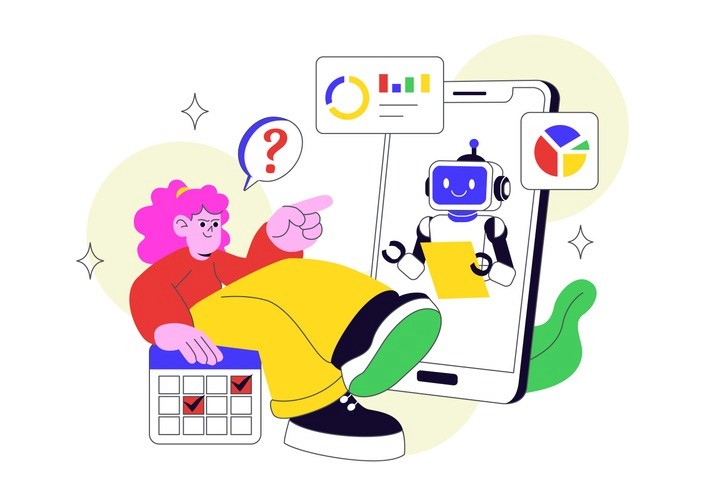
Not all AI coaches are created equal. The right choice depends on whether you’re optimizing for personal growth or organizational outcomes like hiring.
For personal AI coaching apps, consider:
Depth of coaching model: Does the app use evidence-based methods like CBT or motivational interviewing?
Data privacy: Is the platform GDPR compliant? Does it clearly explain how your data is used?
Platform availability: Is there an app for iOS, Android, and web?
Integrations: Can it connect to your calendar, health apps, or other tools you use?
Transparency: Does the app explain its recommendations and provide feedback you can act on?
For founders and AI leaders:
Use personal AI coaches to support your own focus, resilience, and leadership habits.
Consider pairing a personal AI life coach to keep yourself at your best with Fonzi to keep your hiring pipeline moving quickly, consistently, and fairly.
Conclusion
AI life coach apps have moved from novelty to everyday tools for personal development, decision-making, and habit building by 2026. Many professionals now rely on AI tools to stay consistent, reflect on challenges, and track progress toward meaningful goals.
The most effective AI coaches are structured systems that ask better questions, provide feedback, and support lasting change. They work best alongside human insight for deeper reflection and major life transitions.
The same ideas now apply to hiring AI engineers. Fonzi acts as an AI hiring coach, helping founders and enterprise leaders hire elite AI engineers in under three weeks with consistency and a strong candidate experience.
FAQ
What is an AI coach and how does it differ from a human life coach?
What are the best AI coaching apps and platforms in 2026?
Can an AI life coach actually help with career decisions and personal growth?
How much do AI coaching platforms cost compared to hiring a real coach?
What are the biggest limitations of using an AI coach right now?