Between 2023 and 2026, AI shifted from a “nice-to-have” innovation to a core requirement for modern product teams. Experts note that AI is now embedded in how serious product organizations design experiences, make decisions, and compete in the market, and that momentum isn’t slowing down.
As a result, the role of the product manager has evolved. PMs are no longer focused solely on roadmaps and feature delivery. Today, they’re expected to understand how AI shapes user experience, data strategy, and business models. This includes knowing when machine learning adds value, designing for probabilistic outcomes, and working effectively with data scientists and ML engineers who operate in a very different technical world.
This shift has given rise to the AI product manager. In some companies, it’s a dedicated role; in others, it’s a mindset every PM must adopt. Whether building recommendation systems, fraud detection tools, or generative AI features, the foundations of product management remain, but execution now looks very different in an AI-driven environment.
In this article, we’ll explore what AI product management looks like in 2026, how AI is reshaping day-to-day PM work, the skills needed to succeed, how Fonzi fits into the evolving hiring landscape, and clear answers to the most common questions about AI-powered product roles.
What Is an AI Product Manager in 2026?
An AI product manager is the PM responsible for products or features powered by machine learning, such as recommendation engines, AI copilots, fraud detection models, content personalization systems, or generative AI tools. Unlike traditional PMs who focus primarily on UI flows and feature delivery, AI PMs own a more complex set of outcomes.
Here’s what distinguishes the AI PM role:
Business outcomes + model performance: AI PMs balance traditional metrics (NPS, retention, revenue) with technical metrics like precision/recall above 90%, latency under 200ms, and safety guardrails.
Data strategy ownership: They define what data is needed, how it’s collected and labeled, and how it feeds into model training, working closely with data scientists to shape training pipelines.
Probabilistic product thinking: Instead of deterministic “it works or it doesn’t” features, AI PMs design for systems that are right 85% of the time and handle the other 15% gracefully.
Responsible AI accountability: They own bias reviews, fairness audits, and compliance with regulations like GDPR and the EU AI Act.
The AI PM operates at the intersection of business, technology, and data. The classic PM Venn diagram showing UX and Engineering now expands: “Data” joins as a third core competency, not replacing UX but sitting alongside it.
This role emerged from the evolution of big tech product positions in the 2010s, moving from CPG brand managers to software PMs to ML product leads at companies like Google, Meta, and Netflix. By 2024–2026, the specialization has expanded across fintech, healthcare, cybersecurity, and SaaS, creating demand far beyond Silicon Valley.
You’ll see this role listed under various titles in job descriptions:
AI Product Manager
ML Product Manager
Product Manager – Applied AI
GenAI Product Lead
Product Manager, Data & AI
How AI Is Redefining the Product Management Lifecycle
Artificial intelligence is not just a productivity add-on for PMs; it fundamentally rewires how we shape product strategy, discover customer needs, prioritize the product backlog, ship features, and iterate post-launch. The entire lifecycle looks different when your product includes AI-powered components.
Let’s walk through the typical PM lifecycle and see how AI changes each stage:
Strategy: AI enables dynamic, data-driven roadmaps that adapt to real-time market signals rather than quarterly planning cycles.
Discovery: Generative AI tools can synthesize thousands of support tickets and interview transcripts to surface patterns humans might miss.
Specification: LLMs draft user stories, PRDs, and acceptance criteria in minutes, freeing PMs to focus on nuance and validation.
Execution: ML models predict delivery risks, suggest optimal staffing, and automate QA testing.
Post-launch: AI monitors model drift, detects anomalies, and triggers retraining before users notice degradation.
While AI tools accelerate research, drafting, analytics, and risk forecasting, human PM judgment, customer empathy, and ethical considerations remain absolutely central. AI doesn’t replace critical thinking; it amplifies it.
The following subsections dive deeper into how AI transforms strategy, discovery, execution, and cross-functional teams' collaboration.
AI and Product Strategy
Modern PMs use AI to synthesize market signals, competitor moves, and usage data into more dynamic, data-driven strategies. Instead of relying on quarterly business reviews and gut instinct, AI enables near-real-time strategic adjustments.
Here’s how AI reshapes product strategy:
Demand forecasting: ML models analyze historical data and real-time telemetry to predict demand, helping PMs prioritize features that will drive the most value.
Customer segmentation: AI identifies high-value customer segments from CRM and product analytics data, revealing opportunities that manual analysis would miss.
Scenario planning: PMs can ask, “What happens to MRR if we prioritize AI copilot features vs. reporting features?” and get data-backed projections.
Pricing optimization: Predictive models simulate pricing changes and their impact on conversion and retention.
Consider a B2B SaaS PM in 2024 using AI to detect emerging customer segments from combined CRM and product analytics data. Or a marketplace PM using ML to dynamically balance supply and demand across regions. These aren’t theoretical; they’re happening now at companies across industries.
But AI PMs must consider data availability, model feasibility, and regulatory constraints as first-class inputs into strategic choices. A compelling product vision still requires human judgment about which scenarios align with the company's mission and market reality.
AI in Product Discovery and Specification
Generative AI and NLP tools accelerate product discovery and spec writing dramatically, but they don’t replace direct customer conversations. The true value of AI in discovery is handling scales that humans simply can’t manage.
Here’s what AI enables in discovery:
Pattern recognition at scale: PMs can use AI to cluster and summarize thousands of support tickets, app reviews, and interview transcripts, analyzing customer feedback to uncover pain points that would take weeks to identify manually.
Rapid spec drafting: LLMs draft user stories, PRDs, acceptance criteria, and UX flows in minutes. The PM edits for nuance and business context rather than writing from scratch.
Interview synthesis: AI tools transcribe and summarize user interviews, extracting key themes and feature ideas automatically.
In 2024-2026, tools like ChatGPT, Claude, and GitHub Copilot, and AI-enabled features inside Jira, Notion, and Productboard make this practical for any product team. PMs can go from research to spec in days rather than weeks.
However, AI PMs must validate AI-generated insights with real users and key stakeholders. Generative AI models can hallucinate requirements that sound plausible but don’t reflect actual customer needs. The PM remains the quality gate between AI output and what actually gets built.
Execution, Risk Management, and Shipping with AI
AI changes how PMs plan sprints, assess risk, and measure product success because AI systems are probabilistic and continuously learning. The traditional “ship and forget” model doesn’t work when your product contains models that drift over time.
Here’s how AI transforms execution:
Risk prediction: ML models predict delivery risks, identify likely blockers, and suggest optimal staffing based on historical velocity and dependencies.
AI-driven QA: Tools can automatically generate test cases, run UI regression tests, and flag anomalies in logs or product metrics before they turn into incidents. Some experts suggest these systems can catch a large share of issues earlier than traditional QA workflows, helping teams move faster while reducing risk.
Dual metrics tracking: AI PMs track both product KPIs (activation, retention, revenue) and AI-specific metrics (accuracy, false positive rate, latency, drift) to decide when to retrain or roll back models.
Consider a fraud detection model that starts causing false declines because customer behavior has shifted, or a content-recommendation model that drifts toward low-quality clickbait because it optimizes for clicks without quality guardrails. AI PMs must catch these issues early through monitoring dashboards and have playbooks for intervention.
This is where AI technologies fundamentally change execution: you’re not just shipping features, you’re shipping systems that learn and evolve, for better or worse.
AI-Enabled Collaboration Across Product Teams
AI reduces meeting overhead and misalignment in distributed teams by automating note-taking, summarization, and action item extraction. For cross-functional teams spread across time zones, this is transformative.
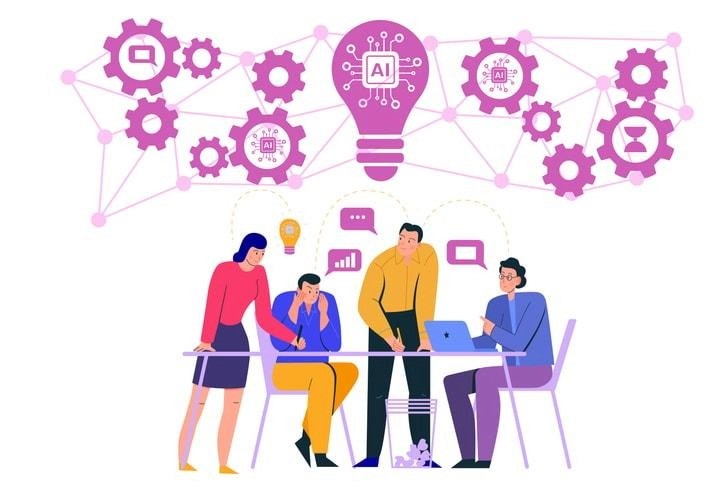
Here’s how AI enhances collaboration:
Meeting intelligence: AI tools transcribe meetings, extract action items, and generate summaries that keep absent stakeholders informed.
Stakeholder communication: AI generates tailored roadmap narratives for executives, engineering updates for developers, and customer-facing release notes for marketing.
Embedded assistants: AI in platforms like Slack, Teams, Notion, and Confluence keep teams synced on decisions, risks, and upcoming milestones through natural language queries.
Async translation: AI converts product decisions into the language each function needs such as technical specs for engineering, business impact for sales, and user benefits for marketing.
But AI PMs must still own context and prioritization. AI-generated summaries and recommendations need human review to ensure they accurately reflect trade-offs, constraints, and organizational alignment. The PM remains the connective tissue between engineering, data science, design, sales, and product leadership; AI just accelerates that connection.
What Does an AI Product Manager Actually Do Day to Day?
AI PMs do much of what traditional PMs do (roadmaps, stakeholder management, discovery), but with added responsibilities around data strategy, model behavior, and responsible AI. The day-to-day rhythm is familiar, but the content is distinctly different.
Here’s what a typical AI PM’s day includes:
Defining AI-powered use cases: Evaluating where ML can solve customer problems more effectively than traditional methods.
Partnering with data scientists: Shaping training data, defining labeling requirements, and reviewing model architecture decisions.
Coordinating deployment: Collaborating with infrastructure teams on model deployment, monitoring, and MLOps pipelines.
Aligning go-to-market messaging: Ensuring marketing accurately represents AI capabilities, avoiding overpromising.
Managing dual success metrics: Tracking business impact (reduced churn, increased LTV) alongside model performance (ROC-AUC, precision/recall, latency).
AI PMs must also design for uncertainty, creating UX guardrails, explanations, and fallback flows to handle cases where AI is incorrect, slow, or uncertain. This sometimes requires a human-in-the-loop review, where a human expert verifies AI decisions before they’re finalized.
Regular activities include reviewing model monitoring dashboards for data drift and bias, working with engineering to prioritize retraining or fine-tuning, and updating guardrails based on real-world experience with the product in production.
How AI PMs Decide When to Use AI (Versus Simpler Rules)
Not every feature needs AI. Overusing AI can increase cost, latency, and risk without meaningfully improving outcomes. One of the most valuable skills an AI PM develops is knowing when not to use machine learning.
Here’s a practical decision framework:
Start from the user problem: What are you actually trying to solve, and what exceptional user experiences define success?
Evaluate deterministic alternatives: Can simple rules, heuristics, or database lookups solve this adequately?
Compare expected lift: How much better would AI perform versus rules, and is the improvement worth the added complexity?
Assess data readiness: Do you have sufficient volume, quality, and labeling feasibility? Is the right data available?
Some use cases clearly favor AI: email spam filtering, personalization, anomaly detection, and natural language understanding typically outperform rules. But pricing tiers, basic eligibility checks, and simple workflow routing often work better with deterministic logic.
Quick prototypes help validate whether AI meaningfully improves UX or economics before a full build. No-code ML platforms, API-based LLMs, or Wizard-of-Oz experiments (where humans simulate AI behind the scenes) let you test hypotheses without major investment.
Responsible AI: Ethics, Risk, and Governance in the PM Toolkit
AI PMs are increasingly accountable for ethical considerations and regulatory impacts. The EU AI Act, U.S. guidelines on AI safety, and sector-specific rules in finance and healthcare make responsible AI a business requirement, not just a nice-to-have.
Here’s what responsible AI ownership looks like:
Bias and fairness reviews: Evaluate training data and model outputs for demographic disparities; research shows facial recognition systems can have error rates 34% higher for darker-skinned females, which AI PMs must catch and address.
Use case governance: Define allowed and disallowed use cases, ensuring the AI solution is deployed appropriately.
Consent and transparency: Ensure users understand when AI is involved and how their data is used.
Legal coordination: Work with compliance and security teams to document model behavior, decision logs, and user-facing explanations.
User controls: Design features like “turn off personalization,” “show why this was recommended,” and “report harmful output” to build trust.
Responsible AI is a competitive advantage. Teams that embed safety and explainability from the start ship faster and avoid costly rollbacks or PR crises later, and the growing ecosystem of AI governance tools makes this increasingly practical to implement.
Skills and Mindsets for Product Managers Working with AI
This section serves as a guide for traditional PMs who want to gain experience and evolve into AI-savvy or AI-specialist product managers by 2026. The good news: you don’t need to become a machine learning researcher.
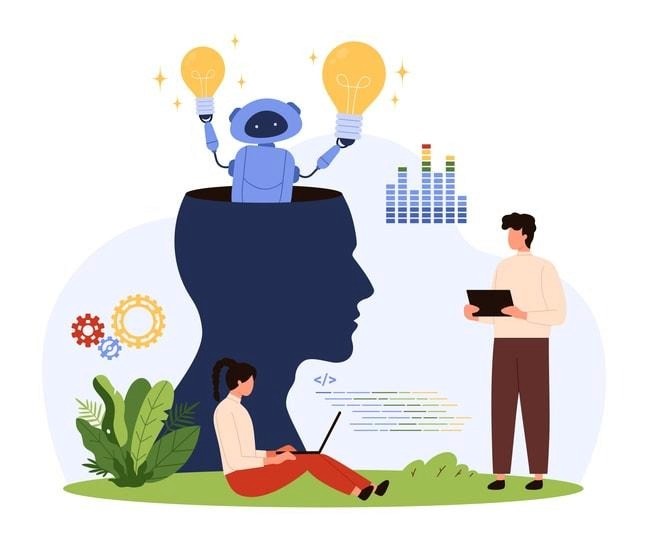
Core skill categories for AI PMs include:
Data literacy and data fluency: Understanding data pipelines, quality issues, and how data feeds into models.
Technical fluency in ML concepts: Knowing the difference between training and inference, supervised and unsupervised learning, and how to interpret evaluation metrics.
Product sense for AI experiences: Designing for probabilistic outputs, uncertainty, and continuous learning through continuous learning.
Ethical judgment: Identifying potential harms and building appropriate safeguards.
Collaboration with specialists: Working effectively with highly specialized AI engineers, data scientists, and MLOps teams.
You don’t need to code neural networks, but you must understand AI enough to have substantive conversations with technical teams—know what deep learning is, how pre-trained models work, and why model drift matters.
Practical upskilling paths include:
Hands-on mini projects with public datasets
No-code ML platforms for experimentation
AI PM courses and certifications
Reading real-world AI case studies from Spotify, Airbnb, Netflix, and YouTube
Consider volunteering for internal AI initiatives at your current company. Working on actual AI pilots, even small ones, builds real-world experience managing data, experiments, and AI-driven UX decisions that no course can fully replicate.
New Mindsets: From Deterministic to Probabilistic Product Thinking
AI systems produce probabilistic outputs, meaning PMs must plan for variance and imperfection instead of assuming fixed behavior. This is a fundamental mindset shift from traditional software development.
Here’s how thinking changes for AI PMs:
Designing for wrong predictions: Features must handle AI errors gracefully, rather than assuming perfection.
Confidence thresholds: Some predictions are more certain than others; UX should reflect this.
Continuous iteration: Models improve after launch through live learning, not just new releases.
Acceptable quality by domain: Search suggestions can tolerate more errors than medical triage. AI PMs define what “good enough” means for their context.
This mindset affects roadmapping, release strategies (A/B tests, gradual rollouts), and executive communication about uncertainty. You must be comfortable saying, “We will launch at 85% quality and improve via live learning,” while ensuring guardrails for high-risk scenarios. Success shifts from “it works, or it doesn’t” to “it works X% of the time compared to baseline.” Mature AI adoption relies on product leaders who can communicate and manage this nuance effectively.
Practical AI Tooling for Product Managers in 2026
PMs should both use AI tools to boost their own productivity and understand the tools their teams use to build AI features. This dual fluency helps PMs ship faster and collaborate more effectively.
Here’s a breakdown of tool categories:
Tool Category | Examples | PM Use Case | 2026 Adoption |
General AI Assistants | ChatGPT Enterprise, Claude | Ideation, drafting PRDs, summarizing research | 80% of PMs use daily |
AI-Enhanced PM Platforms | Jira AI, Notion AI, Productboard | Backlog prioritization, roadmap generation | Growing rapidly |
ML-Based Analytics | Amplitude AI, Mixpanel | Behavioral insights, anomaly detection | Enterprise standard |
No-Code AI Builders | Various chatbot and classifier platforms | Rapid prototyping without engineering | Startup favorite |
MLOps & Experiment Tools | Weights & Biases, MLflow | Model tracking (for AI PMs building AI products) | 70% in AI-focused firms |
Generative AI tools like ChatGPT can reduce research time and accelerate PRD drafting significantly. But tool adoption should be intentional: be mindful of data privacy, security, and vendor lock-in when sending company data to external AI services.
AI agents and natural language workflow tools can automate repetitive PM tasks like product backlog grooming, release note drafting, and interview summarization, freeing up time for the deep understanding and strong foundation work that only humans can do.
How Artificial Intelligence Is Transforming Hiring for AI-Savvy PMs and Teams
Building AI products depends on having the right AI engineering talent, and traditional hiring processes are too slow and inconsistent for the pace of AI innovation. This is one of the biggest bottlenecks facing product teams today.
From 2023-2026, demand for AI engineers has exploded. The talent shortage is real, and it creates years ahead of the backlog for founders, CTOs, and product leaders who want to ship AI-powered features quickly.
This is where Fonzi changes the game. Fonzi is a platform that helps teams hire elite AI engineers in about 3 weeks by standardizing evaluation, surfacing pre-vetted candidates, and preserving a strong candidate experience throughout the process.
Key capabilities include:
Early-stage startup support: From your first AI hire to your first dedicated ML team, Fonzi scales with you.
Candidate experience focus: Tight feedback loops, appropriate role matching, and reduced repetitive assessments protect your employer brand.
Let’s look at how Fonzi compares to traditional hiring approaches.
Why Fonzi Is the Most Effective Way to Hire Elite AI Engineers Today
Fonzi is a specialized hiring engine built specifically for AI roles, not a generic tech recruiting service that happens to post ML job listings. This specialization makes all the difference for business success in AI hiring.
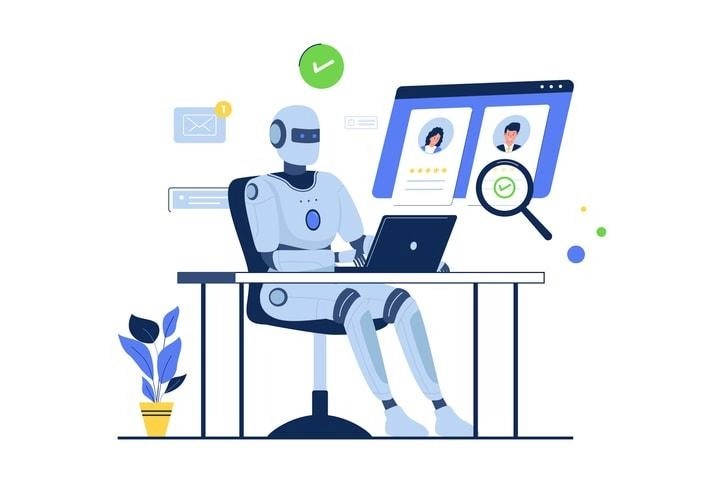
Here’s what sets Fonzi apart:
AI-aware technical assessments: Structured, project-style evaluations test real-world skills like LLM tooling, MLOps, data pipelines, and experimentation culture.
Speed to hire: Most hires close within about three weeks from brief to signed offer, much faster than the typical 8–12 weeks via traditional channels.
Scalability: The process works for a single niche hire at a seed-stage company or multi-region hiring for hundreds of AI engineers.
Candidate experience: Tight feedback loops, well-matched roles, and reduced repetitive take-home tests protect your employer brand while engaging top-tier talent.
For AI PMs trying to future-proof their roadmaps, having access to elite AI engineering talent in weeks rather than months means the difference between shipping AI initiatives and watching them languish in the backlog.
Summary
This article explores how artificial intelligence is transforming product management, giving rise to the AI product manager role. Unlike traditional PMs, AI PMs balance business outcomes with model performance, own data strategy, design for probabilistic behavior, and manage responsible AI risks like bias and compliance. AI also reshapes the PM workflow, enabling faster discovery, automated research synthesis, smarter prioritization, and continuous monitoring of models post-launch. The article highlights key skills for AI PMs and tools like LLM assistants, AI-enhanced PM platforms, and no-code AI builders. Finally, it emphasizes that AI makes product strategy more dynamic and data-driven, turning product lifecycle management into an ongoing process of experimentation and improvement.
FAQ
What does an AI product manager do differently from traditional PMs?
How can product managers use AI to improve their workflow?
What skills do product managers need to work with artificial intelligence?
What are the best AI tools for product management in 2026?
How is artificial intelligence changing product management strategy and processes?